Buck and Boost Converter Uses for Everyday Devices
You use many electronic devices every day, from smartphones to smart watches. A buck and boost converter helps these devices
You use many electronic devices every day, from smartphones to smart watches. A buck and boost converter helps these devices work safely and efficiently by adjusting the voltage inside. This small part keeps batteries healthy and makes sure your gadgets last longer. Check out how these converters improve your experience:
| Feature | Contribution to Efficiency and Safety |
|---|---|
| Voltage Flexibility | Adapts power for different devices |
| High Efficiency | Reduces wasted energy and heat |
| Compact Design | Fits easily in portable electronics |
| Optimized Power Flow | Keeps energy steady in your devices |
| Battery Performance | Extends battery life by managing charging cycles |
Key Takeaways
- Buck and boost converters adjust voltage levels, ensuring your devices operate safely and efficiently.
- Using these converters can significantly extend battery life, allowing you to enjoy your devices longer between charges.
- These converters help prevent overheating, enhancing the safety and reliability of your electronics.
- Modern designs of buck and boost converters achieve high efficiency, often exceeding 90%, which reduces energy waste.
- You benefit from improved performance in everyday devices, from smartphones to medical equipment, thanks to advanced power management.
What Are Buck and Boost Converters?
You use many electronic devices every day, but you might not realize how important voltage control is inside them. Buck and boost converters help your gadgets work safely and efficiently. These small circuits change the voltage to the right level, making sure your devices run smoothly.
Buck Converter Basics
A buck converter lowers a higher voltage to a lower one. You find this type of dc-to-dc converter in many portable electronics. Here’s how it works:
- The converter uses a higher voltage source to push current into an inductor.
- It disconnects the source and lets the inductor’s stored energy keep the current flowing to the load.
- A diode or a second switch closes the circuit when the source is off.
- During the on-state, the source may give more current than usual for a short time. During the off-state, the source does not provide current.
- A capacitor smooths out voltage spikes, keeping the output steady.
- The inductor stores energy in a magnetic field and acts as a current source when the switch is off.
You see buck converters in smartphones, tablets, and other devices that need lower voltage for safe operation. These converters help reduce heat and improve efficiency, which means your battery lasts longer.
| Load Current (mA) | Battery Voltage (V) | Efficiency (%) |
|---|---|---|
| 12 µA | 2.8 | 73 |
| 120 mA | 2.8 | 96.2 |
| 12 µA | 3.3 | 65 |
| 120 mA | 3.3 | 93.35 |
This table shows how buck converters keep efficiency high, even at different loads and voltages.
Boost Converter Basics
A boost converter raises a lower voltage to a higher one. You use this type of dc-dc converter in devices that need more power than the battery can provide directly. The basic operation includes two main stages:
The basic principle of operation for a boost converter can be understood through the following two stages:
Switch-on period (S1 closed, S2 open): During this stage, the input voltage (Vin) is applied across the inductor (L), causing the current through the inductor to increase linearly. The energy stored in the inductor builds up, and the diode (D) is reverse-biased, preventing current flow to the load.
Switch-off period (S1 open, S2 closed): When the switch S1 opens, the inductor current must continue to flow. This forces the diode D to become forward-biased, and the inductor releases its stored energy to the load (R) and the output capacitor (C). During this period, the voltage across the inductor (VL) is equal to the difference between the output voltage (Vout) and the input voltage (Vin).
Boost converters appear in battery-powered devices, USB power banks, and automotive electronics. They help your devices run longer and perform better by making the most of the available power.
| Loss Type | Description |
|---|---|
| Conduction Losses | Caused by the resistance of circuit elements, which can be minimized by selecting low-resistance components. |
| Switching Losses | Occur during the transition of the MOSFET between on and off states, influenced by the MOSFET's characteristics. |
| Diode Reverse Recovery Losses | Result from the diode's transition from conducting to blocking state, mitigated by using fast recovery diodes. |
| Magnetic Core Losses | Energy dissipation in the inductor core due to alternating magnetic fields, reduced by optimizing core material. |
| Capacitor Losses | Caused by the equivalent series resistance of the output capacitor, which can be minimized with low ESR capacitors. |
This table explains why boost converters can achieve high efficiency when designed with the right components.
Why Voltage Conversion Matters
Voltage conversion is critical for modern electronics. You rely on stable voltage for your devices to work properly. Here are some reasons why voltage conversion matters:
- Voltage ensures devices receive the correct levels necessary for functionality.
- It maintains stable voltage levels and converts power efficiently.
- In signal processing, voltage represents information, affecting fidelity in audio and video applications.
- Digital signals rely on precise voltage levels for reliable data processing and communication.
- In telecommunications, voltage variations transmit signals over distances, converting electrical signals to light pulses in fiber optics.
- Sensors convert physical phenomena into voltage signals, enabling monitoring and control in various technologies.
You benefit from voltage conversion every time you use your phone, computer, or smart home device. Buck and boost converters keep your electronics safe, efficient, and reliable.
You also find buck-boost converters in many devices. These circuits combine the features of both buck and boost converters. They let your device switch between lowering and raising voltage as needed. Buck-boost converters achieve efficiency rates over 90%, saving energy and supporting flexible voltage needs. You see them in robotics, renewable energy, telecommunications, and automotive systems. Their compact design helps reduce the size of printed circuit boards, lowering manufacturing costs and improving battery life.
Some people think buck and boost converters waste energy or are too complex. Modern designs use advanced components, reaching over 95% efficiency and making them easy to use, even for hobbyists. These converters are not limited to niche applications. You find them everywhere, from portable electronics to industrial machinery.
When manufacturers use efficient converters, they help the environment. Optimized designs reduce energy use and greenhouse gas emissions. Better recycling and material choices also lower the impact of electronic manufacturing.
Buck Converter Applications
Smartphones and Tablets
You rely on your smartphone and tablet every day. These devices use a buck converter to manage battery power efficiently. The converter lowers the voltage from the battery to the level needed by the processor and screen. This process keeps your device cool and helps the battery last longer. You benefit from compact design and high efficiency, which are important for portable electronics.
- Buck converters regulate output voltage in smartphones and tablets.
- They provide high efficiency and save space inside your device.
- You experience less heat, which helps your device last longer.
- Efficient power management extends battery life.
Laptops and Computers
Your laptop and computer need stable power to work well. A buck converter helps by converting higher DC voltage to a lower one. This conversion protects sensitive components like processors and displays. You get reliable performance because the converter keeps voltage steady. Rapid switching inside the converter reduces energy waste and heat. This efficiency often reaches above 90%. The motherboard operates at low voltages, which protects delicate parts from voltage spikes. You notice better reliability and longer device lifespan.
LED Lighting
LED lighting systems use a buck converter to control voltage and current. You see brighter lights and lower energy bills because the converter manages power efficiently. Pulse-width modulation inside the converter reduces thermal stress on LEDs. This process keeps the lights working well and extends their lifespan. You benefit from energy efficiency that often exceeds 90%. Efficient converters lower operational costs and support sustainability. LED lighting becomes more reliable and lasts longer.
Portable Gadgets
You use portable gadgets like fitness trackers and wireless headphones every day. These devices need careful battery management. A buck converter steps down battery voltage for different parts of the device.
- Voltage management increases battery life.
- You get better device performance because power consumption stays under control.
- The converter helps each subsystem work at the right voltage.
- Your gadgets run longer between charges.
Buck and boost converter technology makes your devices safer and more reliable. You enjoy better performance and longer battery life because converters optimize the power supply. Modern dc-dc converter designs keep your electronics efficient and cool.
Boost Converter Applications
Battery Devices
You use battery-powered devices every day. Many of these rely on a boost converter to keep the voltage steady, even when the battery runs low. This technology helps your devices work longer and more reliably. You see boost converters in laptop chargers, USB power adapters, portable power banks, LED lighting systems, electric vehicles, telecommunications devices, and sensor systems. The table below shows how different devices use boost converters to maintain a stable power supply:
| Device Type | Description |
|---|---|
| Laptop Chargers | Produce stable, higher output voltage from lower input voltage sources. |
| USB Power Adapters | Useful for portable devices where input voltage may vary due to battery discharge. |
| Portable Power Banks | Maintain stable voltage output for charging devices on the go. |
| LED Lighting Systems | Ensure consistent brightness by maintaining a constant current to LED strings. |
| Electric Vehicles | Increase voltage from battery packs for various electrical components. |
| Telecommunications Devices | Produce stable voltages for reliable operation of RF transmitters and base stations. |
| Sensor Systems | Provide stable voltage supply for ADCs and sensitive components in variable input conditions. |
USB Power Banks
You depend on USB power banks to charge your devices when you travel or work away from home. A boost converter inside the power bank generates the necessary 5V output for charging multiple devices. Some power banks automatically test for load every second, while others require you to press a button to start charging. Boost converters can switch off to save energy when no device is connected. Modern power banks use advanced chips, like the M12269, which support fast charging protocols and achieve high voltage accuracy. This technology improves compatibility and efficiency, so you can charge your phone, tablet, or headphones quickly and safely.
Tip: Boost converters help your power bank deliver steady voltage, even when the battery is nearly empty. This means you get reliable charging every time.
Automotive Electronics
You rely on automotive electronics for safety, entertainment, and navigation. Boost converters play a crucial role in these systems by stepping up voltage levels. This process improves efficiency and power management, which are vital for the reliability of electronic systems in cars and electric vehicles. Non-isolated DC-DC converters, including boost converters, are preferred in electric vehicles because they offer better performance. These converters handle high current strains and help maintain stable operation, even under challenging conditions.
- Boost converters enhance system performance in automotive applications.
- They improve reliability by managing power supply efficiently.
- Electric vehicles use boost converters to increase voltage for different components.
Wearables
You use wearables like smart watches and fitness trackers every day. Boost converters make these devices smaller and more efficient. They convert low input voltages from tiny batteries or energy harvesting sources into higher output voltages needed for operation. This conversion allows manufacturers to use smaller batteries, which helps keep wearables compact. Efficient boost converters also reduce energy loss, so your device lasts longer between charges. You benefit from longer battery life and a comfortable, lightweight design.
Note: Boost converters are essential for the miniaturization of wearables and for extending battery life, making your smart devices more convenient.
You see buck and boost converter technology in many devices, working together to optimize power supply and reliability. Boost converters help your electronics run longer, charge faster, and stay safe.
Buck and Boost Converter in Devices
Power Management
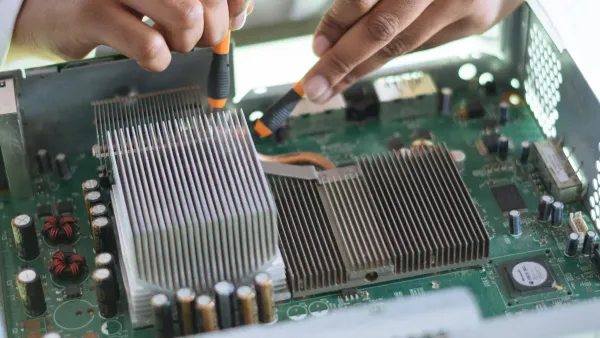
You use many devices that rely on advanced power management to work efficiently. Smartphones, tablets, laptops, and wearable technology all use both a buck converter and a boost converter. These converters help your device adjust voltage levels for different parts. When your battery runs low, a boost converter increases the voltage so your device keeps working. When your device needs less power, a buck converter lowers the voltage to save energy. This smart use of converters improves reliability and keeps your device cool. You get better performance and longer battery life because the power supply stays stable.
- Smartphones use both converters to manage battery and screen power.
- Tablets rely on converters for safe charging and steady operation.
- Laptops need converters for processor and memory voltage control.
- Wearable technology uses converters to keep devices small and efficient.
Smart Home Tech
You see smart home technology everywhere, from smart thermostats to security cameras. These devices often use a buck-boost converter for flexible voltage regulation. This type of dc-dc converter can raise or lower voltage as needed. You benefit from smooth transitions and stable output, even when power conditions change. Buck-boost converters operate in two modes: buck mode for reducing voltage and boost mode for increasing voltage. This versatility helps smart home devices handle different power needs and improves reliability.
Tip: Buck-boost converters make smart home devices more adaptable. You get consistent performance, even when your home's power supply fluctuates.
- Buck-boost converters provide flexibility in voltage regulation.
- Devices switch between buck and boost modes for stable operation.
- Smart home tech stays reliable under varying conditions.
Medical Devices
You depend on medical devices for health and safety. Many of these devices use both buck and boost converters to manage power. Reliable voltage control is critical for devices like portable monitors and infusion pumps. Converters help these devices work safely and efficiently, even when battery levels change. You get accurate readings and dependable operation because converters keep the power supply steady. Medical devices often use integrated circuits with advanced converter designs to improve reliability and performance.
- Medical monitors use converters for precise voltage control.
- Infusion pumps rely on converters for safe operation.
- Integrated circuits in medical devices improve reliability.
Benefits for Users
Battery Life
You want your devices to last as long as possible between charges. Buck and boost converters help you get the most out of your battery. These converters adjust voltage efficiently, so your device uses less energy and stays powered longer.
- Buck converters often give you better battery life than buck-boost converters, especially at normal loads.
- At a 300mA load, a buck converter can run nine minutes longer than a buck-boost converter.
- When your device needs 3.3V, the buck converter keeps battery life equal to or better than other options.
- Buck converters use fewer parts, which means less energy loss and longer use.
You benefit from longer battery life in your portable electronics, so you spend less time charging and more time using your favorite gadgets.
Device Safety
You want your devices to stay safe and cool. Buck and boost converters help prevent overheating and electrical faults.
- Buck converters step down voltage with little heat, which protects sensitive parts.
- Their efficient switching power supply design reduces energy loss as heat, unlike older linear regulators.
- Many converters include cooling features that help manage heat and keep your device safe.
Tip: Efficient converters lower the risk of thermal stress, so your electronics last longer and work more reliably.
User Experience
You enjoy using devices that work smoothly and respond quickly. Converters improve your experience by powering smart features and keeping everything running well. The right power supply helps your device stay connected and easy to use.
Here is how converters boost performance in different areas:
| Application Area | Contribution to Performance |
|---|---|
| Consumer Electronics | Powers smart features, interconnectivity, and user-friendly interfaces in devices. |
| Industrial Automation | Enhances operational efficiency and real-time process monitoring. |
| Healthcare | Improves diagnostics, patient tracking, and treatment optimization. |
You notice faster charging, better reliability, and fewer problems with your electronics. New designs, like extendable switched capacitor cells, make converters even more efficient by reducing energy loss and increasing voltage gain. These improvements help your devices perform better every day.
You see buck and boost converters at the heart of your favorite electronics. These components keep your devices efficient, safe, and reliable. Recent advancements bring you better battery life, smaller gadgets, and stronger performance:
| Key Advancement | Implication for Everyday Devices |
|---|---|
| Improved efficiency | Enhances battery life in portable electronics |
| Compact designs | Saves space, allowing for smaller products |
| Enhanced performance | Supports more demanding low-power applications |
Ongoing innovation in power management means you can expect:
- More efficient and smaller converters in future devices
- Reliable power for smart systems and electric vehicles
- Less energy loss with advanced materials and designs
You benefit from these improvements every day as technology continues to evolve.
FAQ
What is the main job of a buck converter in electronics?
A buck converter lowers voltage for your device. It helps protect sensitive parts like processors and memory chips. You get better battery life and less heat in your gadgets.
Why do boost converters matter in portable devices?
Boost converters raise voltage when your battery gets low. They keep your device running smoothly. You see them in power banks, wearables, and many battery-powered gadgets.
Can one device use both buck and boost converters?
Yes! Many devices use both types. For example, smartphones and tablets need different voltages for different parts. Using both converters helps manage power and keeps everything working well.
How do these converters help with device safety?
Buck and boost converters control voltage and reduce heat. This protects your device from damage. You get safer, longer-lasting electronics.
Are buck and boost converters found in integrated circuits?
You find many converters built into integrated circuits. This design saves space and improves efficiency. Your devices become smaller and more reliable.