Can an RF energy harvester be used as an SWR to power your gadgets?
Can an RF energy harvester be used as an SWR? The answer is a clear no. These tools serve completely different functions. An

Can an RF energy harvester be used as an SWR? The answer is a clear no. These tools serve completely different functions. An RF energy harvester is a circuit designed to collect ambient power, while an SWR meter measures a ratio. The tiny amount of power available from reflected waves is also insufficient for charging modern devices.
A modern smartphone requires 5 to 10 watts for standard charging. This power level is thousands of times greater than what an RF harvester could practically capture from a transmission line.
Key Takeaways
- An RF energy harvester collects power. An SWR meter measures a ratio. They do different jobs.
- RF harvesters do not have parts to measure SWR. They cannot tell the difference between forward and reflected power.
- Reflected power is very small. It is not enough to charge phones or other modern gadgets.
- Radio systems need low SWR. This means less reflected power. Operators try to get rid of reflected power, not use it.
Can an RF Energy Harvester Be Used as an SWR?
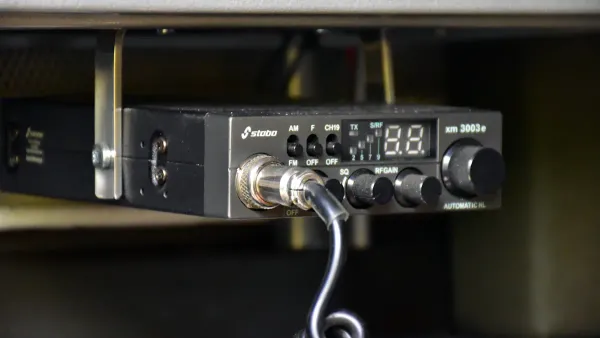
The question of whether an RF energy harvester can be used as an SWR meter stems from a misunderstanding of their fundamental designs. While both devices interact with RF energy, their internal circuits and ultimate goals are worlds apart. One is built to collect power, while the other is built to analyze a signal ratio.
Different Core Functions
An RF energy harvester's primary job is to capture and accumulate as much power as possible from ambient radio waves. Its design prioritizes efficiency in power collection. Engineers use several techniques to achieve this:
- Rectenna Arrays: These systems use multiple antennas to gather energy from various sources at once.
- High-Gain Antennas: Special antenna designs, sometimes using reflecting surfaces or specific feeding techniques, maximize the amount of RF energy captured.
- High-Efficiency Rectifiers: The internal circuits are optimized to convert the weak, incoming AC radio signal into usable DC voltage with minimal loss.
In contrast, an SWR meter performs a completely different task. Its main function is to evaluate the efficiency of energy transmission from a transmitter to an antenna. It measures the impedance match between the two. A good match means most of the power is radiated by the antenna. A poor match means power is reflected back toward the transmitter, which is inefficient and can damage equipment. The core question, can an RF energy harvester be used as an SWR, is answered by this basic difference in purpose. One is a collector, the other an inspector.
Lack of Measurement Circuitry
The internal components of these two devices reveal why they are not interchangeable. An RF energy harvester is a power supply circuit. An SWR meter is a measurement instrument.
An SWR meter contains very specific components for analysis. The most critical part is the directional coupler. This specialized circuit can isolate and sample the forward power (going to the antenna) and the reflected power (coming back from the antenna) separately. Without a directional coupler, it is impossible to distinguish between the two waves. The meter then uses simple diode rectifiers to convert these tiny RF samples into DC voltages, which are smoothed by capacitors and fed to a meter for comparison.
An RF energy harvester lacks this entire measurement setup. Its circuit is designed for power conversion and management.
Note: A typical RF harvesting circuit includes a receiving antenna, a matching network to tune to specific frequencies, and a Power Management IC (PMIC). This PMIC is a complex chip that often includes a boost converter to raise the low harvested voltage and logic to manage storing it in a capacitor or battery.
Comparing their core components makes the distinction clear.
| SWR Meter Circuit | RF Harvester Circuit |
|---|---|
| Directional Coupler | Receiving Antenna |
| Diode Rectifiers | Matching Network |
| Smoothing Capacitors | Power Management IC (PMIC) |
| Analog Meter/Display | Energy Storage (Capacitor/Battery) |
The absence of a directional coupler is the single biggest reason why an RF energy harvester can be used as an SWR meter is a definitive no. It has no physical way to separate and compare forward and reflected power.
Power Collection vs. Ratio Analysis
The final difference lies in how each device approaches impedance matching. This concept is central to both, but they pursue opposite goals.
For an RF energy harvester to work well, its load impedance must be the complex conjugate of the source (antenna) impedance. This condition ensures maximum power transfer, allowing the circuit to absorb as much energy as possible from the incoming radio waves. The goal is to create a deliberate mismatch that "pulls" all the power in.
For a radio transmission line, the goal is the opposite. To minimize SWR, the load impedance (antenna) must perfectly match the characteristic impedance of the transmission line (e.g., 50 ohms). This prevents reflections and ensures the signal travels smoothly to the antenna for radiation.
Therefore, the design philosophy that makes a harvester efficient at collecting power is the exact opposite of what is needed for an efficient antenna system. Answering if an RF energy harvester can be used as an SWR is simple when you realize one is designed to absorb energy from a mismatch, while the other is designed to measure the lack of that very same mismatch.
The Reality of Harvested Power

The idea of capturing wasted RF energy is appealing. However, the numbers reveal a harsh reality. The amount of power available from reflected waves is incredibly small. It is also far less than what modern electronics require. This section explores the vast difference between the power one might hope to harvest and the power a device actually needs.
Reflected Power Levels Explained
A high Standing Wave Ratio (SWR) indicates an impedance mismatch. This mismatch causes some of the transmitter's power to reflect back down the transmission line instead of radiating from the antenna. While this reflected power is a real phenomenon, its quantity is often misunderstood.
Let's imagine a radio transmitting 100 watts of power. The amount of power reflected depends directly on the SWR. A higher SWR means more reflected power.
| SWR Ratio | Reflected Power (Percentage) | Reflected Power (Watts for 100W transmission) |
|---|---|---|
| 1.5:1 | 4% | 4 |
| 2.0:1 | 11% | 11 |
| 3.0:1 | 25% | 25 |
Even with a very poor SWR of 3:1, only 25 watts are reflected. An RF energy harvester must then convert this AC power into usable DC power. This conversion process is not perfect. The efficiency of RF-to-DC conversion in harvesting circuits, which use components like rectifying diodes, can be low. Studies show efficiencies often range from 28% to 77% under ideal conditions with specific input power levels. A harvester connected to a transmission line would likely capture only a few watts, even in a worst-case SWR scenario.
Harvested Power vs. Gadget Needs
The small amount of potentially harvested power stands in stark contrast to the demands of modern gadgets. A simple USB-C device might draw 1.5 amps at 5 volts, which equals 7.5 watts. More advanced devices using USB Power Delivery (PD) can require much more.
A modern smartphone often needs 5 to 10 watts for standard charging. Fast charging protocols can demand 20 watts or more. This is thousands of times more power than an RF harvester can realistically provide.
RF energy harvesting is a real and useful technology. However, it is designed for a completely different class of electronics. Its purpose is to power extremely low-energy devices that operate on milliwatts (thousandths of a watt) or even microwatts (millionths of a watt).
Real-world examples of RF harvesting include:
- Environmental Sensors: Tiny sensors that monitor temperature or humidity and transmit data periodically.
- Occupancy Detectors: Motion sensors for smart lighting or security that sip power from ambient Wi-Fi signals.
- Wireless Sensor Nodes: These devices use specialized components like ultra-low-power microcontrollers and wake-up receivers (WuRx) that consume tiny amounts of energy.
The power consumption of these components is incredibly low, making them suitable for energy harvesting.
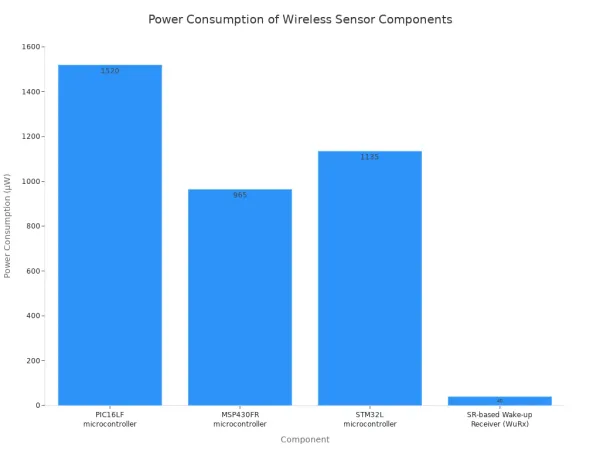
As the chart shows, these components run on microwatts. Trying to charge a smartphone with this level of power would be like trying to fill a swimming pool with an eyedropper.
The Goal of a Low SWR
The final point is the most important. In any radio system, reflected power is undesirable. Radio operators work hard to eliminate it, not harvest it. The goal is always to achieve the lowest possible SWR, ideally a perfect 1:1 ratio. An SWR below 1.5:1 is considered excellent.
A high SWR has several negative effects:
- Reduced Efficiency: Reflected power is power that does not reach the antenna. This reduces the signal's strength and the effective range of the transmission.
- Component Stress: High reflected power creates increased voltage peaks on the transmission line. This puts significant stress on the electronic components in the transmitter's final amplifier stage, potentially leading to overheating and failure.
Therefore, a radio operator's goal is to create a highly efficient system with minimal reflected power. This is the direct opposite of creating a situation where power could be harvested. Deliberately creating a high SWR to generate harvestable power would damage the transmitter and cripple its performance.
The answer to "can an rf energy harvester be used as an swr" is a firm no. An RF harvester's circuit is designed to collect tiny amounts of ambient power for low-energy industrial sensors, not to measure signal ratios. The reflected power in a transmission line is also undesirable and far too weak to charge a gadget.
For reliable performance, operators should use a dedicated SWR meter to tune their antenna system. For charging devices, they should rely on standard methods like USB chargers or AC power adapters.
FAQ
### Can I modify a harvester to measure SWR?
No. An SWR meter requires a specific component called a directional coupler to work. This circuit separates forward and reflected power for measurement. An RF harvester does not have this part, so it cannot be modified for SWR analysis.
### What is the main job of an RF energy harvester's circuit?
💡 Its circuit captures weak radio waves. Key components like rectifying diodes and a Power Management IC (PMIC) convert this energy into tiny amounts of DC power. This power is only suitable for ultra-low-energy devices like wireless sensors.
### Why is using reflected power a bad idea?
Reflected power is a sign of an inefficient system. It causes stress on the transmitter's final amplifier transistors and can lead to overheating and failure. Radio operators work to eliminate reflected power, not use it.
### How much power can a real RF harvester collect?
🔌 A harvester typically collects microwatts or milliwatts from ambient sources. This is thousands of times less than the 5 to 10 watts a smartphone needs. The power difference is too large to overcome.