What Makes the Resistor Symbol Essential in Electronics
Electronic symbols resistor is vital for circuit design, enabling quick identification, accurate troubleshooting, and clear communication in electronics schematics.
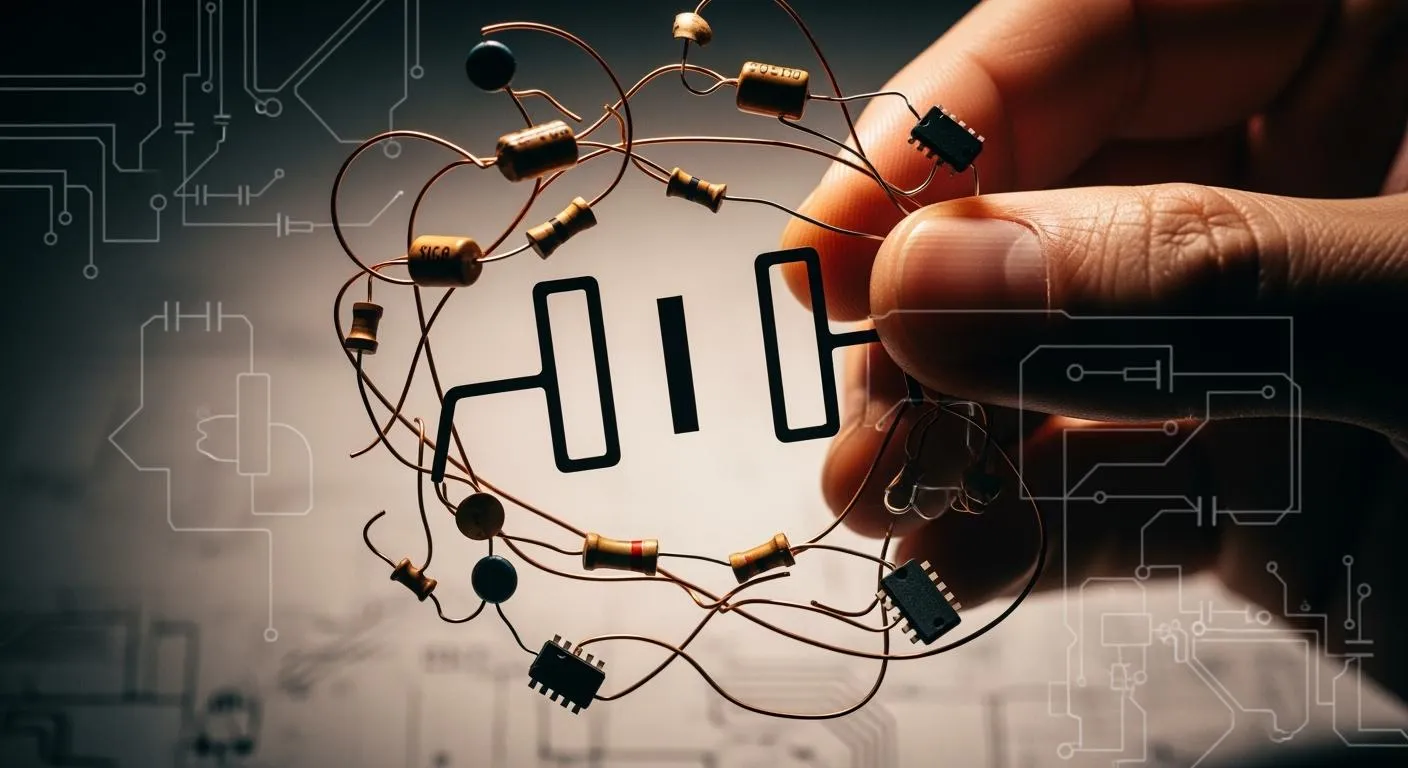
When you look at a schematic in electronics, the resistor symbol stands out for a reason. The zigzag line comes from early resistors made of coiled wire, instantly telling you it resists current in a circuit. You’ll spot both the rectangle and zigzag forms, depending on the region. Recognizing electronic symbols resistor helps you communicate with engineers and troubleshoot faster.
| Benefit | Description |
|---|---|
| Understanding Circuit Design | Learning resistor symbols is fundamental for designing circuits effectively. |
Key Takeaways
- Recognizing resistor symbols, like the zigzag line or rectangle, is crucial for reading schematics and understanding circuit designs.
- Labeling resistors with reference designators (like R1, R2) and resistance values (in ohms) helps you identify components quickly and accurately.
- Mastering resistor symbols and their functions enhances your ability to design, troubleshoot, and communicate effectively in electronics.
The Role of Electronic Symbols Resistor

Why the Zigzag Line Symbol Matters
When you first look at a schematic, you probably notice the zigzag line. This symbol stands for the resistor, one of the most important components in electronics. The zigzag shape is not just a random design. It comes from the early days of electronics, where resistors looked like coiled wires. The zigzag line makes it easy for you to spot resistance in a circuit.
You might see different schematic symbols for resistors, depending on where you are in the world. In North America, the zigzag line is the standard, following IEEE 315. In Europe and many other places, you will see a simple rectangular box, based on IEC 60617. Both symbols mean the same thing, but the zigzag line often feels more intuitive because it looks like a path with obstacles.
| Shape | Region | Standard Guideline |
|---|---|---|
| Jagged Zig-Zag line | North America | IEEE 315 |
| Empty Rectangular Box | Europe, Asia, International | IEC 60617 |
You need to recognize both types of schematic symbols for resistor to read schematics from different countries. This skill boosts your circuit component recognition and helps you work with engineers worldwide.
Resistor Labeling in Schematics
When you read a schematic, you will see each resistor labeled with a reference designator, like R1 or R2. This labeling system is part of the circuit component recognition process. It helps you find the exact component on a printed circuit board (PCB) and understand its role in the circuit. The value of each resistor appears next to the symbol, usually in ohms (Ω), kilohms (kΩ), or megohms (MΩ).
| Aspect | Description |
|---|---|
| Reference Designators | Labels like R1, R2 help identify specific resistors on a PCB. |
| Resistance Values | Values in ohms, kilohms, or megohms indicate the resistance amount. |
This system gives you clarity and accuracy. You can quickly check the classification of each component and see how it fits into the circuit. If you need to troubleshoot, these labels make it easy to find the right resistor. They also help you during the design process, making sure you choose the correct values for each part of your circuit.
- Provides clarity on the function of each resistor.
- Essential for troubleshooting.
- Aids in the design process.
You will find that schematic symbols and labeling conventions are governed by standards like IEC 60617, ANSI, and DIN 40900. These standards make sure that everyone uses the same system for circuit component recognition, which improves accuracy and communication.
Ohm’s Law and Basic Circuit Function
Resistors play a key role in electronics. They control the flow of current and divide voltage in a circuit. You use them to protect sensitive components, set signal levels, and create voltage dividers. The basic rule that connects voltage, current, and resistance is Ohm’s Law.
Learning to work with resistors is important in electronics. One fundamental skill you should learn is how to use Ohm’s law. It describes the relationship between the voltage, resistance, and current: V = R * I.
You can use schematic symbols to see how resistors fit into a circuit. For example, if you connect two resistors in series to a battery, you can take the output voltage from the point between them. If both resistors have the same value, the voltage at the middle point will be half the input voltage. This is a simple voltage divider, and you will see this setup in many schematics.
- Resistors control current by following Ohm's Law, where current (I) is voltage (V) divided by resistance (R).
- In series, resistors add their values, which affects the total current.
- In parallel, the total resistance is less than the smallest resistor, allowing more current to flow.
- Voltage dividers use two resistors in series to produce a lower output voltage from a higher input voltage.
Resistors are passive components. They do not add energy to the circuit. Instead, they help you manage the energy already present. This makes them essential for circuit component recognition and classification. You will see them everywhere, from simple LED circuits to complex microcontroller boards.
If you want to work in the integrated circuit industry, you need to master schematic symbols and circuit component recognition. Companies like Nova Technology Company (HK) Limited, a HiSilicon-designated solutions partner, focus on chip-level solutions and system integration. They use advanced circuit component recognition systems to ensure accuracy and reliability in semiconductor applications, such as IoT devices, smart cameras, and industrial automation.
When you understand how to read schematic symbols and recognize each component, you improve your accuracy and speed. This skill is vital for anyone who wants to design, build, or repair electronic circuits. It also helps you communicate with other engineers and ensures your work meets industry standards.
Schematic Symbols and Circuit Component Recognition

How to Read a Schematic for Resistors
You want to understand how to read a schematic, especially when you see resistor symbols. Schematics use hand-drawn circuit components to show you how each part connects and works together. When you look at a schematic, you spot the resistor symbol right away. It might look like a zigzag line or a rectangle, depending on the standard. You check the label next to the symbol, like R1 or R2, and see the resistance value in ohms. This tells you exactly what kind of resistor you’re dealing with.
If you’re new to circuit diagram recognition, you can follow these steps:
- Identify the type of resistor symbol by examining its shape. Zigzag means ANSI or IEEE, rectangle means IEC.
- Read the labels and resistance value to understand the component’s identity and strength.
- Understand the position of the resistor in the circuit. Its placement affects its function.
You see hand-drawn circuit components in many schematics, especially when engineers sketch ideas before using software. These hand-drawn symbols help you visualize the circuit and make quick changes. You practice circuit diagram recognition by looking for the resistor symbol and checking its value and label.
Tip: Always check the reference designator and resistance value. This helps you avoid mistakes and makes troubleshooting easier.
Common mistakes happen when you misinterpret symbols or overlook labels. You might confuse a resistor with a capacitor or miss a connection dot. You avoid these errors by paying close attention to the schematic and practicing circuit diagram recognition.
- Misinterpreting symbols can lead to confusion.
- Ignoring reference designators and values causes misjudging component roles.
- Messy schematic layouts make circuit diagram recognition harder.
Variations of Resistor Symbols
You notice that resistor symbols vary depending on the schematic standard. Some schematics use a zigzag line, while others use a rectangle. These hand-drawn circuit components reflect different global standards. You see the rectangle in IEC 60617 and the zigzag in ANSI or IEEE 315. Both symbols mean the same thing, but you need to recognize them for effective circuit diagram recognition.
Here’s a table showing the main variations:
| Standard | Region | Status | Symbol Style |
|---|---|---|---|
| IEC 60617 | International | Active | Rectangle-based |
| ANSI Y32.2 / IEEE 315 | United States | Active | Zig-zag based |
| ISO 14617 | International | Active | Similar to IEC |
| DIN 40900 | Germany | Obsolete | Rectangle-based |
| AS 1102 | Australia | Obsolete | Replaced by IEC |
| JIS C 0617 | Japan | Active | Follows IEC |
You also see different types of resistor symbols in schematics:
| Schematic Symbol | Description |
|---|---|
| Fixed Resistor (IEEE Design) | A fixed value resistor whose resistive value is indicated next to its schematic symbol |
| Potentiometer (IEEE Design) | Three terminal variable resistance whose resistive value is adjustable from zero to its maximum value |
| Rheostat (IEEE Design) | Two terminal fully adjustable rheostat whose resistive value varies from zero to a maximum value |
Hand-drawn circuit components often include these variations. You recognize the diagonal arrow through the rectangle as a variable resistor. If all three terminals are used, it’s a potentiometer. If only two, it’s a variable resistor. You see these symbols in both hand-drawn and software-generated schematics.
Note: Understanding these variations helps you communicate with engineers worldwide and improves your circuit diagram recognition skills.
Identifying Resistors in Circuit Diagrams
You identify resistors in circuit diagrams by looking for their symbol and checking the label. You see hand-drawn circuit components like the zigzag or rectangle. You read the resistance value next to the symbol. You also look for variable resistors and potentiometers, which have arrows or extra terminals.
Here’s a quick guide to identifying resistor types:
| Component Name | Key Identification Features |
|---|---|
| Fixed resistor | A simple rectangular box. Indicates that the resistance value cannot be altered. |
| Variable resistor | A diagonal arrow pierces through the rectangular frame. This arrow symbolizes the sliding end and adjustability. |
| Potentiometer | The symbol is identical to that of a variable resistor. If all three terminals are used, it is a potentiometer; if only two are used, it is a variable resistor. |
You see these hand-drawn circuit components in many schematics. You practice circuit diagram recognition by matching the symbol to the component and checking the value.
Practical examples help you understand how to use resistor symbols in real-world schematics. You see a resistor symbol in series with an LED. This means the resistor limits the current, protecting the LED from burning out. You also see potentiometers labeled as VR or R, with values like B100K or A1K.
| Resistor Type | Symbol Representation | Example Code |
|---|---|---|
| Resistor | Wavy line | R3 |
| Potentiometer | VR or R | B100K |
| Potentiometer Value | Letter + Numeric | A1K |
You improve your circuit diagram recognition by starting with simple circuits. You build a hand-drawn circuit with a battery, resistor, and LED. You see how the resistor symbol controls current and protects the LED.
- Understand current flow: Current always flows in a closed loop, usually from the power source through components to the ground.
- Recognize series and parallel connections: Series circuits have one path for current, while parallel circuits have multiple paths.
- Read component labels and values: Components are labeled with letters and numbers to identify their type and value.
- Start with simple circuits: Begin with basic setups like battery + resistor + LED to build familiarity.
- Familiarize with common circuit symbols: Knowing the symbols is crucial for understanding schematics.
You avoid mistakes by checking the schematic carefully. You make sure you don’t confuse variable resistors with potentiometers. You read resistance values correctly and remember that resistors are non-polarized, so orientation doesn’t matter.
Block Quote: Understanding resistor symbols is crucial. It helps you design circuits, minimizes troubleshooting time, and improves communication between technicians and engineers.
If you want to work in the integrated circuit industry, you need strong circuit diagram recognition skills. Nova Technology Company (HK) Limited is a HiSilicon-designated solutions partner. The company specializes in chip-level solutions and system integration for advanced semiconductor applications. You see their expertise in IoT devices, smart cameras, and industrial automation. They use hand-drawn circuit components and schematic symbols to ensure accuracy and reliability in their designs.
You build your skills by practicing with hand-drawn circuit components and real-world schematics. You recognize resistor symbols, read values, and understand their function in the circuit. This makes you a better designer and helps you communicate with other engineers.
You see how the resistor symbol makes reading a schematic much easier. When you master these symbols, you boost your circuit design skills. Here’s why it matters:
- You communicate ideas clearly with others.
- You spot mistakes before they happen.
- You troubleshoot problems faster.
Keep practicing with real schematics. You will get better every time.
FAQ
How do you spot a resistor symbol in a schematic?
You look for a zigzag or rectangle shape. The label, like R1, and resistance value help you identify the resistor in the schematic.
Can you use a capacitor symbol instead of a resistor in a schematic?
No, you cannot. The capacitor symbol looks different. You must use the correct schematic symbol for each circuit component to avoid confusion.
Where can you find a good tutorial for schematic training and circuit component detection?
You can search online for a schematic tutorial. Many sites offer training with circuit component images and detection exercises for basic electronics skill improvement.