From Silicon to Systems: The Revolutionary Story of the 1st Integrated Circuit
The creation of the first integrated circuit changed history forever. It changed how technology grew, leading from Silicon to Systems. By putting many electronic parts on one chip, it saved space and worked better.
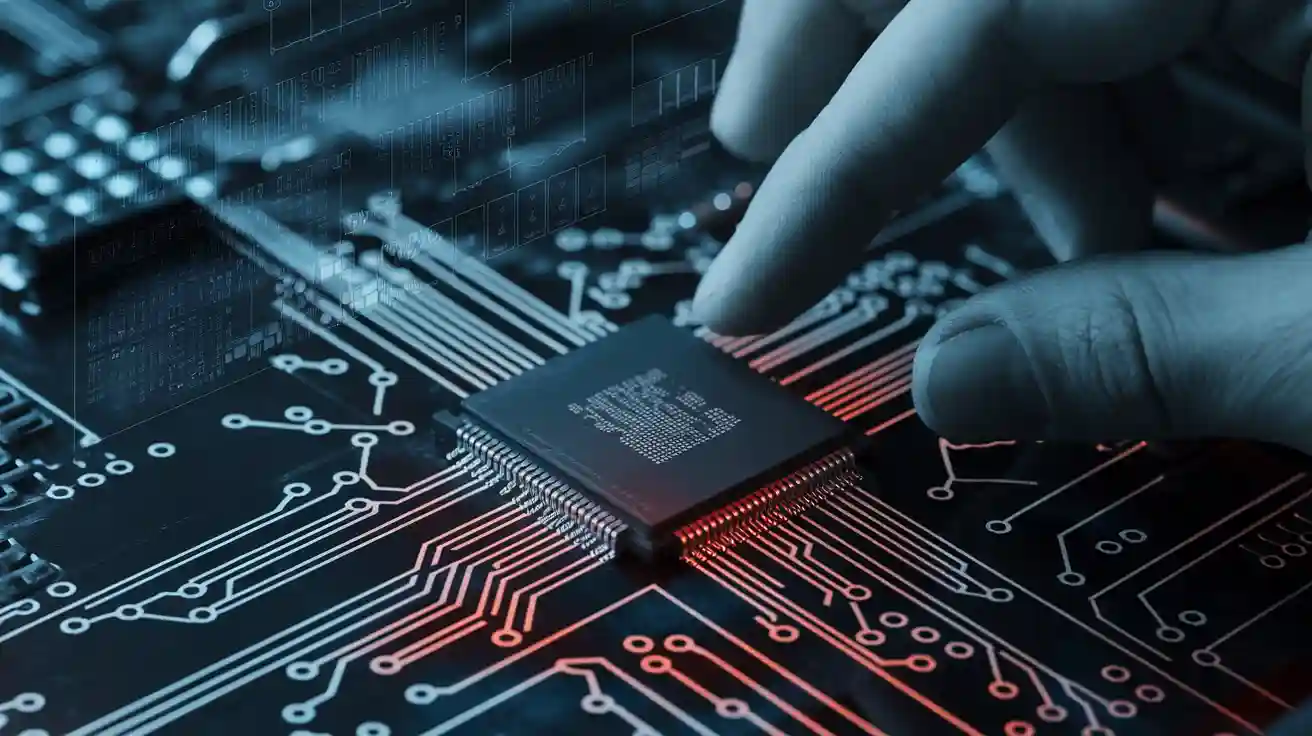
The creation of the first integrated circuit changed history forever. It changed how technology grew, leading from Silicon to Systems. By putting many electronic parts on one chip, it saved space and worked better. This idea started the digital age, helping computers, communication, and machines improve quickly. Its impact still affects our world today, powering tools and systems we use daily. The integrated circuit is a key part of progress, linking ideas to real technology.
Key Takeaways
-
The first integrated circuit changed technology by putting many parts on one chip. This made gadgets smaller and work better.
-
Jack Kilby and Robert Noyce helped create integrated circuits. They each added ideas that shaped today's electronics.
-
Robert Noyce's planar process made silicon chips more reliable and easier to make. This led to faster and cheaper chips.
-
Moore's Law says technology grows quickly. It predicts chips will have twice as many transistors every two years, making computers stronger.
-
Integrated circuits are used in many industries. They power phones, electric cars, and inspire new inventions.
The Origins of Silicon to Systems
Early Challenges in Miniaturization
The path from silicon to systems started with a big problem: making things smaller. Early devices used large vacuum tubes and separate parts. These made them heavy, slow, and hard to carry. Engineers had to figure out how to shrink circuits but keep them working well. This became urgent as industries wanted smaller and faster machines.
In March 1959, Jack Kilby at Texas Instruments made a huge leap. He built a "solid-circuit" using only semiconductor parts. This was a big step toward smaller systems. But it wasn’t easy. Early computer contracts didn’t have clear plans, so designs kept changing. This made building hardware harder. Companies like Fairchild Semiconductor also struggled to make enough integrated circuits by 1963.
Robert Noyce solved some problems with the planar process. This method used a silicon dioxide layer to make transistors stronger and easier to produce in large numbers. It helped make chips faster to build and more reliable. This progress pushed the electronics industry forward, making smaller and better circuits possible.
Note: The first steps in miniaturization were tough. Engineers had to solve both technical and planning problems. Their creative ideas led to amazing breakthroughs.
The Birth of the First Integrated Circuits
The creation of the first integrated circuits was a major event in technology. It started with important ideas from earlier inventors. In 1949, Werner Jacobi patented a device with built-in transistors. Then, in 1952, Geoffrey Dummer suggested the idea of an integrated circuit. These early thoughts paved the way for Jack Kilby and Robert Noyce’s work.
On September 12, 1958, Jack Kilby showed the first working integrated circuit at Texas Instruments. It was simple compared to today’s chips but proved that many parts could fit on one chip. Kilby’s invention was a game-changer. He applied for a patent on February 6, 1959, and called it an "integrated circuit."
At the same time, Robert Noyce at Fairchild Semiconductor made a silicon-based integrated circuit. His design used silicon, which was stronger and easier to scale up. This made chips cheaper and better. By the early 1960s, Jay Last and his team at Fairchild improved this technology further, creating the planar integrated circuit.
These first chips changed the electronics world. They allowed smaller, faster, and more powerful devices to be built. These chips became the base for modern computers, phones, and more. The move from silicon to systems had begun, driven by the need for smaller and smarter technology.
Callout: The invention of integrated circuits wasn’t done by one person. Many people worked together, each building on earlier ideas. This teamwork changed technology forever.
Key Contributors to the Integrated Circuit Revolution
Jack Kilby’s Groundbreaking Demonstration
Jack Kilby played a key role in microchip history. On September 12, 1958, he showed the first working integrated circuit at Texas Instruments. This moment changed electronics forever. Kilby used germanium instead of silicon because silicon wasn’t available. Even with this challenge, he proved many parts could fit on one chip. This idea became the base for today’s microchips.
Kilby didn’t work alone. Earlier ideas, like Geoffrey Dummer’s 1952 integrated circuit concept, helped guide him. But Kilby’s real-world creation made him stand out. His phase shift oscillator showed how small circuits could work well. This invention met the need for smaller, better devices.
Kilby’s impact went beyond his first demo. In 1959, he got a patent for his integrated circuit, securing his place in history. His work changed electronics and inspired new ideas in Silicon Valley and beyond.
Fun Fact: Kilby’s invention won him the Nobel Prize in Physics in 2000. His work still influences technology today.
Robert Noyce and the Silicon-Based Microchips
Kilby’s work was amazing, but Robert Noyce’s ideas were just as important. At Fairchild Semiconductor, Noyce made the first silicon-based integrated circuit. His design fixed problems with making and scaling chips. Unlike Kilby’s germanium chip, Noyce’s silicon chip was stronger and easier to mass-produce.
Noyce used the planar process, a method created by Jean Hoerni. This process added a silicon dioxide layer to protect transistors. It made chips more reliable and faster to build. In 1961, Noyce got a patent for his silicon-based integrated circuit. His work pushed technology forward and increased competition in Silicon Valley.
|
Source |
Description |
|---|---|
|
Noyce's 1st IC Patent |
Improved chip connections, allowing mass production of microchips. |
|
Who Discovered the Integrated Circuit? |
Focused on linking parts, leading to a silicon-based IC. |
|
Three Takeaways from Computer Chip Patent Wars |
Showed the competitive chip industry of the 1960s. |
Noyce’s influence went beyond his technical work. In 1968, he co-founded Intel, a company that led the digital revolution. His vision helped make Silicon Valley a hub for innovation.
Callout: Noyce’s success shows the power of teamwork. He built on ideas from Kilby and Hoerni, leaving a lasting mark on microchip history.
Technological Breakthroughs in Circuits
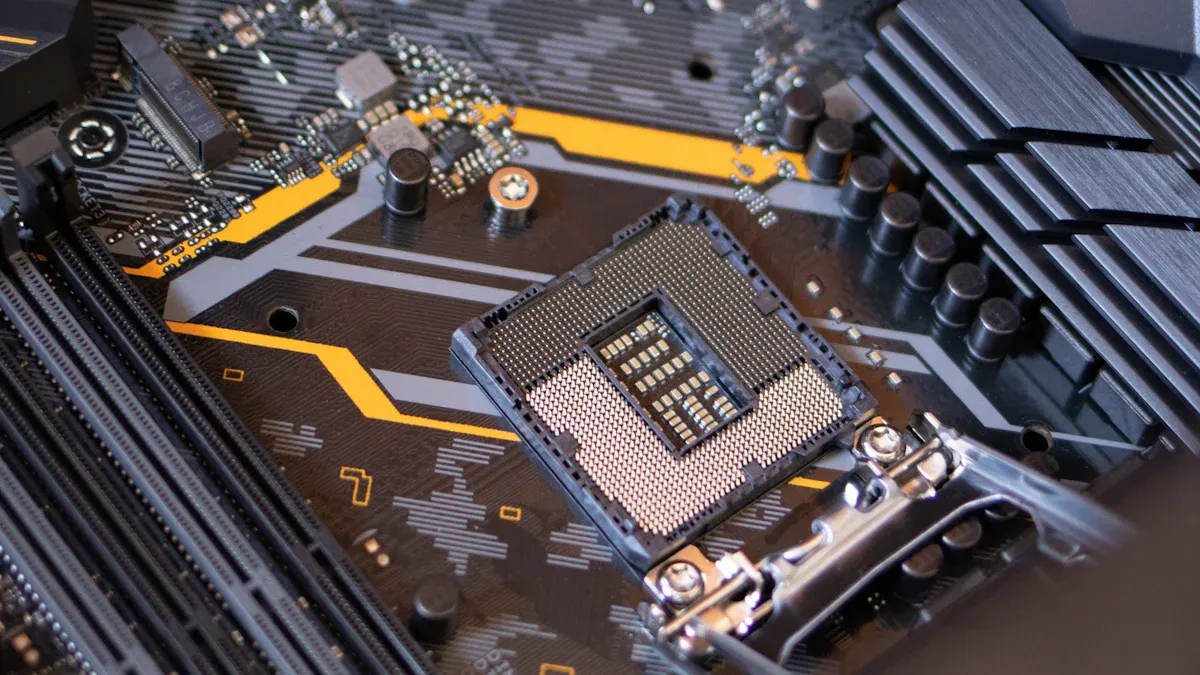
The Planar Transistor Innovation
The planar transistor changed how circuits were made. Jean Hoerni at Fairchild Semiconductor invented it in 1959. This method added a silicon dioxide layer to protect transistors. It made circuits more reliable and easier to produce in large amounts. Engineers could now make many transistors with steady performance.
This invention led to advanced designs like FinFET and GAA-FET. FinFET is a 3D transistor that made circuits smaller and better. GAA-FET improved how gates worked and reduced problems in small circuits. These designs helped technology go beyond the 5 nm size limit.
|
Evidence |
Description |
|---|---|
|
FinFET Technology |
Helped make smaller, more efficient circuits. |
|
GAA-FET Technology |
Improved gate control and reduced circuit issues. |
|
Industry Adoption |
Used widely for advanced semiconductor designs. |
Future ideas include directed-self-assembly (DSA). This method could place parts with atomic-level accuracy. Combined with NCFET, it may lower power use and improve circuit efficiency.
Note: The planar transistor was a big step forward. It helped create modern transistor designs and improved integrated circuits.
Photolithography and Precision Engineering
Photolithography became key to making integrated circuits. It uses light to create tiny patterns on semiconductor wafers. This process allows circuits to be made with very small features. EUV lithography, a newer method, makes even smaller and more efficient circuits.
Precision is very important in this process. Small mistakes can cause big problems in circuits. Advanced lithography ensures every part is placed exactly right. Multi-patterning methods make chips even better, powering devices like phones and quantum computers.
Photolithography is in high demand as industries need better circuits. New ideas in this field support technologies like quantum and photonic circuits. Materials like graphene and TMDs are also being explored. These materials have better electrical properties and help improve semiconductors.
Callout: Photolithography is more than a process. It is the foundation of modern circuits, powering today’s digital world.
Early Applications of Integrated Circuits
Military and Aerospace Advancements
The military and aerospace fields were quick to use integrated circuits. They needed small, reliable, and efficient systems for missions. Integrated circuits helped create better navigation, communication, and control tools. These were vital for modern military gear and space missions.
Drones and UAVs became major uses for integrated circuits. These machines used semiconductors for accurate navigation and fast communication. The military’s growing use of drones showed how important integrated circuits were. Bigger defense budgets also boosted research in semiconductors, leading to new ideas.
The U.S. played a big part in this progress. Government funding supported research to stay ahead in defense tech. This showed how integrated circuits were key to national security and space advancements.
|
Factor |
Details |
|---|---|
|
UAVs depend on semiconductors for navigation and communication. |
|
|
Increasing Defense Budgets |
Higher budgets increase need for integrated circuits in military tech. |
|
U.S. Federal Investments |
Funding ensures leadership in defense and aerospace technology. |
Consumer Electronics and Commercial Products
Integrated circuits changed consumer electronics by making gadgets smaller and faster. This started a new tech era, making devices affordable for everyone. Smartphones, tablets, and wearables all improved thanks to integrated circuits.
The market for integrated circuits is growing fast. People want advanced gadgets, and IoT tech is expanding. For example:
-
The market may grow from USD 635.66 billion in 2024 to USD 1689.86 billion by 2032.
-
By 2029, it could reach USD 661.12 billion, with a 10.3% yearly growth rate.
Health trends also shape integrated circuits. Smart home tools, fitness trackers, and medical wearables use them to innovate. Today, integrated circuits are the heart of modern gadgets, changing how people use technology every day.
Tip: The flexibility of integrated circuits makes them essential for both military and consumer uses, driving progress in many areas.
The Evolution of Microchips and Modern Systems
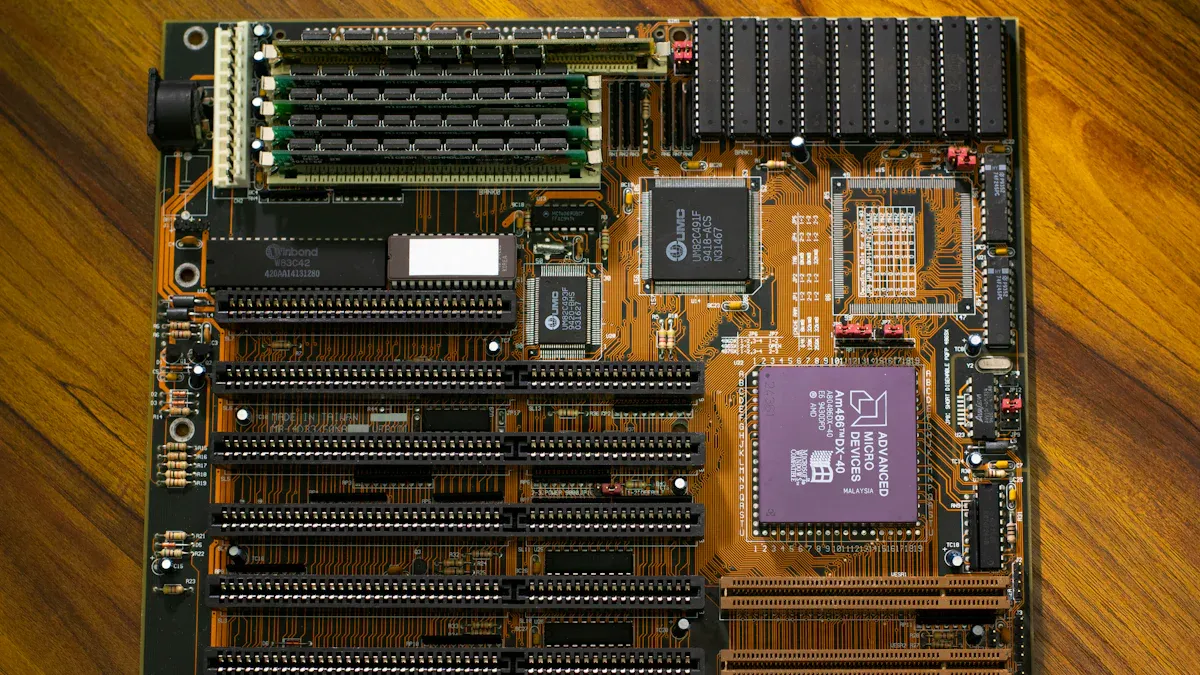
Moore’s Law and Technological Progress
In 1965, Gordon Moore shared an important idea called Moore’s Law. He said the number of transistors on a chip would double every two years. This idea has helped guide the chip industry for many years. Smaller transistors have made computers and devices faster and more powerful.
Between 1990 and 2010, chip research changed a lot. Early work focused on science, but later efforts combined new technologies. This teamwork helped the industry keep up with Moore’s Law. Today, chips like Nvidia’s AI chip work 30 times faster than older ones. Google’s quantum chip solves problems in minutes that regular computers need billions of years to solve.
The chip industry keeps pushing limits with over $40 billion in investments. These efforts have changed electronics and opened doors to amazing new uses. The future of microchips looks bright, with more breakthroughs ahead.
Note: The story of microchips shows how constant progress can change industries and create new possibilities.
Integrated Circuits in PCs, Smartphones, and Beyond
Integrated circuits are the heart of today’s technology. They power computers, smartphones, and other gadgets. In phones, they make fast processing, great graphics, and smooth connections possible.
Integrated circuits do more than power gadgets. In cars, they help electric and self-driving systems work. They control engines, screens, and safety tools. In 5G networks, they are key for base stations and communication. Factories also use them for smart machines and sensors.
|
Sector |
How Integrated Circuits Are Used |
|---|---|
|
Consumer Electronics |
Found in phones, tablets, and smart home devices. |
|
Automotive |
Used in electric cars and self-driving systems for safety and entertainment. |
|
Telecommunications |
Needed for 5G networks and communication tools. |
|
Industrial |
Help machines and sensors work together in smart factories. |
The microchip revolution is shaping the future of technology. Companies like HiSilicon lead this change with creative chip solutions. Learn more about their work at HiSilicon Solution.
Tip: Integrated circuits are more than parts—they drive progress in many industries and power modern innovation.
The integrated circuit changed the world and still matters today. It made technology smaller, faster, and more efficient. Early computers used it, and now it powers smartphones and AI. This invention changed how people live and work every day. It also opened doors for future discoveries. The integrated circuit shows how creative ideas can lead to amazing progress.
FAQ
What is an integrated circuit, and why is it important?
An integrated circuit (IC) is a tiny chip with many electronic parts like transistors and resistors. It matters because it helps make gadgets smaller, quicker, and more useful. ICs power modern tools like smartphones, computers, and health devices.
Who invented the first integrated circuit?
Jack Kilby and Robert Noyce are known for creating the first integrated circuits. Kilby showed the first working IC in 1958. Noyce made a silicon-based version that was stronger and easier to produce.
How did integrated circuits revolutionize technology?
Integrated circuits replaced big vacuum tubes and separate parts. They let engineers build smaller, stronger, and smarter devices. This invention improved computers, communication tools, and everyday electronics.
What industries benefit the most from integrated circuits?
Industries like electronics, cars, phones, and aerospace use integrated circuits. ICs make smartphones, electric cars, 5G networks, and military tools work better. They are key for new ideas and progress.
What is Moore’s Law, and how does it relate to integrated circuits?
Moore’s Law says chips double their number of transistors every two years. This idea has helped make integrated circuits faster and more powerful over time.
Tip: Integrated circuits are the heart of today’s technology. They push progress in many areas and inspire future inventions.