How to Determine if a Crystal Oscillator is Satisfactory for Your Electronic Design
Determining if a crystal oscillator is satisfactory requires careful evaluation. You must assess its stability and reliability.
Determining if a crystal oscillator is satisfactory requires careful evaluation. You must assess its stability and reliability.
-
Allan Variance evaluates how the frequency changes over time.
-
Standard Deviation measures the accuracy of the oscillator.
-
Autocorrelation Function examines how its output aligns with itself over time.
These evaluations help you determine if the crystal oscillator is satisfactory for your design's timing requirements.
Key Takeaways
-
Check if the oscillator's timing is steady and correct for your design.
-
Pick oscillators with little noise and shaking for important tasks like networks.
-
Think about temperature limits to make sure it works in tough places.
-
Use low-power oscillators in battery devices to save battery life.
-
Read datasheets closely to avoid mistakes that might cause problems.
Evaluating Key Performance Metrics
Frequency Stability and Accuracy
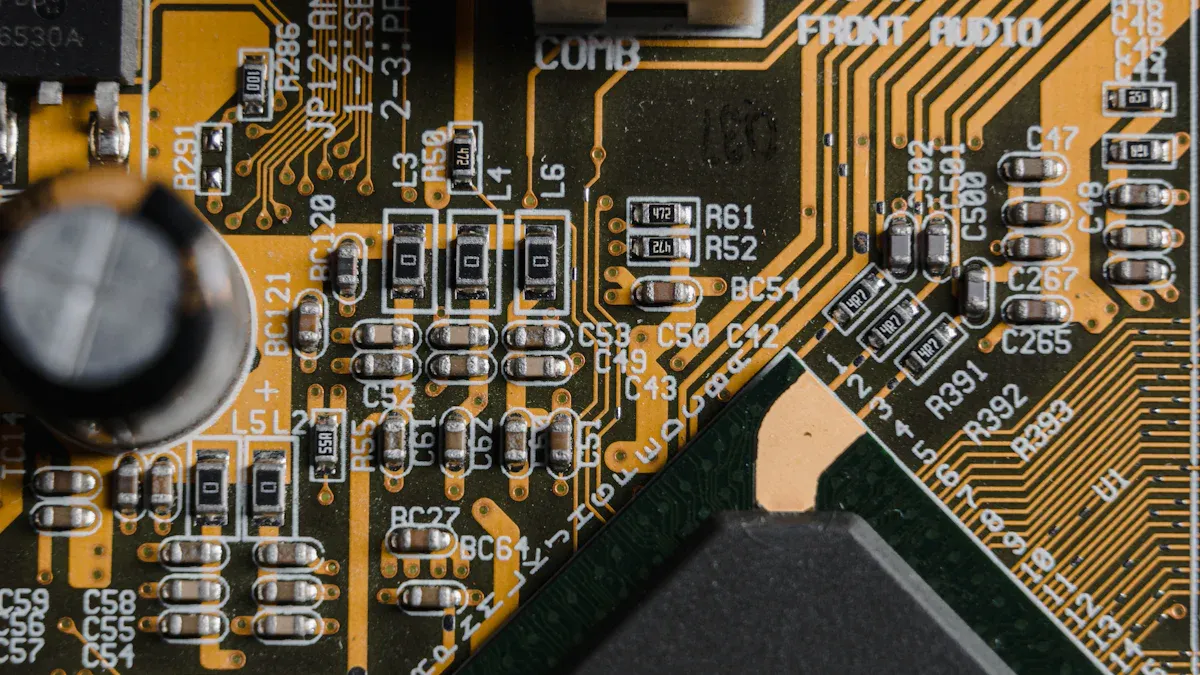
When picking a crystal oscillator, check its stability and accuracy. Stability means how well it keeps the same frequency over time. Accuracy shows how close the frequency is to its set value. For precise designs, stability should stay within certain limits.
|
Stability Range |
Temperature Effect |
|---|---|
|
Changes |
|
|
±10 ppm |
Changes |
Oscillators with tighter stability, like ±10 ppm, work best for exact timing needs, such as in GPS or communication systems. Oscillators with ±100 ppm may work for simpler designs. Always match the stability range to your design's needs to ensure the crystal oscillator works well.
Phase Noise and Jitter
Phase noise and jitter are key for sensitive designs. Phase noise shows frequency stability in the frequency domain. Jitter measures timing changes in the time domain. Both affect systems like frequency synthesizers and fast data networks.
Oscillators in the 5–10 MHz range are used in atomic clocks. Their phase noise is measured at offsets as low as 0.1 Hz. Higher-frequency oscillators, like 50–100 MHz, are measured at offsets from 10 Hz to 1 MHz. These tests show if the oscillator meets noise and timing needs. Low phase noise and jitter are vital for clean signals and exact timing.
Tip: For fast data or RF designs, pick oscillators with low phase noise and jitter to keep signals clear.
Temperature Tolerance and Environmental Factors
Temperature tolerance is important for checking if a crystal oscillator fits your design. Oscillators must work well in different temperatures, especially in tough environments like factories or cars. Industrial oscillators work between -40°C and +85°C. Automotive ones handle up to +125°C.
Quartz oscillators can change frequency a lot in extreme heat. For example, a TCXO rated for +85°C may not work well at +125°C. MEMS oscillators handle heat better, with only 50 ppb changes between +85°C and +125°C. This makes MEMS a good choice for stable designs in harsh conditions.
To make sure your oscillator works in real life, check its temperature limits and test it in real conditions. This step helps keep it reliable and prevents failures later.
Matching Application-Specific Requirements
Power Consumption and Efficiency
Power use is important when picking a crystal oscillator. This matters most for battery-powered gadgets and IoT devices. These need energy-saving parts to last longer and work well.
Low-power oscillators are great for portable items like fitness bands, smartwatches, and sensors. They use less energy, so devices run longer without charging or new batteries. For example, a low-power oscillator can make a wearable gadget work for days or weeks on one charge.
Tip: Always check how much power the oscillator uses. Make sure it fits your energy-saving goals.
Size and Form Factor
The size of a crystal oscillator affects how it fits in your design. Small devices, like phones or medical tools, need tiny oscillators. Companies make different sizes to match these needs.
Here’s a table showing common oscillator sizes:
|
Package Type |
Dimensions (mm) |
|---|---|
|
2016 |
2.0 × 1.6 |
|
2520 |
2.5 × 2.0 |
|
3225 |
3.2 × 2.5 |
|
5032 |
5.0 × 3.2 |
|
7050 |
7.0 × 5.0 |
|
OCXO |
25.4 × 25.4 (and ranges from 9.7 × 7.5 to 135 × 72) |
|
CSP |
1.5 × 0.8 |
|
SOT23-5 |
N/A |
For visual learners, here’s a chart showing the width and height of these sizes:
When choosing an oscillator, think about the space in your design. A CSP package, 1.5 × 0.8 mm, works for very small devices. Bigger ones, like OCXO, are better for stable systems like telecom networks.
Cost vs. Performance Trade-offs
Balancing price and performance is key when picking a crystal oscillator. High-performance ones cost more but may not always be needed.
For simple timing, a basic oscillator with average stability works fine. These are cheaper and good for easy tasks, like basic electronics. But for precise timing, like in GPS or fast data systems, a high-performance oscillator is worth the cost.
Note: Think about what your design really needs. Spending extra on unneeded features can waste money.
By looking at power use, size, and cost-performance balance, you can decide if a crystal oscillator fits your design.
Comparing Crystal Oscillators with Alternatives
Crystal Oscillators vs. Quartz Crystals
Crystal oscillators and quartz crystals work differently. A crystal oscillator combines a quartz crystal with a circuit. This makes it more stable and compact. Quartz crystals only use their natural properties to create a frequency.
|
Component Type |
Frequency Stability (ppm) |
Design Features |
|---|---|---|
|
Crystal Oscillator |
Built-in circuit allows small size and temperature control (TCXOs). |
|
|
Quartz Crystal |
±10 |
Needs careful design to keep the right shape, limiting low-frequency use. |
Crystal oscillators are more stable, so they are great for precise tasks like GPS. Quartz crystals are less stable but cheaper, making them good for simple designs.
Crystal Oscillators vs. MEMS Oscillators
MEMS oscillators use tiny mechanical systems to make frequencies. They are better than crystal oscillators in tough conditions. MEMS oscillators handle temperature changes, shocks, and vibrations well.
|
Metric |
MEMS TCXO Performance |
Quartz TCXO Performance |
Difference in Performance |
|---|---|---|---|
|
Frequency-over-temperature slope (dF/dT) |
Varies, no pattern |
Big improvement |
|
|
Allan deviation (ADEV) |
Almost no effect |
Up to 38 times worse |
Huge advantage |
|
Failure rates |
< 1 DPPM |
Higher due to fragility |
50X better |
|
Mean time between failures (MTBF) |
> 2 billion hours |
Lower |
50X better |
MEMS oscillators stay accurate even in changing temperatures. They are also very durable, which lowers repair costs. This makes them perfect for cars and factories.
Choosing the Right Timing Solution
Pick the right timing tool based on your needs. If you need high accuracy and small size, crystal oscillators are a good choice. For extreme heat or physical stress, MEMS oscillators work better.
Tip: Think about your design's needs for stability, strength, and cost. This helps you pick the best timing solution for your project.
Avoiding Common Pitfalls and Ensuring Suitability
Misinterpreting Datasheet Specifications
Datasheets give important details about a crystal oscillator's performance. Misreading them can cause design problems. Look closely at things like frequency stability, phase noise, and temperature tolerance. For example, ±10 ppm means the frequency can change by 10 parts per million. If misunderstood, this could lead to timing mistakes in your design.
Another mistake is ignoring load capacitance needs. If the oscillator's load capacitance doesn't match the circuit, it might not work or give wrong frequencies. Always compare datasheet values with your design needs to avoid these issues.
Tip: Use simulation tools to check if the oscillator's specs match your circuit before finalizing.
Testing for Environmental Conditions
Temperature and vibration can affect how a crystal oscillator works. Testing in real-world conditions ensures it stays reliable. Standards like AEC-Q200 and temperature cycling help check durability.
|
Metric |
What It Tests |
|---|---|
|
AEC-Q200 |
Checks reliability of passive components, including crystal oscillators. |
|
Temperature Cycling |
Tests how oscillators handle quick temperature changes. |
For example, temperature cycling simulates fast temperature shifts to see if the oscillator stays stable. This is key for designs in tough places, like cars or factories. Testing ensures the oscillator works well where it will be used.
Assessing Long-Term Reliability
Long-term reliability helps reduce repairs and downtime. Quartz oscillators are common but fragile. They can drift in frequency over time and fail under shock or extreme conditions. This increases system downtime and repair costs.
MEMS oscillators are much more reliable.
-
They fail 50 times less often than quartz oscillators.
-
They last longer, needing fewer recalibrations.
-
They work well in tough environments, making them great for critical uses.
Picking a reliable oscillator keeps your design working longer, saves money, and improves user experience.
To check if a crystal oscillator works for your design, look at key features. Check its frequency stability, noise levels, and how it handles tough conditions. Pick one that fits your needs, like low power use, small size, or good value. Compare it with MEMS oscillators to find the best option. Read datasheets carefully and test it in real-world settings. These steps ensure the oscillator is reliable and fits your project well.
FAQ
What is the difference between frequency stability and accuracy?
Frequency stability shows if the oscillator keeps the same frequency. Accuracy checks how close the frequency is to the target value. Stability means consistency, and accuracy means precision. Both are important for good timing in designs.
How do you test a crystal oscillator for environmental conditions?
You can test it with AEC-Q200 or temperature cycling. These tests copy real-world conditions like heat changes and vibrations. They make sure the oscillator stays stable and works well in tough places.
Why are MEMS oscillators better for harsh conditions?
MEMS oscillators handle heat, shocks, and vibrations better than quartz ones. They fail less often and last longer. This makes them great for cars, factories, and other hard environments.
Can you use a crystal oscillator in battery-powered devices?
Yes, but pick one that uses little power. Low-power oscillators save energy and make batteries last longer. They are great for gadgets like fitness bands, smartwatches, and IoT devices.
How do you interpret ppm in a crystal oscillator's datasheet?
PPM means parts per million. It shows how much the frequency can change. For example, ±10 ppm means the frequency can shift by 10 parts per million. Knowing this helps you decide if the oscillator fits your design.
See Also
Exploring 5MHz Vectron Crystal Oscillator: Specs And Uses
IC Integrated Circuits: Types, Uses, And Future Developments
Innovations And Trends In Automotive Electronic Components Future