Improving HVAC Efficiency with the Correct AC Capacitor Size
Choosing the correct ac capacitor size keeps your ac system running smoothly. You protect your equipment and save energy whe

Choosing the correct ac capacitor size keeps your ac system running smoothly. You protect your equipment and save energy when you use the right capacitor. An ac capacitor that matches your unit helps you avoid breakdowns and keeps your home comfortable. If you select the wrong capacitor, you risk poor performance and higher bills. Always check the ac capacitor size chart and read the label before you pick a new ac capacitor. Learning how to choose the right size capacitor helps you get the best results from your hvac capacitor. Each ac needs a specific capacitor, so never guess. A proper ac capacitor means longer life for your ac.
Key Takeaways
- Always use the exact capacitor size your AC unit needs to keep it running efficiently and avoid costly damage.
- Check the capacitor size chart and your AC’s label or manual before buying a new capacitor to ensure the right microfarad and voltage ratings.
- Replace a failing capacitor promptly to prevent poor cooling, higher energy bills, and possible motor failure.
- Follow safety steps carefully when replacing a capacitor, or hire a certified HVAC professional if unsure.
- Regularly inspect and test your AC capacitor to extend your system’s life and maintain home comfort.
Why AC Capacitor Size Matters
Efficiency and Performance
You want your ac to run at its best. The right ac capacitor helps your system work smoothly and keeps your home cool. When you use the correct capacitor, your ac motor gets the energy it needs to start and run efficiently. If you pick a capacitor with lower capacitance, your ac motor may not store enough electrical energy. This leads to uneven magnetic fields and poor motor operation. Your ac might struggle to cool your home, and you could see higher energy bills.
- Using a run capacitor with capacitance up to 20% higher than needed sometimes improves motor performance.
- Oversizing the capacitor too much increases current in the start winding, which can damage the compressor.
- A capacitor with lower voltage ratings tends to fail sooner, making your ac less reliable.
- Start capacitors that are too small may not give enough energy for the motor to start.
Your ac needs a capacitor that matches its specifications. If you use the wrong size, your ac system works harder and uses more electricity. You may notice uneven cooling or hear strange noises from your ac unit. The right ac capacitor size keeps your system efficient and saves you money.
Preventing Damage
Choosing the correct capacitor protects your ac from harm. When you use a capacitor with the wrong rating, you put extra strain on the compressor and fan motors. Motors can overheat and fail, which means expensive repairs or replacements. Your ac may cycle on and off more often, causing more wear and tear.
- A bad capacitor can cause the compressor to struggle during startup, leading to overheating and motor seizure.
- Fan motors without proper capacitor support wear out bearings and windings faster.
- Faulty capacitors may discharge electrical current erratically, damaging wiring and other parts.
- Longer run times from improper system conditions increase capacitor stress and failure risk.
You keep your ac safe by matching the capacitor to the manufacturer's specs. Regular checks help you spot problems early. When you replace a capacitor, always use the correct size to avoid costly damage and keep your ac running smoothly.
Identifying AC Capacitor Size
Using an AC Capacitor Size Chart
You can use a capacitor size chart to help you find the right capacitor for your ac. These charts show common microfarad and voltage ratings for different ac models and tonnage. When you look at a capacitor size chart, you see the recommended capacitor size for ac compressor and fan motors. You should always check the chart against your unit’s specifications. The ac capacitor size chart gives you a starting point, but you must confirm the exact size with the manufacturer’s data.
Tip: Never rely only on a capacitor size chart. Always compare the chart with your ac’s label or manual to avoid mistakes.
Capacitor size charts are helpful, but they do not fit every ac. Each motor design needs a specific capacitor. If you use a chart, match the microfarad (µF) and voltage ratings exactly. Oversizing or undersizing the capacitor can cause your ac to run poorly or even fail. You should use the chart as a guide, then check the manufacturer’s specs for the final answer.
Here is a simple example of a capacitor size chart for residential ac units:
| AC Tonnage (Tons) | Typical Microfarad (µF) | Voltage Rating (VAC) |
|---|---|---|
| 1.5 – 2 | 20 – 35 | 370 or 440 |
| 2.5 – 3 | 30 – 50 | 370 or 440 |
| 3.5 – 5 | 40 – 80 | 370 or 440 |
You can see that the capacitor size for air conditioner changes with the size of the unit. Always use the ac capacitor size chart with care and double-check the numbers.
Reading Labels and Specs
You find the most accurate capacitor size by reading the label on your ac capacitor. The label shows the microfarad rating, voltage rating, and sometimes the tolerance. You may see markings like “35 µF 440V” or “±10%.” These numbers tell you exactly what capacitor you need.
If the label is missing or hard to read, you can look up the model number in the manufacturer’s manual or online. You can also call the manufacturer’s support line for help. Manufacturer datasheets give you all the details, including diagrams and symbols. You should always match the microfarad and voltage ratings to your ac’s requirements.
Here are the steps to find the right capacitor:
- Turn off the power to your ac.
- Locate the capacitor and read the label for microfarad (µF) and voltage (VAC).
- If the label is gone, check the unit’s data plate or manual.
- Use a multimeter to test the old capacitor if needed.
- Match the ratings exactly when you buy a new capacitor.
Note: Run capacitors usually have lower microfarad ratings and stay in the circuit while the motor runs. Start capacitors have higher ratings and only work for a short time during startup. Dual run capacitors combine both functions in one unit.
Common microfarad ranges for residential ac capacitors are 5 to 80 µF. Voltage ratings are usually 370 VAC or 440 VAC. Start capacitors often have ratings above 70 µF. Dual run capacitors have three terminals and serve both the compressor and fan.
When you want to calculate capacitor size, you can use voltage and amperage readings. Measure the voltage between the HERM and COMMON terminals. Measure the amperage on the wire from HERM to START. Use these numbers to calculate capacitor size for ac compressor. Always check that your calculated value matches the label or manufacturer specs.
Matching Tonnage and Ratings
You must match the capacitor size to your ac’s tonnage and motor ratings. The right capacitor keeps your ac running smoothly and safely. If you want to know how to size a capacitor, start by testing the old capacitor with a multimeter. Make sure the capacitance is within the normal range.
Follow these steps to match the ratings:
- Select a replacement capacitor with the same microfarad value as the original.
- Choose a voltage rating equal to or higher than the old capacitor.
- Pick a reputable brand for quality and long life.
- Power off your ac before installing the new capacitor.
- Connect the new capacitor the same way as the old one.
- Secure the capacitor to prevent vibration.
- Turn on your ac and check for smooth operation.
Warning: Never guess the capacitor size for ac compressor or use a different rating. Wrong sizing can cause noise, overheating, or motor failure.
You may see different capacitor size charts for various ac models. Always use the chart as a guide, but confirm with the manufacturer’s specs. If you want to know how to size a run capacitor, check both the compressor and fan motor ratings. Each may need a different microfarad value.
Here is a table showing how ac tonnage matches space size:
| HVAC Tonnage (Tons) | Suitable Space Size (sq. ft.) | Notes |
|---|---|---|
| 1.5 – 2 | ~600–1,200 | Good for small apartments or rooms |
| 2.5 – 3 | ~1,200–1,800 | Fits mid-sized homes |
| 3.5 – 5 | 1,800+ | Best for large homes or commercial use |
You should always use professional load calculations for the best results. When you calculate capacitor size, match the microfarad and voltage ratings to your ac’s needs. This keeps your system efficient and protects your equipment.
AC Capacitor Replacement
When to Replace
You need to know when your ac capacitor needs replacement. A failing capacitor can cause your ac to stop working or run poorly. You can spot trouble by watching for these common signs:
- Your ac unit does not turn on.
- The ac blows warm air instead of cold.
- You notice delayed starts or random shutdowns.
- You smell burning or see smoke from the unit.
- You hear a humming noise from the condenser.
- Your energy bills rise without changes in usage.
- You see a swollen or leaking capacitor during inspection.
If you notice any of these problems, you should check your ac capacitor. Quick action helps you avoid bigger issues and keeps your ac running smoothly.
Tip: Regular inspection of your ac capacitor can prevent unexpected breakdowns and costly repairs.
Steps for Safe Replacement
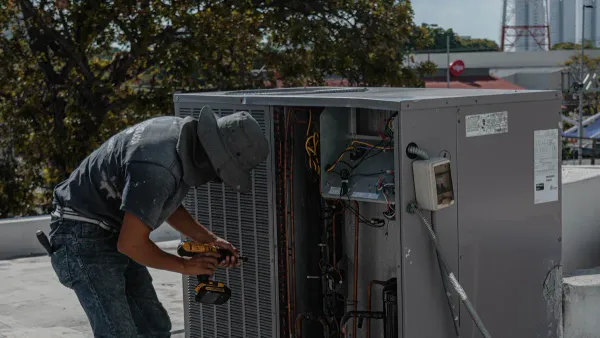
You must follow safe steps for ac capacitor replacement. Handling a capacitor can be dangerous because it stores electrical energy even after the power is off. Always put safety first.
Here is a step-by-step guide for replacing your ac capacitor:
- Turn off the power to your ac by switching off the circuit breaker. Use a multimeter to confirm no voltage is present.
- Remove the access panel from your outdoor unit to reach the capacitor.
- Inspect the capacitor for swelling, leaks, or other damage.
- Write down the microfarad and voltage ratings from the capacitor label. Make sure your replacement matches these ratings exactly.
- Discharge the capacitor using an insulated screwdriver across the terminals. This step protects you from electrical shock.
- Label and record the wiring connections before you disconnect anything.
- Carefully remove the old capacitor.
- Install the new capacitor, matching the original specifications. Reconnect the wires as labeled.
- Double-check all connections for security and accuracy.
- Restore power to your ac and test the system to make sure it works properly.
- Replace the access panel and perform a final system check.
Note: If you feel unsure about any step, contact a certified HVAC professional. Proper ac capacitor replacement keeps your ac safe and efficient.
Avoiding Common Mistakes
You must avoid mistakes when replacing your ac capacitor. Using the wrong size or connecting wires incorrectly can damage your ac and void your warranty.
- Never guess the capacitor size. Always match the microfarad and voltage ratings to the original part.
- Do not use a capacitor with a lower voltage rating. It may fail quickly and harm your ac.
- Avoid touching the terminals before discharging the capacitor. You risk a dangerous shock.
- Do not skip labeling wires. Wrong connections can cause system failure.
- Never install a capacitor that looks damaged or swollen.
⚠️ Using an incorrect capacitor size can lead to poor ac performance, higher energy bills, and even permanent damage to your unit.
Certified HVAC professionals have the training to handle ac capacitor replacement safely. They know how to choose the right capacitor and install it correctly. If you want your ac to last longer and work better, always use the correct capacitor and follow safe replacement steps.
Capacitor Size Chart and Ratings
Microfarad (μF) Values
You can use a capacitor size chart to find the right microfarad value for your HVAC system. The microfarad rating tells you how much electrical charge the capacitor can store. Most run capacitors in residential and commercial systems have values between 2.5 μF and 100 μF. You often see common capacitor sizes like 5, 10, 15, 20, 25, 30, 35, 40, and 45 μF. The capacitor size chart helps you match the correct value to your motor. If you use a run capacitor with the wrong microfarad rating, your motor may overheat or fail to start. Start capacitors have higher μF values and only work for a short time during startup. Always check the capacitor size chart and match the microfarad value to your system’s needs.
| Capacitance (μF) | Voltage (VAC) | Frequency (Hz) |
|---|---|---|
| 5 | 370 | 50/60 |
| 10 | 370 | 50/60 |
| 15 | 370 | 50/60 |
| 20 | 370 | 50/60 |
| 25 | 370 | 50/60 |
| 30 | 370 | 50/60 |
| 35 | 370 | 50/60 |
| 40 | 370 | 50/60 |
| 45 | 370 | 50/60 |
Matching the microfarad value from the capacitor size chart keeps your HVAC system running smoothly and prevents motor problems.
Voltage Ratings
You must pay close attention to voltage ratings when you use a capacitor size chart. Most HVAC capacitors have voltage ratings of 370 VAC or 440 VAC. The voltage rating shows how much electrical pressure the capacitor can handle. If you pick a capacitor with a lower voltage rating than your system needs, it may fail quickly and cause safety problems. The capacitor size chart lists voltage ratings so you can choose the right one. Always select a capacitor with a voltage rating equal to or higher than your motor’s requirement. This protects your system from power surges and keeps your equipment reliable. Start capacitors and run capacitors both need proper voltage ratings for safe operation.
Tip: Using the correct voltage rating from the capacitor size chart helps your capacitor last longer and keeps your HVAC system safe.
Dual Run Capacitors
Dual run capacitors are a popular choice in residential HVAC systems. You can find them easily on a capacitor size chart. These capacitors power both the compressor and the fan motor in one package. Dual run capacitors have three terminals: Common (C), Herm (H), and Fan (F). The capacitor size chart shows the microfarad values for each section, such as 55+5 μF at 440 VAC. This means one part supports the compressor and the other supports the fan. Dual run capacitors save space and simplify wiring. When you look at capacitor types and packages, dual run capacitors stand out for their efficiency and convenience. Always check the capacitor size chart to match the correct values for your system.
| Feature | Dual Run Capacitor | Single Run Capacitor |
|---|---|---|
| Function | Powers two motor components (compressor and fan) | Powers one motor component |
| Internal Structure | Two capacitors in one casing | Single capacitor |
| Terminals | Three terminals: Common (C), Herm (H), Fan (F) | Two terminals: power source and motor winding |
| Application | Primarily used in residential HVAC systems | Used in various motors including appliances |
| Complexity | More complex wiring due to multiple terminals | Simpler wiring |
| Cost | Generally more expensive | Generally less expensive |
| Size | Larger due to dual functionality | Smaller and more compact |
Dual run capacitors make installation easier and help you keep your HVAC system efficient. Always use the capacitor size chart to find the right dual run capacitor for your unit.
Risks of Wrong Capacitor Size
Reduced Efficiency
When you use the wrong capacitor in your system, you lose efficiency right away. The motor may hesitate or make strange noises. Your ac might not cool your home as well as before. A bad ac capacitor can cause the compressor to work harder, which means it draws more power but gives you less cooling. You may notice your ac running longer to reach the same temperature. This extra work puts stress on the whole system.
- The system may short cycle or fail to start.
- The fan or compressor can overheat.
- Your home feels less comfortable, even when the ac runs.
A bad ac capacitor often leads to uneven cooling and higher energy bills. Early detection and correct sizing help you avoid these problems.
Equipment Failure
Using the wrong capacitor size can damage your ac. The compressor and fan motors depend on the right electrical boost to start and run. If you install a capacitor that is too small or too large, you risk burning out the motor or causing electrical arcing. A bad ac capacitor can make the compressor try to start over and over, which leads to overheating and sometimes a locked-up motor.
- Motors may overheat and fail.
- Electrical arcing can damage wiring and other parts.
- The system’s lifespan shortens, and you may face expensive repairs.
What starts as a small capacitor issue can turn into a costly compressor replacement or even a full system upgrade.
Increased Energy Use
A wrong-sized capacitor makes your ac use more electricity. The compressor and fan motors must work harder, which increases your energy bills. When a capacitor fails, the system draws more current and becomes less efficient. You pay more for less cooling.
| Problem | Result |
|---|---|
| Bad ac capacitor | Higher electricity bills |
| Motor strain | More energy used, less cooling |
| Overheating | Shorter motor life, more repairs |
Regular maintenance and correct capacitor selection help you avoid these long-term costs. Replacing a capacitor costs much less than fixing a damaged compressor or replacing the whole ac system.
Choosing the right AC capacitor size keeps your HVAC system efficient and reliable. You protect your equipment and save energy when you match the voltage and microfarad ratings to manufacturer specifications. Regular checks and timely replacements help you avoid costly repairs and sudden breakdowns.
- Test capacitors yearly to catch problems early.
- Use size charts and official guides for accurate selection.
- Schedule professional maintenance to extend system life.
Proper capacitor care lowers energy bills and improves comfort in your home.
FAQ
What happens if you use a capacitor with the wrong microfarad rating?
You risk damaging your AC system. The motor may overheat or fail to start. You might notice strange noises or poor cooling. Always match the microfarad rating to your unit’s specifications.
Can you use a capacitor with a higher voltage rating?
Yes, you can use a capacitor with a higher voltage rating. It will not harm your system. Never use a capacitor with a lower voltage rating, as it may fail quickly.
How often should you check your AC capacitor?
You should check your AC capacitor once a year. Regular checks help you spot problems early. Early detection keeps your system running smoothly and prevents costly repairs.
How do you know if your AC capacitor is bad?
Look for signs like your AC not starting, blowing warm air, or making humming noises. You may also see a swollen or leaking capacitor. If you notice these, replace the capacitor soon.
Can you replace an AC capacitor yourself?
You can replace an AC capacitor if you feel comfortable and follow safety steps. Always turn off the power and discharge the capacitor first. If you feel unsure, call a certified HVAC professional.