Is HiSilicon the Right Choice for Your Video Analytics ROI
HiSilicon is the optimal choice for large-scale video analytics. Projects demanding high performance-per-watt and cost effic
HiSilicon is the optimal choice for large-scale video analytics. Projects demanding high performance-per-watt and cost efficiency at the edge find it ideal. This applies to smart cities, large retail chains, and industrial monitoring. These sectors require low latency and a favorable total cost of ownership.
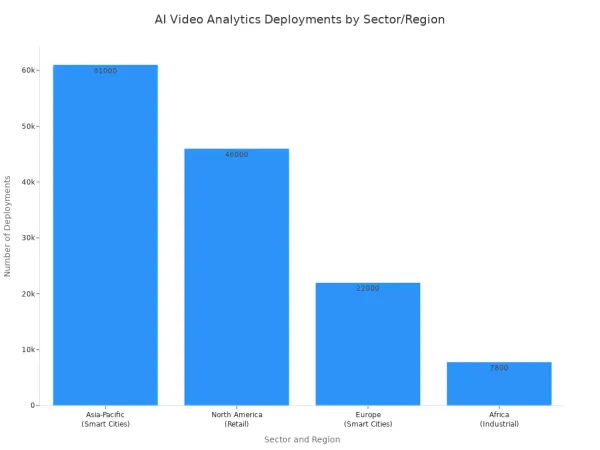
Note: The edge AI hardware market shows significant growth. This trend makes a quantitative decision essential. | Metric | Value | |---|---| | Projected Market Size (2032) | USD 4.94 billion | | CAGR (2025-2032) | 20.84% |
An ROI calculator provides a practical framework. It helps quantify this decision for specific project needs.
Key Takeaways
- HiSilicon is good for big video projects. It saves money and power at the edge.
- An ROI calculator helps you decide. It looks at initial costs, money saved, and new value created.
- HiSilicon helps smart cities, stores, and factories. It makes things safer and more efficient.
- Sometimes other options are better. This includes small projects or when you need flexible software.
- Check for supply chain risks. Geopolitical issues can affect HiSilicon's availability.
USING AN ROI CALCULATOR FOR HISILICON

A quantitative analysis is essential for any major technology investment. An ROI calculator provides the framework to evaluate the financial impact of a HiSilicon-based video analytics solution. This tool moves the decision from a guess to a data-driven conclusion. Organizations can project financial outcomes by detailing three core components: initial investment, operational savings, and generated value.
Industry data strongly supports the financial viability of these projects. A study commissioned by BriefCam and conducted by Omdia revealed a significant trend. Over 85% of end users achieved a positive return on investment within just one year of implementation. This rapid return underscores the technology's effectiveness.
INITIAL INVESTMENT (CAPEX)
Capital expenditures (CAPEX) represent the upfront costs of the project. A clear understanding of these expenses is the first step in any ROI calculator. These costs typically include:
- Hardware: The price of cameras, edge computing devices, and any necessary on-premise servers. HiSilicon-powered devices often present a lower per-unit hardware cost, which is crucial for large-scale deployments.
- Software: Licensing fees for the video management system (VMS) and analytics software.
- Installation: Labor costs for deploying and configuring the hardware and software across all locations.
A detailed budget for these items forms the initial investment baseline in your financial model.
OPERATIONAL SAVINGS (OPEX)
Operational expenditures (OPEX) are the recurring costs required to run the system. HiSilicon's architecture directly reduces these ongoing expenses, creating significant long-term savings. The primary drivers of OPEX reduction are power and bandwidth.
💡 Power Efficiency at the Edge A HiSilicon-powered AI camera, such as one using the Hi3559A chipset, consumes as little as 2.6 Watts. This is because it processes video data directly on the device. This approach avoids the need to continuously stream high-resolution video to a power-hungry cloud server for analysis, drastically lowering electricity costs across hundreds or thousands of cameras.
Key operational savings to input into an ROI calculator include:
- Reduced Energy Costs: Lower power consumption per device results in substantial savings, especially in 24/7 monitoring environments.
- Lower Bandwidth Fees: Edge processing means only relevant events and metadata are sent to the cloud. This minimizes data transmission and lowers internet service provider costs.
- Decreased Cloud Processing Fees: Analyzing video at the edge eliminates the high, recurring expense of using cloud-based GPU instances for video analytics.
PROJECTED VALUE GENERATION
The final component of the ROI calculator is the new value the system creates. This is where AI-powered analytics deliver a powerful financial return. Reports show that these systems can produce a remarkable ROI.
| Investment Category | 3-Year ROI |
|---|---|
| AI Software Platform | 200% - 400% |
This impressive return materializes within 18-24 months. It comes from tangible improvements like reduced staffing costs and the prevention of costly security incidents. For example, large facilities can save hundreds of thousands of dollars annually by optimizing security personnel.
Value generation varies by industry but can be quantified:
- Retail: Analytics can optimize store layouts to guide customers toward key products. This directly impacts sales. Some retailers have increased conversion rates from 15% to over 22% by using analytics to coach staff and track performance.
- Public Safety: Faster incident detection and response can reduce the financial impact of emergencies and improve resource allocation.
- Industrial: Predictive maintenance alerts prevent equipment failure, avoiding expensive downtime and repair costs.
By quantifying these three areas, an organization can build a simple ROI calculator. This model will clearly show if HiSilicon is the right financial choice for its objectives.
HISILICON'S HIGH-ROI USE CASES

The theoretical benefits of an ROI calculator become tangible when applied to real-world scenarios. HiSilicon's architecture provides a distinct financial advantage in specific large-scale deployments. Its value is not just in the hardware itself, but in how it enables cost-effective solutions that drive measurable returns. The following use cases highlight where HiSilicon-powered systems deliver a superior ROI.
SMART CITY AND PUBLIC SAFETY
Municipalities manage vast public spaces and complex infrastructure. They require real-time intelligence to improve safety and efficiency. HiSilicon-based cameras provide this intelligence directly at the edge, creating a powerful ROI driver.
ROI Driver: Reduced Latency and Cloud Dependency
Smart city applications like traffic management and incident detection cannot tolerate delays. Processing video on the camera eliminates the latency of sending footage to a central server. This enables instant alerts and faster emergency response. It also drastically cuts costs by minimizing data transmission and avoiding expensive, 24/7 cloud computing fees. A city can deploy thousands of intelligent cameras without incurring crippling operational expenses.
This approach delivers quantifiable improvements in urban mobility. Intelligent traffic systems powered by edge AI have demonstrated significant success in reducing congestion.
| City/System | Reduction in Traffic Congestion/Travel Time |
|---|---|
| Pittsburgh (Surtrac) | 25% reduction in travel times |
| Los Angeles (ATSAC) | 32% reduction in intersection delays |
These reductions translate directly into economic benefits. They include lower fuel consumption for citizens, improved air quality, and more productive commercial transit.
LARGE-SCALE RETAIL ANALYTICS
Retail chains operate on thin margins across numerous locations. Technology investments must be scalable and deliver a clear return. HiSilicon's cost-effective hardware is ideal for deploying analytics across an entire enterprise.
ROI Driver: Scalable Operational Efficiency and Loss Prevention
The primary financial benefit for retailers is achieving sophisticated analytics without high recurring software or cloud fees. A low per-unit cost allows a chain to equip hundreds of stores with AI capabilities. These capabilities optimize two critical areas: customer experience and asset protection.
AI-powered scheduling software can reduce average customer wait times by 30% in retail stores. This improvement enhances customer satisfaction and directly impacts revenue. Analytics can monitor queue lengths in real time, allowing managers to reallocate staff dynamically and improve resource utilization by 10%.
Simultaneously, on-camera analytics are a powerful tool against inventory shrinkage. The system can identify suspicious behavior and alert staff instantly. This proactive approach is far more effective than reviewing footage after an event.
- A leading retail chain experienced a 30% reduction in shrinkage within the first year of implementing AI-powered video surveillance.
- Another system, integrating computer vision with retail operations, achieved up to a 70% reduction in shrinkage in stores using its technology.
INDUSTRIAL AND INFRASTRUCTURE
Industrial sites, factories, and critical infrastructure facilities are high-stakes environments. Safety and production efficiency are paramount. Downtime is extremely costly, and accidents can have devastating consequences.
ROI Driver: Proactive Safety Compliance and Production Optimization
HiSilicon's edge processing enables real-time monitoring that drives ROI through prevention. On-camera AI can automatically detect if workers are wearing the required Personal Protective Equipment (PPE). It can also identify unsafe behaviors or unauthorized access to restricted zones. These systems foster a stronger safety culture, which has been shown to reduce injury rates by as much as 40%. Contractors investing in advanced technology and training have achieved a 59% reduction in on-site injuries.
In manufacturing, automated visual inspection is another key application. A HiSilicon-powered camera can perform quality control checks on a production line faster and more accurately than the human eye.
💡 Manufacturing Throughput Gains Automated inspection systems dramatically boost production speed. One electronics manufacturer achieved a 6X improvement in throughput while reducing manual inspection labor to just one-quarter of its previous level. A medical device company saw a 65% increase in component inspection quality with its automated system.
This level of automation reduces defects, minimizes waste, and increases overall output, delivering a clear and substantial return on investment.
WHEN ALTERNATIVES OFFER BETTER ROI
HiSilicon provides strong value in many cases. However, it is not the universal solution for every video analytics project. Certain scenarios demand different approaches where alternative technologies can deliver a superior return on investment. Organizations must evaluate these situations to make the most financially sound decision.
PROJECTS NEEDING SOFTWARE FLEXIBILITY
Projects that require broad software compatibility or rapid development cycles may find better ROI with other platforms. A cloud-first approach offers developers immense flexibility. They can access virtually unlimited computing power for training complex AI models without being tied to specific edge hardware. This freedom allows teams to experiment and deploy software faster. The market also offers a diverse ecosystem of chipsets from manufacturers like Google, AMD, and Intel, giving system integrators more options to match their software needs.
SMALL-SCALE OR CLOUD-NATIVE NEEDS
For small businesses or pilot projects, a large capital investment in on-premise hardware can be a barrier. Cloud-based video surveillance systems offer a more attractive ROI in these cases. They replace high upfront costs with a predictable monthly subscription. This model is ideal for organizations that prefer operational expenses (OPEX) over capital expenses (CAPEX).
Cost Comparison: 10-Camera System (3-Year Total) A cloud system's total cost can be significantly lower for small deployments. | System Type | Estimated 3-Year Cost | |---|---| | On-Premise NVR System | $18,500 - $29,000+ | | Cloud-Based System | ~$8,200 |
The lower initial investment and inclusive maintenance of cloud services provide a faster path to positive ROI for smaller-scale needs.
NAVIGATING SUPPLY CHAIN RISKS
Geopolitical factors introduce risks that can impact a project's long-term viability and cost. Recent reports show that HiSilicon's international supply chain faces uncertainty due to trade restrictions. While the company is strong domestically, its global availability can be constrained. This creates potential challenges for project timelines, hardware replacements, and long-term support outside of China. System integrators must actively monitor these geopolitical developments. A reliance on a single-source component with a volatile supply chain can threaten a project's ROI, making diversified or more stable alternatives a financially safer choice.
HiSilicon delivers a strong return on investment for large-scale edge analytics. It excels where power and cost efficiency are critical. Organizations should make a data-driven choice, not a guess. They can apply the CAPEX, OPEX, and value generation factors discussed to their own projects.
🎯 Your Next Step: Build a simple ROI calculator. This will definitively show if HiSilicon is the right financial and technical choice for your 2025 objectives.
FAQ
H3: What is HiSilicon's primary ROI advantage?
HiSilicon's main advantage is its performance-per-watt efficiency. This design lowers operational costs. It makes large-scale deployments financially viable by reducing power and bandwidth expenses. The lower hardware cost also reduces the initial capital investment for organizations.
H3: How does edge processing directly lower costs?
Edge processing analyzes video directly on the camera. This action significantly reduces the data sent over a network. It lowers bandwidth fees and eliminates expensive cloud computing charges for video analysis, creating substantial operational savings (OPEX).
H3: Is HiSilicon a good choice for small businesses?
Small businesses often find better ROI with cloud-based systems. These alternatives replace large initial hardware costs with predictable monthly fees. This operational expense (OPEX) model is often more suitable for smaller-scale projects or pilot programs.
H3: What are the main risks of using HiSilicon?
The primary risk involves potential supply chain disruptions. Geopolitical factors can affect hardware availability and long-term support for projects outside of certain regions. System integrators must consider this risk when evaluating the total project ROI and timeline.