Optical Integrated Circuits vs. Electronic ICs: Key Differences and Advantages for Next-Gen Applications
Optical integrated circuits are different from electronic ICs. They give faster speed, more bandwidth, and better efficiency in tough jobs. Many tech leaders pick optical integrated circuits.
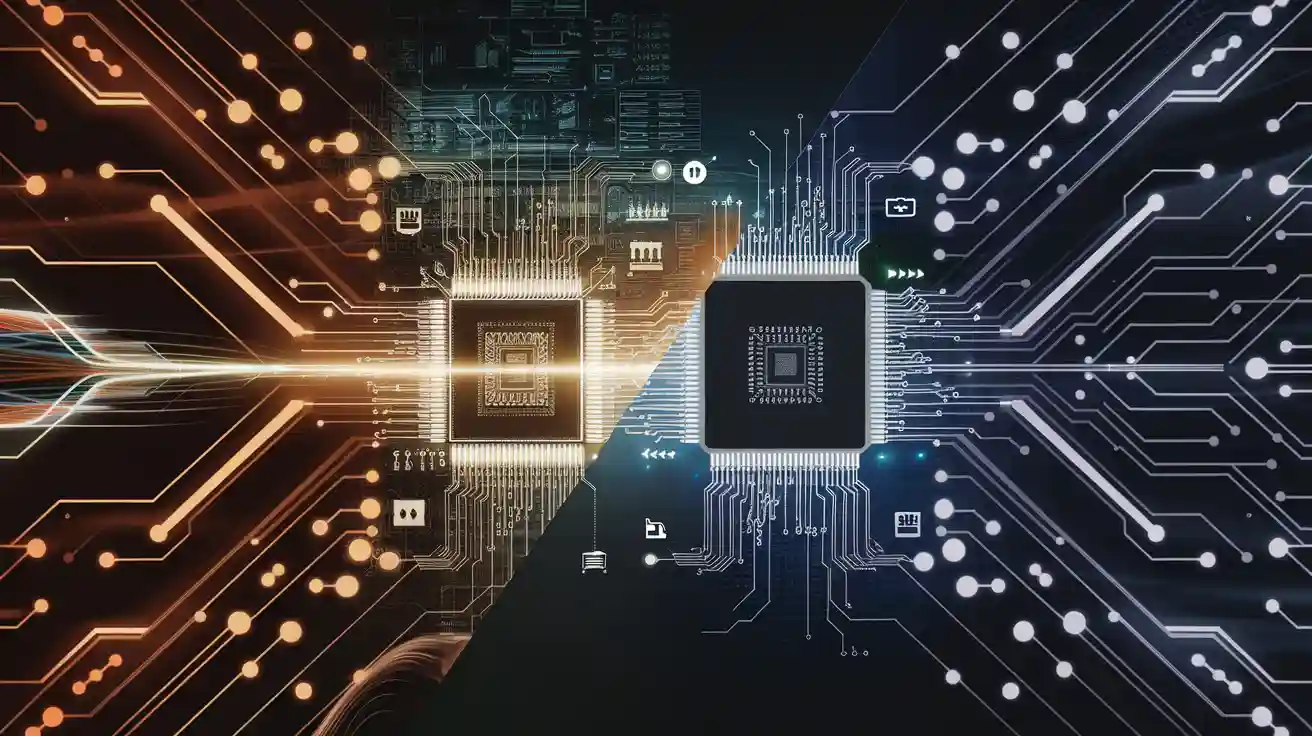
Optical integrated circuits are different from electronic ICs. They give faster speed, more bandwidth, and better efficiency in tough jobs. Many tech leaders pick optical integrated circuits. They use photons, not electrons, so data moves fast and makes less heat. More data centers and networks now use integrated optical technology. This shows a big change is happening. In 2023, the global market for PICs was $23.6 billion. This happened because people want energy-saving, fast solutions for AI, data, and new systems. The debate about pic vs. eic is still going. Each type of integrated circuit has special uses in new technology.
Key Takeaways
-
Optical integrated circuits use light to move data. They are faster and use less energy than electronic ICs. Electronic ICs use electricity instead of light. Electronic ICs cost less and are used a lot. They are flexible and good for many devices. Photonic circuits can move more data with less heat. They keep signals strong even far away. This is great for data centers, AI, and telecom. Hybrid systems mix optical and electronic circuits. These systems give the best speed and save power. They also let designers be flexible. You should pick the right circuit for your project. Think about speed, cost, and how much power you need.
Overview
Electronic ICs
Electronic integrated circuits are called eic or ic. They are very important in today’s electronics. Engineers make these circuits to use electrons for data. Eic technology has helped computers and phones for many years. Each eic has many tiny transistors and other parts on a chip. These parts work together to control electric signals.
Eic have many good points. They work well and can do many jobs. Companies make eic cheaply because the technology is old. Most eic use silicon as the main material. This makes it easy to make lots of them with good quality. Eic can process data fast, but there are limits. As people need more data, these limits become clearer.
Note: Eic are still very important, especially when cost and flexibility are needed.
Optical Integrated Circuits
Optical integrated circuits are also called photonic integrated circuits or pic. They use light to move data instead of electricity. Engineers use special materials to guide photons in small paths. A pic can send and get information very fast. Photonic signals move faster than electrical ones and make less heat.
A photonic integrated circuit often has lasers, detectors, and waveguides on one chip. This helps send data in a small and efficient way. Pic technology gives much more bandwidth than eic. Many data centers and networks now use photonic solutions for lots of data. Photonic integrated circuits also work well with current semiconductor methods, so they are easier to make.
-
Key features of pic:
-
Very fast data transfer
-
Low energy loss
-
Strong signal quality
-
Small design
-
Works with integrated manufacturing
-
Photonic integrated circuits are important for new uses, like AI, telecommunications, and fast computing.
Key Differences
Materials
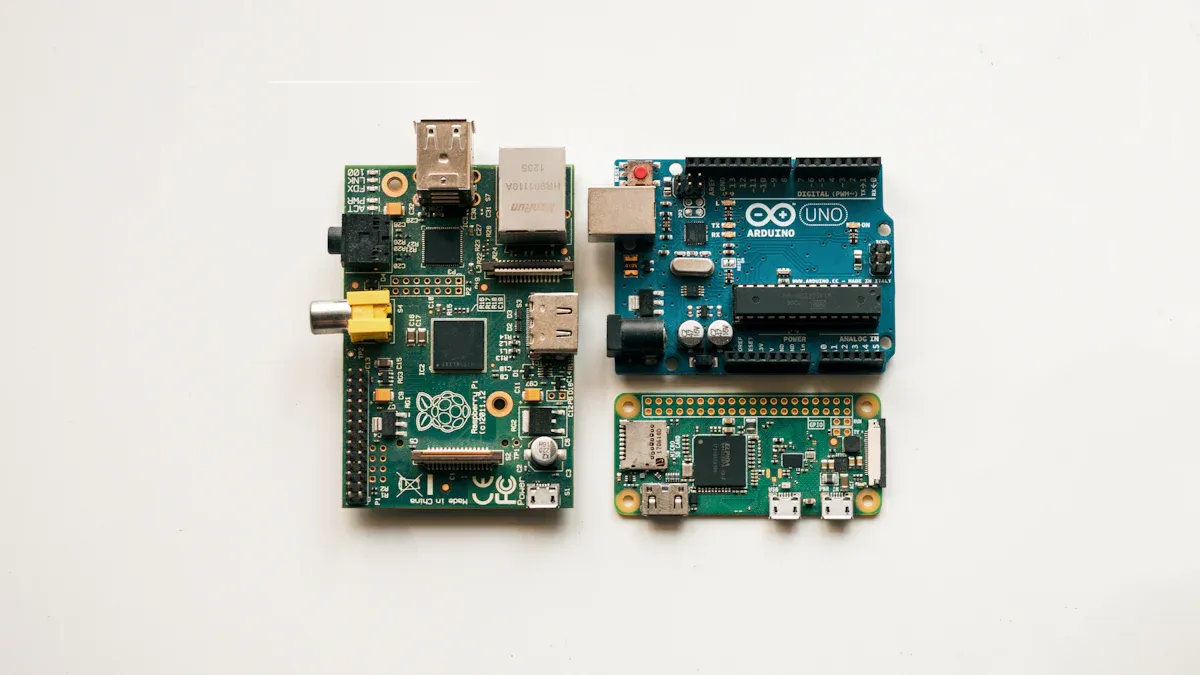
Engineers use silicon to make eic. Silicon is good for moving electrons. It is cheap and easy to use in big factories. Most eic chips have silicon and some metals for wires.
Pic use special materials to control light. These include indium phosphide, silicon nitride, and sometimes silicon. Each material helps guide photons in small paths. Photonic materials must be very pure. Even tiny flaws can stop light from moving. Engineers pick the best material for each photonic part. Indium phosphide is good for lasers. Silicon nitride is used for waveguides. These choices help pic go fast and keep signals strong.
Note: The materials used decide what each circuit can do. Photonic materials help pic move more data and make less heat.
Operation
Eic move electrons through wires and transistors. Each part switches or makes electric signals stronger. This makes heat and uses energy. Eic can handle many signals, but have limits as they get smaller.
Pic work differently. They use photons instead of electrons. Light moves through waveguides, bends, and splits on the chip. Lasers, modulators, and detectors control the light. Pic can send signals at light speed. This means less delay and less energy loss. Photonic signals do not make much heat. Pic stay cool even when moving lots of data.
-
Main differences in operation:
-
Eic use electrons and make more heat.
-
Pic use photons and lose less energy.
-
Photonic signals move faster and do not have the same limits as electric signals.
-
Performance
Performance is where pic and eic are most different. Eic have powered computers and phones for years. They work well for most jobs. But as people want more data and speed, eic have problems. Electric signals slow down in long wires. Heat builds up and can hurt the chip. Signal quality gets worse over long distances.
Pic fix many of these problems. Photonic signals move at light speed. Pic can handle lots of data at once. They keep signals strong, even over long paths. Pic use less power and make less heat. This makes them great for data centers and fast networks. Photonic circuits also work well with integrated manufacturing. Engineers can put pic and eic together on one chip. This gives the best of both worlds.
Photonic integrated circuits are best for speed, bandwidth, and saving energy. Eic are still good for cost and flexibility. The choice between pic and eic depends on what each job needs.
Optical Integrated Circuits: Advantages
Speed and Bandwidth
Photonic integrated circuits use photons to send information. This makes them much faster than electronic chips. Light moves much quicker than electricity in wires. A pic can send signals almost as fast as light. This lets data move very quickly. Photonic signals also give wide bandwidth. Many channels can travel together using different colors of light. This is called wavelength division multiplexing. It lets one pic carry a lot of data at once. Optical integrated circuits help networks and computers switch faster. Engineers use these features to build fast systems. These systems need quick responses and lots of data.
Photonic integrated circuits help move more data in less time. This helps data centers, AI, and fast networks work better.
Power and Heat
Photonic integrated circuits use less power than electronic chips. They do not need to charge or discharge metal wires. This means less energy turns into heat. Lasers and detectors use some power, but not much. Many pic designs now use as little as 15 picojoules per bit. Newer technologies try to use even less power. Some optical devices, like thermo-optic phase shifters, still use more power and make heat. But engineers keep finding ways to lower this. They use new materials and better designs. For example, graphene micro-heaters can cut power use to just a few milliwatts. Most heat in a pic comes from lasers and amplifiers, not from moving the light.
-
Key points about power and heat in photonic integrated circuits:
-
Less power is needed for long-distance data
-
Low loss because photons do not face resistance
-
Most heat comes from a few optical devices
-
Improvements keep making pic more efficient
-
Photonic integrated circuits stay cooler than electronic ICs. This helps make chips smaller and lets more parts fit on one chip.
Signal Integrity
Photonic signals keep their quality over long distances. They do not have the same problems as electric signals. In electronic ICs, signals can get weak and pick up noise. This makes it hard to send data far without mistakes. Photonic integrated circuits avoid this problem. Light can travel through waveguides with very little loss. This is called low transmission loss. It means the signal stays strong and clear. Photonic circuits also resist electromagnetic interference. This keeps data safe and correct. Engineers can build big systems with many photonic parts. These systems keep signal quality even as they get more complex.
Photonic integrated circuits give strong signal quality, high efficiency, and reliable data. These features make them great for new technology.
Applications
Data Centers
Data centers move lots of data every second. Many companies use optical integrated circuits for this. These circuits help send and get information fast. They use less power and stay cooler than old systems. When engineers mix photonic and electronic circuits, networks get faster. This makes data centers work better for more people and bigger jobs.
Telecommunications
Telecommunication systems link people and businesses everywhere. Optical integrated circuits are important in these systems. They help send voice, video, and data at high speed. These systems need strong signals that travel far. Photonic circuits keep signals clear and save energy. Many companies mix photonic and electronic parts to make things work better and cost less.
AI and Computing
AI and advanced computers need to process data quickly. Pic are used in high-performance computing and machine learning. Photonic circuits move data at light speed, so computers solve problems faster. Mixing photonic and electronic circuits gives engineers more choices. They can build systems that use less power and handle more data.
Sensors and Medical
Sensors and medical devices use photonic circuits in many ways. These circuits help doctors look inside the body and check health changes. Photonic sensors are good for medical imaging and lab tests. They also help watch the environment and keep people safe. Mixing photonic circuits with electronics makes devices smaller and more exact.
Many new uses need both photonic and electronic circuits. Hybrid solutions are important for 5G, 6G, and new sensors. More industries want fast and reliable communication, so the market keeps growing.
Electronic ICs: Strengths
Cost and Maturity
Many engineers choose eic because they cost less to make. Factories have made eic for many years. This long history means companies know how to build them well. The tools and machines for eic are common in the industry. Companies can make millions of eic chips quickly. This lowers the price for each chip. Eic also have a strong supply chain. Parts and materials are easy to find. When a company needs to make a new product, they can use eic without high risk.
Eic have a proven track record. They work in many devices, from phones to cars. This makes them a safe choice for most projects.
Eic also have many design tools. Engineers can test and fix eic before making them. This saves time and money. The mature process helps companies avoid mistakes. Eic chips often last a long time. They can handle changes in temperature and power.
Versatility
Eic can do many jobs. They work in computers, TVs, cars, and even toys. Engineers use eic for logic, memory, and power control. Eic can connect with other parts, like sensors and displays. This makes them useful in many fields.
-
Eic can:
-
Process digital signals
-
Store data
-
Control motors
-
Manage power
-
Eic also fit into small spaces. Companies can make tiny eic chips for wearables or large ones for servers. Eic can work alone or with other chips. Some systems use eic with photonic circuits for better results. This mix gives both speed and flexibility.
Eic remain a key part of modern technology. Their low cost, strong history, and wide use make them important for many next-gen applications.
Comparison Table
Picking between optical integrated circuits and electronic ICs is not easy. There are many things to think about. The table below shows the biggest differences. It helps you see which one is better for your needs.
|
Feature |
Optical Integrated Circuits (PICs) |
Electronic ICs (EICs) |
|---|---|---|
|
Signal Carrier |
Photons (light) |
Electrons (electric current) |
|
Speed |
Very high (near light speed) |
High, but limited by wires |
|
Bandwidth |
Extremely wide |
Moderate |
|
Power Efficiency |
Very efficient, low heat |
Less efficient, more heat |
|
Signal Integrity |
Strong over long distances |
Weakens over distance |
|
Material |
Indium phosphide, silicon nitride |
Mostly silicon |
|
Maturity |
Newer, still evolving |
Very mature, well-known |
|
Cost |
Higher, but dropping |
Lower, mass-produced |
|
Best Use Cases |
Data centers, telecom, AI, sensors |
Consumer electronics, control |
Tip: Look at this table to help pick the right circuit. PICs are best for jobs that need fast speed and lots of data. EICs are good if you want something cheap and reliable.
-
PICs use light to send data. This makes them fast and keeps signals strong.
-
EICs use electric current. They cost less and work in many things.
-
PICs do not get hot and save energy. EICs can get hot when moving lots of data.
-
PICs can move more data at once. EICs have trouble when data needs get bigger.
-
Many engineers use both types together now. This gives the best mix of features.
The table and notes make it easier to compare both types. Each one is better for certain jobs. Picking the right one helps new technology work better.
Choosing the Right Solution
Application Fit
Engineers and designers must think about what their project needs. Some jobs need fast data and strong signals. Other jobs need to be cheap and simple. Optical integrated circuits are best when speed and bandwidth are needed most. Data centers and telecom networks use these for quick and clear data. Electronic integrated circuits work well in things like phones, cars, and control systems. These circuits cost less and are easy to make. Each technology is good for different uses.
Tip: Write down what your project needs. Decide if speed, power, or cost matters most. This will help you choose the right circuit.
Hybrid Integration
Many new systems use both optical and electronic circuits. This is called hybrid integration. It mixes the best parts of both technologies. Hybrid integration lets engineers build systems that move data fast and do not cost too much. For example, a data center might use optical integrated circuits for fast links. It might use electronic integrated circuits for control jobs. Hybrid integration is also used in AI and advanced computers. These areas need both speed and flexibility. Engineers use hybrid integration to fix problems that one type of circuit cannot solve alone.
-
Benefits of hybrid integration:
-
Faster data movement
-
Lower power use
-
Better signal quality
-
Flexible design options
-
Easier scaling for big systems
-
Hybrid integration is becoming more important. Many companies now work on making solutions with both types of circuits. This trend will help shape the future of electronics and photonics.
Optical Integrated Circuits use light to move data quickly. They are very efficient and fast. Electronic ICs use electrons instead of light. They cost less and have worked well for a long time. PICs are great for jobs that need lots of speed and data, like data centers and AI. EICs are better for things we use every day and for control systems. More people now use both types together as technology gets better.
Readers should think about what their project needs most. The best choice depends on how fast, efficient, or cheap it should be.
FAQ
What is the main difference between optical and electronic ICs?
Optical ICs send data using light. Electronic ICs use electricity to send data. Optical ICs are faster and use less energy. Electronic ICs cost less and work in many things.
Can optical ICs replace electronic ICs in all devices?
No, they cannot. Optical ICs are best for fast data jobs, like in data centers. Electronic ICs are better for most daily electronics. They are cheaper and easier to make.
Are optical ICs more expensive than electronic ICs?
Yes, they are. Optical ICs cost more to make right now. The price is dropping as more companies use them. Electronic ICs are still cheaper for most things.
Why do data centers use optical ICs?
Data centers move a lot of data very fast. Optical ICs help send this data quickly and use less power. This keeps the systems cool and working well.