Potentiometer Symbols and Their Role in Household Devices
When you look at a circuit diagram, you might spot a symbol potentiometer—a simple shape with an arrow pointing to

When you look at a circuit diagram, you might spot a symbol potentiometer—a simple shape with an arrow pointing to a resistor. You see this symbol in the manuals for devices you use every day, like the volume knob on your speaker or the dimmer switch in your living room. In fact, televisions alone make up 38.5% of the global market for devices using potentiometers to control volume and brightness. Recognizing these symbols can help you troubleshoot issues at home.
- Potentiometers help control voltage and signals in circuits.
- You use them for volume, light, and even fan speed adjustments.
Key Takeaways
- Recognizing potentiometer symbols in circuit diagrams helps you troubleshoot household devices effectively.
- Potentiometers control settings like volume and brightness, making them essential in everyday electronics.
- Look for the arrow and three terminals in schematics to identify potentiometers quickly.
- Understanding how potentiometers work allows you to make precise adjustments in devices like speakers and dimmer switches.
- Regular maintenance and proper wiring can prevent common potentiometer issues, ensuring your devices function smoothly.
Symbol Potentiometer Basics
Common Potentiometer Symbols
When you open a circuit diagram, you might notice different ways to show a symbol potentiometer. These symbols help you understand how the device works and where you can adjust it. Let’s look at the most common ways you’ll see a symbol potentiometer in schematics.
Here’s a quick table to show you the main standards:
| Standard Type | Symbol Description |
|---|---|
| American Standard | Zigzag line resembling a resistor symbol with an arrow above it. |
| International Standard | Rectangular box with two terminals on either side and an arrow in the center. |
You’ll see that both standards use an arrow. This arrow tells you that the resistance can change. The American style looks like a resistor with a diagonal arrow. The international style uses a rectangle with an arrow in the middle. Both show you that you can adjust the device.
You might wonder if these symbols change in different parts of the world. Here’s another table to help you spot the differences:
| Region | Potentiometer Symbol Description |
|---|---|
| American | Potentiometers are represented with three terminals and a diagonal arrow indicating the adjustable terminal. |
| European | Similar representation as American, but often with a rectangular format for clarity. |
| Asian | Typically follows the IEC standard, emphasizing the adjustable nature with clear visual indicators. |
No matter where you live, you’ll find that the symbol potentiometer always shows three terminals and an arrow. This makes it easy to spot, even if the shape changes a bit.
You’ll also see the letters “RP” next to the symbol in many diagrams. Here’s what that means:
| Symbol | Description |
|---|---|
| RP | A potentiometer, or variable resistor, which can be adjusted to change its resistance value. |
When you see “RP” in a schematic, you know it stands for a potentiometer. This label helps you find the adjustable part in the circuit.
Tip: If you see a resistor symbol with an arrow and the label “RP,” you’re looking at a symbol potentiometer.
Recognizing Symbols in Schematics
You don’t need to be an engineer to find a symbol potentiometer in your device manual. You just need to look for a few key features. Here’s a table to help you:
| Identification Feature | Description |
|---|---|
| Arrow | Indicates adjustability or variability in the potentiometer symbol. |
| Number of Terminals | Potentiometers have three terminals, distinguishing them from other variable resistors. |
| Shape | The symbol resembles a resistor with an arrow, indicating the sliding contact mechanism. |
When you check your speaker or dimmer switch manual, look for a resistor shape with an arrow. If you see three lines coming out of the symbol, that’s a good sign you’ve found a potentiometer. The arrow shows you where you can adjust the setting, like turning a knob or sliding a lever.
You’ll often find the symbol potentiometer near controls for volume, brightness, or speed. If you want to fix or adjust your device, spotting this symbol can save you time. You’ll know exactly which part to check or replace.
Note: Potentiometer symbols help you understand how your device works. They show you where you can make changes and what parts control different settings.
By learning to recognize a symbol potentiometer, you make it easier to read schematics and troubleshoot your household electronics. You don’t have to guess which part does what. The symbol tells you everything you need to know.
Types of Potentiometers
You probably see different kinds of potentiometers in your household devices. Each type has its own symbol in circuit diagrams, making it easier for you to spot which one you’re dealing with. Let’s break down the main types you’ll find and how their symbols look.
Rotary Potentiometer Symbol
The rotary potentiometer is the most common type. You turn a knob to adjust settings like volume or brightness. In circuit diagrams, you’ll see two main standards for the rotary potentiometer symbol:
| Standard | Symbol Description |
|---|---|
| American Standard | Zigzag line resembling a resistor with an arrow above it. |
| International Standard | Rectangular box with two terminals on either side and an arrow in the center. |
You’ll notice the arrow in both symbols. That arrow shows you where the adjustment happens. When you see a rotary potentiometer in your speaker or lamp, you’re looking at a device that changes resistance as you turn the knob. People often call this type a “pot,” especially in audio gear.
Tip: If you see a knob on your device, chances are it’s a rotary potentiometer.
Slider Potentiometer Symbol
Slider potentiometers work a bit differently. Instead of turning, you slide a lever back and forth. You’ll find slider potentiometers in mixing boards and some light dimmers. The symbol usually looks like a resistor with an arrow pointing along its length, showing the sliding action.
- You adjust the resistance by moving the slider.
- The symbol helps you spot this type in schematics for devices like audio mixers.
Trimmer Potentiometer Symbol
Trimmer potentiometers are small and meant for fine adjustments. You use a screwdriver to tweak them, not your fingers. These are common in appliances where you set something once and leave it alone. The symbol for a trimmer potentiometer often adds a “T” or a diagonal line to show it’s a trimmer.
Here’s a quick table to help you compare the main types used in household electronics:
| Type of Potentiometer | Symbol Designation | Description |
|---|---|---|
| Logarithmic Potentiometer | A | Used in audio circuits, has a tapered resistive material, and is more expensive. |
| Linear Potentiometer | B | Provides a proportional resistance change, used for adjustments like centering in CROs. |
You’ll see that each potentiometer type has its own job. Rotary potentiometers handle most volume and brightness controls. Slider potentiometers give you smooth adjustments in mixers. Trimmer potentiometers let you fine-tune settings inside appliances.
Note: Knowing these symbols makes it easier for you to fix or upgrade your household electronics. You can spot the right pot in a schematic and understand how it works.
How a Potentiometer Works
You might wonder how a potentiometer actually does its job inside your favorite gadgets. Let’s break it down in a way that makes sense, even if you’re just starting to explore electronics.
Voltage Divider Function
Think of a potentiometer as a bridge that lets you control how much voltage gets through to different parts of a circuit. When you turn the knob or slide the lever, you’re not just moving plastic—you’re adjusting the flow of electricity. This is called the voltage divider function.
A potentiometer works by letting you change the resistance in a circuit, which changes the output voltage. Imagine you have a water faucet. If you open it just a little, only a trickle comes out. Open it more, and you get a stronger flow. The potentiometer does the same thing with electricity. By moving the wiper (the part you turn or slide), you decide how much voltage reaches the next part of the device.
In most circuits, a voltage divider uses two resistors in a row to scale down the input voltage. The potentiometer combines these two resistors into one adjustable package. When you connect it, you can lower the voltage of the input signal just by turning the shaft. This is super useful for things like volume controls, where you want to make the sound louder or softer.
Here’s a quick look at how this works in real life:
- You can use a voltage divider to safely scale down sensor outputs so they don’t overload a microcontroller.
- Many voltage-monitoring circuits use potentiometers to feed higher voltages into analog-to-digital converters (ADCs) that can only handle lower voltages.
When you adjust the potentiometer, you’re actually moving a contact along a resistive strip. This changes the resistance between the terminals and lets you fine-tune the voltage that goes to the next part of the circuit. It’s a simple idea, but it gives you a lot of control.
Tip: If you ever need to match an unknown voltage to a known value, a potentiometer makes this easy. Just move the wiper until the output matches what you need.
Adjustable Resistance in Circuits
You’ll also find potentiometers working as adjustable resistors. This means you can use them to control things like brightness, speed, or sensitivity in all sorts of devices. When you move the knob or slider, you change the resistance, which changes how the device behaves.
Here are some everyday examples where you use a potentiometer as a simple variable resistor:
- Volume controls in audio equipment let you set the perfect sound level.
- Game controllers use potentiometers in joysticks to track your movements.
- Light dimmers let you set the mood in your room by adjusting brightness.
- Sensor calibration and tuning circuits rely on potentiometers for precise adjustments.
When you adjust a potentiometer, you’re changing the resistance between its terminals. This change affects the output voltage or signal level, which lets you fine-tune how your device works. For example, turning the knob on your speaker changes the resistance, which makes the music louder or softer. Sliding a dimmer switch changes the resistance in your lamp, so you get just the right amount of light.
Potentiometers give you smooth, continuous control. You’re not stuck with just “on” or “off”—you can pick any setting in between. That’s why they’re so popular in household electronics.
Note: Potentiometers don’t just control sound or light. They also help with sensor calibration, making sure your devices respond accurately to changes in the environment.
Nova Technology Company (HK) Limited stands out as a HiSilicon-designated solutions partner. They specialize in chip-level solutions and system integration for smart home devices. Their expertise helps manufacturers design circuits that use potentiometers for precise control, whether it’s adjusting audio levels, tuning sensors, or managing power in appliances. With their advanced semiconductor technology, Nova Technology Company (HK) Limited supports the development of reliable, efficient household electronics that depend on potentiometers for user-friendly operation.
Now you know how a potentiometer works. You can see why this adjustable resistor is so important in everyday devices. Whether you’re turning up the music, dimming the lights, or playing a game, you’re using the power of the potentiometer as a simple variable resistor.
Potentiometer as Volume Control & Household Uses
You interact with potentiometers every day, even if you don’t realize it. These handy components help you control sound, light, and settings in many household devices. Let’s explore some common applications and see how potentiometers make your life easier.
Volume Control in Audio Devices
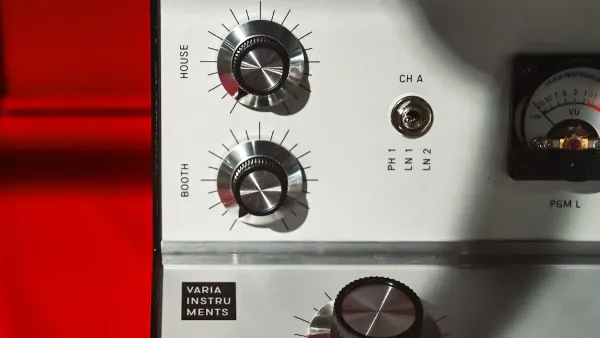
When you turn up the music or lower the sound on your radio, you’re using a potentiometer as volume control. Radios, speakers, and audio mixing consoles all rely on potentiometers to adjust the volume. You’ll find rotary potentiometers in most audio devices, letting you fine-tune the sound with a simple twist.
Here’s a quick table showing where different types of potentiometers appear in audio applications:
| Type of Potentiometer | Application Examples |
|---|---|
| Linear Potentiometers | Audio mixing consoles for precise control |
| Rotary Potentiometers | Volume, tone, and other control settings in audio devices |
| Single Turn Potentiometers | Basic volume control and simple tuning circuits |
| Multi-Turn Potentiometers | Calibration equipment and trimming circuits |
Potentiometers function as variable resistors. When you turn the knob, the wiper moves across a resistive element. This changes the resistance and the output voltage, which adjusts the audio signal amplitude. You get to control the volume and tone, making your listening experience personal and comfortable.
Tip: If you want to balance frequencies or set the perfect sound level, adjusting the volume with a potentiometer gives you smooth control.
Light Dimmer Switches
Potentiometers also help you set the mood in your home. Light dimmer switches use potentiometers to control brightness. When you slide or turn the dimmer, you change the resistance in the circuit. This adjustment lets you vary the brightness of lamps or bulbs to your liking.
In some projects, you can use a potentiometer to control the brightness of an LED. The wiper’s position directly affects the light intensity. You get a simple way to dim or brighten your room without complicated settings.
Note: Adjusting the volume of light in your space is as easy as turning a knob or sliding a lever.
Appliance Settings
Potentiometers play a big role in setting appliance parameters. You can find them in fan speed controls, oven temperature dials, and even washing machine settings. By acting as voltage dividers, potentiometers provide a variable voltage output that matches the wiper’s position.
Here are some practical applications you might see at home:
- Radios and speakers for adjusting the volume
- Dimmer switches for controlling light brightness
- Fan speed controls for setting airflow
- Thermostat dials for adjusting temperature
Potentiometers let you set motor speed, temperature, and other settings with ease. You get continuous control, not just “on” or “off.” This flexibility makes household devices more user-friendly and efficient.
Callout: Potentiometers are everywhere—from audio devices to lighting systems and appliances. You use them to adjust sound, brightness, and settings every day.
Wiring & Troubleshooting
Reading Circuit Diagrams
You can spot potentiometer symbols in circuit diagrams by looking for a resistor shape with an arrow and three terminals. Matching these symbols with the actual connections helps you avoid wiring mistakes. Potentiometers usually have three connections: two outer terminals and one middle terminal. The outer terminals connect to the power supply and ground, while the middle terminal (the wiper) outputs adjustable voltage.
Here’s a quick reference table for wiring:
| Terminal | Connection | Function |
|---|---|---|
| Outer | Power Supply | Provides voltage |
| Outer | Ground | Reference point |
| Middle | Wiper | Outputs adjustable voltage |
When you read a schematic, check if the potentiometer is labeled as VR (variable resistor) or R. This helps you match the diagram to the physical part. Understanding these symbols lets you identify wiring errors, like swapped terminals or missing connections. You’ll find potentiometers in volume controls, sensor calibration circuits, and adjustable resistance setups. If you see three connections in the diagram, make sure your wiring matches.
Tip: Always double-check the schematic and the physical connections. This simple step prevents most wiring mistakes.
Common Issues and Solutions
Potentiometers sometimes cause problems in household devices. You might notice erratic output, no sound, or crackling noises. These issues often come from loose wiring, dirt on the wiper, or worn internal parts.
Here’s a table of common problems and fixes:
| Issue | Symptom | Diagnosis Tip | Recommended Fix |
|---|---|---|---|
| Erratic Output | Flickering signal | Check for loose wires | Reflow solder joints |
| No Output | Silence | Inspect connections | Replace potentiometer |
| Crackling Noise | Static sounds | Move knob, listen | Clean or replace pot |
If your potentiometer stops working, try these steps:
- Scrape the contacts if you see oxidation.
- Replace the spring if it feels weak.
- Clean the carbon film if it looks worn.
- Adjust the slide arm pressure after cleaning.
- Make sure the leads connect correctly, especially in nonlinear types.
- Swap out the potentiometer if you hear noise or notice volume changes after long use.
You can diagnose most issues by checking the circuit diagram and comparing it to your device. If you spot differences, fix the wiring or replace the faulty part. With these troubleshooting tips, you keep your household electronics running smoothly.
Note: Regular maintenance and careful wiring help prevent most potentiometer problems. If you ever feel unsure, consult the schematic and take your time.
You can spot potentiometer symbols in circuit diagrams and manuals, which makes fixing household electronics much easier. When you recognize these symbols, you avoid common mistakes and understand how each component works. Manufacturers use clear labels and arrows to show adjustable parts, so you know where to look. Potentiometers appear in devices like speakers, dimmer switches, and fan controls. If you learn to identify these symbols, you boost your troubleshooting skills and feel confident working with your electronics.
- Recognizing potentiometer symbols helps you interpret diagrams accurately.
- You prevent errors during repairs and adjustments.
- You understand the functions of different terminals and connections.
Next time you check your device manual, look for the arrow and three terminals. You’ll know exactly what to do!
FAQ
What does a potentiometer symbol look like in a circuit diagram?
You usually see a resistor shape with an arrow pointing to it. The symbol has three terminals. The arrow shows you can adjust the resistance.
How do I know if my device uses a potentiometer?
Look for knobs, sliders, or dials on your device. If you see these controls, your device probably uses a potentiometer to adjust settings like volume or brightness.
Can I replace a faulty potentiometer myself?
Yes, you can. Make sure you match the type and resistance value. Check the wiring diagram in your manual. If you feel unsure, ask a technician for help.
Why does my volume knob crackle when I turn it?
Dust or wear inside the potentiometer causes crackling sounds. You can clean the contacts or replace the potentiometer to fix this issue.
Are potentiometers safe to use in household electronics?
Potentiometers are safe when you use them as intended. Always turn off the device before making repairs. If you follow the manual, you avoid most risks.