The Role of a 45+5 MFD Capacitor in Your AC
Your AC unit relies on a small but mighty electronic part: the 45+5 mfd capacitor. This component acts like a temporary batt
Your AC unit relies on a small but mighty electronic part: the 45+5 mfd capacitor. This component acts like a temporary battery for two crucial motors. The larger 45 MFD rating provides a powerful jolt to start the main compressor. The smaller 5 MFD rating keeps the fan motor running smoothly. This dual capacitor works hard, though a typical ac capacitor has a 10-20 year lifespan.
Think of this dual function like a sprinter. The powerful capacitor gives the burst of energy to launch the compressor off the blocks, while the smaller capacitor provides the steady energy to finish the race.
Key Takeaways
- A 45+5 MFD capacitor helps your AC unit work. It starts the main compressor and keeps the fan motor running.
- Watch for signs of a bad capacitor. Your AC might hum, not blow cold air, or have a bulging top. These mean it needs attention.
- A failing capacitor makes your AC work harder. This can raise your energy bills and damage other parts of your system.
- Do not try to replace a capacitor yourself. It stores dangerous electricity. Always call a professional HVAC technician for this job.
- Replacing a capacitor is usually affordable. It costs about $100 to $250. This small fix can prevent bigger, more expensive repairs.
The Role of a 45+5 MFD Capacitor
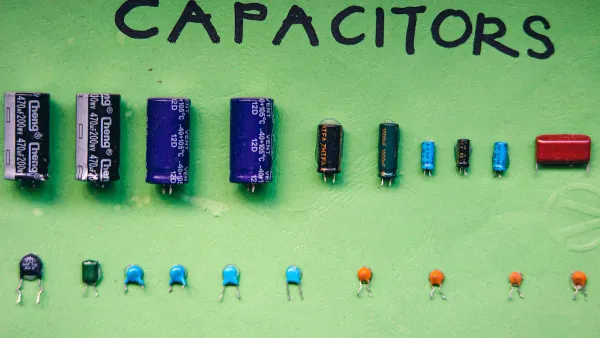
Your 45+5 mfd capacitor is a hard-working electronic component with two distinct jobs. It uses its stored electrical energy to power up two different motors at the right time and with the right amount of force. Think of it as a traffic controller for electricity inside your HVAC unit.
Starting the Compressor
The compressor is the heart of your air conditioner. It needs a massive jolt of electricity to get started. The "45 MFD" side of the capacitor handles this task. A higher MFD (microfarad) rating means the capacitor can store more electrical current. This powerful charge creates a magnetic field that gives the compressor motor the strong push it needs to overcome inertia and begin its cycle. Without a healthy capacitor, the compressor might just hum without ever starting.
Running the Condenser Fan
Once the compressor is running, your AC needs to get rid of the heat it pulls from your home. That's the job of the condenser fan. The "5 MFD" side of the dual capacitor is rated specifically for this fan motor. It provides a steady, continuous flow of electricity. This keeps the fan blades spinning at the correct speed to release heat into the outside air. A weak 5 MFD capacitor can cause the fan to run slowly or not at all, preventing your system from cooling effectively.
The Dual-Run Function
This single component efficiently combines two capacitors into one, which is why it's called a dual capacitor. HVAC manufacturers use dual run capacitors because they save space and simplify the system's wiring. This makes maintenance easier for technicians. A dual capacitor has three terminals on top, usually labeled:
- C for Common (the power input)
- HERM for Hermetic (for the compressor)
- F for Fan
This design allows one ac capacitor to power two motors. The table below shows the key differences between a dual capacitor and a single-run ac capacitor.
| Feature | Dual Run Capacitor | Single Run Capacitor |
|---|---|---|
| Function | Powers two motors (compressor and fan) | Powers one motor |
| Internal Structure | Contains two capacitors in one casing | Contains a single capacitor |
| Terminals | Typically three terminals (C, HERM, F) | Typically two terminals |
| Application | Primarily used in HVAC systems | Used in various single-motor appliances |
This clever dual design makes the 45+5 mfd capacitor a critical and efficient part of your cooling system.
Why Your HVAC System Needs It
You now know what the dual capacitor does, but why is it so essential for your HVAC system? This single electronic component is the starting gun for your entire cooling process. Without a healthy capacitor, your air conditioning simply cannot do its job, leaving you with a warm and uncomfortable home.
Enabling the Cooling Cycle
Your AC's cooling cycle is a chain reaction, and the capacitor starts it all. When you turn on your air conditioning, the capacitor provides the powerful jolt of energy needed to start the compressor. This is the heart of your system, responsible for pumping refrigerant to absorb heat from your home. The capacitor also powers the fan motor, which is crucial for releasing that captured heat outside.
Think of it this way:
- The 45 MFD side of the dual capacitor gives the compressor the push it needs to start compressing refrigerant.
- The 5 MFD side keeps the fan spinning to blow air over the coils and get rid of the heat.
If the capacitor fails, this critical first step never happens. The motors won't start, the refrigerant won't circulate, and no heat will be removed. Your system becomes little more than a large metal box.
Ensuring Motor Efficiency
A good capacitor does more than just start the motors; it helps them run efficiently and protects them from damage. The motors in most HVAC systems are Permanent Split Capacitor (PSC) motors, which rely on a capacitor to run correctly. A healthy capacitor helps create the proper electrical environment for these motors. It adjusts the relationship between the voltage and the current, which improves the motor's efficiency.
When a capacitor weakens, it can cause the motors to work harder, overheat, and eventually burn out. A failing capacitor can lead to expensive problems like a complete compressor failure. Therefore, this small electronic part plays a huge role in the overall health and longevity of your HVAC equipment. This dual capacitor is a key component for all modern air conditioning systems.
Signs of a Failing Capacitor
A failing capacitor rarely stops working overnight. It usually gives you warning signs through poor system performance and visible clues. Recognizing these signs early can help you avoid a complete AC breakdown, especially during a heatwave.
Common Performance Issues
Your AC's performance is the first place you will notice a problem. A weak or failing capacitor directly impacts the motors it supports, leading to several distinct issues. You might experience one or more of the following symptoms:
- Your AC system fails to blow cold air.
- A humming or buzzing noise comes from the outdoor unit.
- The air conditioner shuts off by itself unexpectedly.
- Your AC unit struggles to turn on or does not power on at all.
The humming sound is a classic sign of a bad capacitor. You may hear a buzz or even clicking noises from the outdoor unit. This happens because the capacitor is not delivering the powerful jolt of energy the motor needs to start. The motor tries to draw power and turn on, but it cannot overcome inertia without the capacitor's help. This struggle creates the audible humming sound and is a clear signal that a key electronic component is failing.
Visual Inspection Clues
Sometimes, you can identify a bad capacitor just by looking at it. A physical inspection of the component can reveal obvious signs of failure. If you can safely view the capacitor (with the power turned off), look for these red flags.
A healthy capacitor is a smooth cylinder. The most obvious sign of failure is a bulging or swollen top. This swelling happens when the dielectric fluid inside the capacitor breaks down and creates gas, building up internal pressure. This deformation means the capacitor is damaged beyond repair and needs immediate replacement.
Another clear indicator is any kind of leak. You might see an oily or sticky substance on the body of the capacitor or around its terminals. This is the internal dielectric fluid leaking out, which is essential for the ac capacitor to hold a charge. Leaks mean the internal seals have failed. You may also spot rust or corrosion on the terminals, which can interfere with the electrical connection.
Visual Check Summary: A quick look can tell you a lot. Swollen tops, oily leaks, and rusty terminals are all signs that your air conditioner capacitors have failed. Spotting this damage early can prevent a more expensive repair down the road.
Impact on Energy Bills
A failing capacitor does more than just hurt your AC's cooling performance; it also hits your wallet. This small electronic part is crucial for motor efficiency. When the capacitor weakens, the compressor and fan motors must work much harder to start and run.
This extra strain causes the motors to draw more electrical current from your home's power supply. The system's overall efficiency drops, forcing it to run longer and harder to cool your home. This inefficient operation leads directly to higher energy consumption. A faulty ac capacitor can cause:
- Motors to pull excess current to compensate for the weak starting jolt.
- The AC unit to run unevenly, reducing its cooling performance.
- Increased strain on motors, which can cause them to overheat.
An unexpected spike in your monthly utility bills could be a sign that your capacitor is on its last legs. Replacing a weak capacitor can restore your system's performance and bring your energy costs back down.
Replacing a Bad AC Capacitor
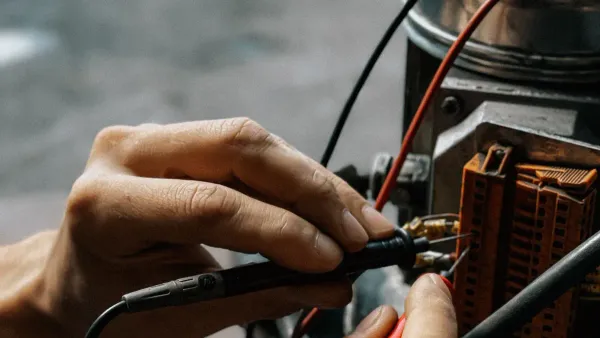
When you discover a faulty capacitor, your first thought might be to handle the replacement yourself. However, this is one repair where professional expertise is non-negotiable. A capacitor is a specialized electronic component that poses significant safety risks.
DIY Dangers and Safety
You should never attempt to replace a capacitor on your own. Even with the power to your air conditioning unit turned off, the capacitor can hold a powerful and dangerous electrical charge. This stored energy makes it a serious hazard for anyone without proper training and tools.
An untrained person handling a charged capacitor risks severe electrical shock. This can happen through direct contact or if your hand gets close enough for electricity to arc. The HVAC industry has strict safety protocols for this reason. Only qualified employees with training on these hazards should perform this kind of electrical work.
Safety Alert ⚠️: A capacitor can discharge its stored current long after the power is off. Do not assume it is safe to touch. A qualified technician uses specific procedures and tools to guarantee the component is fully discharged before handling it.
Professionals in the HVAC industry always use personal protective equipment (PPE) for this job. This includes:
- Insulated gloves to protect their hands.
- Safety goggles to shield their eyes.
- Insulated tools designed for electrical work.
These precautions are essential to prevent injury. For your safety, you should always leave this task to a trained HVAC technician.
The Professional Process
When you call a professional, they follow a precise and safe process to replace a capacitor. This ensures the job is done correctly and protects your HVAC systems from further damage.
- Discharge the Old Capacitor: The technician's first and most important step is to safely discharge the old capacitor. They use a tool like an insulated screwdriver to short the terminals, releasing any stored electrical charge in a controlled way. They will confirm the capacitor is fully discharged before proceeding.
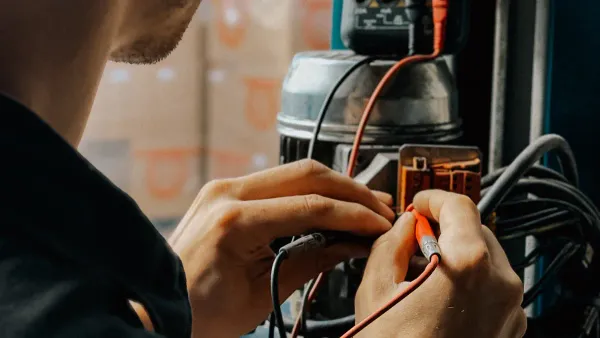
- Test the Component: Next, the technician will test the component to confirm it has failed. They use a multimeter to measure the capacitance. A reading outside the acceptable tolerance for the listed MFD rating confirms the capacitor is bad and needs replacement.
- Install the New Capacitor: The technician installs a new capacitor with the exact specifications required for your unit. Using a capacitor with the wrong MFD rating can cause serious problems. A rating that is too high can shorten the motor's lifespan, while one that is too low can prevent the motor from working at all. The voltage rating must also be equal to or greater than the original.
- Verify Wiring: For a dual-run ac capacitor, the technician carefully connects the wires to the correct terminals:
C(Common),HERM(Hermetic compressor), andF(Fan). They ensure these connections are secure to prevent future issues.
This professional process guarantees that your new ac capacitor works correctly and your air conditioning system runs efficiently.
Expected Replacement Costs
The cost to replace a capacitor is quite reasonable, especially when you consider the damage it prevents. For a professional replacement service, most homeowners pay between $100 and $250. This price typically includes the service call fee, the part itself, and the labor.
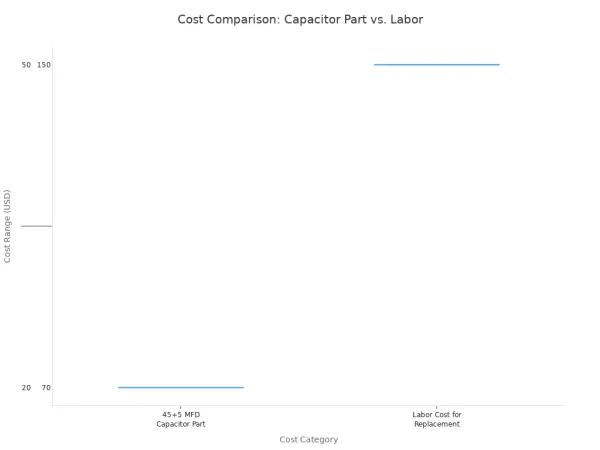
The cost of the 45+5 MFD capacitor part is much lower than the labor involved. This is because you are paying for the technician's expertise, safety procedures, and time.
| Cost Breakdown | Average Price Range |
|---|---|
| 45+5 MFD Capacitor Part | $20 – $50 |
| Professional Labor | $70 – $150 |
Several factors can affect the final price of the replacement. Your geographic location plays a role, as costs are often higher in areas with a higher cost of living or high demand for HVAC services. Emergency or after-hours service calls will also increase the total cost.
Your 45+5 mfd capacitor is the unsung hero of your HVAC systems. This dual electronic component starts the compressor and keeps the fan running. If you notice a humming motor or a bulging capacitor, your unit needs immediate attention. A failing capacitor can lead to much bigger problems.
Safety First: A small capacitor fix prevents huge repair bills for parts like the compressor. For your safety and the health of your AC, always have a professional test and install a new ac capacitor. A technician will ensure the new dual capacitor has the correct mfd rating for your
45+5 mfd capacitorreplacement. This dual mfd capacitor is a critical part.
FAQ
Can I use a different MFD rating for my capacitor?
No, you must use the exact MFD rating specified by the manufacturer. A different rating can damage the motors or prevent them from working. Your technician will ensure the new electronic component has the correct 45+5 MFD specification for your system.
What does MFD mean on a capacitor?
MFD stands for microfarad. It is the unit of measurement for capacitance. This number tells you how much electrical energy the component can store. A higher MFD rating means the capacitor holds a more powerful charge to start a larger motor.
How long does an AC capacitor last? ⏳
Most AC capacitors have a lifespan of 10 to 20 years. However, factors like extreme heat or power surges can cause this electronic part to fail sooner. Regular HVAC maintenance helps catch a weak capacitor before it fails completely.