Tone Pot Capacitors Explained for Guitarists
A tone control capacitor shapes your guitar’s sound by filtering out high frequencies as you turn the tone knob. When you us
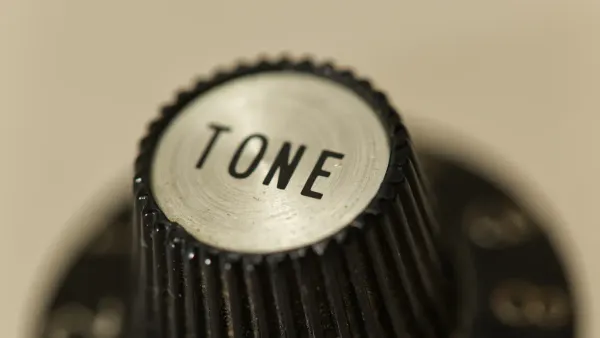
A tone control capacitor shapes your guitar’s sound by filtering out high frequencies as you turn the tone knob. When you use a smaller value capacitor, you keep more treble in your signal, making your guitar sound brighter. Larger values take away more treble, resulting in a warmer tone. At lower tone settings, these differences become even more noticeable. By understanding value, voltage, and type, you can start choosing capacitor for tone pot setups that match your personal style.
Key Takeaways
- Tone pots control the brightness of your guitar's sound. Use a smaller value capacitor for a brighter tone and a larger value for a warmer sound.
- Experiment with different capacitor values to find your ideal tone. Smaller values keep more treble, while larger values can make your sound darker.
- The type of capacitor matters less than its value. Focus on capacitance to shape your sound effectively.
- Consider your music style when choosing capacitor values. Different genres may benefit from specific capacitor types and values.
- Swapping capacitors is a simple way to customize your guitar's tone. Keep a few different values on hand for easy experimentation.
What Are Tone Pots?
Role in Guitar Sound
Tone pots play a key role in shaping the sound of your guitar. You use them to control how much treble, or high-frequency sound, stays in your signal. When you turn the tone knob, you decide how bright or warm your guitar sounds.
Think of tone pots as your personal sound filter. You can make your guitar sing with sparkling highs or mellow out for a smoother, jazzier tone.
Electronics experts explain that tone pots do three main things:
- They control the flow of higher frequency signals to ground.
- They act as a low-pass filter, letting low frequencies pass while blocking high frequencies.
- The resistance of the tone pot affects how much high-frequency sound you lose.
You will notice that different pickups use different tone pots. Single coil pickups often use a 250k pot to manage high frequencies. Humbuckers usually pair with a 500k pot to let more high-end frequencies through. Lower value pots can cause a slight loss of high frequency, which changes your overall sound.
How They Work
Tone pots work as variable resistors in your guitar’s circuit. When you turn the knob, you change the resistance in the circuit. This adjustment works with the tone capacitor to drain high frequencies from the signal coming from your pickups. The interaction between the pot’s resistance and the capacitor’s frequency response shapes your sound.
The science behind tone pots involves resistance, capacitance, and inductance. These three properties create a low-pass filter. The pickup and tone pot split the signal, and the capacitor decides which frequencies get filtered out. As you adjust the tone pot, you change how much treble gets sent to ground. The inductance of the pickup also affects the result, so you get a unique sound based on your guitar’s electronics.
If you want a brighter sound, you might choose a higher value pot, like 500k. For a warmer tone, a 250k pot works well. This choice lets you fine-tune your guitar’s voice to match your style.
Tone Control Capacitor Basics
What Is a Tone Control Capacitor?
A tone control capacitor is a small electronic component inside your guitar. You find it connected to the tone pots. This part works with the tone pots to shape your sound by filtering certain frequencies. When you turn the tone knob, you change how the tone control capacitor affects your signal.
Manufacturers use different materials to make these capacitors. Each type can have a slight effect on your tone. Here is a table showing some common types and their materials:
| Capacitor Type | Material Used |
|---|---|
| Cornell Dubilier .022μF | Polypropylene dielectric |
| Nichicon .022μF | Polyester film |
| Ceramic disc .022μF | Ceramic |
| Ceramic disc .01μF | Ceramic |
| Ceramic .05μF | Ceramic |
You do not need to worry much about voltage ratings for your tone control capacitor. Guitar circuits use very low voltages. Most capacitors rated at 200V or higher work perfectly. Higher ratings only make the part bigger and more expensive, not better for your sound.
How It Shapes Tone
The tone control capacitor changes your sound by filtering out high frequencies. When you turn the tone knob, you send more of these high frequencies to ground. This makes your guitar sound darker or warmer.
Tip: If you want a brighter sound, use a smaller value capacitor. For a warmer tone, try a larger value.
Here is how the tone control capacitor works in your circuit:
- The capacitor stores charge and blocks direct current.
- As the frequency goes up, the capacitor’s resistance goes down.
- High frequencies move through the capacitor to ground.
- Low frequencies stay in your signal.
You can see the effect in this table:
| Frequency Type | Effect on Signal |
|---|---|
| Low Frequencies | Allowed to pass through |
| High Frequencies | Shunted to ground |
The interaction between the tone pots and the tone control capacitor lets you control your guitar’s brightness. You can experiment with different values to find your favorite sound.
Capacitor Value and Tone
High vs. Low Capacitance
When you look at tone pots in your guitar, the value of the capacitor you use makes a big difference in your sound. Capacitance is measured in microfarads (uF) or nanofarads (nF). High capacitance values, like 0.047uF, let more high frequencies pass to ground. This makes your tone darker and warmer. Low capacitance values, such as 0.010uF, keep more treble in your signal. You get a brighter and clearer sound.
Tip: If your guitar sounds too muddy, try a smaller capacitor value. If it feels too sharp or thin, use a larger value.
Here is what happens when you choose capacitor values at different ends of the range:
- Larger capacitor values (like 22nF or 0.022uF) can make your sound muddy. They remove more upper frequencies and can swamp the pickup's resonant frequency.
- Smaller capacitor values (like 1nF or 0.001uF) shift the resonant frequency higher. This gives you a brighter tone and keeps more clarity.
- Some famous guitarists, like Eric Clapton, used lower value capacitors to get a smoother, less muddy sound. This is known as the "Woman Tone."
- A 0.015uF capacitor gives a subtle effect. It does not darken the tone as much as a 0.022uF capacitor, which some players find too dark.
- Bass players or those who want a very dark tone often use 0.047uF capacitors. If you want a bright sound, try 0.010uF.
You can experiment with different values to find the sound you like best. The right capacitor lets you adjust your guitar’s tone from bright and sharp to warm and mellow.
Typical Values for Pickups
Different pickups work best with certain capacitor values. The type of pickup in your guitar affects how you should choose capacitor values for your tone pots. Here is a table that shows the most common choices:
| Pickup Type | Common Capacitor Values |
|---|---|
| Humbucker | .047uF, .022uF |
| Single-Coil | .047uF |
Single-coil pickups usually pair with a 0.047uF capacitor. This value helps control the bright sound of single-coils, making them less harsh. Humbucker pickups often use either 0.022uF or 0.047uF. The 0.022uF value keeps more treble, which works well with the naturally warmer sound of humbuckers.
When you choose capacitor values, you also need to think about tolerance. Tolerance tells you how close the actual value is to what is printed on the capacitor. High-quality capacitors with a 2% tolerance give you more consistent sound. Cheaper capacitors with a 10% tolerance can sound different from one guitar to another.
- A good capacitor lets you pick between bright highs and warm lows.
- The value you choose affects how much you can adjust your tone.
- Try different values to see what works best for your style.
Note: You do not need to worry about voltage ratings for tone pots in guitars. Most guitar circuits use very low voltage, so almost any capacitor will work.
If you want to shape your sound, start by changing the capacitor value in your tone pots. You can always swap it out and listen for the difference. This simple change can help you find your perfect guitar tone.
Choosing Capacitor for Tone Pot
Matching Value to Style
When you start choosing capacitor for tone pot setups, you need to think about your music style and the sound you want from your guitar. The tone control capacitor acts as a filter, shaping the frequencies that reach your amp. Each value and type of capacitor changes your sound in a unique way.
You should look at several criteria when matching a capacitor value to your style. These include how the capacitor performs in audio circuits, its impedance, distortion levels, dielectric properties, and the overall impact on sound quality. Here is a table to help you understand these factors:
| Criteria | Description |
|---|---|
| Capacitor Performance Data | Different capacitors perform differently in audio circuits, which affects your sound quality. |
| Impedance | The impedance of a capacitor changes how it interacts with your signal, which can affect clarity. |
| Distortion | Lower distortion means better audio fidelity, which is important for many music styles. |
| Dielectric Properties | The material inside the capacitor can change its performance and the way it shapes your tone. |
| Impact on Sound Quality | The right capacitor can make your guitar sound clear, warm, or bright, depending on your choice. |
Professional guitarists often select capacitor values based on their preferred genre. For example, blues and classic rock players might use a 0.022µF paper-in-oil capacitor for a warm, smooth tone that keeps some brightness. Jazz players often choose a 0.033µF paper-in-oil capacitor for a rounded, mellow sound. Metal guitarists may prefer a 0.022µF polypropylene capacitor to keep clarity with high-gain distortion. Country players sometimes use a 0.047µF capacitor to darken the tone and tame harsh highs.
| Genre | Capacitor Type | Value | Description |
|---|---|---|---|
| Blues/Classic Rock | Paper-in-oil | 0.022µF | Warm and smooth tone, retains brightness. |
| Blues/Classic Rock | Ceramic/Polypropylene | 0.047µF | Darkens tone, tames treble response. |
| Jazz | Paper-in-oil | 0.033µF | Smooth, rounded tone, mellows high frequencies. |
| Metal/High-Gain | Polypropylene | 0.022µF | Neutral response, maintains clarity with distortion. |
| Country/Twang | N/A | 0.047µF | Preferred darker tone for country music. |
When choosing capacitor for tone pot, you also need to consider the voltage rating. Most guitar circuits use very low voltage, so almost any capacitor will work. Higher voltage ratings do not improve sound but can make the capacitor larger. Focus on the value and type instead of voltage.
If you want a brighter sound, try a smaller value tone control capacitor. For a warmer or darker sound, use a larger value. Choosing the right value helps you match your guitar’s tone to your favorite style.
Experimentation Tips
Experimenting with different tone control capacitor values and types lets you find your personal sound. You can try several methods to hear how each capacitor changes your guitar’s tone.
- Use a small value capacitor (500pF to 50nF) in a variable low-pass filter setup. This helps you shape the frequency response and find the sweet spot for your style.
- Add a potentiometer in series with a capacitor to ground. This creates another low-pass filter, but you might notice some signal loss. Listen carefully to how your tone changes.
- Place a small-value capacitor in parallel with a diode clipping circuit. This can smooth out harsh high-end clipping, especially if you play with distortion.
- Try capacitors in timing circuits, like a low-frequency oscillator, to control frequency settings in more advanced guitar electronics.
Tip: Keep a few different capacitors on hand. Swap them in and out to compare how each one affects your sound. Take notes on what you like best.
When you experiment, always listen to how the tone control capacitor interacts with your pickups and amp. Small changes in value can make a big difference. Choosing capacitor for tone pot is not just about numbers; it is about finding the sound that inspires you.
You do not need expensive tools to start. A soldering iron and a few spare capacitors are enough. If you want to avoid soldering every time, you can use alligator clips to test different capacitors quickly.
Remember, choosing capacitor for tone pot is a personal journey. Your ears are the best judge. Try different values and types until you find the tone that fits your music and playing style.
Capacitor Types and Myths
Ceramic, Film, and Others
You will find several types of capacitors in guitar tone circuits. Each type has unique electrical properties that affect reliability and performance. Ceramic capacitors are popular because they offer stability and cost-effectiveness. They work well in high-frequency applications and do not have polarity issues. Modern multilayer ceramic capacitors (MLCC) can reach high capacitance ratings. You can use them without worrying about failure from incorrect installation.
Film capacitors are another common choice. Many players value them for their superior audio quality. These capacitors often appear in tone circuits and signal paths. Film types use materials like polyester or polypropylene. They provide consistent performance and low distortion, which helps you achieve clear sound.
Electrolytic capacitors offer high capacitance but are less common in guitar tone pots. They have polarity, so you must install them correctly. If you reverse the voltage, they can fail. Most builders avoid them in tone circuits because ceramic and film capacitors are safer and more reliable.
| Capacitor Type | Common Use in Guitar Circuits | Key Features |
|---|---|---|
| Ceramic | Tone pots, high-frequency | Stable, affordable, no polarity |
| Film | Tone pots, signal paths | High audio quality, low distortion |
| Electrolytic | Rare in tone pots | High capacitance, polarity required |
Myths vs. Facts
Many players believe that the type and material of a tone pot capacitor will change the sound of their guitar. Scientific studies show that if two capacitors have the same value, they will produce the same tone. The value of the capacitor controls how much high frequency you roll off. This is the most important factor in shaping your sound.
- Capacitors with higher values remove more high frequencies.
- Common values in guitars are 0.022 microfarads and 0.047 microfarads.
- Testing different sizes helps you find your best tone.
"Audio geeks will argue the sonic merits of the various types of high-end capacitors, but I think most people, including musicians with well-trained ears, are hard-pressed to differentiate between the better types. In tone circuits, most of the difference that you hear is the variation in value. There is no audible difference between a 2 cent ceramic and a ten-dollar Orange Drop in a guitar. Any perceived difference comes from the need to justify the money wasted."
You should focus on the capacitance value when choosing a capacitor for your guitar. The type matters less than many people think. Try different values to shape your sound, but do not worry about spending extra on expensive types.
Swapping Your Tone Control Capacitor
What You Need
Before you start, gather the right tools and parts. You will need a soldering iron, some solder, wire cutters, and a screwdriver. Make sure you have your replacement capacitor ready. Choose a value that matches the tone you want for your guitar. Many players keep a few different capacitors on hand to test which one sounds best. You may also want a pair of tweezers to handle small parts and some alligator clips if you want to test different capacitors without soldering right away.
Tip: Always work in a well-lit area and keep your workspace organized. This helps you avoid losing small electronic components.
Installation Steps
You can install a new capacitor in your guitar by following these steps:
- Remove the back cover or pickguard to access the electronics.
- Locate the tone pot and find the old capacitor connected to it.
- Use your soldering iron to heat the solder joints and carefully remove the old capacitor.
- Place the new capacitor in the same position. Make sure the leads go into the correct holes.
- Solder the new capacitor in place. Let the solder cool before moving the wires.
- Double-check your work to make sure there are no loose connections.
- Replace the cover or pickguard.
When you swap capacitors, you change how your guitar sounds. Higher value capacitors roll off more high frequencies, making your tone warmer. Lower value capacitors let you fine-tune your sound, which often leads to greater satisfaction because you have more control. The material of the capacitor does not change the sound as much as its value, so focus on the number printed on the part.
Safety Tips
Working with guitar electronics can be safe if you follow a few simple rules:
- Always discharge capacitors before you touch them. This prevents electric shocks.
- Use the "one hand rule" when you probe circuits. Keep one hand away from the guitar to avoid creating a path for electricity across your body.
- Check and discharge capacitors more than once to make sure they are safe to handle.
Note: Even though guitar circuits use low voltage, it is smart to treat all electronic components with care.
By following these steps and tips, you can safely install a new capacitor and shape your guitar’s tone to match your style.
You now know that the value of a tone control capacitor shapes your guitar’s sound more than the material it is made from. Scientific research shows:
- The capacitance value controls how much high frequency your tone pot removes.
- Capacitors with the same value give your guitar the same tone, no matter the type.
- Tolerance can cause small differences in sound.
No single capacitor works best for every player. Try different values in your guitar circuit to find the tone that inspires you.
FAQ
What does a tone pot capacitor do in my guitar?
A tone pot capacitor filters out high frequencies from your guitar signal. When you turn the tone knob, the capacitor sends more treble to ground. This makes your sound warmer or darker.
Can I use any capacitor in my guitar’s tone circuit?
You can use most capacitors in your guitar’s tone circuit. Choose the right value for your sound. The voltage rating does not matter much because guitar circuits use low voltage.
Does the type of capacitor affect my guitar’s tone?
The value of the capacitor shapes your tone the most. The type, such as ceramic or film, has little effect. Focus on the capacitance value to get the sound you want.
How do I know which capacitor value to choose?
Try different values to find your favorite sound. Smaller values keep your tone bright. Larger values make it warmer. Many players start with 0.022μF or 0.047μF.
Is it safe to swap capacitors myself?
Yes, you can swap capacitors if you use basic safety steps. Unplug your guitar, use a soldering iron carefully, and avoid touching hot parts. Always check your work before playing.