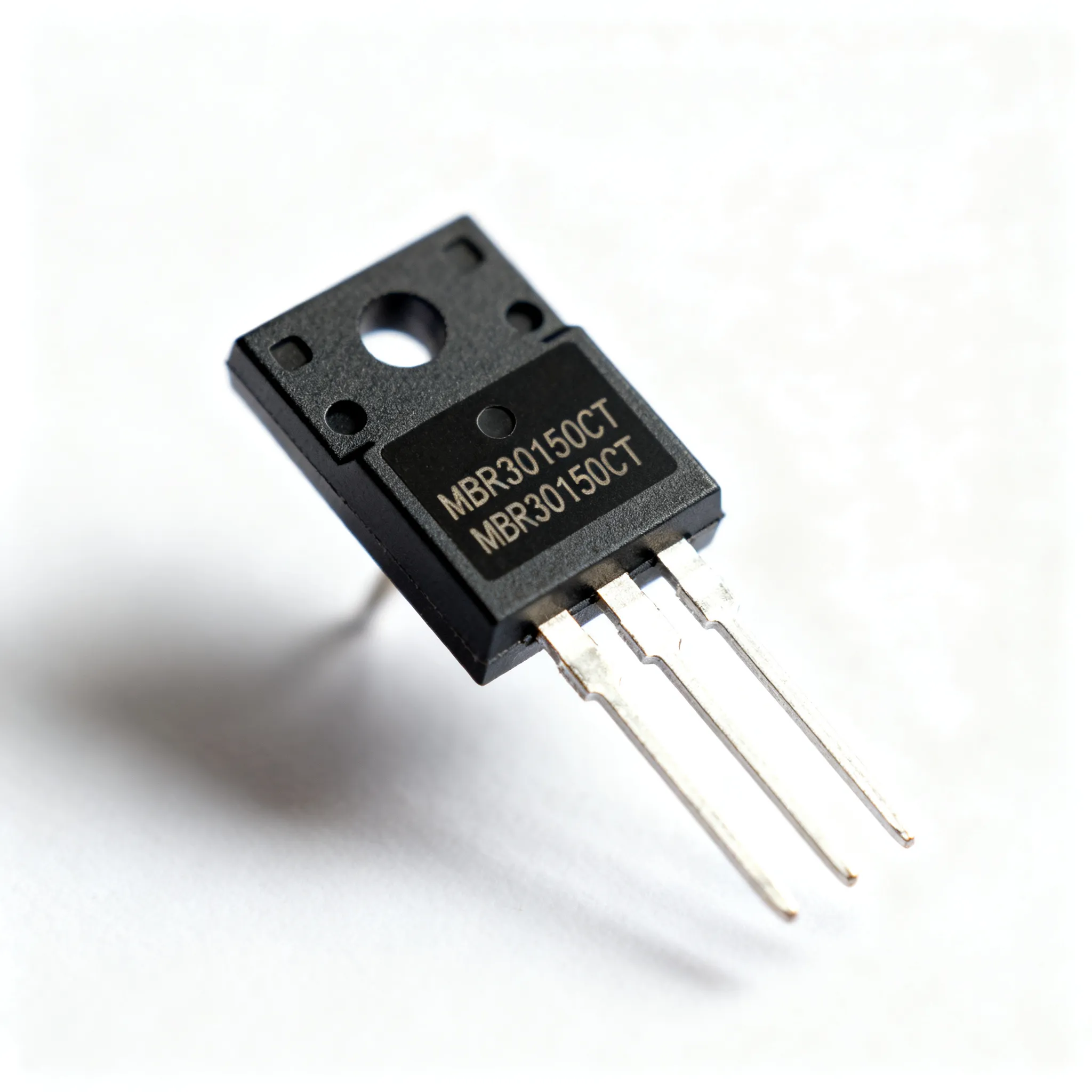
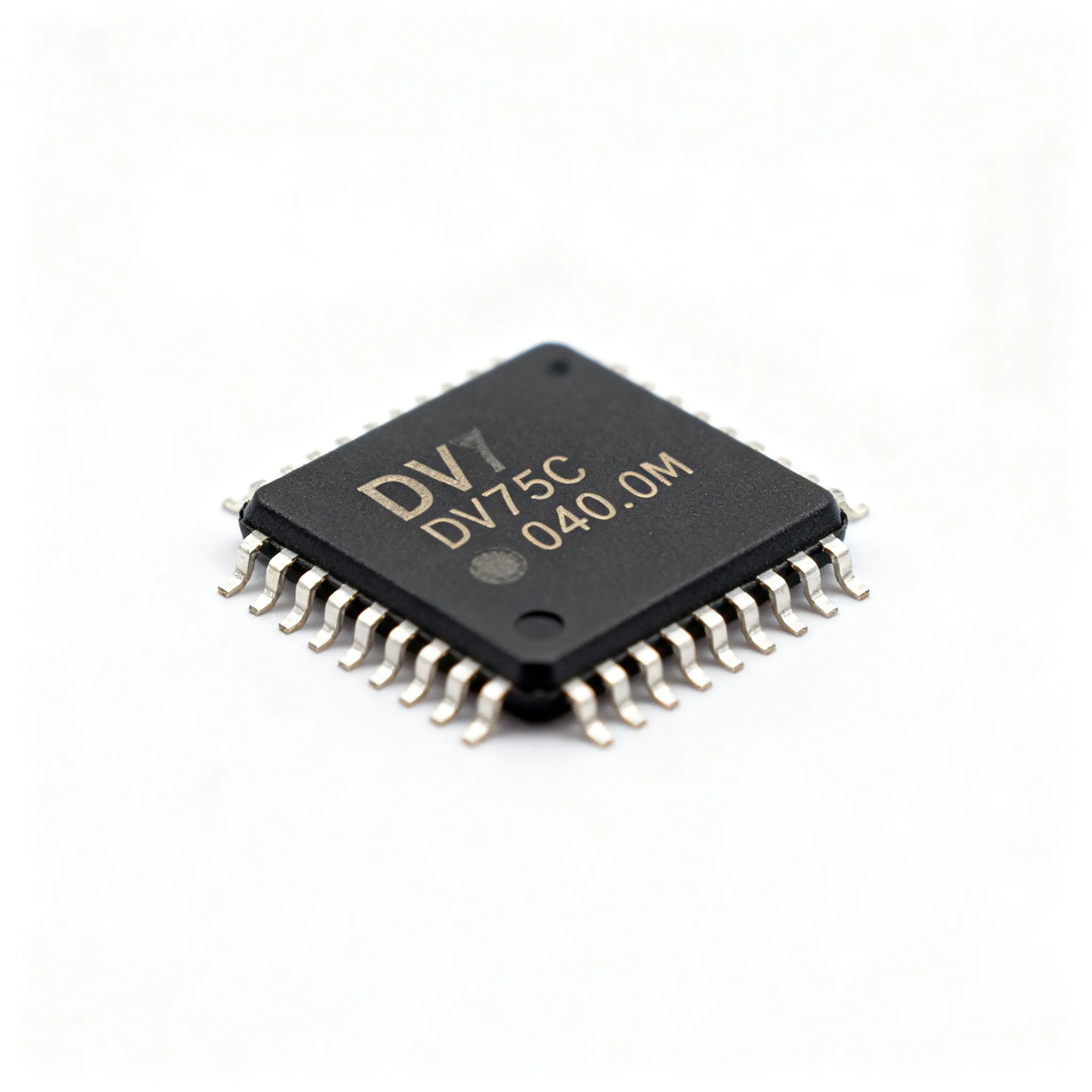
Top 10 Circuit Protection Devices for Industrial and Consumer Electronics Applications
Imagine your favorite device stops working because of too much power or heat. Circuit failures can cause lots of problems at home and in factories.
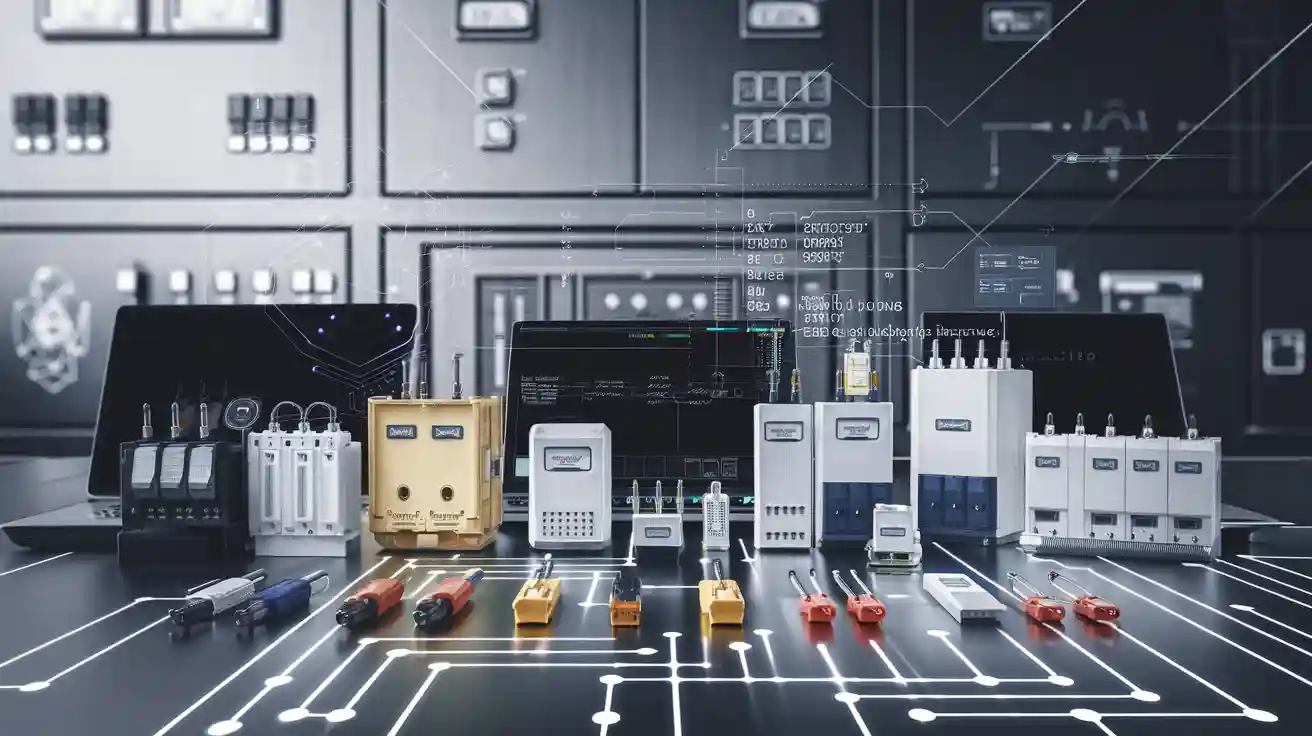
Imagine your favorite device stops working because of too much power or heat. Circuit failures can cause lots of problems at home and in factories. You might see things break, work badly, or get ruined by heat or water. Other problems are broken parts, too much electricity, and old parts. Here are 10 important Circuit Protection Devices you should know:
-
Fuses
-
Ground Fault Circuit Interrupters (GFCI)
-
Metal Oxide Varistors (MOVs)
-
TVS Diodes
-
PPTC Resettable Fuses
-
Gas Discharge Tubes (GDTs)
-
ESD Protection Devices
-
Inrush Current Limiters
-
Surge Protection Devices
These devices help keep your electronics safe. They also make them work well and last longer at home and in factories.
Key Takeaways
-
Circuit protection devices help keep electronics safe. They stop too much current, heat, or voltage from causing harm. Using the right protection devices makes your gadgets last longer. It also helps them work better and follow safety rules. Fuses, circuit breakers, GFCIs, MOVs, and TVS diodes each do a special job. They protect different parts of your electronics. You pick devices based on your equipment’s needs and where you use them. Safety standards also help you choose the best protection. Good circuit protection saves money by lowering repairs and downtime. It also helps prevent accidents and keeps people and machines safe.
Circuit Protection Devices Overview
Definition
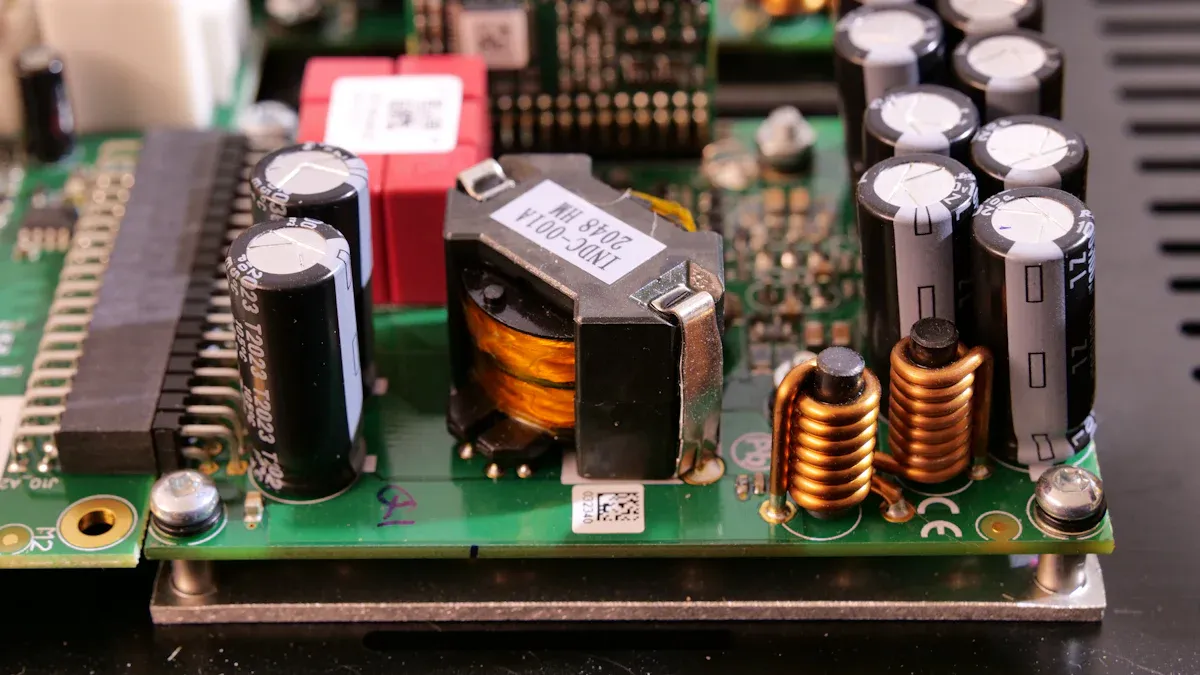
Circuit protection devices help keep electronics safe from harm. They act like guards for your circuits. These devices stop too much current, heat, or voltage. This keeps your equipment from getting damaged. Some common types are fuses, circuit breakers, and thermal limiters. Fuses melt if the current is too high. Circuit breakers can be used again after stopping an overload. Thermal limiters protect against too much heat. There are also ESD protection devices. TVS diodes and multilayer varistors help stop sudden voltage spikes and static electricity. Each device has a special job to keep electronics working well.
Importance
Circuit protection devices are very important in factories and homes. They help stop fires, broken equipment, and electric shocks. In factories, these devices protect big machines and keep people safe. At home, they keep your gadgets and appliances safe from power surges and short circuits. You also need these devices to follow safety rules and laws. For example, fuses and circuit breakers help you meet safety codes in your country.
If you do not use circuit protection, small problems can become big dangers.
Benefits
Using circuit protection devices gives you many good things. Your electronics last longer and work better. You do not have to pay for repairs as often. You also avoid losing time when things break. These devices help you meet safety rules around the world. This is important if you want to sell your products everywhere. Here is a table that shows how each device helps you stay safe and follow the rules:
|
Device Type |
Role in Safety Compliance |
Key Safety Standards Addressed |
|---|---|---|
|
Fuses and Circuit Breakers |
Stop too much current and short circuits by breaking the flow, which keeps things safe. |
IEC 61508, UL 508, IEC 60601 |
|
TVS Diodes and MOVs |
Block and absorb sudden high voltages to protect sensitive parts from surges and spikes. |
IEC 61000-4-5 (surge immunity), IEC 62368 |
|
Crowbar Circuits and Zener Diodes |
Move extra voltage away to stop overvoltage and keep parts safe. |
IEC 61508, IEC 62368 |
|
Fault Detection and Redundancy |
Watch for problems in real time and use backup safety circuits to keep things safe. |
IEC 61508, ISO 13849 |
|
EMC Measures (Filtering, Shielding, PCB Layout) |
Lower electromagnetic interference so devices work well and stay safe. |
IEC 61000, CISPR standards |
Picking the right circuit protection devices makes your electronics safer, more dependable, and ready for use everywhere.
Fuses
Operation
A fuse acts as a safety device in your circuit. You place it in line with the power supply. When too much current flows, the thin metal wire inside the fuse heats up and melts. This action breaks the circuit and stops the flow of electricity. You can think of a fuse as a one-time-use safety switch. Once it melts, you need to replace it. Fuses respond quickly to overloads or short circuits. This fast action helps protect your devices from damage.
Features
Fuses come in many shapes and sizes. You can find glass tube fuses, blade fuses, and ceramic fuses. Each type works best for certain voltages and currents. Most fuses have a clear marking that shows their rating. This rating tells you the maximum current the fuse can handle before it blows. Some fuses are slow-blow, which means they can handle short bursts of high current. Others are fast-acting and blow right away if the current gets too high. Fuses do not reset themselves. You must replace them after they operate.
Tip: Always choose a fuse with the correct rating for your device. Using the wrong fuse can lead to poor protection or even more damage.
Applications
You use fuses in many places. They protect home appliances like microwaves, TVs, and washing machines. In factories, fuses guard motors, control panels, and lighting systems. Cars and trucks also use fuses to protect their electrical systems. The electronics industry relies on fuses to keep devices safe and reliable. In 2024, the global fuse market reached about USD 4.84 billion. Experts expect it to grow to USD 9.44 billion by 2032. This growth shows how important fuses are for protecting more and more electronic devices. As you add new gadgets to your home or workplace, you depend on fuses to keep everything running safely.
Circuit Breakers
Operation
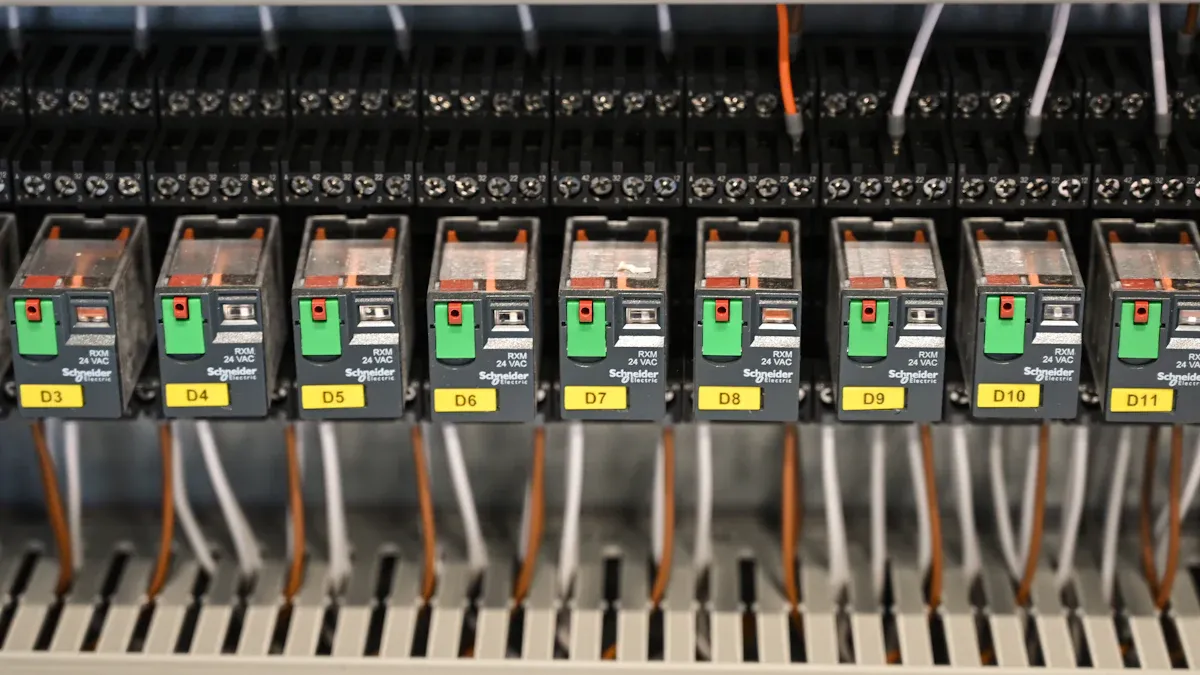
A circuit breaker helps stop damage to your circuits. If too much current flows, it senses the problem. The breaker trips and opens the circuit. This stops electricity from moving through. You do not have to replace a circuit breaker after it trips. You just reset it and use it again. This is helpful in homes and factories. You can get power back fast after fixing the issue.
Features
Circuit breakers have many useful features. They come in many sizes and ratings. Some protect small home circuits. Others work with big machines in factories. Most breakers have an on/off switch. This makes them easy to reset. Some show a light or sign when they trip. Some breakers also protect against ground faults or arc faults. These features help keep people and equipment safe.
Here is a table that shows how circuit breakers and fuses are different:
|
Feature |
Fuse |
Circuit Breaker |
|---|---|---|
|
Response Time |
Faster response to overcurrent, ideal for sensitive equipment |
Slower response compared to fuses |
|
Reusability |
Not reusable; must be replaced after blowing |
Reusable; can be reset multiple times |
Note: Fuses work faster, but you must replace them. Circuit breakers are slower, but you can use them again by resetting.
Applications
You find circuit breakers in many places. At home, they protect outlets, lights, and appliances. In factories, they guard motors and control panels. You also see them in offices, hospitals, and schools. Circuit breakers are good when you need power back quickly. In factories, they last about 8 to 15 years. How long they last depends on use and the environment. Too much shaking, water, or heat can make them wear out faster. Checking and caring for breakers helps them last longer. Facility managers often check breaker age, type, and use. This helps stop problems and keeps things working well.
Ground Fault Circuit Interrupters (GFCI)
Operation
A Ground Fault Circuit Interrupter, or GFCI, protects you from electric shock. You use it in places where water and electricity might mix. The GFCI watches the flow of electricity in a circuit. If it finds a difference between the current going out and the current coming back, it acts fast. The GFCI cuts off the power in less than a second. This quick action can save your life if you touch a live wire or if water causes a short. The device keeps checking the current all the time. Even a small leak will make it trip and stop the flow.
-
GFCIs sense imbalances in current caused by ground faults, like current leaking through a person.
-
They shut off power almost instantly to prevent dangerous shocks.
-
GFCIs work best in wet places, such as bathrooms and kitchens.
-
The device keeps monitoring the circuit for any leakage.
-
You need to test GFCIs often to make sure they work.
Tip: Always press the “Test” button on your GFCI outlets every month. This helps you know they still protect you.
Features
You can spot a GFCI by its “Test” and “Reset” buttons. These buttons let you check if the device works and reset it after it trips. GFCIs come as outlets or as breakers in your panel. Some models have a light that shows if they are working. You can install them in new or old homes. GFCIs protect you even if you use extension cords or power tools outside. They work with many types of appliances and wiring.
|
Feature |
Benefit |
|---|---|
|
Test/Reset |
Easy to check and restart |
|
Fast Response |
Stops power in less than a second |
|
Indicator Light |
Shows working status |
Applications
You need GFCIs in many places where water and electricity meet. The National Electrical Code (NEC) says you must use GFCIs in kitchens, bathrooms, laundry rooms, garages, and outdoor spaces. You also need them for outlets near sinks, pools, and even in office break rooms. The NEC updates rules every three years, so you must check local codes. GFCIs now protect more appliances, like refrigerators, microwaves, and dryers. You also find them in places like unfinished basements and near pool lighting. Using GFCIs helps you follow safety laws and keeps your home or workplace safe from shocks.
Metal Oxide Varistors (MOVs)
Operation
A Metal Oxide Varistor, or MOV, helps protect electronics from voltage spikes. When the voltage is normal, the MOV does not let much current pass. If a surge happens, the MOV changes quickly. Its resistance drops, and it lets electricity flow. This sends extra voltage away from your devices. The MOV keeps the voltage at a safer level. This stops damage before it starts. You can think of an MOV as a smart gate. It only opens when there is danger.
Features
MOVs come in many sizes and voltage ratings. Some MOVs work with about 10 volts, while others handle over 1,000 volts AC or DC. The varistor voltage is when the MOV starts to work. This is usually measured at 1mA current. For surge protection, you pick an MOV with a voltage rating just above your system’s highest supply voltage. For example, if your supply is 120 V, you might use an MOV rated at about 130 V RMS. This means you can protect many kinds of circuits. You can use MOVs for small gadgets or big machines.
MOVs react very fast to voltage spikes. They clamp the voltage almost right away. This helps protect sensitive electronics. But MOVs cannot absorb as much energy as some other devices. People often use MOVs with other protection devices for better safety.
|
Feature |
MOVs (Metal Oxide Varistors) |
GDTs (Gas Discharge Tubes) |
|---|---|---|
|
Operating Principle |
Clamping: resistance drops sharply at threshold |
Gas ionizes at a set voltage, switching to conduction |
|
Response Time |
Fast |
Slower than MOVs and TVS diodes |
|
Energy Absorption |
Good for high-energy surges, but lower than GDTs |
Handles very large surges, like lightning |
|
Typical Use |
Fast overvoltage protection |
Extreme surge protection, often with other devices |
Tip: Use MOVs for quick protection from voltage spikes. Pair them with GDTs if you need to stop very large surges.
Applications
You see MOVs in many places where surge protection is needed. They are in power strips, surge protectors, and home appliances. MOVs also protect machines, control panels, and communication devices. You can use them in both AC and DC circuits. MOVs help keep computers, TVs, and other electronics safe from power surges. These surges can come from lightning or switching events. In factories, MOVs protect motors and control systems from sudden voltage changes. Using MOVs helps your devices last longer and work better.
TVS Diodes
Operation
TVS diodes protect electronics from sudden voltage spikes. You put a TVS diode across important circuit parts. When a spike happens, the TVS diode acts very fast. It lets electricity flow and keeps voltage at a safe level. This sends extra energy away from your main components. After the spike, the TVS diode goes back to normal. Think of a TVS diode as a quick shield. It only works when there is danger, keeping your devices safe.
Features
TVS diodes have many helpful features for circuit protection. They react in nanoseconds, faster than most other devices. TVS diodes come in many voltage ratings and sizes. Some protect against both positive and negative spikes. Others work best in one direction. TVS diodes also help lower electromagnetic interference by having high impedance during normal use. This keeps signals clean and devices working well.
Here is a table showing what TVS diodes can do:
|
Feature |
Benefit |
|---|---|
|
Stops voltage spikes before damage occurs |
|
|
Wide voltage range |
Fits many types of circuits |
|
Bidirectional options |
Protects against both positive and negative surges |
|
EMI reduction |
Keeps signals clear and stable |
Tip: Always pick a TVS diode with the right voltage rating for your circuit.
Applications
You use TVS diodes where sensitive electronics need protection. These diodes help you stop failures from overvoltage. They make things safer by lowering fire risks. TVS diodes help your parts last longer by blocking spikes. They help you meet tough industry rules, like in cars and telecom. Using TVS diodes saves money on repairs and upkeep. They also lower electromagnetic interference for better device work.
You find TVS diodes in:
-
Computers such as solid-state drives and DC-DC converters.
-
Factory equipment, including smart meters and solar switches.
-
Home electronics like power tools and amplifiers.
TVS diodes also protect circuits in aerospace, defense, medical, and telecom. By using TVS diodes, you keep electronics safe, reliable, and ready for anything.
PPTC Resettable Fuses
Operation
PPTC resettable fuses help protect circuits from too much current. They are made with a special polymer and carbon particles. When your device works right, electricity moves through the fuse easily. If there is a short circuit or overload, the fuse gets hot. The polymer grows bigger and blocks many paths for electricity. This makes the fuse’s resistance get very high. The fuse does not break or burn out like normal fuses. It stays in this high-resistance state and lets only a little current pass. When you turn off the power and the fuse cools, the polymer shrinks. The fuse goes back to low resistance and your circuit works again. You do not need to buy a new fuse. It resets itself and can protect your device many times.
Tip: PPTC fuses work like automatic guards. They step in when there is trouble and step back when things are safe.
Features
PPTC resettable fuses give you many good things. They protect your devices again and again without needing a new fuse. They act fast when there is too much current or a short. You save money and time because you do not need to replace them after every problem. PPTC fuses are small and fit in many electronics. They use little power when things are normal, so your devices stay efficient. You can trust them to keep your circuits safe and working longer.
|
Feature |
Benefit |
|---|---|
|
Automatic reset |
No need for manual replacement |
|
Fast response |
Protects quickly from faults |
|
Compact size |
Fits in small electronic devices |
|
Low power loss |
Keeps devices energy efficient |
Applications
You find PPTC resettable fuses in lots of modern electronics. They protect ballasts in lighting systems and help keep transistors safe. This lowers repair costs. In transformers, these fuses stop damage from shorts and overloads. Horns in cars use PPTC fuses for quiet, automatic protection that resets itself. Mobile phone batteries use these fuses to guard against too much current and save space and energy. Cordless phone batteries and radio communication batteries also use PPTC fuses for safe, light protection.
|
Application Area |
Role of PPTC Resettable Fuses |
|---|---|
|
Ballasts |
Protects transistors, lowers repair costs, improves reliability |
|
Transformers |
Prevents damage from short circuits and overloads, reduces fire hazards |
|
Horns |
Provides automatic, silent reset protection, reduces repair rates |
|
Mobile Phone Batteries |
Offers overcurrent protection, saves space and energy |
|
Cordless Phone Batteries |
Suitable for low current and voltage, ensures safe operation |
|
Radio Communication Batteries |
Handles moderate currents, provides compact and lightweight protection |
You can count on PPTC resettable fuses to keep your electronics safe and ready for daily use.
Gas Discharge Tubes (GDTs)
Operation
Gas Discharge Tubes, or GDTs, help keep circuits safe from high-voltage surges. You put a GDT across the parts you want to protect. Inside, there is a sealed gas between two metal ends. When voltage is normal, the gas does not let electricity pass. If a surge happens, the voltage gets too high. The gas inside changes and lets current flow. The GDT sends the extra energy safely to the ground. After the surge, the gas goes back to normal. The tube stops letting electricity through. This all happens very fast, so your electronics stay safe.
Tip: GDTs are like a strong gate. They only open when a big surge tries to get in.
Features
GDTs have many features that make them good for both factories and home electronics:
-
They can handle very large surges of energy.
-
GDTs react quickly when voltage spikes happen.
-
They last a long time and do not wear out fast.
-
GDTs have low capacitance, so they do not mess up signals. This is important for fast data lines.
-
They are small and fit easily on circuit boards.
Here is a table to show how GDTs compare with other surge protection devices:
|
Feature |
GDTs |
MOVs |
TVS Diodes |
|---|---|---|---|
|
Surge Capacity |
Very High |
Medium |
Low to Medium |
|
Response Time |
Fast |
Fast |
Very Fast |
|
Reusability |
High |
Medium |
High |
|
Capacitance |
Very Low |
Medium |
Low |
Applications
You can find GDTs in many places where surge protection is needed most. In factories, GDTs are used in surge protection devices. These tubes take in big electrical spikes from lightning. GDTs help protect whole systems and sensitive equipment by handling strong surges. Factory surge protectors use GDTs with MOVs and silicon avalanche diodes. This helps them react fast and work well during surges. These devices can handle tough surges in factories, so your equipment stays safe and keeps working.
-
GDTs protect power lines and phone lines from lightning.
-
You see GDTs in surge protectors at home and in offices.
-
Telecom equipment uses GDTs to stop voltage spikes.
-
Solar and wind energy systems use GDTs for extra safety.
GDTs give you a strong and long-lasting way to send dangerous surges away from your important systems, so everything keeps running well.
ESD Protection Devices
Operation
ESD protection devices keep electronics safe from static electricity. Static can jump from your body to a device when you touch it. This can hurt small parts inside. ESD protection devices act like shields for these parts. They move extra static away very fast. TVS diodes are the most common ESD protection in consumer electronics. You put them on data lines or power lines. When static hits, the TVS diode reacts in less than a second. It clamps the voltage and sends the charge to the ground. This keeps your device safe and working well.
Tip: Always use ESD protection on data ports like USB, HDMI, and Ethernet. These places are easy for static to get in.
Features
You want ESD protection devices that work fast and do not slow your circuits. Good ESD devices have low clamping voltage. This stops surges before they get too high. They also have low capacitance, so data moves quickly. Low leakage current helps save energy. Fast response time is very important. TVS diodes, like Semtech’s Shield brand, protect your devices in less than a billionth of a second.
Here are some features you should look for:
-
Low clamping voltage
-
Low capacitance
-
Low leakage current
-
Fast response time
A table can help you compare:
|
Feature |
Why It Matters |
|---|---|
|
Low Clamping Voltage |
Stops surges early |
|
Low Capacitance |
Keeps data signals fast |
|
Low Leakage Current |
Saves energy |
|
Fast Response |
Protects before damage occurs |
Applications
You use ESD protection devices in many places. In consumer electronics, you find them in mobile phones, laptops, TVs, tablets, and appliances. TVS diodes protect data ports like USB, HDMI, and Ethernet. Wearables and smart home devices also use ESD protection to stay reliable. In factories, ESD devices play a bigger role. You see wrist straps, floor mats, ESD gloves, and ionizing blowers. These tools help control static and keep products safe during assembly. ESD protection lowers product failures and keeps workers safe. When you pick the right ESD devices, your electronics last longer and work better.
Inrush Current Limiters
Operation
Inrush current limiters keep your devices safe from sudden power surges when you turn them on. When you switch on a device, a big rush of electricity can enter the circuit. This can hurt sensitive parts or make fuses blow. Inrush current limiters, which are often made from NTC thermistors, help stop this problem. At room temperature, these thermistors have higher resistance, usually about 1 ohm at 25°C. This slows down the first big current. As the device gets warmer, the thermistor’s resistance drops fast, sometimes down to 0.018 ohms. Then, the limiter lets normal current pass with almost no resistance. This gives you protection when starting up and lets your device work well after.
Tip: Always use inrush current limiters with circuits that have large capacitors or transformers. This helps stop damage from high currents when you turn things on.
Features
Inrush current limiters have many helpful features:
-
Automatic Adjustment: The resistance changes as the device heats up. You do not need to reset or replace it after each use.
-
Compact Size: These limiters are small and fit easily on circuit boards.
-
Energy Efficiency: After the device starts, the low resistance means little power is lost.
-
Wide Range: You can pick limiters with different resistance levels for your needs.
Here is a simple comparison:
|
Feature |
Benefit |
|---|---|
|
High initial resistance |
Stops big surges at startup |
|
Low hot resistance |
Keeps things running smoothly |
|
Self-resetting |
No need to fix or change it |
Applications
You use inrush current limiters in many places. Power supplies and adapters need them to stop big surges when turning on. Audio amplifiers, LED lights, and factory machines also use these devices. Large motors and transformers need inrush protection because they pull a lot of current at startup. You also find inrush current limiters in battery chargers and home appliances. Using these devices helps your electronics last longer and work better.
Surge Protection Devices
Operation
Surge protection devices help keep electronics safe from sudden voltage jumps. These jumps can happen because of lightning or changes in the power grid. Turning big machines on and off can also cause spikes. You put surge protection devices in important spots in your circuit. When a spike happens, the device acts fast. It either soaks up or sends away the extra energy. This keeps your important equipment from getting hurt. Your devices keep working because the surge is stopped.
There are three main kinds of surge protection devices:
-
MOVs (Metal Oxide Varistors): These work like a gate that closes when voltage gets too high. They soak up energy and limit current during a surge. MOVs are good for big surges but can wear out after many spikes.
-
GDTs (Gas Discharge Tubes): These stay off until a very high voltage shows up. Then, they turn on and send the surge safely to the ground. GDTs last a long time and do not leak current, but they are a little slower than other types.
-
TVS Diodes (Transient Voltage Suppressors): These act very fast when voltage spikes happen. TVS diodes clamp the voltage quickly, so they are great for protecting sensitive electronics from quick, small surges.
Features
Surge protection devices have many helpful features:
-
Fast Response: TVS diodes act in nanoseconds. MOVs and GDTs handle bigger surges.
-
Energy Handling: MOVs can take in big surges. GDTs can handle even bigger surges for a short time.
-
Durability: GDTs last longer because they do not leak current. MOVs may wear out over time.
-
Combination Use: You can use MOVs and GDTs together. This gives you both quick action and long life.
Tip: Always pick the right surge protection device for your equipment to stay safe.
Applications
You use surge protection devices in lots of places. Power strips and home surge protectors use MOVs. Telecom systems and factory controls often use GDTs for strong surge safety. TVS diodes protect data lines, USB ports, and sensitive parts in computers and phones. Picking the right Circuit Protection Devices helps your equipment last longer and saves money on repairs.
Choosing Circuit Protection Devices
Application Needs
First, think about what your device needs. Check if you are protecting a heater, motor, or power supply. Each one needs a different kind of protection. Look at the voltage and current your system uses. Big machines in factories can get strong surges from lightning or switching. You need to know how big and how long these surges last. Some devices, like TVS diodes, act very fast when voltage spikes. Fuses stop too much current but must be replaced after they work. Series diodes help with reverse polarity but can lower voltage. Always think about how fast, reliable, and costly each device is. Make sure the device you pick fits your system.
-
Find out if your load is resistive, inductive, or capacitive.
-
Know the voltage and current your system uses.
-
Think about problems like overcurrent, overvoltage, or ground faults.
-
Pick devices that work well together, like fuses and TVS diodes.
Tip: Always read datasheets and compare how fast and strong each device is before you choose.
Environment
Where you use your Circuit Protection Devices is important. High heat can make resistance go up and parts wear out faster. Cold can make metal shrink and cause water drops, which may lead to shorts. Humid air can cause rust or short circuits. Dry air can make static electricity, which can hurt small parts. If your device shakes or gets hit, you need strong protection. You can use coatings, better parts, or control air and water to help your devices last longer.
|
Environmental Condition |
Effect on Devices |
What You Can Do |
|---|---|---|
|
More resistance, faster aging |
Use cooling or ventilation |
|
|
Low Temperature |
Metal contraction, condensation |
Prevent moisture buildup |
|
High Humidity |
Corrosion, short circuits |
Use protective coatings |
|
Low Humidity |
More static electricity |
Add ESD protection |
|
Vibration/Shock |
Mechanical stress |
Choose rugged devices |
Compliance
You must follow rules to keep your devices safe and legal. Different countries and jobs have their own rules. For example, IEC 61000-4-2 is for ESD protection. IEC 61000-4-5 is for overvoltage. If you work with cars, you may need AEC-Q200 or ISO 7637-2. These rules make sure your Circuit Protection Devices can handle real problems like static or surges. The ESD Association gives tips and test methods. Always check the newest rules for your job. Reading datasheets and guides helps you pick the right device and follow the rules.
-
Follow rules like IEC 61000-4-2 and IEC 61000-4-5.
-
For cars, check AEC-Q200 and ISO 7637-2.
-
Use ESD Association tips for best results.
-
Always look at datasheets and test results.
Note: Following these rules helps your products stay safe everywhere.
You help keep your electronics safe and working well. Circuit Protection Devices stop big repair bills and keep things running. Here are some ways they save money over time:
|
Long-term Cost Benefit |
Explanation |
|---|---|
|
Reduced Equipment Damage |
Stops your important systems from breaking, so you do not have to buy new ones. |
|
Minimized Downtime |
Keeps things working, so you do not lose money or upset customers. |
|
Lower Maintenance Costs |
Some SPDs do not need much care and can be checked from far away, so you spend less on fixing things. |
|
Improved Safety |
Makes things safer, so there are fewer accidents and less money spent on insurance. |
|
Extended Equipment Longevity |
Helps your machines last longer, so you get more use for your money. |
Picking the right protection does more than save money. Good circuit protection helps you:
-
Find and fix problems fast to keep people safe.
-
Keep important parts from getting ruined.
-
Have fewer problems and fix things quicker.
-
Make your system work better and more often.
Always learn about new protection and follow your local rules. Look up new ideas or ask experts for help. If you act now, your electronics will last longer and work better.
FAQ
What happens if you do not use circuit protection devices?
Your electronics can break or catch fire. You might get shocked. Circuit protection devices stop these problems before they start. They keep your home and workplace safe.
How do you choose the right fuse for your device?
You need to check the voltage and current your device uses. Pick a fuse with a rating just above your device’s normal current. Always read the device manual or datasheet for the best choice.
Can you reuse a fuse after it blows?
No, you cannot reuse a fuse. Once it blows, you must replace it with a new one. Circuit breakers and PPTC resettable fuses can be used again.
Tip: Always turn off power before replacing a fuse.
What is the difference between a surge protector and a circuit breaker?
|
Surge Protector |
Circuit Breaker |
|---|---|
|
Stops voltage spikes |
Stops too much current |
|
Protects electronics |
Protects wiring |
|
Often single-use |
Can be reset |
You need both for full protection.