Understanding PCB Assembly Costs: Key Factors That Impact Your Electronics Manufacturing Budget
PCB assembly costs rely on many things that affect money spent. For example, the global PCB industry made $61.3 billion in 2019. This was a small drop because of outside problems.
PCB assembly costs rely on many things that affect money spent. For example, the global PCB industry made $61.3 billion in 2019. This was a small drop because of outside problems. Even with issues like COVID-19, the industry grew to $62.5 billion in 2020. Experts think it will grow to $79.2 billion by 2025. This means it will grow by 5% each year. These numbers show how material costs, design choices, and production steps affect prices. Knowing these factors helps you save money and improve your manufacturing process.
Key Takeaways
-
Learn about material costs to manage your PCB budget. Pick materials that balance good quality and low price.
-
Keep your PCB design simple to save money. Using fewer layers and common parts lowers costs but keeps it working well.
-
Choose trustworthy suppliers for steady parts supply. Planning early avoids delays and extra expenses.
-
Think about how many you’ll make when budgeting. Making more at once costs less per piece than testing a few.
-
Spend on good testing and skilled workers. This makes products last longer and cuts future repair costs.
Material Costs in PCB Assembly
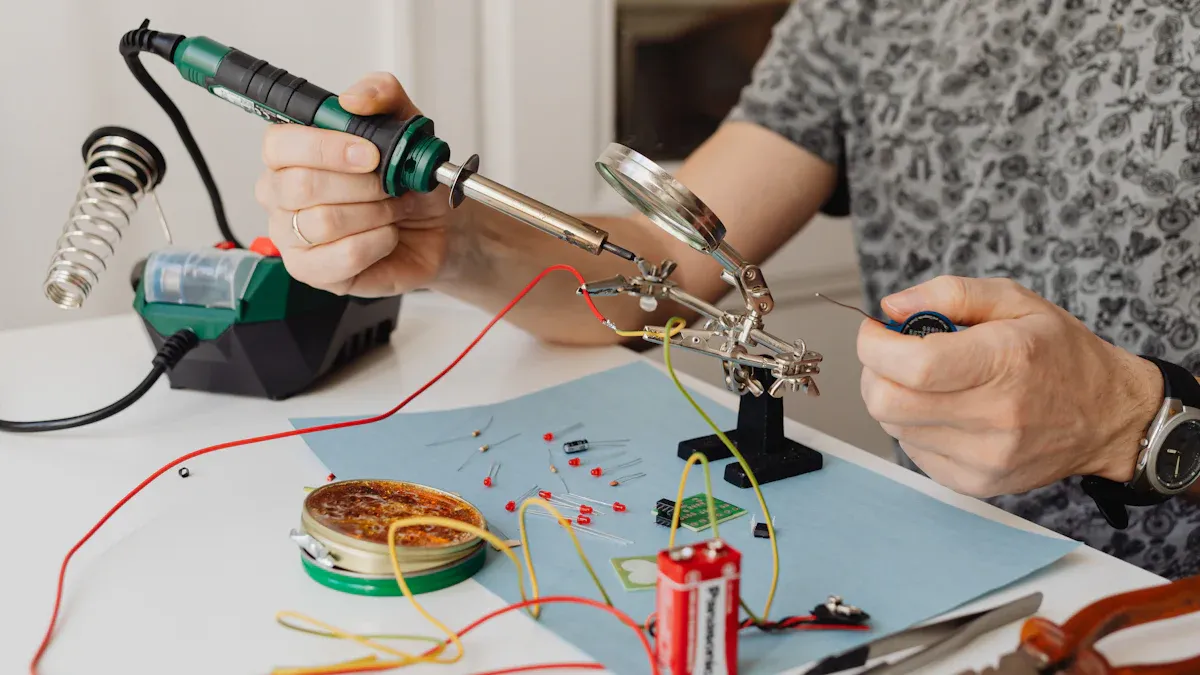
Knowing material costs is important for understanding PCB assembly prices. The materials you pick affect the cost, quality, and how well your product works. Let’s look at what impacts material costs in PCB assembly.
PCB Substrate and Material Selection
The substrate is the base of your PCB. It affects strength, heat resistance, and electrical performance. Common substrates include FR-4, polyimide, and metal-core PCBs. FR-4, made of fiberglass and resin, is popular for its good price and performance. Polyimide is better for heat resistance but costs more. Metal-core PCBs are great for heat control, like in LED lights, but they are expensive.
You need to think about your product's quality needs when picking materials. High-quality PCBs often need better materials, which cost more. But spending on good materials can make your product last longer and work better.
Component Sourcing and Availability
Getting components affects how much PCB assembly costs. Global supply problems can make finding parts hard. Issues like complex manufacturing, worker shortages, and high demand add to this. For example:
|
Problem |
Details |
|---|---|
|
Complex Manufacturing |
Making electronic parts can take up to 6 months. |
|
Worker and Material Shortages |
Lack of copper and resin makes sourcing harder. |
|
COVID-19 Effects |
Factory closures during COVID-19 still hurt supply chains. |
|
High Demand |
Industries like cars and electronics fight for limited parts. |
To avoid these problems, work with trusted suppliers for steady parts. Plan ahead and keep extra stock to prevent delays and extra costs.
Material Quality and Its Impact on Costs
Material quality changes both the cost and how well your product works. Better materials cost more but lower the chance of problems. For example, cheap copper can cause bad conductivity and overheating, hurting product quality.
Using good materials helps your PCB meet standards and work well in different conditions. This improves quality and lowers future repair costs. Balancing cost and quality is key to making a good PCB without overspending.
Design Complexity and PCB Assembly Cost
How complex your PCB design is affects its cost. More detailed designs need extra steps, which raise expenses. Knowing how design choices affect costs helps you decide wisely.
Layer Count and Board Size
The number of layers in a PCB changes its price. Simple boards with one layer are cheaper to make. Boards with many layers need extra steps like drilling and lamination. These steps make them cost more. Bigger boards also cost more because they use more materials and take longer to make.
For example:
|
Extra Steps Needed |
Cost Impact |
|
|---|---|---|
|
Simple PCB |
1 |
Lower Cost |
|
Complex PCB |
3-4 |
Higher Cost |
Think about how many layers and how big the board needs to be. If your product doesn’t need a complex design, fewer layers can save money without losing quality.
Component Density and Placement
How close parts are on a PCB affects its cost. Crowded designs need careful placement, which takes more time and costs more. Machines can help with dense designs, but they still add to the price.
Spreading parts out evenly can lower costs. It makes assembly easier and reduces mistakes. Try to balance how the PCB works with how much it costs when placing parts.
Custom vs. Standard Designs
Custom PCB designs give more options but cost more. They need special layouts, unique parts, and custom manufacturing. Standard designs use common parts and templates, which cost less and are faster to make.
If your product doesn’t need a custom design, a standard one is better. It saves money and still works well. Only choose custom designs if they really improve your product.
Assembly Process and Costs
Surface Mount Technology (SMT) vs. Through-Hole Technology
Choosing SMT or Through-Hole Technology affects assembly costs. SMT places parts on the PCB's surface. It’s great for small designs and fast production. Through-Hole Technology puts parts into drilled holes. It makes stronger connections for products under physical stress.
SMT is quicker and cheaper for large-scale production. Through-Hole is better for durable products but costs more due to extra labor. Pick the method based on your product’s needs and budget.
Manual vs. Automated Assembly
Manual assembly means workers place parts by hand. It’s good for small batches or testing new designs. Automated assembly uses machines to place and solder parts. It’s faster and ensures consistent quality.
Automation lowers mistakes and inspection time, improving product quality. But, it needs expensive equipment, raising initial costs. Manual assembly might seem cheaper but can cost more if errors happen. For high-quality results, automation is often the better choice.
Testing and Quality Assurance Costs
Testing ensures your PCB works properly. Functional tests check if it performs as expected. Visual checks find problems like bad soldering or misplaced parts. Advanced tools like AOI give detailed inspections.
Testing adds to costs but prevents failures and repairs later. Spending on good testing improves reliability and product value. Focus on quality checks to avoid problems in your assembly process.
Production Volume and PCB Manufacturing Cost
Knowing how production size affects PCB costs helps manage money. Making a few or many PCBs changes the cost per piece.
Prototyping vs. Mass Production
Prototyping makes a small number of PCBs to test ideas. This costs more per piece because of setup fees and special tools. For example, one PCB can cost $20 during prototyping. Mass production lowers the cost per piece, often below $2.
|
Production Type |
Cost per Piece |
|---|---|
|
Prototyping |
$20 |
|
Mass Production |
<$2 |
Scaling up saves money, but finalize your design first. This avoids expensive changes later.
Economies of Scale in PCB Assembly
Making more PCBs lowers costs through economies of scale. Fixed costs like setup spread across many pieces, reducing the price. Buying parts in bulk also gives discounts, saving more money.
For example, ordering 1,000 parts instead of 100 lowers prices for items like resistors. Using economies of scale helps you spend less while getting more value.
Lead Times and Their Impact on Costs
Lead times are how long it takes to finish your PCB order. Faster lead times cost more because of rush fees. Planning ahead avoids these extra charges.
Longer lead times let manufacturers find cheaper parts and plan better. This lowers costs and makes production smoother. Balance lead times with deadlines to keep PCB costs under control.
Labor and Overhead Costs in PCB Assembly
Labor and overhead costs affect how much PCB assembly costs. These include worker pay, building upkeep, and machine care. Knowing these costs helps you plan your budget better.
Regional Labor Cost Differences
Labor costs change based on where your PCB is made. Countries like China or India have lower wages, making assembly cheaper. Places like the U.S. or Europe have higher wages but offer skilled workers and better quality.
Think about cost versus value when picking a location. Cheaper labor saves money, but skilled workers improve product reliability. Match your product needs to find the best option.
Skilled Workers and Their Impact on Quality and Cost
Skilled workers make your PCB assembly better. They handle tricky parts carefully, reducing mistakes and improving quality. This makes your product work better overall.
Skilled workers cost more, but they save money by avoiding errors. For complex designs, paying for experienced workers is worth it. It helps your product last longer and work well.
Building and Machine Costs
Building and machine costs include rent, power, and repairs. Advanced machines, like pick-and-place tools, work faster but cost a lot. These costs are added to your assembly price.
Choose manufacturers who use their resources wisely. Efficient factories lower costs and keep PCB quality high. Reliable manufacturers also avoid extra expenses while delivering good results.
Hidden Costs in PCB Assembly
Shipping and Logistics Costs
Shipping adds extra costs to making PCBs. These include packaging, freight, and customs fees. If your manufacturer is overseas, costs rise with import taxes. Shipping delays can also mess up schedules, causing rush fees or storage costs.
To save money, pick manufacturers with good shipping systems. Combining shipments or using local suppliers can cut costs. Planning ahead helps your PCBs arrive on time without wasting money.
Compliance and Certification Requirements
Following rules ensures your PCB is safe and reliable. Certifications like ISO, RoHS, and UL prove your product meets safety standards. But getting certified costs money for testing and paperwork.
You can lower these costs by designing for compliance early. Work with manufacturers who know the certification process well. While it costs more upfront, compliance improves quality and helps your product sell better.
Unexpected Costs in PCB Manufacturing
PCB production can have surprise expenses that hurt your budget. Hidden fees like setup charges or material costs may appear. Design problems or wrong parts can lead to expensive fixes. These issues delay projects and lower value.
To avoid this, choose manufacturers with clear pricing and quotes. Check your design carefully to spot problems early. Fixing issues before production saves money and keeps costs steady.
Tips to Save Money on PCB Assembly
Easy-to-Make PCB Designs
Making your PCB easy to produce saves money. Keep the design simple. Avoid using too many layers or tricky layouts. Simple designs are faster to make and have fewer mistakes.
Use common parts instead of custom ones. Custom parts cost more and take longer to get. Standard parts are cheaper and easier to find. Place parts evenly and logically. This makes assembly quicker and improves quality.
Work with your manufacturer early. They can suggest ways to save money, like using less material or speeding up production. Small changes now can save a lot later.
Choosing Trustworthy Suppliers and Manufacturers
Picking good suppliers and manufacturers helps control costs. Reliable partners deliver on time and make quality products. Research their history and read customer reviews before choosing.
Ask how they get their parts. Good manufacturers have strong supplier connections. This helps them buy parts at lower prices and avoid delays.
Check their tools and workers. Skilled workers and advanced machines handle tough designs better. They also ensure your PCB works well. Building a strong relationship with a good manufacturer saves money and improves results.
Balancing Cost and Quality for Better Results
Finding the right balance between cost and quality is important. Cheap materials or bad assembly can cause problems later. Spending on good parts and skilled workers makes your PCB last longer.
Think about long-term savings, not just upfront costs. High-quality PCBs need fewer repairs and last longer. For example, materials like FR-4 or polyimide cost more but improve durability and performance.
Review your process often to find ways to save. Cutting waste, improving workflows, and using better tools can lower costs without hurting quality. By focusing on both cost and quality, you make a product that works well and builds trust with customers.
PCB assembly costs come from materials, design, production size, and labor. Knowing these factors helps you plan your spending wisely. Keeping designs simple and picking trusted suppliers can lower costs. This saves money without hurting the quality of your product. Using Design for Manufacturability (DFM) makes production smoother and adds value. Working with skilled manufacturers ensures your PCB is high-quality and affordable. Improving these areas helps you save money and get lasting value for your electronics.
FAQ
What’s the cheapest way to get PCB parts?
Work with trusted suppliers who give good prices and quality. Buying in bulk often lowers costs. Plan ahead to avoid last-minute buying, which costs more. Check the supplier’s reviews to avoid delays or bad parts.
How does a complex design raise PCB costs?
Complex designs need more layers and careful assembly, costing more. Simplify your design by using fewer layers or common parts. Keep it simple but functional to save money without losing performance.
Can testing designs early save money later?
Yes, testing designs early finds mistakes before big production starts. It costs more per piece but helps fix problems early. This saves money by reducing waste and extra work later.
Why do labor costs change in different places?
Labor costs depend on wages and worker skills in each area. Countries like China have lower wages, making assembly cheaper. Places with higher wages often have better workers and tools, improving quality. Pick a location based on your budget and needs.
How can you stop surprise costs in PCB assembly?
Ask manufacturers for clear price details to avoid surprise fees. Check your design for problems before production starts. Work with manufacturers who explain costs clearly. Planning ahead stops rush fees and fixes that cost extra.