What Are HiSilicon AI SoCs and Why Your Camera Needs One
A HiSilicon AI SoC serves as the central intelligence for smart cameras. This advanced system-on-chip is specifically engine
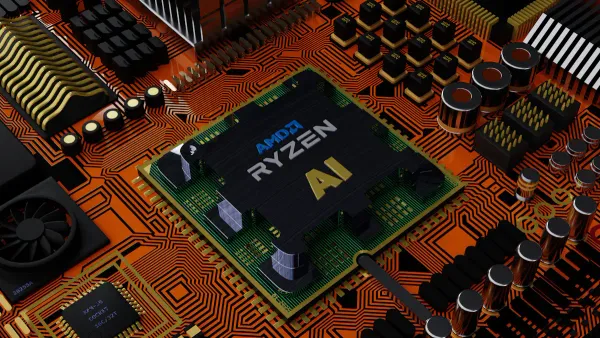
A HiSilicon AI SoC serves as the central intelligence for smart cameras. This advanced system-on-chip is specifically engineered for demanding AI operations, effectively upgrading a basic camera into an intelligent surveillance system equipped with AI vision. Think of it this way: a standard camera merely provides sight, whereas a camera powered by a HiSilicon AI SoC offers sight coupled with a brain that comprehends its observations. This on-device AI capability, stemming from dedicated HiSilicon AI SoCs, is a significant catalyst for substantial industry expansion.
| Metric | Value |
|---|---|
| Market Size (2024) | ~USD 10 billion |
| Projected Market Size (2030) | ~USD 22 billion |
| CAGR (2024-2030) | ~15% |
Key Takeaways
- HiSilicon AI SoCs make smart cameras truly intelligent. They add a 'brain' to the camera, helping it understand what it sees.
- These special chips have a dedicated NPU, which is like a super-fast engine for AI tasks. It helps the camera process information quickly and efficiently.
- Cameras with HiSilicon AI SoCs give you better pictures, especially in the dark. They also send more accurate alerts, so you get fewer false alarms.
- On-device AI keeps your data private. The camera processes video locally, so your sensitive information stays on the device and does not go to the cloud.
MCU VS. SOC: CORE CAMERA PROCESSORS
To understand what makes a camera truly "smart," one must first look at its core processor. The two main types are the Microcontroller Unit (MCU) and the System-on-Chip (SoC). Each serves a very different purpose. An advanced mobile SoC contains powerful components. The capabilities of a modern mobile SoC are impressive.
THE MCU: FOR SIMPLE, SINGLE TASKS
A Microcontroller Unit is a simple, low-cost processor. It handles basic, dedicated functions within a device. Think of it as a specialist that performs one job very well. In a smart camera, an MCU manages simple hardware operations. These tasks do not require significant computing power.
Common MCU responsibilities include:
- Controlling a status indicator light, like a red 5mm LED.
- Managing a surface mount device (SMD) RGB LED to change its color.
- Operating strobe and shutter control systems.
- Handling simple lighting systems, including dimming levels.
THE SOC: A FULL SYSTEM ON A CHIP
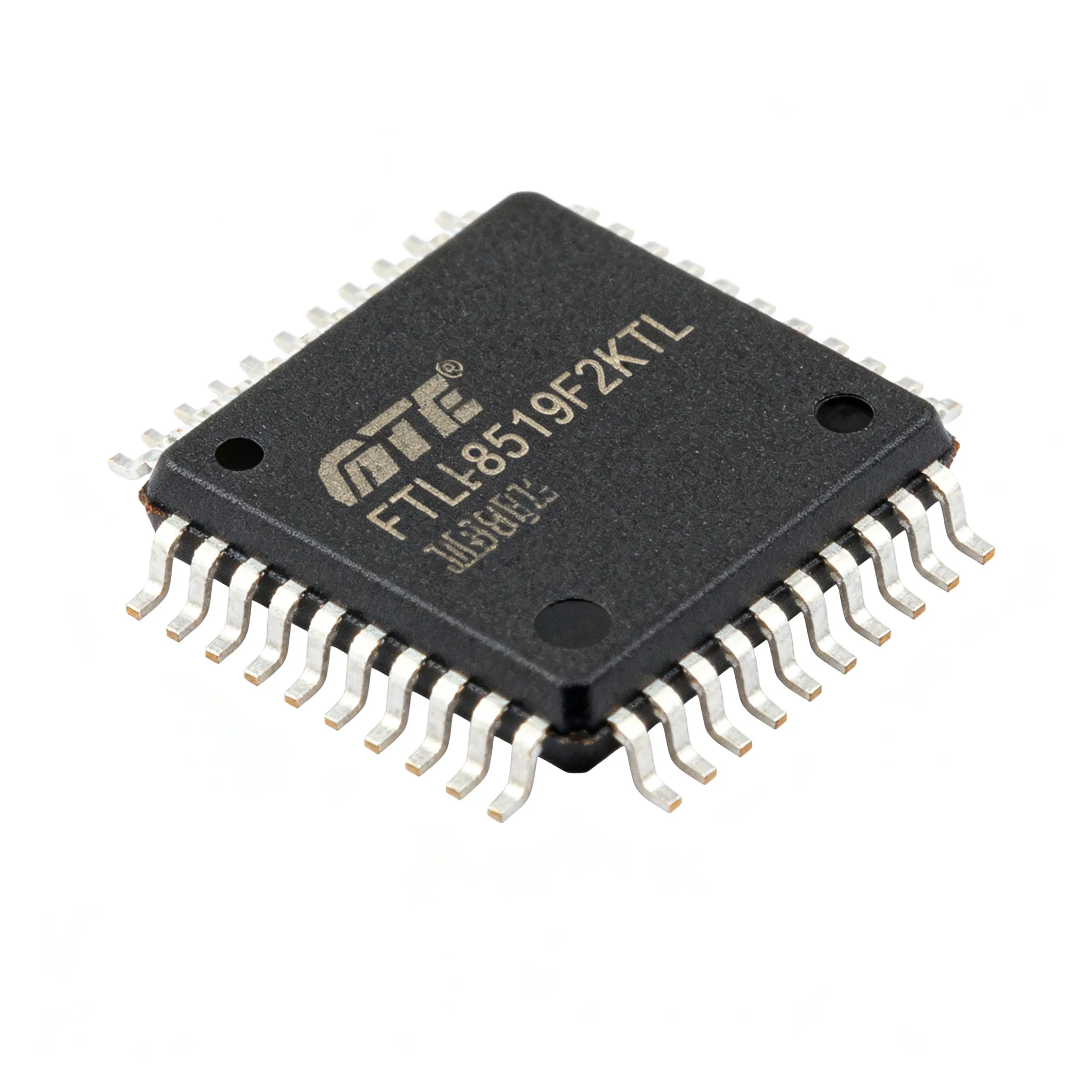
The SoC, or system-on-chip, is far more advanced. It is a complete computer packed onto a single piece of silicon. A system-on-chip integrates multiple processing components. This allows the SoC to manage the entire camera's operation. A powerful mobile SoC can even run a full operating system like Android or Ubuntu. The design of a mobile SoC enables it to handle many complex jobs at once.
An SoC often includes a CPU as its control center, a GPU for graphics, and an Image Signal Processor (ISP) to enhance image quality. This integration makes the system-on-chip incredibly efficient.
This powerful architecture allows a single SoC to perform multiple demanding tasks simultaneously. For example, a high-performance mobile SoC can encode 4K video, stream it over Wi-Fi, and run AI analytics all at the same time. The SoC is the true brain of the operation. In fact, a complex system-on-chip can even contain smaller MCUs or their functions within its design. The SoC represents a huge leap in processing capability. This system-on-chip is what gives a smart camera its intelligence. The SoC is the key.
THE ADVANTAGE OF HISILICON AI SOCS
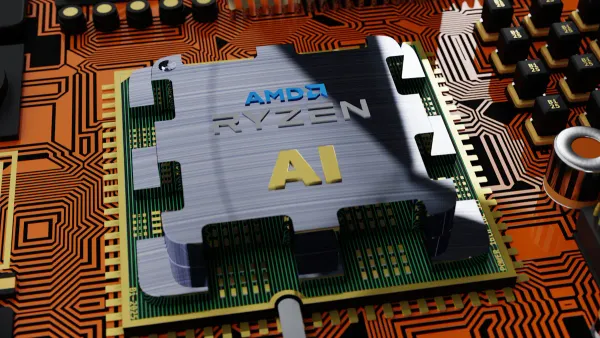
While a standard SoC gives a camera basic intelligence, a HiSilicon AI SoC provides a distinct and powerful advantage. The key difference lies not in the CPU or GPU, but in a specialized component engineered exclusively for artificial intelligence. This component elevates the device's capabilities far beyond simple processing. The true power of HiSilicon AI SoCs comes from this dedicated hardware.
THE DEDICATED NPU: AN AI ENGINE
The secret weapon inside a HiSilicon AI SoC is the Neural Processing Unit (NPU). Think of the NPU as a dedicated brain for AI. A standard SoC uses its general-purpose GPU for AI tasks. A GPU is a powerful tool for graphics but is not specialized for AI. Using a GPU for AI is like asking a versatile construction worker to perform delicate brain surgery. The worker might be strong, but they lack the specific tools and training for the job.
The NPU, in contrast, is the specialized surgeon. Its architecture is built from the ground up for one purpose: running AI models with maximum efficiency.
- Specialized Design: An NPU contains dedicated hardware for the exact mathematical operations used in AI, such as matrix multiplication. Its design prioritizes the data flow needed for AI workloads.
- High Efficiency: The NPU architecture mimics the human brain's structure. It achieves high parallelism for AI computing tasks while consuming significantly less energy. This low-power design is critical for an always-on camera.
- Optimized Memory: It features high-speed on-chip memory. This minimizes data transfer delays, which are a common bottleneck in AI performance.
A GPU is a generalist processor adapted for AI. A Neural Processing Unit is a specialist AI processor crafted for peak AI performance and low-power operation. This makes the NPU the superior engine for on-device AI.
This specialized design makes the NPU a far more efficient AI processor than a general-purpose GPU. It delivers better AI performance with lower power consumption, making it the ideal mobile AI chip for smart devices. This is the core of AI chips technology.
FASTER ON-CAMERA AI INFERENCE
The primary job of the NPU is to perform "inference." AI has two main stages: training and inference.
- Training: This is the learning phase. Developers use massive datasets and powerful computers to teach an AI model how to perform a task, like recognizing a human face. This AI training process is incredibly resource-intensive and happens in data centers, not on your camera.
- Inference: This is the "thinking" phase. The camera uses the pre-trained model to make decisions in real-time. When your camera identifies a person, it is performing AI inference.
A standard SoC running AI inference on its CPU or GPU is slow and inefficient. It can lead to delays and missed events. The NPU, however, is built for this exact task. It executes AI inference tasks at incredible speeds. This allows the camera to analyze video, recognize objects, and make decisions instantly, right on the device itself. This process is a key feature of low-power inference chips.
The performance of an NPU is often measured in Tera Operations Per Second (TOPS). This metric indicates how many trillion calculations the chip can perform each second. Higher TOPS generally means faster and more complex AI inference capabilities. The performance of HiSilicon's NPU is a testament to its advanced design.
| Model | INT8 TOPS (For Inference) |
|---|---|
| Hi3796CV300 | 9 |
| Ascend 310 | 16 |
This high-performance AI inference capability means your camera does not need to send video to the cloud for analysis. The NPU handles all the learning-based analysis locally. This results in faster alerts, greater accuracy, and enhanced privacy. The NPU in the SoC ensures top-tier AI performance for any learning task. The SoC and its NPU work together to deliver superior AI inference performance. The SoC manages the system, while the NPU accelerates the AI learning and inference. This synergy provides unmatched performance for smart cameras.
KEY BENEFITS OF ON-DEVICE AI
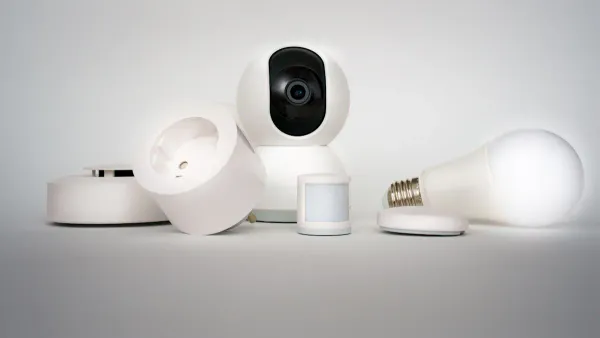
Placing a powerful NPU directly on the camera unlocks transformative benefits. This on-device processing, also known as edge computing, moves AI tasks from the cloud to the camera itself. This shift delivers superior performance in image quality, alert accuracy, and data privacy. The result is a smarter, faster, and more secure device.
SUPERIOR IMAGE QUALITY
A HiSilicon AI SoC dramatically improves a camera's vision, especially in difficult lighting. This is possible because the NPU works with the Image Signal Processor (ISP) to create an AI-ISP. This system uses AI to clean up video in real-time. Traditional cameras struggle in low light, producing grainy images where details are lost. An AI-ISP uses advanced AI algorithms to fix this.
This AI-powered approach delivers a clear performance advantage over older methods.
| Feature | AI-ISP (HiSilicon) | Traditional Methods |
|---|---|---|
| Person Detection Accuracy (0.01 lux) | 92% | 78% |
| Noise Reduction | Advanced Algorithms | Basic |
| Detail Retention | Better | Less |
| Clarity in Dark Environments | Enhanced | Standard |
The AI-ISP achieves this superior performance through several key functions:
- It uses neural networks to intelligently remove noise while keeping important details like faces sharp.
- It supports multi-spectral fusion technology, which balances different light sources to create lifelike colors.
- The AI applies noise reduction selectively, preserving sharp edges and textures for a clearer overall picture.
This intelligent processing ensures the camera provides a high-quality, usable vision feed day or night.
SMARTER, MORE ACCURATE ALERTS
One of the biggest frustrations with standard security cameras is the constant stream of false alerts. A camera with a HiSilicon AI SoC solves this problem. The onboard NPU runs sophisticated AI models that can understand what the camera sees, providing a new level of accuracy. This machine vision capability allows the camera to differentiate between important events and background noise.
The AI analyzes movement and context to determine if an event is critical. For example, it uses:
- Behavioral Analysis: The AI is trained to recognize the specific body movements associated with an event like a person falling, distinguishing it from someone simply bending over.
- Advanced Pattern Recognition: The system compares events to a vast database of examples, allowing it to tell the difference between a person and an animal, or a car and a tree swaying in the wind.
- Object Classification: The AI can identify and label specific objects. This allows it to send highly relevant notifications.
For home security, this means the camera can send specific smart alerts. Modern AI edge devices can distinguish between people, packages, animals, and vehicles. This significantly reduces false alarms from pets or passing cars. Some systems, like the Google Nest Cam or certain Lorex DVRs, use this on-device AI to provide features like facial recognition and specific alerts for packages, delivering information that truly matters.
This high-performance AI is also critical for large-scale applications like traffic management.
For instance, one AI system for a major US toll highway achieved over 99.5% accuracy in license plate recognition. This powerful on-device inference helped recover $3.8 million in lost revenue by detecting fraud. Another system in Singapore reached 95% accuracy in all weather conditions, improving incident response times by 30% without costly infrastructure changes.
These examples show how the powerful AI performance of an NPU delivers smarter, more reliable alerts in any environment.
ENHANCED PRIVACY AND SECURITY
In an era of growing concern over data privacy, how a camera handles your information is critical. Traditional smart cameras often send raw video footage to the cloud for AI analysis. This practice creates significant security risks. Unencrypted video streams can be intercepted, and data stored on remote servers can be exposed through security breaches or misused. The Italian city of Trento, for example, was fined for invasive surveillance projects where personal data was not properly protected.
A camera with a HiSilicon AI SoC offers a fundamentally more secure design through edge computing.
The NPU processes video directly on the device. This means sensitive video footage never has to leave your camera. The device analyzes the video locally on the edge, identifies an event, and then sends only a small, secure notification or a short clip. This edge architecture minimizes data transfer and keeps your personal information under your control.
By handling all the heavy AI lifting locally, these edge devices provide top-tier security. Your private moments stay private because the analysis happens at the source. This makes a camera powered by an on-device AI chip the clear choice for anyone who values security and privacy. The future of secure smart vision is on the edge.
A HiSilicon AI SoC is the component that elevates a camera from smart to truly intelligent. This advanced AI SoC delivers superior AI-enhanced images and faster, more reliable AI alerts. The SoC also ensures stronger privacy, as on-device AI processing on the SoC keeps sensitive data local. The future of AI on the SoC promises even more powerful AI capabilities. The SoC is the AI engine. The SoC is the AI core. The SoC is the AI hub.
For the most advanced security, consumers should look for "Powered by HiSilicon AI SoCs" on the specifications sheet. This ensures the camera's SoC has the best AI technology.
FAQ
What is the main difference between a regular soc and a HiSilicon AI soc?
A standard soc uses its general-purpose GPU for AI tasks. A HiSilicon AI soc contains a dedicated Neural Processing Unit (NPU). This special hardware makes the soc a far more efficient and powerful AI engine. This specific soc is designed for intelligent analysis.
Can a camera work without an soc?
Simple cameras can use a basic microcontroller (MCU) for single tasks. However, a smart camera requires an soc to manage complex operations. The soc handles everything from video processing to running AI models, making it the device's brain.
Why is on-device AI better than cloud AI?
On-device AI offers greater speed and privacy. The camera's powerful soc processes video locally, so sensitive data never leaves the device. This soc architecture delivers faster alerts. The soc also ensures your personal information remains secure.
Does a better soc mean better video quality?
Yes, a superior soc directly improves video quality. An advanced soc often includes an AI-powered Image Signal Processor (AI-ISP). This system uses AI to reduce video noise and enhance details, producing a much clearer picture, especially in low-light conditions.