What Is a 5 Pole Single Throw Switch and How Does It Work
A 5 pole single throw switch allows a person to control five separate circuits at once. In electrical engineering, a pole me
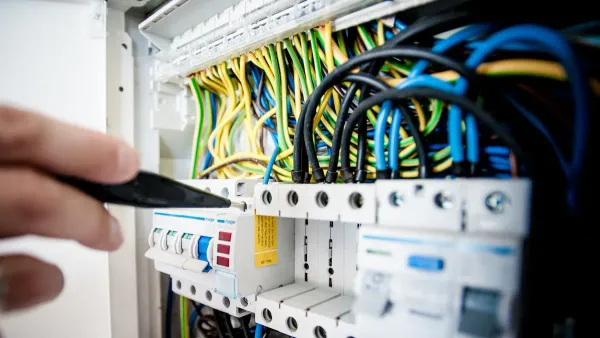
A 5 pole single throw switch allows a person to control five separate circuits at once. In electrical engineering, a pole means the number of independent switches inside one switch. A single throw means each pole connects to only one output, so each circuit can be turned on or off. The 5 pole single throw switch makes it possible to manage several circuits together with just one switch. This setup helps simplify wiring and ensures all circuits respond at the same time.
- Pole: The number of circuits the switch controls.
- Throw: The number of positions each pole can connect to.
Key Takeaways
- A 5 pole single throw switch controls five separate circuits at once with one simple ON/OFF action.
- This switch keeps each circuit isolated, preventing unwanted connections and improving safety.
- Using one 5 pole single throw switch simplifies wiring and saves space compared to multiple switches.
- It works well in industrial control panels, audio equipment, lighting systems, and multi-circuit setups.
- Choosing a high-quality switch with the right size, ratings, and features ensures reliable and efficient operation.
5 Pole Single Throw Switch Overview
Definition
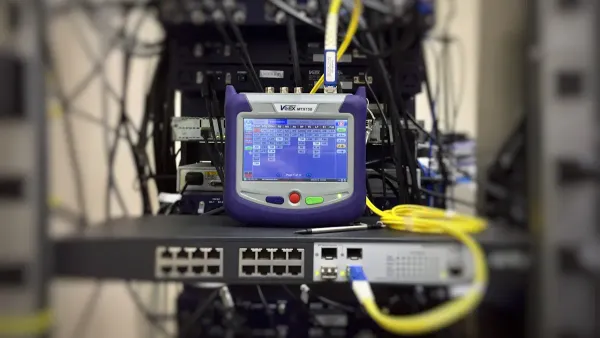
A 5 pole single throw switch is a switching device designed to control five separate circuits at the same time. Each pole inside the switch manages one independent circuit. The single throw feature means each pole connects to only one output, allowing a simple ON or OFF action for every circuit. This type of switch is often used when a person needs to activate or deactivate multiple circuits together with one movement. The design helps simplify the connection process and reduces the need for multiple switches.
Key Features
The 5 pole single throw switch stands out because of its ability to manage several circuits with one toggle. Manufacturers use silver alloy and gold-plated materials for the contacts. These materials help the switch last longer and carry more current. Insulation materials play a key role in safety and allow the switch to handle higher voltages. The base and actuator parts are usually made from plastic, thermoplastic, or metal. These choices ensure the switch remains durable and meets safety standards.
Below is a table showing common electrical specifications for a 5 pole single throw switch:
| Specification | Details |
|---|---|
| Switch Type | 5-Pole Single Throw Momentary Auxiliary Switch |
| Voltage Rating | 660 Volt |
| Current Rating | 10 Amp |
| Terminal Type | 0.187 Push-on or solder terminals |
| Switch Body Material | Plastic |
| Overall Length | 5-3/8 inches |
| Base Length | 4-3/16 inches |
| Base Width | 1-1/4 inches |
| Overall Height | 1-9/16 inches |
| Base Height | 3/4 inches |
| Mounting Holes | 2 slotted holes for #8 screws |
| Plunger Length | 1-3/16 inches |
| Plunger Features | #10 hole for actuator attachment, Slot 1/8" wide x 5/8" deep |
| Plunger Maximum Travel | 1/4 inch |
Tip: Using switches with high-quality materials helps prevent electrical problems and increases the lifespan of the switching device.
How It Works
The 5 pole single throw switch operates by controlling five independent circuits with a single toggle. Each pole inside the switch connects one input to one output. When a person flips the switch, all five connections change state together. This means every circuit turns ON or OFF at the same time. The switch keeps each circuit electrically isolated, so there is no cross-connection between them. This setup allows safe and efficient management of multiple circuits.
- The switch has five poles, each controlling a separate circuit.
- One toggle action changes the state of all five circuits together.
- Each pole connects one input to one output, allowing a simple ON/OFF function.
- The switch maintains electrical isolation between circuits, preventing unwanted connections.
- This design is useful for situations where several circuits need to be managed at once, such as in industrial panels or audio equipment.
A person can use a 5 pole single throw switch to simplify wiring and reduce the number of switches needed for complex systems. The connection process becomes easier, and the output from each circuit can be controlled with one movement.
Poles and Throws Explained
Poles in Switches
A pole in a switch shows how many separate circuits the switch can control. Each pole acts as an independent pathway for electricity. When a person uses a switch with more poles, they can manage more circuits at the same time. For example, a single pole switch controls one circuit, while a double pole switch manages two. The spst switch is a common type that controls just one circuit. In larger systems, engineers often use switches with more poles to handle several circuits together.
The table below compares different types of switches and the number of circuits they control:
| Switch Type | Number of Poles | Number of Circuits Controlled | Description |
|---|---|---|---|
| SPST | 1 | 1 | Controls a single circuit with one input and one output. |
| DPST | 2 | 2 | Controls two independent circuits simultaneously; each pole controls one circuit. |
| DPDT | 2 | 2 | Controls two circuits with two throws each, allowing switching between two outputs per pole. |
| 4 Pole | 4 | 4 | Controls four separate circuits simultaneously, useful for complex setups. |
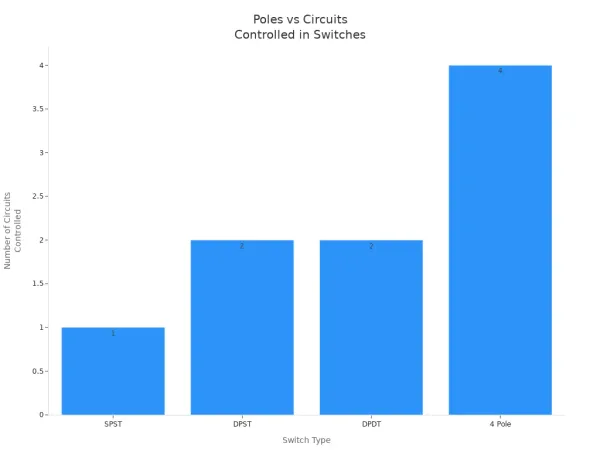
A switch with more poles gives greater flexibility and centralized control. For example, a 4 pole switch can manage four circuits at once. This setup helps reduce the number of switches needed and makes wiring easier. The chart below shows how adding more poles increases the number of circuits a switch can control:
Note: Each pole in a switch works independently, so users can open or close multiple circuits at the same time without mixing them.
Single Throw Function
The throw in a switch describes how many positions each pole can connect to. A single throw switch, like the spst, connects one input to one output. This design allows simple ON or OFF control for each circuit. When a person flips the switch, the circuit either closes (ON) or opens (OFF). This makes spst switches ideal for basic tasks, such as turning lights on or off.
In contrast, a double throw switch can connect one input to two different outputs, but never both at the same time. This feature lets users switch between two power sources, such as utility power and a generator. The table below highlights the differences between single throw and double throw switches:
| Feature | Single Throw Switch | Double Throw Switch |
|---|---|---|
| Circuit Control | Controls one circuit with one input and one output | Controls one input but can connect to either of two outputs, never both simultaneously |
| Positions | Typically two positions: ON and OFF | Usually three positions: ON to first circuit, ON to second circuit, sometimes OFF |
| Wiring Complexity | Simple wiring, minimal complexity | More complex wiring, requires careful handling |
| Typical Use Cases | Simple ON/OFF control, circuit isolation, safety disconnects | Switching between two power supplies or loads, controlling circuit direction |
| Connection Options | Single path connection (ON or OFF) | Provides two alternative circuit paths from one input |
The spst switch remains popular because it offers easy operation and reliable circuit isolation. Many people choose spst switches for safety disconnects and simple control panels. These switches help keep systems safe and easy to use.
Applications
Industrial Uses
Many factories and workshops use a 5 pole single throw switch to control several machines at once. Workers often find these switches in control panels for handling and packing machines. The switch also appears in HVAC systems, where it manages fans, pumps, and heaters. Some household appliances and automotive systems use this switch for tasks like turning on auxiliary lights or activating multiple outputs together. The DR-A11N25ABL 5-pin SPST rocker switch, for example, works well in heavy-duty jobs. It can handle 20 amps at 12 volts DC and 10 amps at 24 volts DC. Its waterproof design lets workers use it in marine environments, such as boats and trailers. The switch helps control LED light strips, work lights, fog lights, headlights, and tail lights in vehicles.
Common industrial applications include:
- Control panels for machinery
- Handling and packing equipment
- HVAC systems
- Automotive lighting and auxiliary outputs
- Marine and outdoor electrical systems
Tip: Waterproof and illuminated switches work best in harsh environments, keeping circuits safe and reliable.
Audio Equipment
Audio engineers use a 5 pole single throw switch to route multiple analog signals at the same time. This switch helps in guitar wiring projects, where it can switch several pickup wires with one movement. The switch allows users to change the output path for different audio signals without using powered multiplexers. Mechanical switches like these keep the audio quality high, avoiding delays or distortion. Stackable rotary switches can provide more poles and throws, but size and availability may limit their use. In audio jacks, the switch detects when someone plugs in headphones and redirects the output from speakers to headphones. This direct connection preserves signal integrity and prevents unwanted noise.
Audio equipment uses include:
- Routing multiple audio signals in mixers
- Switching pickup wires in guitars
- Managing output paths in amplifiers
- True bypass switching in guitar pedals
Note: Mechanical switches offer true bypass, which means the signal travels directly from input to output without extra electronics. This feature is important for guitar pedal true bypass setups, where players want the cleanest sound possible.
Multi-Circuit Systems
Engineers design multi-circuit systems to control several outputs with one switch. The 5 pole single throw switch makes this possible by managing five circuits at once. This setup reduces wiring complexity and saves space in control boxes. Users can activate or deactivate all circuits together, making the system easier to operate. The switch keeps each circuit isolated, so there is no unwanted connection between outputs. In lighting systems, the switch can turn on several lights at once. In security systems, it can activate alarms, cameras, and sensors with one action.
Advantages of using a 5PST switch:
- Simultaneous control of multiple circuits
- Simplified wiring and installation
- Reliable isolation between outputs
- Easy troubleshooting and maintenance
| Application Area | Function of 5PST Switch | Benefit |
|---|---|---|
| Industrial Machinery | Controls multiple machines | Centralized operation |
| Audio Equipment | Routes several audio signals | Preserves signal quality |
| Lighting Systems | Activates multiple lights | Saves time and wiring effort |
| Security Systems | Manages alarms and sensors | Quick response and control |
| Automotive | Switches auxiliary outputs | Efficient power distribution |
Callout: Using a 5 pole single throw switch in multi-circuit systems helps users bypass the need for several individual switches. This design streamlines the connection process and ensures all outputs respond together.
Switch Comparison
Other Switch Types
Switches come in many forms, each designed for specific tasks. A Single Pole Single Throw (SPST) switch controls one circuit with a simple ON/OFF function. This type works best for basic lighting or power control. A Double Pole Single Throw (DPST) switch manages two circuits at once, making it useful for devices that need to disconnect both live and neutral wires. Double Pole Double Throw (DPDT) switches allow users to switch two circuits between two outputs, which helps in reversing motors or changing signal paths.
A 5 pole single throw switch stands out because it can control five independent circuits at the same time. This capacity is five times greater than an SPST switch. Each pole inside the switch operates separately, so users can manage multiple devices with one action. The number of poles in a switch shows how many circuits it can control, while the throw indicates how many outputs each pole can connect to. Most switches with more poles help simplify wiring and reduce the number of switches needed in complex systems.
Tip: Choosing the right switch depends on how many circuits need control and whether each circuit requires a simple ON/OFF or more advanced switching.
When to Use a 5PST Switch
A 5 pole single throw switch works best in situations where several circuits must turn ON or OFF together. Industrial control panels, audio equipment, and multi-circuit lighting systems often use this switch for centralized management. The switch saves space and reduces wiring complexity, making installation easier.
When selecting a 5PST switch, users should consider several important factors:
| Factor | Explanation |
|---|---|
| Size and Form Factor | Physical dimensions and shape determine fit in space-limited or industrial applications. |
| Default State | Indicates if the switch is normally ON or OFF, affecting circuit control and management. |
| Positions | Number of stable positions influences switch functionality in circuit design. |
| Mounting Options | Methods like panel mount, surface mount, or through-hole affect installation and maintenance. |
| Actuation Method | Operation style (toggle, push-button, rocker) impacts user interaction and ease of use. |
| Current and Voltage Ratings | Maximum electrical load the switch can safely handle, critical for application requirements. |
| Environmental Factors | Operating conditions such as temperature, humidity, and corrosive exposure dictate design needs. |
Other features to look for include:
- Illumination for status indication
- Locking mechanisms to prevent accidental switching
- Sealed construction for protection against dust and moisture
- Reputable brands for reliability
- Certifications for safety standards
- Cost and bulk purchasing options
- Testing and compliance with regulations
A 5PST switch offers unique benefits, such as simultaneous control and simplified wiring. However, it may not suit applications needing more complex switching patterns or individual circuit control. Users should match the switch type to the system’s needs for safe and efficient operation.
A 5 pole single throw switch gives users the power to control five circuits at once. This switch connects each circuit with a single action. The switch keeps each circuit separate, so users avoid unwanted connections. Many engineers choose this switch for control panels, audio gear, and lighting. The switch makes wiring simple and saves space. Each switch offers clear ON and OFF control. The switch works well in many projects. People who need to manage more than one circuit should try this switch. The switch can improve safety and make systems easier to use. The switch stands out for its reliability and easy operation.
Tip: Choosing the right switch helps users build safer and more efficient systems.
FAQ
What does a 5 pole single throw switch do?
A 5 pole single throw switch controls five separate circuits at the same time. Each pole manages one circuit. The switch turns all circuits ON or OFF together with one action.
Can a 5 pole single throw switch replace multiple single switches?
Yes. This switch can replace five single switches. It helps users control several circuits with one movement. This setup saves space and reduces wiring.
Where should someone use a 5 pole single throw switch?
Engineers use this switch in control panels, audio equipment, and lighting systems. It works best when several circuits need to turn ON or OFF together.
How does the switch keep circuits separate?
Each pole inside the switch stays isolated from the others. This design prevents unwanted connections between circuits and keeps each output safe.