What is SMPS? A Simple Guide to Controller Choices
An SMPS controller functions as the brain of a power supply. It regulates power by rapidly switching components on and off.
An SMPS controller functions as the brain of a power supply. It regulates power by rapidly switching components on and off. The question of what is smps is central to this control method. Selecting the correct controller is a direct process. The decision rests on answering three key questions about a project's needs.
Engineers must evaluate the required power conversion type (topology), the operational speed (frequency), and the specifications for energy storage parts (magnetics).
Key Takeaways
- An SMPS controller is like the brain of a power supply. It keeps the output voltage steady for devices.
- SMPS controllers are very efficient. They save energy better than older types of power supplies.
- Choosing an SMPS controller involves three main steps. First, pick the right circuit type for voltage changes.
- Second, decide on the controller's speed. Faster speeds make smaller power supplies but can use more energy.
- Third, choose between a controller with a built-in switch or one that uses a separate switch. This depends on the power needed.
What is SMPS and Why a Controller Matters
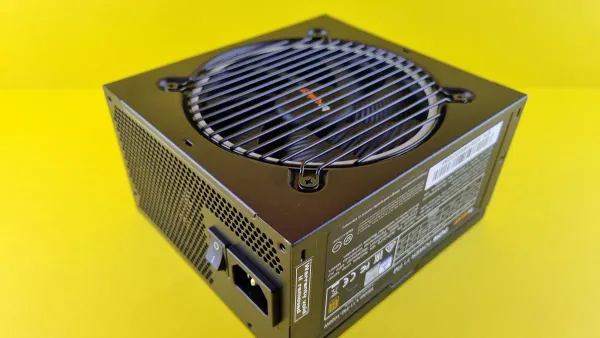
A switched-mode power supply (SMPS) relies entirely on its controller to function correctly. The controller is the intelligent component that ensures a device receives stable, reliable power. Understanding what is smps involves understanding this crucial control mechanism. Expert solution providers, such as the HiSilicon-designated (authorized) solutions partner Nova Technology Company (HK) Limited, specialize in implementing these advanced controllers for robust power systems.
The Role of a Controller in Power Regulation
The primary role of an SMPS controller is to maintain a constant output voltage despite changes in input voltage or load demand. It achieves this using a feedback loop. A negative feedback error amplifier constantly compares the output voltage against a stable reference voltage. If it detects a deviation, the controller takes corrective action.
This feedback loop performs several critical jobs:
- It adjusts the output voltage when the input voltage changes.
- It adjusts the output voltage when the load is dynamic.
- It adjusts the output voltage to respond to transients on the power rail.
The controller acts on this feedback using a technique called Pulse-Width Modulation (PWM). It generates a signal of varying pulse widths. A wider pulse delivers more energy, increasing the output voltage. A narrower pulse delivers less energy, decreasing it. This rapid adjustment keeps the output stable.
Linear Regulators vs. Switched-Mode Supplies
Engineers often choose between a linear regulator and an SMPS. The core of what is smps lies in its efficiency. A linear regulator works like a variable resistor, burning excess power as heat to lower voltage. An SMPS rapidly switches power on and off, minimizing energy loss. This operational difference leads to a significant gap in efficiency.
| Power Supply Type | Typical Efficiency |
|---|---|
| Switched-Mode Power Supply | About 80% or higher |
| Linear Regulator | About 60% |
This high efficiency is a key reason for the widespread use of SMPS designs. However, the switching action can create electrical noise. For certain sensitive applications, a linear regulator may be a better fit.
Linear supplies can indeed be noisy, though it's usually limited to diode recovery: mains frequency and harmonics, rarely over some kHz (with poor diodes, some MHz). This is still much easier to regulate out, and less prone to CM interference, than SMPS sources.
Ultimately, the choice depends on project priorities like efficiency, cost, and noise sensitivity. The answer to what is smps is a highly efficient but complex power solution.
Step 1: Choosing the Right SMPS Topology
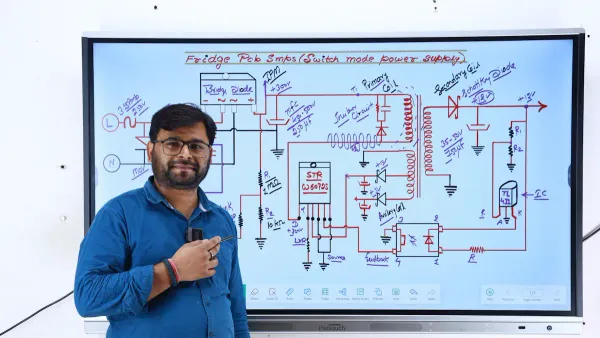
Selecting the right topology is the most crucial first step in designing a power supply. This decision dictates the fundamental circuit structure, the type of magnetic components needed, and the overall performance characteristics. The topology defines how the controller transfers power from the input to the output.
Buck Controllers for Step-Down Conversion
A buck controller is the choice for step-down conversion. It takes a higher input voltage and produces a lower, regulated output voltage. This is one of the most common and simplest SMPS configurations. The controller modulates a switch to control the amount of energy sent to an inductor, effectively "bucking" the voltage down.
Engineers use buck controllers in a wide range of common industrial and commercial applications.
- Powering DC motors
- Managing energy storage elements like supercapacitors
- Automotive systems (e.g., engine control units, infotainment)
- General industrial equipment
Boost Controllers for Step-Up Conversion
A boost controller performs the opposite function of a buck controller. It takes a lower input voltage and produces a higher, regulated output voltage. This topology is essential when a system requires a voltage rail that is greater than the available source voltage. Many consumer electronics use boost controllers to power specific components. For example, the MAX25203 boost controller generates voltages for LED backlights and Class-D audio amplifiers in devices like LCD TVs and monitors.
While effective, boost converter circuits present unique design challenges. Engineers must carefully manage issues with gate drive signals, parasitic capacitances in the MOSFET, and correct inductance calculations. A 100% duty cycle at startup can damage components, highlighting the need for robust testing.
Buck-Boost for Variable Input Voltages
A buck-boost controller offers the ultimate flexibility for inputs that vary. It can step a voltage up or down as needed to maintain a stable output. This capability is critical in systems where the input source, like a battery, can have a voltage that is sometimes higher and sometimes lower than the required output voltage.
This topology is essential for many modern electronics:
- Battery-powered devices like smartphones, cameras, and wireless headphones
- Industrial Internet of Things (IoT) devices and wireless sensors
- Portable point-of-sale (POS) terminals
- Automotive electronics, where it stabilizes DC voltage during engine starting or stopping
Isolated Topologies like Flyback and Forward
In many applications, safety standards require galvanic isolation between the input and output. This means there is no direct electrical path, which protects users from high input voltages. Answering the question of what is smps often involves understanding these safer, isolated designs. Flyback and forward converters are two popular isolated topologies.
A flyback controller is ideal for power levels up to 150W. It is highly valued for its low component count and cost-effective isolation, as the transformer also acts as the storage inductor. A 150W offline flyback converter can provide a regulated rail for microcircuits or power low-voltage BLDC motors in home appliances. Common applications include:
- AC-DC chargers and adapters
- Appliance power supplies
- USB PD adapters
- LED drivers for smart lighting
A forward controller is another isolated topology, but it operates differently. It is generally more efficient for higher power applications. The primary difference lies in how the two topologies handle energy.
| Feature | Flyback Converter | Forward Converter |
|---|---|---|
| Energy Transfer | Stores energy in the transformer core when the switch is ON, releases it when OFF. | Directly transfers energy through the transformer when the switch is ON. |
| Transformer Use | Acts as a coupled inductor, storing energy. | Acts as a true transformer, requiring a reset mechanism to prevent core saturation. |
| Peak Currents | Higher peak currents. | Lower peak currents, leading to smoother operation. |
The choice between them depends on the specific power level, efficiency targets, and cost constraints of the project.
Step 2: Balancing Size vs. Efficiency with Frequency
After selecting a topology, the next decision involves the controller's operating speed, or switching frequency. This choice presents a fundamental trade-off. Engineers must balance the physical size of the power supply against its electrical efficiency. The switching frequency directly influences the size of magnetic components and the amount of power lost as heat.
Benefits of Lower Switching Frequencies
Controllers operating at lower frequencies, typically below 500 kHz, generally achieve higher efficiency. The main advantage is a reduction in switching losses. Switching losses happen each time the internal power transistors turn on and off. Fewer switches per second mean less total energy is wasted during these transitions.
However, this efficiency comes at the cost of size. Lower frequencies require larger inductors and transformers to store and transfer the necessary energy in each cycle. Power losses at these frequencies are still a concern.
Copper loss is a primary issue below 500 kHz. The current in the windings does not use the full wire, a phenomenon known as the skin effect. This increases resistance and wastes power as heat.
Benefits of Higher Switching Frequencies
Controllers with higher switching frequencies, often above 1 MHz, enable significantly more compact designs. The power supply can transfer energy in smaller packets more frequently. This allows engineers to use smaller, lighter, and less expensive inductors and transformers. This size reduction is critical for space-constrained applications like mobile devices and dense server racks.
The trade-off for this compact size is lower efficiency. Higher frequencies increase several types of power loss. The rapid switching creates more heat due to parasitic capacitance and inductance in the circuit. The on-resistance of the MOSFETs also contributes to greater conduction losses. Furthermore, fast switching generates more electromagnetic interference (EMI), which can disrupt nearby electronics. Designers must implement mitigation strategies to manage this noise.
- Optimizing the PCB layout to shorten current loops.
- Using dedicated EMI filters at the input and output.
- Shielding noisy components with metal enclosures.
Ultimately, the choice of frequency depends on the project's priorities: maximum efficiency with a larger footprint or a compact design at the expense of some power loss.
Step 3: Controller Impact on Magnetics Design
The controller's configuration provides the blueprint for the power supply's magnetic components. The choices of topology and frequency directly shape the specifications for the inductors and transformers. These components are critical for storing and transferring energy, so their design must align perfectly with the controller's operation.
How Topology and Frequency Define Magnetics
The controller's operating parameters determine the essential properties of the magnetics. The chosen topology and switching frequency dictate the required inductance value, the necessary current rating, and the physical core area of an inductor or transformer. A higher frequency, for instance, generally allows for a smaller inductance value, leading to a more compact component.
Pro Tip: The controller's datasheet is the most important resource for magnetics selection. Manufacturers provide detailed application notes, design formulas, and sometimes even specific part number recommendations to simplify the process.
Many component manufacturers also offer free software to streamline this task. These tools help engineers find the optimal magnetic components for their design.
- PowerEsim is a popular web-based tool that simulates a complete SMPS design, including transformer calculations.
- Inductor Design Tools from companies like Micrometals allow engineers to input electrical parameters and receive a list of suitable core solutions.
- Ferrite Magnetic Calculators help designers account for complex factors like skin and proximity effects in their transformer windings.
Integrated (Monolithic) vs. External Switches
SMPS controllers come in two main configurations based on the power switch. A monolithic, or integrated, controller includes the power MOSFET switch inside the same chip as the control logic. An external controller contains only the logic and drives a separate, discrete MOSFET.
The choice depends on power level and design flexibility.
| Controller Type | Best For | Key Advantage |
|---|---|---|
| Integrated (Monolithic) | Lower-power, compact designs | Simplicity and smaller board footprint. |
| External Switches | Higher-power, custom applications | Flexibility to select the ideal MOSFET for power and efficiency. |
Integrated controllers are excellent for space-constrained applications like mobile device chargers. External controllers give engineers the freedom to handle higher currents and better manage heat in demanding industrial or server power supplies.
Selecting the right SMPS controller follows a clear three-step process. An engineer first chooses a topology based on input and output voltages. Next, they weigh size against efficiency by setting a switching frequency. Finally, they decide between integrated or external switches. This methodical selection is key to successful outcomes, like a well-documented 27W SMPS circuit using the UC3843 controller.
Next Step: A practical way to begin is by visiting a major electronics distributor's website. Engineers can use the parametric search, filtering first by "Topology" and then by input/output voltage ranges to quickly find suitable controllers.
FAQ
What is the main job of an SMPS controller?
An SMPS controller acts as the power supply's brain. It uses Pulse-Width Modulation (PWM) to keep the output voltage stable. This process ensures consistent power for a device despite changes in input voltage or load.
Why choose an SMPS over a linear regulator?
Engineers choose an SMPS for its high efficiency, often above 80%. It wastes less power as heat than a linear regulator. This makes SMPS designs ideal for modern electronics where saving energy is a priority.
What does "topology" mean in an SMPS?
Topology is the power supply's circuit layout. It defines how components connect to transfer power. The choice of topology, like buck or boost, depends on whether the design needs to step voltage down or up.
Does a higher frequency make a better SMPS?
Not always. 💡 A higher frequency enables smaller components, creating a compact design. The trade-off is lower efficiency and more electrical noise (EMI). Engineers must balance the need for a small size against the project's efficiency goals.