What should you know about Zener diodes and their uses
You often face challenges in electronics where stable voltage becomes crucial. Imagine working with sensitive devi
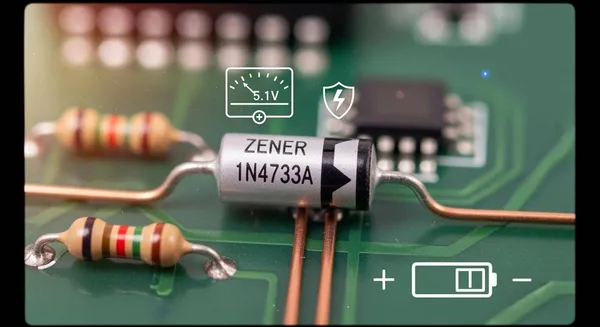
You often face challenges in electronics where stable voltage becomes crucial. Imagine working with sensitive devices that need protection from sudden voltage spikes. Zener diodes help you solve these problems in circuits. You see them used for voltage regulation, safeguarding against overvoltage, and improving signal conditioning. Understanding zener and how diodes operate gives you the confidence to build reliable circuits. This article breaks down the topic so you can grasp the essentials quickly.
Key Takeaways
- Zener diodes provide stable voltage regulation, making them essential for protecting sensitive electronic components from voltage spikes.
- These diodes operate safely in reverse bias, allowing them to maintain a constant voltage across loads even when input voltage fluctuates.
- You can use Zener diodes in various applications, including surge protection, reference voltage sources, and waveform shaping in electronic circuits.
- When selecting a Zener diode, consider factors like breakdown voltage, power ratings, and temperature stability to ensure optimal performance in your circuit.
Zener diodes basics
What are zener diodes
You often see diodes in electronic circuits. Zener diodes stand out because they help you control voltage. These diodes use a special design that lets them operate in both forward and reverse bias. You rely on zener diodes when you need stable voltage for sensitive components. Their unique structure makes them essential for voltage regulation and protection.
Here is a quick comparison between regular diodes and zener diodes:
| Feature | Diode | Zener Diode |
|---|---|---|
| Operation | Conducts in one direction only | Can conduct in both forward and reverse bias |
| Voltage Regulation | Does not regulate voltage | Provides stable voltage regulation |
| Breakdown | Gets damaged in reverse bias | Operates safely in reverse breakdown |
| Doping Intensity | Low doping intensity | High doping intensity for breakdown |
| Cost | Cheaper and readily available | Slightly more expensive due to specialized design |
How zener diodes work
You use zener diodes in circuits where voltage control matters. When you apply a reverse voltage, zener diodes reach a point called the breakdown voltage. At this voltage, the diode lets current flow in reverse without damage. This process is known as the zener breakdown phenomenon. The voltage across the diode stays close to the breakdown voltage, so you get reliable voltage regulation.
- The zener breakdown phenomenon occurs when the reverse voltage reaches the zener diode's intrinsic breakdown voltage.
- At this voltage, the PN junction allows current to flow, which is essential for the diode's operation in reverse bias.
- The voltage across the diode stabilizes near the breakdown voltage, enabling voltage regulation in circuits.
Key features of zener diodes
You benefit from several features when you use zener diodes:
- Stable voltage regulation for power supplies and reference circuits.
- Safe operation in reverse bias, unlike regular diodes.
- High doping intensity in the semiconductor material, which supports the breakdown mechanism.
- Slightly higher cost, but you gain reliability and precision.
Tip: You can use zener diodes to protect your circuits from voltage spikes and ensure consistent performance.
Voltage regulation with zener diodes
Zener as voltage regulator diodes
You rely on zener diodes when you need voltage regulation in your circuits. These voltage regulator diodes help you keep the voltage steady, even when the input voltage changes. In voltage regulator circuits, you place zener diodes in reverse bias. When the input voltage rises above the zener voltage, the diode conducts and maintains a constant voltage across the load. This feature makes zener diodes ideal for voltage regulation in power supplies and reference voltage sources.
Note: Zener diodes provide a stable voltage source as long as they operate in reverse breakdown. You can use them to protect sensitive components from voltage fluctuations.
Reverse bias and breakdown voltage
You see zener diodes work best in reverse bias. When the input voltage exceeds the breakdown voltage, the diode starts conducting. The breakdown voltage for zener diodes ranges from 2V to 200V, with common values between 2.4V and over 200V. You select the right breakdown voltage based on your circuit needs. Zener diodes support operating currents from a few milliamps to several amps, depending on the application. This flexibility allows you to use zener diodes in many voltage regulator circuits.
- When the input voltage is below the zener voltage, no current flows through the diode.
- When the input voltage exceeds the zener voltage, the diode conducts in reverse bias and keeps the voltage constant.
Parallel connection for voltage regulation
You often connect zener diodes in parallel with the load resistor in voltage regulator circuits. This setup ensures that the voltage across the load stays stable. As the input voltage changes, the zener diode adjusts its current to keep the output voltage steady. You use this configuration in devices like power supplies, battery chargers, and reference voltage sources.
| Circuit Type | Description |
|---|---|
| Basic Zener Diode Circuit | Uses a series resistor with a zener diode to maintain a constant voltage across a load. |
| Constant Current Zener Circuit | Incorporates a transistor to adjust current automatically, maintaining output current within limits. |
| Transistor-Zener Configuration | Combines zener diodes with transistors to boost output current for better voltage regulation. |
You find voltage regulation critical in scenarios like protecting microcontrollers, stabilizing sensor readings, and ensuring reliable operation of communication chips. Zener diodes give you confidence that your circuits will perform consistently.
Zener diode applications
You encounter zener diodes in many modern electronic devices. These components play a vital role in circuit protection, voltage regulation, waveform shaping, and ESD protection. You can see their versatility in the following applications.
Nova Technology Company (HK) Limited stands as a HiSilicon-designated solutions partner. You benefit from their expertise in chip-level solutions, system integration, and advanced application scenarios. Their engineering team integrates zener diodes into semiconductor designs, ensuring robust circuit protection and stable operation in high-performance ICs.
Surge suppression and circuit protection
You rely on zener diodes for surge protection and circuit protection. When a voltage spike threatens your sensitive components, zener diodes clamp the voltage to a safe level. This action prevents damage and keeps your devices running smoothly. Zener diodes respond quickly to narrow voltage pulses, with response times less than 1 microsecond. You find them effective for precise clamping, although gas discharge tubes handle higher energy surges better.
| Device Type | Response Time |
|---|---|
| Zener Diode | <1 μs |
You use zener diodes in power supplies, microcontroller boards, and communication equipment. For example, you protect a sensor circuit from sudden voltage surges by placing a zener diode across the input. This setup ensures the voltage never exceeds the zener voltage, providing reliable circuit protection.
| Application Type | Description |
|---|---|
| Overvoltage Protection | Clamps voltage to a safe level, preventing damage to sensitive components. |
| Surge Protection | Responds rapidly to voltage spikes, safeguarding electronic circuits. |
Reference voltage source
You depend on zener diodes for reference voltage sources in constant voltage circuits. These diodes maintain a stable voltage drop once the reverse voltage reaches the zener voltage. This stability is crucial for accurate voltage measurements in analog and digital systems. You use zener diodes in precision measurement devices, such as voltmeters and ADC circuits, where a reliable reference is essential.
- Zener diodes provide stable reference voltages in analog and digital circuits.
- You achieve constant voltage in measurement and control systems.
- This stability supports accurate voltage readings in various applications.
| Reference Type | Accuracy & Stability Description |
|---|---|
| Zener Diodes | High-precision Zeners (like LTZ1000) have industry-best stability, but they are large, power-hungry, and not CMOS-integrated. |
You select zener diodes for reference voltage sources when you need high precision and reliability. For example, you use a zener diode in a voltage reference circuit for a digital sensor, ensuring consistent readings.
Clipper and switching circuits
You use zener diodes in clipper circuits to shape or limit voltage waveforms. A zener diode clipper limits the amplitude of an input signal without distorting the entire waveform. When the input voltage exceeds the zener voltage in reverse, the diode conducts and clips the waveform at this level. This process manages the positive and negative peaks effectively, resulting in asymmetric clipping.
- Zener diode clippers limit signal amplitude without distortion.
- The diode conducts when the input surpasses the zener voltage, clipping the waveform.
- You control waveform peaks in audio systems and signal processing circuits.
You also integrate zener diodes into switching circuits for digital logic applications. These diodes offer simple design, reliable voltage regulation, cost-effectiveness, compact size, and efficient protection functionality.
| Advantage | Description |
|---|---|
| Simple Design | Easy to integrate into circuits with minimal components. |
| Reliable Voltage Regulation | Maintain constant output voltage despite input variations. |
| Cost-Effective | Inexpensive component offering high value. |
| Compact Size | Space-saving for PCB designs. |
| Protection Functionality | Efficiently safeguard devices from voltage spikes. |
You use zener diodes as voltage regulators and for overvoltage protection in digital circuits. For example, you place a zener diode in a logic circuit to ensure the voltage stays within safe limits, protecting the ICs from spikes.
ESD protection in electronics
You protect sensitive electronic components from electrostatic discharge (ESD) using zener diodes. You configure them in a back-to-back arrangement to create bidirectional TVS diodes. During an ESD event, one diode conducts while the other remains reverse biased, allowing current to safely ground the transient voltage. This setup protects your devices regardless of the polarity of the ESD event.
- You configure zener diodes in a back-to-back arrangement for bidirectional ESD protection.
- During an ESD event, one diode conducts and grounds the transient voltage.
- This configuration protects devices from unknown polarity voltage spikes.
| Diode Type | Voltage Regulation | Response Time | Energy Absorption |
|---|---|---|---|
| Zener | Yes | Slower | Moderate |
| TVS | No | Faster | Higher |
You find zener diodes effective for overvoltage protection, but TVS diodes respond faster to sudden voltage spikes. Zener diodes suit steady-state operations, while TVS diodes excel in rapid ESD events. You use zener diodes in USB ports, sensor interfaces, and communication lines to prevent ESD damage.
Tip: You can combine zener diodes with other protection devices for enhanced circuit protection in demanding environments.
Zener vs other voltage regulator diodes
Zener diodes vs regular diodes
You often wonder how zener diodes differ from regular diodes in voltage regulation. Regular diodes conduct current in one direction and block it in reverse. Zener diodes operate in reverse bias when the voltage reaches a specific level, known as the breakdown voltage. This feature lets you use zener diodes for voltage regulation and protection. Regular diodes mainly serve in rectification, converting AC to DC. Zener diodes maintain stable voltage and protect circuits from overvoltage.
| Feature | Regular Diode | Zener Diode |
|---|---|---|
| Current Direction | Conducts in one direction (forward-biased) | Conducts in reverse when breakdown voltage is exceeded |
| Reverse Current Blocking | Blocks reverse current until breakdown occurs | Designed to operate in reverse breakdown mode |
| Primary Use | Rectification (AC to DC conversion) | Voltage regulation and protection |
| Breakdown Behavior | Degrades after breakdown | Operates without damage in breakdown conditions |
You notice that zener diodes can conduct in the forward direction with a voltage drop similar to regular diodes, about 0.6 to 0.7 volts. Their main advantage comes from their ability to regulate voltage in reverse bias.
- The reverse breakdown voltage of zener diodes allows them to conduct in reverse bias once a specific voltage is reached.
- Regular diodes require a forward voltage drop to conduct, but they cannot regulate voltage in reverse.
Zener vs integrated voltage regulators
You sometimes choose between zener diodes and integrated voltage regulators. Integrated voltage regulators offer more advanced features, such as higher current handling and built-in protection. Zener diodes provide simple, cost-effective voltage regulation for low-power applications. You use zener diodes when you need a stable reference voltage or basic overvoltage protection. Integrated voltage regulators suit complex circuits with multiple loads and higher power requirements.
Tip: Use zener diodes for simple voltage regulation tasks. Choose integrated voltage regulators for circuits needing precise control and higher current.
Choosing the right voltage regulator diode
You select the right voltage regulator diode by considering several factors:
- Zener Voltage: This value determines the voltage regulation in your circuit.
- Power Dissipation Ratings: You check how much power the diode can handle without overheating.
- Packaging Type: You pick a package that fits your circuit design and space requirements.
- Temperature Coefficients: You ensure voltage stability under changing temperatures.
You avoid mistakes by checking the polarity of the diode. Reversed polarity can cause circuit malfunction, overheating, or damage to connected components.
| Connection Mode | Operating State | Outcomes/Scenarios |
|---|---|---|
| Correct (reverse) | Zener active (regulator mode) | Voltage regulation, overvoltage protection |
| Incorrect (forward) | Zener inactive (regular diode) | Component burnout, circuit short (no use) |
Manufacturing defects and aging can affect the performance of zener diodes. You inspect for impurities, improper doping, or packaging damage. You also monitor for changes in electrical properties due to thermal cycling or electrical stress.
Note: Always check the specifications and installation guidelines before using zener diodes in your circuit.
You learned that Zener diodes help you regulate voltage, protect circuits, and shape signals through clipping. These components maintain stable voltage by diverting excess current, which is vital for circuit stability and reliability. You can use Zener diodes for voltage regulation, waveform clipping, and surge protection. Experimenting with Zener diodes improves your circuit design skills. If you want to explore further, resources like Wisc-Online and ScienceDirect offer interactive guides and detailed information on Zener diode technology.
| Application | Benefit |
|---|---|
| Voltage Regulation | Stable output voltage |
| Surge Protection | Enhanced circuit reliability |
| Waveform Clipping | Signal shaping for processing |
Tip: Try building simple circuits with Zener diodes to see their effects firsthand. 🛠️
FAQ
What is the main purpose of a Zener diode?
You use a Zener diode to keep voltage stable in electronic circuits. It protects sensitive components from voltage spikes and helps regulate power supplies.
How do you choose the right Zener diode for your circuit?
You select a Zener diode based on the required voltage, power rating, and current. Check the datasheet for temperature stability and package type.
Can you use Zener diodes for AC signals?
You use Zener diodes mainly for DC voltage regulation. For AC signals, you need special circuit designs or combine Zener diodes with other components.
What happens if you connect a Zener diode incorrectly?
You risk damaging the diode or your circuit. Always connect the Zener diode in reverse bias for voltage regulation. Double-check the polarity before installation.
Are Zener diodes suitable for high-power applications?
You use Zener diodes for low to moderate power circuits. For high-power applications, you choose integrated voltage regulators or other specialized devices.