

Modular/Ethernet Connector (RJ45) Jacks With Magnetics9 Products
| Image | Part Number | Manufacturer | Description | Actions | |
|---|---|---|---|---|---|
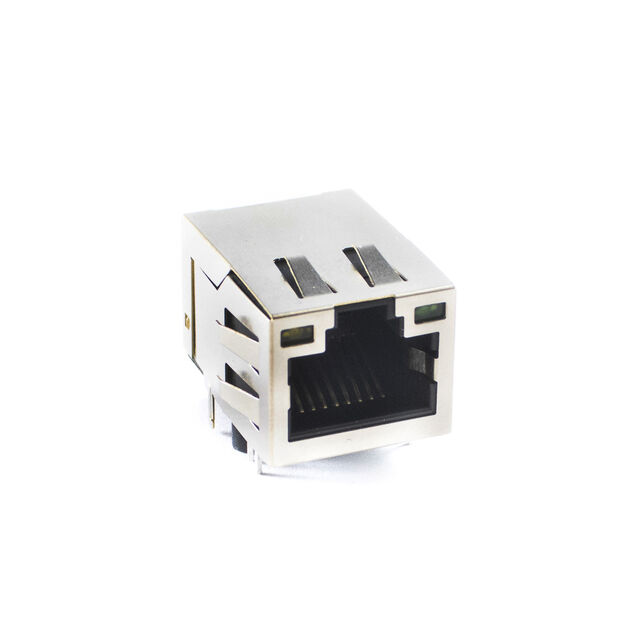 PDF | AR11-4700 | Allied Components International | CONN JACK 1PORT PCB | MOQ: 1 Hover to quote | |
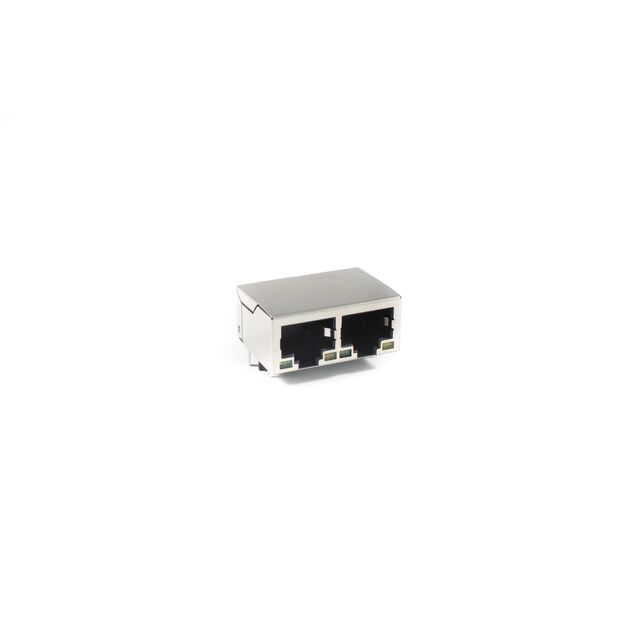 PDF | AR12-4775I | Allied Components International | CONN JACK 2PORT PCB | MOQ: 1 Hover to quote | |
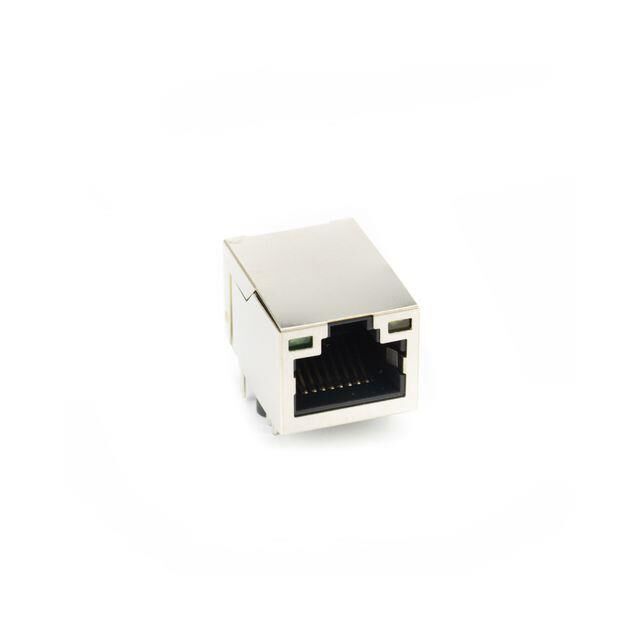 PDF | AR11-4699 | Allied Components International | CONN JACK 1PORT PCB | MOQ: 1 Hover to quote | |
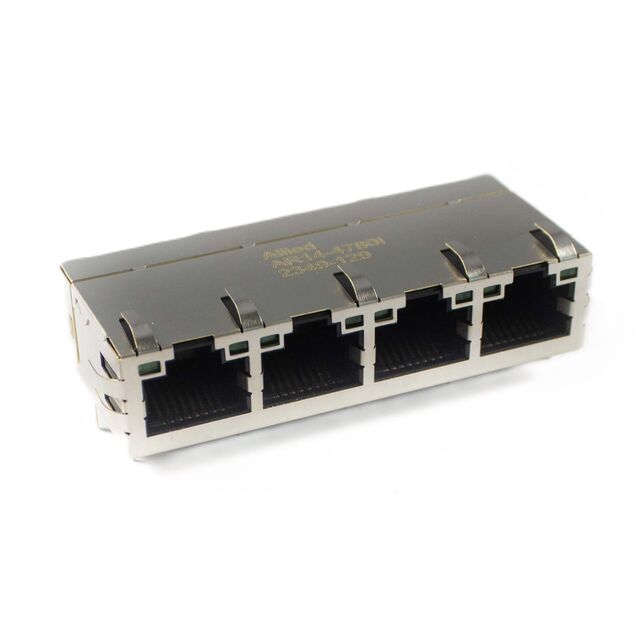 PDF | AR14-4780I | Allied Components International | CONN JACK 4PORT PCB | MOQ: 1 Hover to quote | |
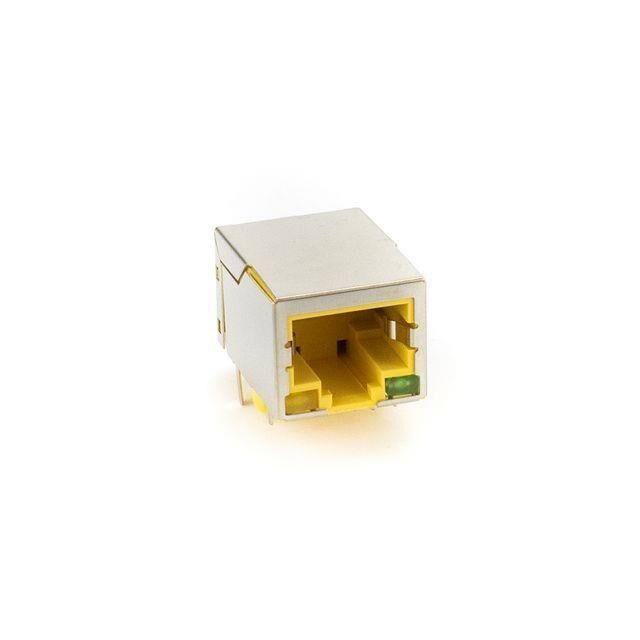 PDF | AR11-4697 | Allied Components International | CONN JACK 1PORT PCB | MOQ: 1 Hover to quote | |
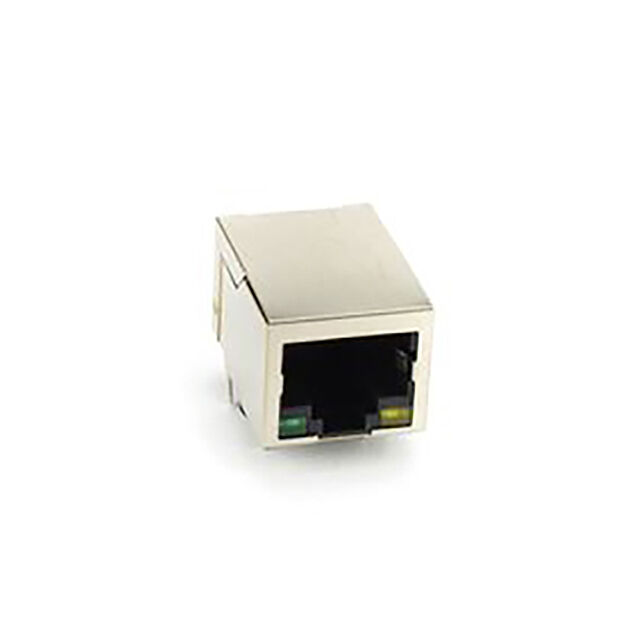 PDF | AR11-4696 | Allied Components International | CONN JACK 1PORT PCB | MOQ: 1 Hover to quote | |
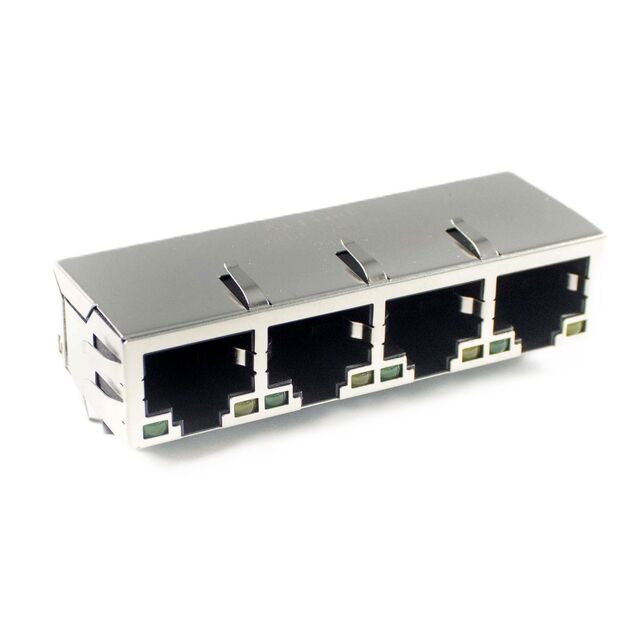 PDF | AR14-4784IR | Allied Components International | CONN JACK 4PORT PCB | MOQ: 1 Hover to quote | |
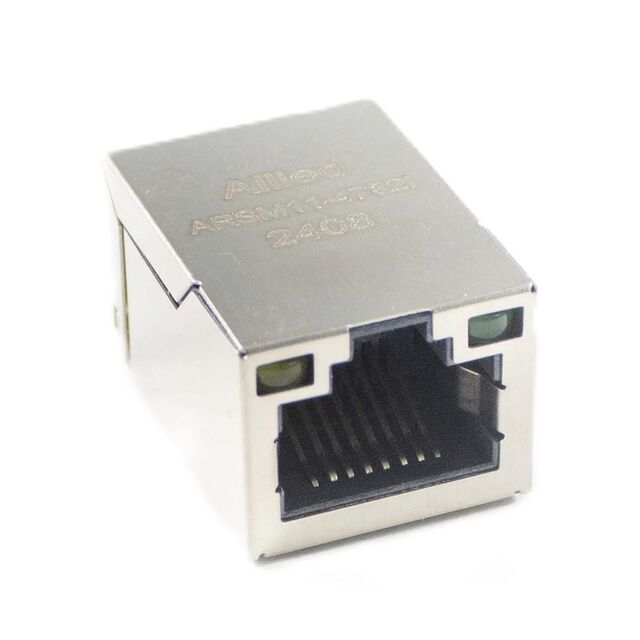 PDF | ARSM11-4782I | Allied Components International | 1x1 SMD RJ45, w/Mag, IndTemp | MOQ: 1 Hover to quote | |
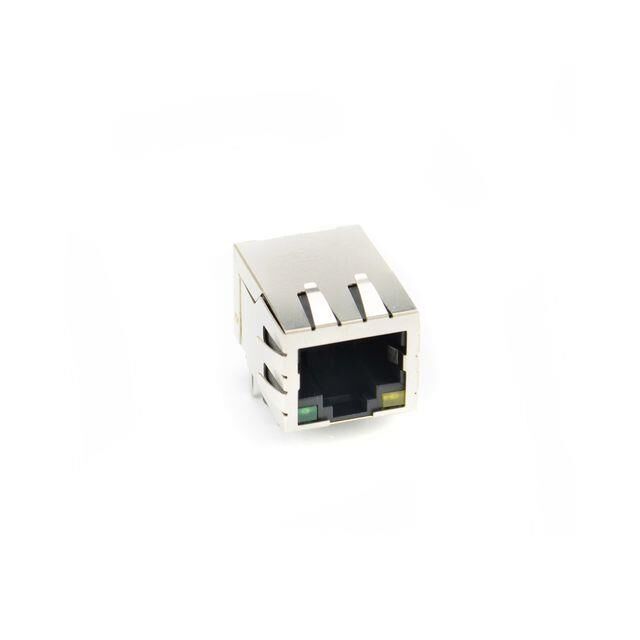 PDF | AR11-4695 | Allied Components International | CONN JACK 1PORT PCB | MOQ: 1 Hover to quote |
The RJ45 connector—short for Registered Jack 45—is the most widely used interface for Ethernet networking, found in devices ranging from home routers to industrial switches. It uses an 8P8C (8 Position, 8 Contact) configuration standardized by ANSI/TIA-1096-A, with typical pinouts following T-568A or T-568B wiring schemes. While similar in appearance to the smaller RJ11 telephone connector, RJ45 supports more conductors and higher data rates, making it the standard for LAN transmission across Cat5e, Cat6, and Cat6a cabling. These jacks support high-speed Ethernet protocols defined by IEEE 802.3, including 10/100/1000Base-T and multi-gigabit applications. When integrated with magnetics—meaning the inclusion of built-in transformers and common-mode chokes—RJ45 jacks provide enhanced signal conditioning, isolation, and EMI (electromagnetic interference) suppression, which are essential for reliable, standards-compliant Ethernet communication. Choosing an RJ45 jack with integrated magnetics offers several key advantages over non-magnetic versions. First and foremost, they eliminate the need for external magnetics on the PCB, saving valuable board space and simplifying layout—especially important in compact or high-density designs. These magnetics provide galvanic isolation (typically 1500 Vrms or higher) between the device and the network, protecting sensitive circuits from voltage transients and ground loops. They also improve signal integrity, especially at higher transmission speeds or over longer cable runs, by filtering noise and compensating for impedance mismatches. In applications supporting PoE (Power over Ethernet), jacks with integrated magnetics ensure compatibility with IEEE 802.3af, at, or bt standards, delivering power safely alongside data.