Quad Flat Package Explained Why It Matters Today
Quad flat package offers high pin counts, strong thermal performance, and easy assembly, making it vital for today's compact, reliable electronic devices.
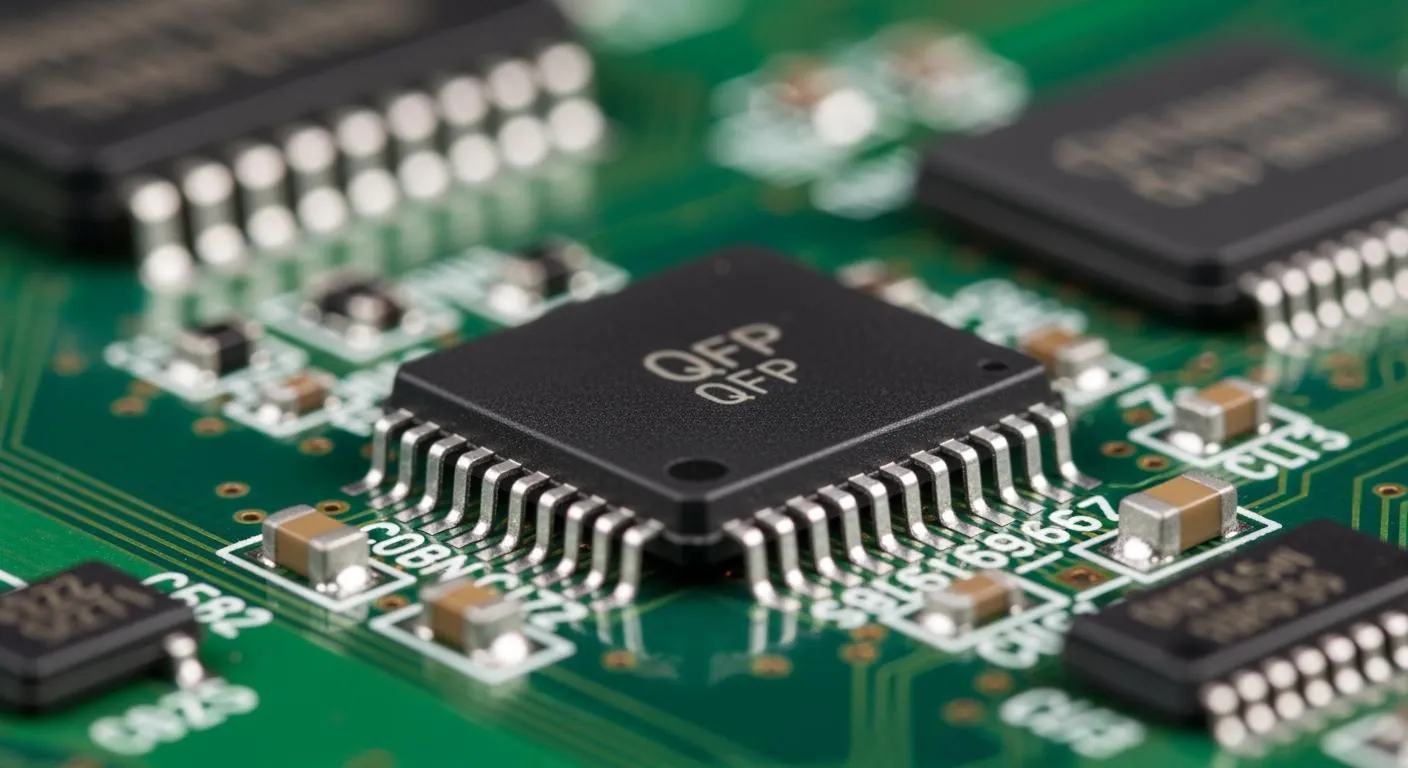
You see the quad flat package discussed everywhere in electronics because it shapes how you experience smaller, faster, and more reliable devices. As companies race to make products more compact and powerful, packaging stands out as a critical factor. The rise in demand for integrated circuit packaging comes from trends like miniaturization in consumer electronics, 5G network expansion, and the push for efficient hardware in automotive and telecom sectors. These needs make the quad flat package more significant than ever.
Key Takeaways
- Quad flat packages (QFPs) are essential for modern electronics, enabling smaller, faster, and more reliable devices.
- The unique structure of QFPs allows for high pin counts and efficient space usage, making them ideal for complex circuits.
- Gull-wing leads enhance the reliability and ease of assembly, supporting automated manufacturing and quality control.
- QFPs excel in thermal management, helping devices run cooler and last longer, which is crucial for high-performance applications.
- Choosing QFP technology provides cost-effective solutions for various industries, including consumer electronics, automotive, and healthcare.
What Is a Quad Flat Package?
Structure and Features
You often see the quad flat package in modern electronics because of its unique structure. This package uses a compact, square design that fits well in high-density applications. The package stands out from other integrated circuit packages due to its ability to handle a high number of pins and its efficient use of space. The table below highlights the main structural characteristics:
| Characteristic | Description |
|---|---|
| Lead Design | Gull-wing (L) shape, enhancing reliability and durability under thermal and mechanical stress. |
| Size | Compact design suitable for high-density applications. |
| Pin Count | Accommodates a high number of pins, ideal for large-scale integrated circuits. |
| Surface Mount Technology | Specifically designed for SMT, improving electrical performance. |
| Lead Frame | Made using fine etching or stamping, allowing for more leads while reducing overall size. |
| Interconnect Distance | Shortened interconnect distance improves electrical performance and reduces signal delays. |
| Lead Width | Can be as small as 0.16 mm, with outer lead pitch ranging from 0.35 mm to 1.27 mm. |
You will find that the quad flat package typically supports between 32 and 304 pins. The lead pitch usually ranges from 0.4 mm to 1.0 mm. Compared to other surface-mount packages, this package offers a higher pin count and a smaller lead pitch. This feature allows you to place more connections on a printed circuit board, which is essential for complex devices.
The square shape of the package brings several advantages:
- You can use space on the PCB more efficiently.
- The design supports excellent heat dissipation, which helps manage thermal issues in compact devices.
- The square form factor allows for high pin counts, making it suitable for advanced integrated circuits.
- The flat design fits into tight spaces without adding bulk.
Gull Wing Leads and Surface Mounting
You will notice that the quad flat package uses gull wing leads that extend from all four sides. These leads play a critical role in the package’s reliability and assembly. Here’s why gull wing leads matter:
- They provide mechanical compliance, which helps the package tolerate vibration.
- The leads allow for better performance during thermal cycling.
- Their flexibility accommodates minor PCB flex, improving overall reliability.
- The visibility of the leads makes inspection and quality control easier during assembly.
Surface-mount technology works well with this package. You can mount the package directly onto the PCB without drilling holes. This method simplifies the manufacturing process and supports automated assembly. The combination of gull wing leads and surface-mount technology ensures stable long-term performance and predictable reliability.
Square Quad Flat Package Variants
You will encounter several variants of the square quad flat package, each designed for specific needs. The table below summarizes the main types:
| Type | Thickness | Description |
|---|---|---|
| QFP | 2.0–3.6mm | Standard QFPs suitable for various applications. |
| LQFP | 1.4mm | Low-profile QFPs optimized for high I/O designs and cost-sensitive applications. |
| TQFP | 1.0mm | Thin QFPs ideal for medium performance and low lead count requirements. |
- QFP works best for large-scale integrated circuits with more than 100 pins.
- LQFP fits cost-sensitive applications and addresses board density and portability.
- TQFP suits applications that need a thin package and medium performance.
Each variant supports high-density mounting and reliable electrical performance. You can select the right type based on your device’s requirements for size, pin count, and application scenario.
QFP Performance and Efficiency
High-Density Applications
You often need to fit more features into a smaller space. The quad flat package helps you achieve this goal. Its design supports a high pin count, which means you can connect more signals and power lines to your integrated circuits. This package style allows you to place components closer together on the printed circuit board. The flat shape and gull-wing leads make it possible to use less vertical space, so you can build thinner and lighter devices.
You will find the quad flat package in many high-density electronic applications, such as:
- Large-scale integrated circuits with more than 100 pins
- High-speed signal processing applications
- High-frequency applications
- Computers
- Communication equipment
- Consumer electronics
- Automotive electronics
- Industrial control
As electronic devices become more complex, you need packages that support higher component density. The quad flat package gives you a compact format with a large number of interconnects. This feature is essential for modern devices that require high functionality in limited space.
Thermal Performance Benefits
You want your devices to run reliably, even when they generate a lot of heat. The quad flat package offers better thermal performance because of its design. The flat body and exposed leads help transfer heat from the chip to the printed circuit board. When you use copper pads on the PCB, you improve heat dissipation even more. This process lowers the operating temperature of your circuit, which helps maintain stable operation and extends the device’s lifespan.
Thermal management plays a key role in device reliability, especially in high-power applications. You can improve efficient thermal performance by adjusting the gap between the pad and the leads or by increasing the pad size. These changes reduce the thermal resistance and help your device handle more power without overheating. Materials like copper, with high thermal conductivity, further aid in heat management. When you control the temperature well, you protect the quality and electrical performance of your product.
Tip: Careful attention to thermal design ensures your device stays cool and reliable, even under heavy use.
Cost-Effectiveness
You want to keep production costs low while maintaining high quality. The quad flat package supports this goal. Its structure allows for automated assembly, which reduces manual labor and lowers the chance of errors. You can handle high pin count devices efficiently, which speeds up the manufacturing process. The compact design also saves space on the PCB, so you can fit more circuits onto a single board.
Assembly reliability improves because the leads are easy to inspect and solder. This feature helps you maintain consistent quality across large production runs. The quad flat package also offers a cost advantage over some newer package types, such as quad flat no-lead packages, especially when you need a balance of performance, reliability, and affordability.
You benefit from a package that combines efficient thermal performance, ease of assembly, and strong electrical performance. This combination makes the quad flat package a smart choice for many high-volume and high-performance applications.
QFP vs QFN Package
Key Differences
When you compare the quad flat package with the qfn and qfn package, you notice clear differences in structure and assembly. The quad flat package uses gull-wing leads that extend from all four sides. These leads make it easy for you to handle, inspect, and solder the device. You can use this package for prototyping and manual soldering because the leads are visible and accessible.
The qfn and qfn package do not have leads that stick out. Instead, you see a flat, no-lead design. This structure makes the qfn harder to handle and inspect. You often need automated equipment for assembly. The qfn package works best in high-volume manufacturing where speed and precision matter.
| Package Type | Lead Configuration | Handling and Assembly Characteristics |
|---|---|---|
| QFP | Gull-wing leads | Easy to handle, inspect, and solder; ideal for prototyping and manual soldering. |
| QFN | No leads | Harder to handle and inspect; better suited for high-volume, automated manufacturing. |
Note: The qfn package offers a smaller footprint and better thermal performance, but you may find it less suitable for manual assembly.
Application Scenarios
You choose between the quad flat package and the qfn package based on your project needs. The quad flat package fits well in automotive systems, IoT devices, medical devices, and consumer electronics. You often see it in electronic control units, fuel injection systems, anti-lock braking systems, and advanced driver assistance systems. This package handles harsh environments, extreme temperatures, and vibrations.
The qfn and qfn package shine in applications where you need compact size, excellent thermal management, high-frequency performance, and cost-effectiveness. You find the qfn package in devices that require high-speed signal processing and efficient heat dissipation.
Both packages remain important in today’s electronics industry. You benefit from the quad flat package when you need easy inspection and robust mechanical support. You turn to the qfn package for miniaturized designs and automated assembly.
Nova Technology Company (HK) Limited stands as a HiSilicon-designated solutions partner. You can rely on their expertise in chip-level solutions, system integration, and advanced application scenarios across the semiconductor industry.
Applications of Quad Flat Package
Nova Technology Company (HK) Limited, a HiSilicon-designated solutions partner, delivers advanced chip-level solutions and system integration for the IC industry. You can rely on their expertise for high-reliability applications in consumer electronics, automotive systems, and healthcare devices.
Consumer Electronics
You see quad flat package technology in many popular consumer electronics. Manufacturers use different QFP types to meet the needs of various devices. The table below shows where you find these packages:
| Type of QFP | Application |
|---|---|
| EQFP | Consumer electronics and communication equipment |
| SQFP | Portable electronic devices (smartphones, tablets) |
| VQFP | Portable electronic devices (smartphones, tablets) |
You benefit from QFPs because they support miniaturization. Devices become slimmer and lighter as QFPs allow for high pin counts and efficient heat dissipation. You notice that smartphones, tablets, and wearables use these packages to deliver high performance in a small space. As the demand for compact devices grows, QFPs help you achieve better electrical performance and reliability.
- You get high-speed circuits with excellent integrity.
- You see more features packed into smaller devices.
- You enjoy longer battery life due to efficient thermal management.
Automotive and Industrial Use
You find quad flat package technology in automotive and industrial electronics where reliability and durability matter most. The table below highlights the main advantages:
| Advantage | Description |
|---|---|
| Compact Size | Fits space-constrained automotive and industrial systems. |
| Thermal Management | Handles high temperatures with efficient heat dissipation. |
| Electrical Performance | Maintains high signal integrity for critical operations. |
| Mechanical Durability | Withstands vibration and extreme conditions. |
| High Pin Count Capability | Integrates multiple I/O interfaces and protocols. |
| Reliability | Delivers consistent performance in harsh environments. |
You rely on QFPs for electronic control units, embedded controllers, and communication modules. These packages use materials that match thermal expansion rates, reducing stress and improving safety. You can trust QFPs to meet strict quality standards and provide cost-effective mechanical performance.
Healthcare Devices
You see quad flat package technology in many medical electronics. Devices such as diagnostic equipment, portable monitors, and implantable devices use QFPs for their high pin count and compact size. You benefit from reliable connections and efficient thermal management, which are essential for patient safety and device accuracy.
- QFPs support complex medical devices that require many connections.
- You get stable operation in portable and implantable healthcare products.
- You see improved device performance due to advanced packaging.
By choosing quad flat package technology, you ensure your products meet the demands of modern electronics across multiple industries.
Challenges and Ongoing Relevance
Limitations of QFP
You face several challenges when working with quad flat packages. The small size and tight pitch of the pins make them vulnerable during handling. You may see pins bend or break, which can be hard to repair. High pin counts require careful PCB design. If you do not plan well, you risk signal interference or short circuits. The fine pin pitch also increases the chance of soldering defects. These issues can affect circuit stability and reliability. You must pay close attention during assembly and inspection to avoid these problems.
Why QFP Remains Important
Despite these challenges, you still find quad flat packages in many modern devices. The demand for smaller and more powerful electronics drives the need for compact packaging. You benefit from efficient thermal management, which helps your devices run cooler and last longer. The package supports high-speed applications by improving signal integrity. As 5G networks and IoT devices grow, you need packaging that can handle high-frequency operations and dense circuits. The table below shows why QFP continues to matter:
| Factor | Description |
|---|---|
| Miniaturization | Supports smaller, more powerful devices. |
| Thermal Management | Exposed pad design helps with heat dissipation. |
| Electrical Performance | Enhances signal integrity for high-speed circuits. |
| 5G and IoT Growth | Meets the needs of new, advanced applications. |
Note: You can rely on QFP for a balance of size, performance, and reliability in many sectors.
Future Outlook
You will see the market for quad flat packages continue to grow. The need for compact and efficient components in consumer electronics and automotive industries drives this trend. As devices become more complex, you will need better solutions for thermal and electrical performance. New manufacturing innovations, such as side-wettable flanks and copper clip interconnects, will improve reliability and current handling. You can expect more advanced QFP designs, like dual-row and embedded die types, to support higher density and better performance. The future looks bright for QFP as you seek solutions for next-generation electronics.
You see the quad flat package remain important in electronics because it offers high pin counts, strong thermal performance, and easy assembly. You benefit from its versatility in consumer, automotive, and healthcare devices.
- QFP supports miniaturization and reliable connections.
- You get cost-effective solutions for complex circuits.
Looking ahead, you will find QFP technology shaping the next generation of high-performance, compact electronic devices.
FAQ
What does QFP stand for?
QFP stands for Quad Flat Package. You see this term used for integrated circuit packages with leads on all four sides. The design helps you mount chips directly onto printed circuit boards.
Why do you choose QFP for your project?
You choose QFP when you need high pin counts, good thermal performance, and easy inspection. The gull-wing leads help you solder and check connections. QFP works well for prototypes and high-volume production.
How do you solder a QFP?
You use surface-mount technology (SMT) to solder QFPs. Place the package on the PCB pads, then use reflow soldering. The gull-wing leads make it easier for you to inspect and fix solder joints.
What is the difference between QFP and QFN?
QFP has gull-wing leads that extend from all sides. QFN has no leads and sits flat on the PCB. You find QFP easier to handle and inspect, while QFN offers a smaller footprint and better heat dissipation.
Can you repair bent QFP leads?
Yes, you can repair bent QFP leads with fine tweezers and a steady hand. Work carefully to avoid breaking the lead. If you see severe damage, you may need to replace the package.