Stator Motors and Electronics Integration in 2026
Stator motor integration with electronics in 2026 boosts device efficiency, reliability, and control for automotive, industrial, and consumer applications.
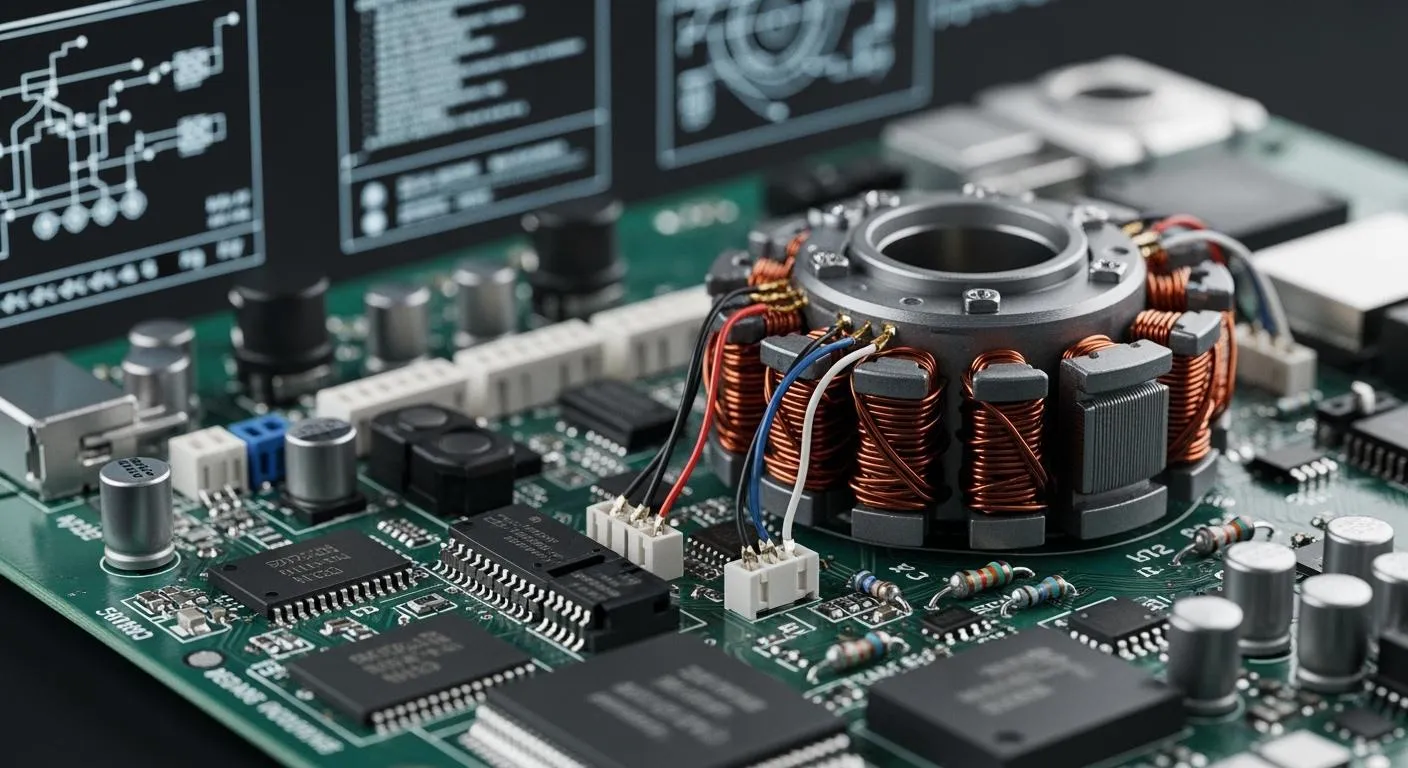
You see stator motors everywhere in modern electronics, powering everything from smart appliances to electric vehicles. In 2026, new integration methods connect stator motors with advanced electronics, making devices more efficient and reliable. Recent data shows strong growth in the market:
- The Servo Motor Stator Assembly Line market expects a 9% CAGR from 2026 to 2033.
- AC motors are set to hold 55.2% of the market share, especially in transportation.
- The demand for energy-efficient, high-performance motors continues to rise in automotive and consumer electronics.
Understanding these changes helps you make sense of the technology shaping your world.
Key Takeaways
- Stator motors are essential in modern devices, powering everything from appliances to electric vehicles.
- New materials and manufacturing processes improve motor efficiency, making devices lighter and more reliable.
- Advanced integration methods lead to better performance, including increased torque and reduced energy loss.
- Smart technology in motors allows for real-time monitoring, enhancing maintenance and operational efficiency.
- Understanding stator motor technology helps you choose the right devices for energy savings and improved performance.
Stator Motor Integration in Electronics
Advancements in Stator Motor Technology
You see rapid changes in how stator motors connect with electronics in 2026. Manufacturers now use advanced materials and new manufacturing processes to boost the performance of every electromagnetic induction motor. These improvements help you get more out of your devices, whether you use three phase induction motors in industrial settings or rely on compact motors in consumer electronics.
| Material Type | Benefits |
|---|---|
| Advanced Polymers | Enhance insulation properties, prevent leakage, and improve safety. |
| Composites | Increase durability, thermal resistance, and mechanical strength. |
| High-Performance Laminates | Offer excellent wear resistance and improve overall efficiency. |
| Nanocomposites | Provide excellent electrical and thermal conductivity, increasing power density and reducing losses. |
| Process Type | Benefits |
|---|---|
| Robotic Winding | Improves precision and consistency in coil winding, enhancing performance and reliability. |
| Automation in Lamination | Increases speed and quality control, reducing labor costs. |
| Virtual Design | Allows for optimization of designs and early defect detection, improving product performance. |
| 3D Printing | Enables complex customization and reduces production time and costs. |
You benefit from these innovations because they make every electromagnetic induction motor lighter, more reliable, and more efficient. For example, PCB stator technology allows electric motors to reach efficiency levels in the mid-90s. This means your devices last longer and use less energy. The use of nanocrystalline alloys and amorphous steel in stator cores reduces core losses, which is especially important for high-frequency operation in modern electronics.
Recent years have also seen a shift from radial-flux to axial-flux motor architectures. This change increases power density and efficiency, making compact powertrains possible for electric vehicles and other applications. The average stator weight has dropped by 20-30% over five years, and all motor topologies now show higher power-per-kg trends. You see these benefits in everything from three phase induction motors in factories to micro ultrasonic motors in medical devices.
Nova Technology Company (HK) Limited stands out as a HiSilicon-designated solutions partner in the integrated circuit industry. The company specializes in chip-level solutions and system integration for advanced stator motor control, supporting applications in automotive, industrial automation, and smart devices. Their expertise in semiconductor design and IC packaging ensures seamless integration between stator, rotor, and control electronics, driving innovation in electromagnetic induction motor technology.
Impact on Electric Motors Performance
You notice the difference that advanced stator motor integration makes in electric motors. The combination of new materials, precise manufacturing, and smart electronics leads to measurable improvements in performance and operation. Here are some of the most important benefits:
- Precision automated winding improves coil placement and mechanical balance, reducing vibration and fatigue on bearings and shafts.
- Optimized coil geometry reduces electrical losses, increasing efficiency in every electromagnetic induction motor.
- Cooler operation lowers thermal stress, which extends insulation life and copper integrity.
- Enhanced thermal and mechanical stability means longer service intervals and less maintenance.
- Digitalized winding technology and smart diagnostics improve reliability and enable preventive maintenance.
| Performance Metric | Improvement Attributed to Advanced Stator Motor Integration |
|---|---|
| Torque | Up to 25% increase |
| Power Density | Up to 30% improvement |
| Efficiency | Up to 3% gain |
| Thermal Performance | Motors run 10-20°C cooler during operation |
| Motor Size Reduction | Up to 30% smaller footprint without performance loss |

You also see how these advancements affect device efficiency and control. Lightweight stator designs reduce shipping costs and make installation easier. Continuous operation capability ensures high reliability, which is crucial for modern electronics. Precise speed control optimizes performance, especially in applications that require accuracy, such as robotics and automation. High efficiency across various operating conditions means your devices use less energy, even during off-peak times.
| Evidence Description | Impact on Efficiency and Control |
|---|---|
| Lightweight design reduces shipping costs and improves installation ease. | Enhances device efficiency by minimizing logistical challenges. |
| Continuous operation capability ensures high reliability. | Reduces downtime, crucial for modern electronics. |
| Precise speed control provided by the motors. | Optimizes performance, essential for applications requiring accuracy. |
| High efficiency across various operating conditions. | Maintains performance during off-peak times, lowering energy consumption. |
Modern stator designs also help reduce noise in electric motors. Techniques like optimal slot/pole combinations, skewing stator slots, and maintaining air gap uniformity minimize electromagnetic vibrations. This leads to quieter operation, which you appreciate in both home appliances and industrial machinery.
You face some challenges with advanced stator motor integration. System integration issues can cause mechanical vibrations and damage. Temperature management is critical because uneven heating affects material properties and performance. Misalignment during assembly can result in operational inefficiencies and potential failures. Manufacturers address these challenges with improved design, better materials, and advanced assembly techniques.
The integration of stator motors with electronics in 2026 brings you higher efficiency, better control, and more reliable operation. Whether you use ac or dc motors, three phase induction motors, or specialized electromagnetic induction motor types, you benefit from these advancements in every aspect of motion, power, and performance.
Inside an Electric Motor: Stator Components

Stator Frame, Core, and Winding
When you look inside an electric motor, you find three main stator components: the frame, the core, and the winding. The stator forms the stationary part of the motor and plays a key role in electromagnetic induction. The frame supports the entire structure and helps with heat dissipation, keeping the motor cool during operation. The core, made from stacked thin metal sheets, channels the magnetic field and reduces energy loss from eddy currents. The winding, usually copper wire, wraps around the core and creates a strong electromagnetic field when current flows through it.
| Component | Role in Electric Motor |
|---|---|
| Stator | Stationary part, provides a magnetic field |
| Permanent Magnets | Create a magnetic field for the rotor in DC motors |
| Electromagnets | Generate a rotating magnetic field in AC motors |
You see how the stator core, windings, and frame work together to maximize efficiency and power. The choice of copper for windings lowers resistive losses, which boosts efficiency. The stator’s design also affects how electric motors work, especially in terms of induction and electromagnetic performance.
- The stator core channels the magnetic field and minimizes energy loss.
- The windings generate the magnetic field when electric current flows through them.
- The stator frame provides structural support and aids in heat dissipation.
How Electric Motors Work with Stators
You might wonder how electric motors work and what happens inside an electric motor during operation. The stator uses electromagnetic induction to create a rotating magnetic field. When alternating current flows through the stator windings, it generates this field, which interacts with the rotor. This interaction produces torque and causes the rotor to spin, converting electrical energy into mechanical motion.
In AC motors, the stator’s electromagnets create a rotating field that drives the rotor. In DC motors, permanent magnets or electromagnetic windings in the stator provide the magnetic field for the rotor. The process of induction is central to both types. The stator’s windings, connected to an AC power source, act as an electromagnet. As the current alternates, the magnetic field rotates, and the rotor follows this motion.
- In motors, the stator generates a rotating magnetic field that interacts with the rotor to produce torque, converting electrical energy into mechanical energy.
- In generators, the rotor moves within the stator’s magnetic field, inducing a current and converting mechanical energy into electrical energy.
The efficiency of electric motors depends on the quality of the stator windings and the materials used. Copper windings reduce losses, while advanced designs in PCB stator motors further minimize induction losses. You see these improvements in how a DC motor works and how an AC motor works, with better power output and less wasted energy. Inside an electric motor, the stator’s electromagnetic induction ensures reliable power and smooth motion for every application.
Evolution of Motor and Electronics Integration

Historical Changes in Electric Motors
You can trace the journey of stator motor and electronics integration through many important milestones. The story begins in 1832 when William Sturgeon invents the first DC electric motor. This marks the first practical use of electromagnetic induction to move machinery. In 1837, Thomas and Emily Davenport receive the first patent for a DC electric motor, but early designs still struggle with power and efficiency.
As you move forward, the 1960s bring the introduction of Variable Frequency Drives. These allow you to control the speed of electric motors with greater precision, improving energy efficiency. The period from 1962 to 1982 sees the rise of brushless DC motors. These motors use rare earth magnets and eliminate mechanical commutation, which boosts reliability and efficiency.
In the late 1980s, Jerry Genco and Norman Smith patent a motor design that integrates the stator onto a printed circuit board. This step reduces manufacturing complexity and material costs. By 2015, ECM launches PrintStator software, which automates the design of PCB stators. This software optimizes copper geometries and thickness, leading to better torque density and power efficiency. By 2019, ECM secures multiple patents for embedding stators into multilayer PCBs, removing traditional wire winding and iron laminations. This innovation creates lightweight, efficient motors that use advanced electromagnetic induction.
Smart Control and Connectivity
Today, you see electric motors that combine stator, rotor, and electronics in ways that maximize efficiency and power. Modern designs use sophisticated control systems and high-energy magnets to improve performance. Smart motors now use the Internet of Things for real-time monitoring and predictive maintenance.
| Feature | Description |
|---|---|
| Fixed and Variable Speed | Lets you choose between fixed and variable speed control for different applications. |
| Motion Control | Integrates motion control for better operational efficiency. |
| Condition Monitoring | Provides real-time health checks to prevent failures and reduce downtime. |
| Advanced Diagnostics | Offers tools for troubleshooting and maintenance. |
| Adaptive Tuning | Adjusts motor performance based on load conditions for optimal efficiency. |
| Predictive Maintenance | Tracks maintenance needs to prevent unexpected failures. |
| Unified Engineering Environment | Allows programming of all features in one platform for streamlined operations. |
Connectivity plays a big role in modern stator motor systems. Online partial discharge monitoring uses sensors and software to give you real-time data. This helps you spot insulation issues early and plan maintenance before problems grow. Over 18,000 motors and generators now use this technology to catch developing insulation problems.
You benefit from these advances in electromagnetic induction, rotor design, and stator integration. The result is electric motors that deliver more power, higher efficiency, and reliable motion for every application.
Applications and Misconceptions
Stator Motor Use in Devices
You encounter stator motor technology in many applications. You see it in home appliances, such as washing machines and refrigerators, where induction motors deliver reliable motion and high efficiency. You rely on electric motors in power tools, including drills and saws, which use advanced stator designs to maximize performance. You benefit from induction motor applications in HVAC systems, where motors provide smooth operation and energy savings.
You notice stator motors in industrial applications. Manufacturing plants use electric motors to drive conveyor belts, pumps, and robotic arms. PCB stators improve efficiency and sustainability in these motors, reaching efficiency levels in the mid-90s. You depend on stator motor integration in automotive applications. Electric vehicles use induction motors to convert electrical power into mechanical power, powering wheels and supporting regenerative braking. Transportation systems rely on stator motors for trains and buses, where efficiency and reliability matter most.
- Stator motors play a key role in manufacturing and transportation industries.
- PCB stators enhance efficiency and sustainability in electric motors.
- The stator converts electrical power into mechanical power, essential for industrial machinery and automotive applications.
You see stator motor technology in medical devices, such as MRI machines and surgical robots, where precise motion and induction are critical. You find electric motors in consumer electronics, including fans, printers, and smart devices, where efficiency and quiet operation improve user experience.
Common Misconceptions About Electric Motors
You may hear several misconceptions about stator motors and electric motors. Many people believe PCB stators are only suitable for delicate or low-durability applications. CORE Outdoor Power proved this wrong by developing rugged and quiet outdoor power tools, such as leaf blowers and weed trimmers, using PCB stators. Another misconception is that PCB stators can only be used in low-power machines. Boulder Wind Power challenged this belief by using a PCB stator in a large wind turbine generator, producing 3 megawatts and over 2 million newton meters of torque.
You sometimes misunderstand motor specifications. Motor datasheets serve as critical interfaces between engineering design and practical application. You need clear communication to avoid confusion. You benefit from exercises that consider customer perspectives, which help designers make better decisions and clarify motor capabilities.
- PCB stators are not limited to delicate or low-power applications.
- Rugged outdoor tools and large wind turbines use PCB stators for high power and smooth operation.
- Understanding both customer and designer perspectives helps prevent misapplications and improves communication.
- Motor datasheets provide essential information for engineers and consumers.
Tip: Always check the motor datasheet and ask questions if you do not understand specifications. This helps you choose the right motor for your applications and ensures you get the best efficiency and performance.
You have seen how advanced stator motor integration boosts efficiency, reliability, and control in modern electronics. These improvements shape the devices you use every day. Looking ahead, you will notice new trends, such as high-efficiency motors, miniaturized designs, embedded sensors, sustainable materials, and modular platforms. Additive manufacturing with conductive inks will also change how motors are made. You can expect even smarter, greener, and more adaptable electric motors in the future.
FAQ
What is the main function of a stator in an electric motor?
You find the stator creates a magnetic field that interacts with the rotor. This process turns electrical energy into mechanical motion. The stator stays still while the rotor spins inside it.
How do single phase induction motors differ from three-phase motors?
You use single phase induction motors in small appliances and fans. They run on one alternating current. Three-phase motors work in factories and large machines. They use three currents for more power and smoother operation.
Is a DC or AC electric motor better for home use?
You often choose AC electric motors for home devices. They are reliable and easy to connect to your power supply. DC motors work well in battery-powered tools and electronics. Your choice depends on your needs.
Why do modern electric motors use advanced materials?
You see advanced materials in motors because they reduce energy loss and heat. These materials make motors lighter, stronger, and more efficient. You get better performance and longer life from your devices.
Can electric motors help save energy?
You save energy with efficient electric motors. They use less electricity to do the same work. This helps lower your bills and reduces waste. You also help protect the environment by using energy-saving motors.