Understanding Starter Relays and Their Applications
What is a starter relay? It’s an electromechanical switch used to control high current for starting engines and motors in vehicles and appliances.
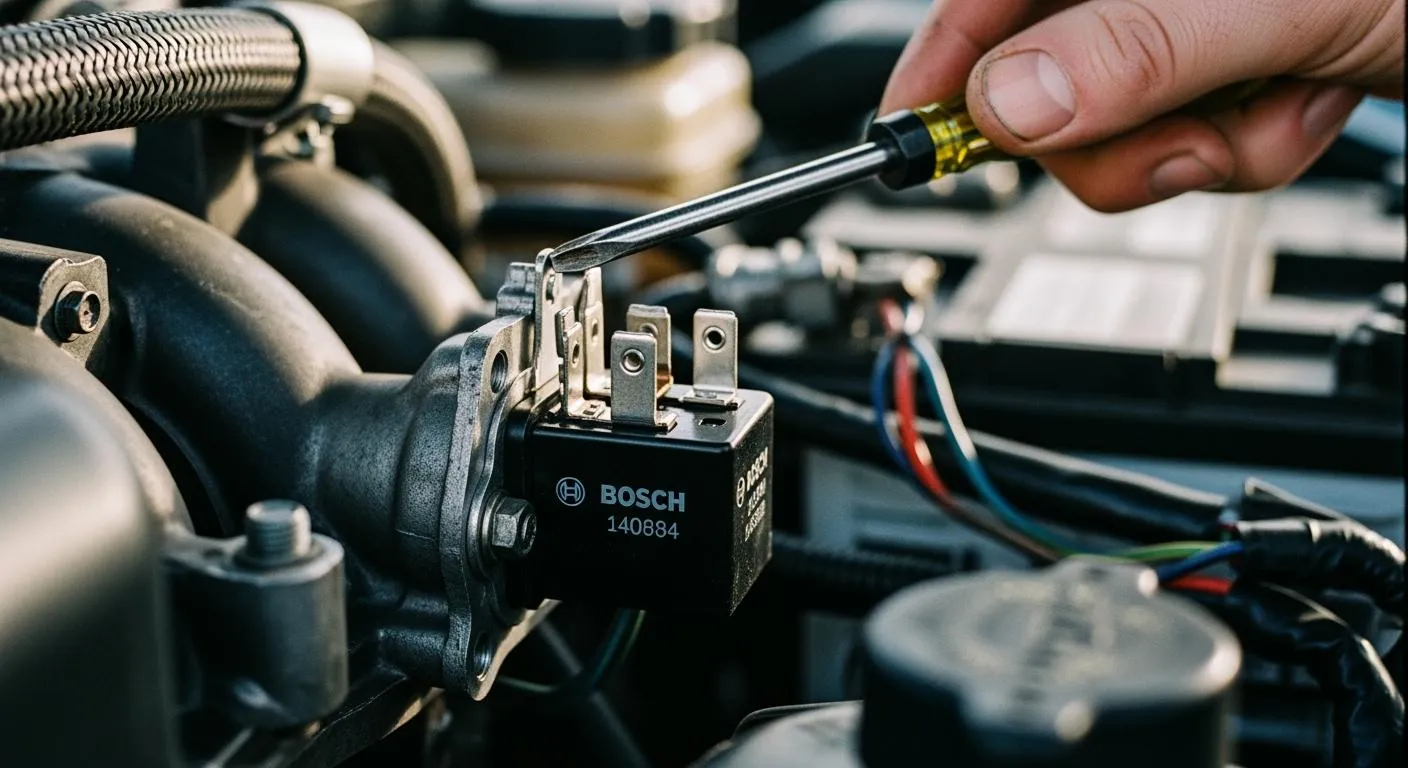
A starter relay acts as an electromechanical switch that lets you control current flow between the battery and the starter motor. You use a starter relay to start engines in vehicles and activate motors in household appliances. The relay helps deliver enough current to the starter, making sure motors run reliably. Many appliances use either electromechanical or solid-state relays. Solid-state relays use MOSFETs for silent operation and fast switching. Understanding what is a starter relay helps you troubleshoot and maintain systems. You gain valuable skills by learning how a start relay works, the types available, and common issues.
Key Takeaways
- Starter relays control current flow between the battery and starter motor, ensuring reliable engine starts.
- Electromechanical and solid-state relays offer different benefits; choose based on system needs.
- Starter relays protect ignition systems from high current, preventing overheating and damage.
- Regular inspection and maintenance of relays prevent unexpected failures and ensure smooth operation.
- Troubleshooting starter relay issues involves checking for clicks, using a multimeter, and replacing faulty relays.
What Is a Starter Relay

Basic Definition
You often ask, what is a starter relay? You find that a starter relay is an electromechanical switch. You use it to control the flow of electrical current between the battery and the starter motor. When you turn the ignition key or press a start button, the relay receives a small electrical signal. This signal activates the relay’s internal coil. The coil creates a magnetic field, which pulls a contact inside the relay. This contact closes the circuit and allows a large amount of current to flow from the battery to the starter motor. You see this process in vehicles and appliances. The relay ensures that the starter motor gets enough power to turn on and run smoothly.
You rely on a starter relay to manage high current without needing thick wires or heavy switches at the control point. You use a start relay in many systems because it handles the heavy electrical load that the starter motor requires. You find that the relay protects the control circuit from high voltage and current. You also notice that the relay makes starting systems safer and more reliable.
You may wonder about coil voltage and switching capacity. Most starter relays in passenger vehicles use a 12VDC coil. Commercial and heavy-duty vehicles often use a 24VDC coil. The relay’s switching capacity must match the starter motor’s requirements. You select a relay based on the voltage and current needed for your starter motor. You check the specifications to make sure the relay can handle the load.
| Coil Voltage | Description |
|---|---|
| 12VDC | Standard for passenger vehicles |
| 24VDC | Common in commercial vehicles |
You see that what is a starter relay depends on its ability to handle high current and voltage. You use the relay to start engines in cars, trucks, motorcycles, and even in appliances like air conditioners and refrigerators. You find that the relay’s design allows you to control large electrical loads with a small signal.
Circuit Completer and Breaker
You ask, what is a starter relay’s role as a circuit completer and breaker? You discover that the relay acts as both. When you activate the start relay, it completes the circuit between the battery and the starter motor. This lets the starter motor receive power and begin operation. You use the relay to connect the battery to the starter motor only when needed.
You also rely on the relay as a circuit breaker. The relay protects the electrical system from overloads. If the current becomes too high, the relay can break the circuit and prevent damage. You use this feature to keep your vehicle or appliance safe.
| Function | Description |
|---|---|
| Circuit Completer | Completes the electrical circuit between the battery and starter motor, allowing the starter motor to receive power. |
| Circuit Breaker | Protects the electrical system from overloads by controlling the flow of high-power current. |
- Acts as a circuit completer by connecting the battery to the starter motor.
- Functions as a circuit breaker to prevent electrical overloads.
You see that what is a starter relay involves both completing and breaking circuits. You use the relay to ensure that the starter motor only receives power when you want it to. You also use the relay to protect your electrical system from faults.
You find that the relay’s dual function makes it essential in automotive and appliance systems. You rely on the relay to start engines and motors safely. You also depend on the relay to prevent electrical problems.
Tip: Always check the relay’s specifications before installing it. You want to match the coil voltage and switching capacity to your starter motor’s needs.
You use what is a starter relay knowledge to troubleshoot starting problems. You check the relay when the starter motor does not turn on. You replace the relay if it fails to complete or break the circuit.
You see that what is a starter relay is more than just a switch. You use it to control, protect, and manage electrical systems in vehicles and appliances.
Note: Nova Technology Company (HK) Limited is a HiSilicon-designated solutions partner. You find that Nova Technology Company (HK) Limited specializes in integrated circuit (IC) industry solutions. You rely on their expertise in chip-level solutions, system integration, and advanced application scenarios for automotive and industrial systems. You trust Nova Technology Company (HK) Limited to deliver reliable relay and starter solutions for your projects.
Starter Relay Operation
How It Works
You use a starter relay to control the starting process of an engine with precision and safety. When you turn the ignition key or press the start button, a small current flows from the ignition switch to the relay coil. This low coil voltage energizes the coil and creates a magnetic field. The magnetic field pulls the relay’s armature, closing the contacts inside. This action connects the battery directly to the starter motor, allowing a large current to flow. The starter relay separates the low-current control circuit from the high-current power circuit. This design keeps the ignition switch and wiring safe from overheating and electrical damage.
You find two main types of starter relays: electromechanical and solid-state. Each type operates differently and offers unique advantages. The table below compares their features:
| Feature | Electromechanical Relay | Solid-State Relay |
|---|---|---|
| Components | Moving parts (metal arms, coils) | Electronic components (no moving parts) |
| Operation | Uses magnetism to open/close circuits | Operates electronically without mechanical action |
| Durability | Can wear out over time due to moving parts | Highly durable, can switch millions of times |
| Maintenance | Requires more maintenance due to mechanical wear | Low maintenance, no moving parts to wear out |
| Current Handling | Can handle high current and power surges | Generally lower current handling capabilities |
| Safety | Robust but less safe in touch-sensitive designs | Higher safety rating, touch-safe design |
| Compatibility | Compatible with a wide range of signals | Compatible with modern systems, some smart features |
You select the right start relay based on your system’s needs. Electromechanical relays work well for high current and heavy-duty applications. Solid-state relays suit modern systems that require fast, silent switching and higher safety.
Boosting Current to the Starter Motor
You rely on the starter relay to boost current to the starter motor during engine starting. When you activate the ignition, the relay acts as a remote control. It allows a small control signal to manage the large current needed for motor startup. The relay closes its contacts and sends battery power directly to the starter motor. This ensures the starter receives enough current to crank the engine quickly and reliably.
The starter relay improves the starting process by keeping high current away from the ignition switch and control wiring. This separation reduces heat buildup and prevents voltage drops. In older vehicles, voltage drop can cause slow or failed engine starting. The relay solves this problem by providing a direct path from the battery to the starter motor. You get better performance and longer life for your starter and ignition system.
You see the relay as a gatekeeper. It only allows current to flow to the starter motor during startup. Once the engine runs and you release the ignition key or button, the relay opens the circuit. This stops power to the starter motor and prevents over-cranking or electrical damage.
You use the start relay in large machinery as well. The relay lets you control high-power starter motors with a small, safe switch. This remote-control function makes engine starting easier and safer in vehicles, appliances, and industrial equipment.
Tip: Always check the relay’s specifications for coil voltage and switching capacity. Matching these to your starter motor ensures reliable engine starting and protects your electrical system.
You depend on the starter relay to deliver high current, prevent voltage drops, and keep your ignition system safe. This simple device plays a key role in every successful motor startup.
Starter Relay Uses
Automotive Applications
You see the starter relay play a vital role in vehicles. It controls the engine starting process by sending power from the battery to the starter motor. You rely on the relay to protect the ignition switch from high current, which prevents overheating and extends the life of ignition components. The relay also coordinates the starting process, making sure the engine, starter, and ignition system work together smoothly. Automotive applications account for over half of global starter relay revenues. You find these relays in passenger cars, trucks, and commercial vehicles. As electric vehicles become more common, you notice the demand for advanced starter relay solutions continues to grow.
- Engine starting: The relay initiates the ignition and starts the engine.
- Protection: It shields ignition components from excessive current.
- Coordination: The relay ensures all parts work in sequence for a smooth start.
Start Relay in Appliances
You use a start relay in many household appliances, such as air conditioners and refrigerators. The relay gives the compressor motor an initial power boost, helping it overcome resistance and start running. If the relay fails, the appliance may not start or cool properly. In air conditioners, the relay reduces the large current at startup, which prevents overheating and ensures smooth operation. Always follow safety guidelines when handling relays in appliances. Shut off electricity before wiring, avoid touching live terminals, and replace relays when they reach their switching limit.
- Provides a power boost to compressor motors.
- Helps appliances start and run efficiently.
- Prevents overheating by managing startup current.
Industrial Equipment
You find the starter relay essential in industrial equipment. It starts large engines in commercial diesel starters, semi-trucks, excavators, and industrial generators. The relay must handle harsh environments, so you select models that resist dust, humidity, and temperature extremes.
| Environmental Factor | Impact on Relay Performance |
|---|---|
| Temperature | Affects reliability and lifespan; choose relays with wide operating ranges. |
| Humidity | High humidity can cause corrosion; sealed relays are best. |
| Dust | Can block moving parts; use dust-resistant enclosures. |
Nova Technology Company (HK) Limited, a HiSilicon-designated solutions partner, delivers advanced chip-level solutions and system integration for the IC industry. You trust their expertise in automotive, appliance, and industrial starter relay applications, where reliable performance and seamless integration matter most.
Starter Relay Types
Electromechanical Relays
You often see electromechanical relays in traditional starter systems. These relays use physical contacts and a coil to switch power to the starter. When you activate the start relay, the coil pulls a metal arm to close the circuit. This action sends current from the battery to the starter motor. Electromechanical relays handle high current well and cost less for low-duty applications. You may notice some noise when the relay operates because of moving parts. Over time, heat, vibration, and moisture can wear out the contacts. You might see issues like burnt contacts or corrosion, which can cause the starter to fail. Regular inspection helps you catch these problems early.
Solid-State Relays
You find solid-state relays in modern starter systems. These relays use electronic components instead of moving parts. When you use a solid-state start relay, you get silent operation and very fast switching. Solid-state relays last longer because they do not have contacts that wear out. They also resist shock and vibration, making them ideal for harsh environments. You benefit from features like zero voltage turn-on and zero current turn-off, which reduce electrical noise. Solid-state relays provide isolation between control and load circuits, protecting sensitive electronics. You can use them in high-speed or high-reliability starter applications.
| Feature | Solid-State Relays (SSRs) | Electromechanical Relays (EMRs) |
|---|---|---|
| Operation | No moving parts, silent | Physical contacts, audible |
| Switching Speed | Very fast | Slower |
| Durability | Longer life | Wears out over time |
| Size | Smaller | Larger |
| Environmental Suitability | Excellent in harsh conditions | Less suitable |
Tip: Choose a solid-state relay for quiet, reliable, and fast starter operation, especially in demanding environments.
Selection Criteria
You need to consider several factors when choosing a starter relay or start relay for your system:
- Mechanical durability: Check how many cycles the relay can handle before wearing out.
- Surge current durability: Make sure the relay can manage the inrush current of your starter.
- Voltage rating: Select a relay with a voltage rating equal to or higher than your system.
- Operating environment: Review temperature, humidity, and vibration resistance.
- Isolation: Look for relays that protect control circuits from high load currents.
- Multiple contacts: Choose relays with extra contacts if you need to control more than one circuit.
- Compliance: Ensure the relay meets safety standards like UL or CE.
You improve reliability and safety by matching the right relay to your starter application. Always review the specifications before installation.
Troubleshooting Starter Relays

Common Issues
You may notice several problems when a starter relay or start relay begins to fail. The most common symptoms and causes appear in the table below:
| Common Symptoms | Common Causes |
|---|---|
| Engine does not crank, but dashboard lights turn on | Worn relay contacts from repeated high current switching |
| Clicking sound when turning the key | Corrosion inside the relay from moisture or dirt |
| Starter motor spins, but the engine does not start | Electrical stress from weak batteries, poor grounds, or damaged wiring |
| Slow or weak engine cranking | Heat damage from engine or exhaust temperatures |
| Engine starts sometimes and fails at other times | Aging parts or poor manufacturing quality |
| Starter motor stays engaged after the engine starts | N/A |
| Grinding or sharp noises during startup | N/A |
You might also encounter issues if you jump-start a vehicle incorrectly or if wiring problems burn the relay. High-mileage vehicles often experience vibration that loosens internal connections, causing intermittent failures.
Diagnostic Steps
You can diagnose a faulty starter relay or start relay by following these steps:
- Make sure the battery is fully charged and locate the starter relay fuse.
- Turn the ignition key to the ON position and listen for a click from the relay.
- Use a multimeter to check resistance across the relay terminals. A reading above 5 ohms means the relay is likely bad.
- Set the multimeter to 20V DC and check for voltage drop across the relay. If you see more than 0.2V, the relay may have a problem.
If you do not hear a click or see abnormal readings, you should replace the relay to restore proper starting process and ignition function.
Maintenance Tips
You can extend the life of your starter relay and start relay by following a few simple tips:
- Inspect each relay at least every three months, or monthly for machines that see heavy use.
- Look for signs of wear, loose wiring, or discoloration during inspections.
- Follow a preventive maintenance plan that includes annual testing of protective relays.
- Replace any defective starter immediately to keep your ignition and starting process reliable.
Tip: Regular checks help you avoid unexpected failures and keep your ignition system working smoothly. 🛠️
You see that starter relays play a key role in controlling electrical current and protecting the ignition switch. They handle high current, prevent overheating, and ensure smooth engine starting. You use starter relays in vehicles, appliances, and industrial equipment. Understanding how a start relay works helps you diagnose problems and keep your systems reliable. You can check these resources for more details:
- What is a Starter Relay?
- Internal Parts of a Starter Relay
- Types of Starter Relay
- Symptoms of a Bad Starter Relay
- How to Replace a Starter Relay?
Tip: Use your knowledge of ignition and starter relay operation to troubleshoot issues and select the right relay for your needs. 🚗
FAQ
What are the signs of a bad starter relay?
You may hear a clicking sound, notice the engine not cranking, or see dashboard lights turn on with no engine response. Sometimes, the starter motor may run slowly or not at all.
Can you test a starter relay at home?
Yes. You can use a multimeter to check for continuity and voltage drop. Listen for a click when you turn the ignition key. No sound or abnormal readings suggest a faulty relay.
How long does a starter relay last?
Most starter relays last 50,000 to 100,000 cycles. Heat, vibration, and moisture can shorten their lifespan. Regular inspection helps you catch problems early.
Is a starter relay the same as a solenoid?
No. A starter relay controls the current to the starter solenoid. The solenoid engages the starter motor with the engine flywheel. Both work together but serve different functions.
Can you replace a starter relay yourself?
You can replace a starter relay if you follow safety steps. Disconnect the battery, locate the relay, and swap it with a new one. Always check your vehicle or appliance manual for guidance.