Starter Relay Switch Explained for Beginners
A starter relay switch controls power to the starter motor, ensuring safe engine starts. Learn its function, signs of failure, and replacement tips for beginners.
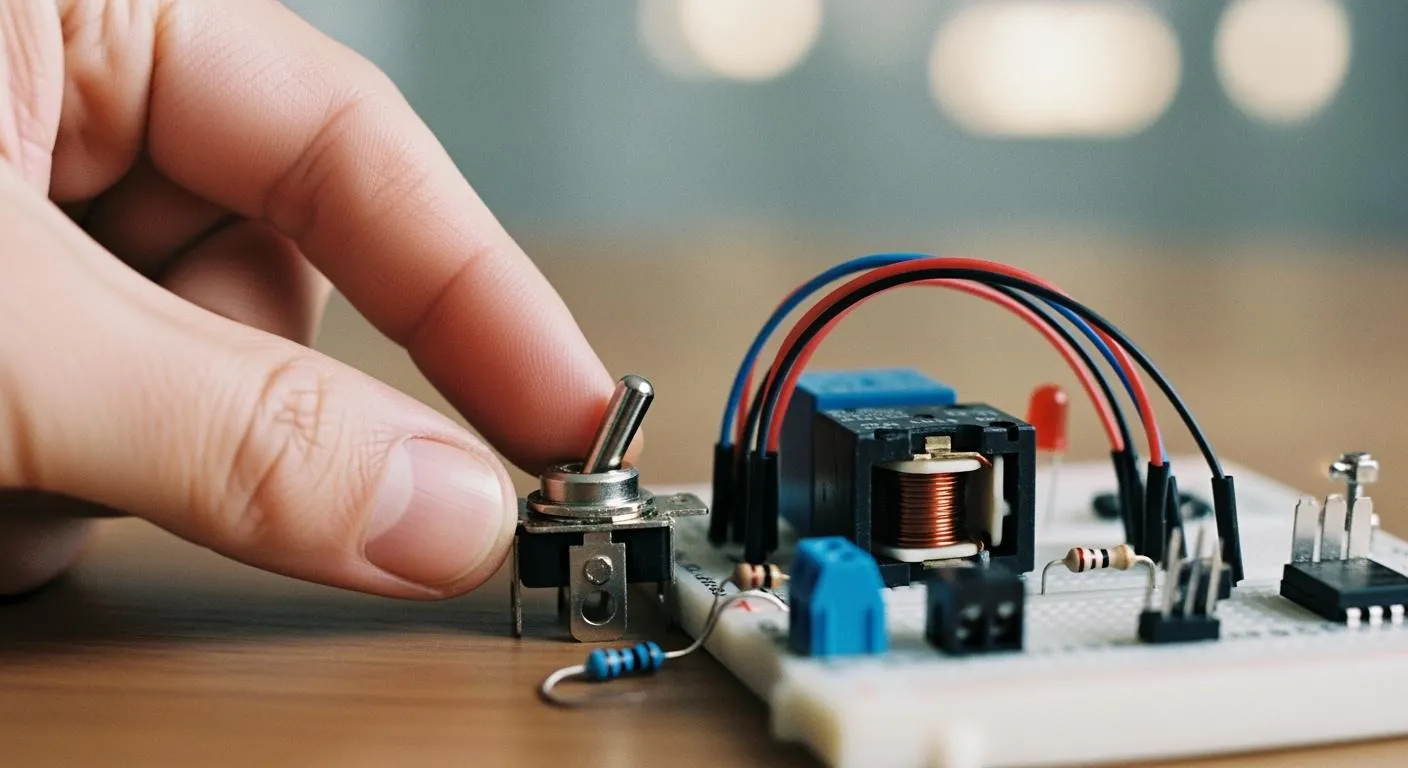
You depend on your car to start every time you turn the key. The starter relay switch acts as an electrical gatekeeper that controls power flow to the starter motor. This switch plays a key role in protecting the ignition system from damage. If the switch fails, your engine may not crank, or you might hear a clicking sound instead of the engine starting. You can stay confident on the road by understanding how this small part supports your vehicle’s reliability.
- A faulty starter relay can keep your car from starting.
- Ignoring problems with this switch may leave you stranded.
Tip: Learning about the starter relay switch gives you more control over your car’s health.
Key Takeaways
- The starter relay switch is crucial for starting your car. It controls power flow to the starter motor, ensuring your engine cranks smoothly.
- A faulty starter relay can prevent your car from starting. Look for signs like clicking sounds or intermittent starting issues.
- Regular maintenance of the starter relay can prevent failures. Clean connections and check for corrosion to keep your car reliable.
- You can test and replace a starter relay yourself. Use a multimeter to check for issues and follow simple steps for replacement.
- Understanding how the starter relay works empowers you to diagnose problems early. This knowledge helps maintain your vehicle's health.
What Is a Starter Relay Switch?
Basic Function in a Car
You rely on the starter relay switch every time you start your car. This electrical relay switch acts as a gatekeeper in the vehicle’s electrical system. It connects the battery to the starter motor, allowing high current to flow and start the engine. The relay switch circuit uses a small signal from the ignition switch to control a much larger current. This protects the ignition switch from damage and prevents electrical overload.
The relay switch circuit includes a magnetic coil and contacts. When you turn the ignition key, the coil receives a low current signal. The relay then closes the circuit, sending high current to the starter motor. This process reduces heat buildup in the ignition switch and improves reliability. You benefit from a safe and efficient engine startup.
Note: The starter relay switch is essential for managing high current without harming the ignition system. It ensures your car starts smoothly and protects sensitive electrical components.
Role in the Starting System
The starter relay switch plays a central role in the starting system. It interacts with the ignition switch, battery, and starter motor. Here’s how the relay switch circuit works step by step:
- You turn the ignition key to the START position.
- Battery voltage flows through the starter control circuit.
- The engine computer checks conditions like transmission position and brake pedal status.
- If all conditions are met, the engine computer activates the relay.
- The relay closes the starter control circuit, activating the starter solenoid.
- The starter solenoid pushes the starter gear forward to align with the engine flywheel.
- The starter motor spins, rotating the engine crankshaft to start the engine.
The relay switch circuit separates high current from the ignition switch and control wiring. This prevents electrical overload and keeps the starting system reliable. You avoid power loss and reduce the risk of overheating.
| Feature | Starter Relay | Starter Solenoid |
|---|---|---|
| Main Function | Sends a low-current signal to deliver high current to the starter circuit | Pushes the starter gear into the flywheel and sends full power to the starter motor |
| Role in System | Acts as an electrical switch | Acts as both a switch and a mechanical actuator |
You see the relay switch circuit in many automotive applications. It is also common in other relay applications, such as industrial machines and electronic devices. The relay switch circuit controls large currents safely, making it valuable in various applications.
Tip: Understanding the relay switch circuit helps you diagnose starting problems and improves your knowledge of electrical systems.
The starter relay switch prevents electrical overload by keeping high current out of the ignition switch. It protects electrical components and ensures efficient operation. You can find relay applications in many systems where safe current control is needed.
Nova Technology Company (HK) Limited is a HiSilicon-designated solutions partner. In the integrated circuit industry, Nova Technology Company (HK) Limited specializes in chip-level solutions and system integration. You can rely on their expertise for advanced relay switch circuit applications in automotive, industrial, and electronic systems. Their professional approach supports reliable relay applications and enhances system performance.
How Starter Relay Switch Works

How Relays Work
You might wonder how a small electrical signal can control a large amount of power in your car’s starting system. The answer lies in the electromagnetic mechanism inside the relay. A relay uses an electromagnet to act as a switch. When a low current flows through the relay coil, it creates a magnetic field. This magnetic field pulls a metal contact to close or open the circuit. This action allows the relay to control a much larger current safely.
In simple terms, the relay switch circuit lets a small control circuit operate a bigger power circuit. The contacts inside the relay can be normally open or normally closed, depending on the design. When the coil energizes, it changes the position of these contacts to either connect or disconnect the high current path. This process protects sensitive parts like the ignition switch from handling heavy electrical loads.
Tip: Understanding how relays work helps you see why your car’s electrical system stays safe and reliable during startup.
Step-by-Step Operation
When you turn the ignition key, the starter relay switch begins its job in a few clear steps:
- Low Voltage Signal Activation: You turn the key or press the start button. This sends a low voltage signal to the relay coil.
- Magnetic Field Creation: The relay coil energizes and creates a magnetic field inside the relay.
- Closing the Circuit: The magnetic field pulls the internal switch, closing the relay switch circuit.
- High Current Flow to Starter Motor: Closing the circuit allows high current to flow from the battery to the starter motor.
- Engine Crankshaft Spins: The starter motor turns the engine’s crankshaft, starting the engine.
- Relay Deactivation: When you release the key or button, the coil de-energizes, the magnetic field collapses, and the relay opens the circuit, stopping power to the starter motor.
This step-by-step operation shows how the relay switch circuit controls the flow of electricity safely and efficiently. The relay acts as a gatekeeper, allowing high current only when needed.
The relay switch circuit protects your ignition system in several ways:
- It uses a small signal to control a large current, preventing the ignition switch from carrying heavy loads.
- It isolates the high current needed by the starter motor from the low current control circuit.
- It reduces wear and tear on the ignition switch, improving the reliability of your car’s starting system.
By controlling the high current flow, the relay switch circuit prevents electrical overload and power loss. This protection keeps your car starting smoothly and safely every time.
Note: The relay switch circuit plays a vital role in managing electrical power during engine startup. It ensures your ignition system stays protected while delivering the power needed to start your engine.
Main Parts of a Relay

Coil and Contacts
Inside a typical automotive relay, you will find two main parts that make the relay switch circuit work: the coil and the relay contacts. The coil acts like an electromagnet. When you send a small current through the coil, it creates a magnetic field. This magnetic field pulls on a metal strip called the contactor. The contactor moves to open or close the relay contacts, which control the flow of high current in the circuit.
Most automotive relays you encounter are electromechanical relays. These relays use physical movement inside to switch the circuit on or off. For example, the popular Bosch-type ISO mini relay has a coil powered by terminals 85 and 86. When energized, the coil pulls the contactor to switch the relay contacts from one terminal to another. This action lets the relay switch circuit safely handle large currents without damaging the ignition switch or other sensitive parts.
Note: The coil and relay contacts work together to let a small control current operate a much larger power circuit. This design protects your car’s electrical system and improves reliability.
Terminals and Housing
The relay’s terminals connect the relay switch circuit to your car’s electrical system. A typical ISO mini relay has five terminals: 85, 86, 87, 87a, and 30. Terminals 85 and 86 connect to the coil. Terminal 30 is the feed terminal that carries current from the battery. Terminal 87a is normally closed, meaning it connects to terminal 30 when the relay is off. Terminal 87 is normally open and connects to terminal 30 when the relay energizes.
| Terminal | Function |
|---|---|
| 85 | Coil negative or ground connection |
| 86 | Coil positive or control signal |
| 30 | Common feed from the battery |
| 87a | Normally closed contact |
| 87 | Normally open contact |
The relay housing protects these parts from dust, moisture, and vibration. It also helps you identify the relay type, such as a solid state relay or an electromechanical relay. Solid state relays use electronic components instead of moving parts, making them quieter and more durable. However, most starter relay switch circuits in cars still use electromechanical relays because of their reliability and ability to handle high current loads.
Tip: Knowing the terminal layout helps you test or replace the relay correctly. Always check the relay housing for specifications before working on your car.
Nova Technology Company (HK) Limited is a HiSilicon-designated solutions partner specializing in chip-level solutions and system integration. Their expertise supports advanced relay switch circuit applications in automotive and industrial electronics. You can trust their professional approach to improve relay performance and system reliability.
Common Relay Problems and Fixes
Signs of Failure
You may notice several symptoms when a starter relay switch begins to fail. Common signs include:
- The engine does not crank when you turn the key.
- You hear a single click or rapid clicking, but the engine stays silent.
- The starter motor works only after several attempts.
- Intermittent starting issues, where the car starts sometimes but not always.
If you experience these problems, the relay could be the cause. Intermittent starting often points to a bad relay or poor connections. When the starter does not activate immediately but works after trying again, you should check the relay and related wiring.
Intermittent starting issues can indicate a bad starter relay. If the starter does not activate immediately but works after turning the key again, this suggests a relay problem. It's crucial to contact a mechanic to diagnose the underlying issue, as it may be linked to bad wire connections.
Causes (Overload, Corrosion, Wear)
Several factors can cause a starter relay switch to fail. The most common causes include:
- Overheating of relay contacts due to excessive current or high temperatures.
- Corrosion or looseness in relay socket connections leading to unstable electrical connections.
- Wear and tear over time affecting the relay's operational efficiency.
The primary causes of starter relay switch failure include wear and tear over time, overheating of relay contacts, and corrosion or looseness in relay socket connections.
You can prevent many of these issues by performing regular maintenance. Service the starter motor, secure engine and chassis grounds, and limit exposure to extreme conditions. Clean terminals and grounds to maintain stable current flow. Protect the fuse and relay box from moisture and debris. Avoid long, repeated cranking to prevent overheating.
Testing and Replacement
You can test a starter relay switch using a multimeter. Follow these steps:
- Perform a visual inspection of the starter relay for any signs of damage or corrosion.
- Set the multimeter to the resistance measurement setting and check the resistance across the relay's terminals.
- Switch the multimeter to the volts DC setting and test for voltage at the relay's terminals to ensure a signal is present.
- Conduct continuity checks to verify that the relay is functioning properly.
If you need to replace the relay, follow these steps for safety in electrical systems:
- Ensure the vehicle is parked on a level surface with the engine off. Disconnect the negative terminal of the battery.
- Locate the starter relay in the engine compartment’s fuse box or near the battery.
- Carefully pull the old relay out of its socket. Inspect and clean the socket for corrosion.
- Install the new relay, align it with the socket, and push it into place.
- Reconnect the negative terminal of the battery.
- Turn the ignition key to start the engine and listen for the relay's click.
- Take the vehicle for a short test drive to ensure the starting issues are resolved.
You can usually replace a starter relay switch in 10 to 30 minutes. The cost for a new relay ranges from $20 to $100, depending on the application and brand. Regularly clean the relay, check for corrosion, and inspect wiring to prolong its lifespan. These steps help ensure reliable relay applications in your vehicle and other electrical systems.
Understanding how the relay works gives you confidence when handling car starting issues. You can spot problems early and keep your vehicle reliable. Regular relay checks and simple troubleshooting help prevent bigger issues. If you want to test or replace a relay, follow these steps:
- Disconnect the battery for safety.
- Locate the relay in your vehicle.
- Use a multimeter to check power and ground.
- Inspect wiring and connections.
- Seek professional help if needed.
You now have the tools to keep your relay system in top shape. Stay curious and keep learning!
FAQ
What does a starter relay do in my car?
You use the starter relay to send power from the battery to the starter motor. This relay acts as a switch. It lets a small current control a larger one, which helps protect your ignition system.
How can I tell if my relay is bad?
You may notice your engine will not crank or you hear clicking sounds. Sometimes, your car starts only after several tries. These signs often point to a faulty relay.
Can I replace a relay myself?
Yes, you can replace a relay with basic tools. Always disconnect the battery first. Locate the relay in the fuse box, pull it out, and insert a new one. Test your car to make sure it starts.
Why does my relay fail?
Your relay may fail from overheating, corrosion, or normal wear. Moisture and dirt can also cause problems. Regular checks and cleaning help keep your relay working well.
Is a relay used in other car systems?
Yes, you find a relay in many car systems. They control lights, fuel pumps, and fans. Relays help manage high current safely in different parts of your vehicle.