Mosfet vs Transistor: Which is the Best Choice for Your Circuit Design?
Expert guide on Mosfet vs Transistor: Which is the Best Choice for Your Circuit Design?. Technical specs, applications, sourcing tips for engineers and buyers.
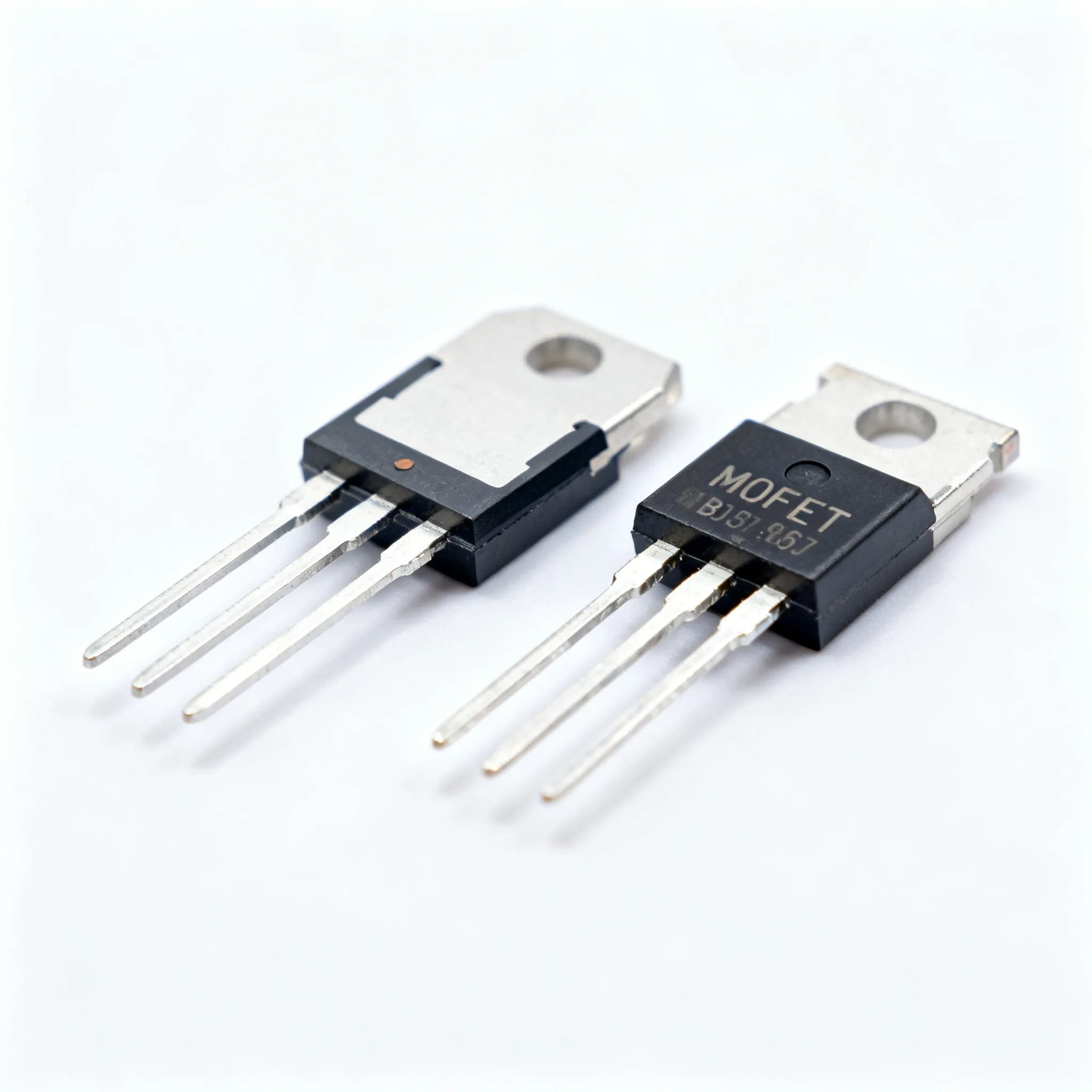
Introduction
The world of electronics is vast and constantly evolving, with numerous components available for various applications. Among these, MOSFETs (Metal Oxide Semiconductor Field Effect Transistors) and BJTs (Bipolar Junction Transistors) stand out as fundamental building blocks in circuit design. Understanding the differences between these two types of transistors is crucial for engineers and hobbyists alike, as this knowledge can significantly influence the efficacy, efficiency, and cost of a project. With the global semiconductor industry projected to reach $595.2 billion by 2026, according to the Semiconductor Industry Association, making informed choices in component selection is more important than ever.
Technical Overview
MOSFETs and BJTs are both semiconductor devices used to amplify or switch electronic signals. The core principle of a MOSFET is its ability to control the flow of current using an electric field, which makes it a voltage-controlled device. This feature is particularly advantageous for high-speed switching applications. On the other hand, BJTs are current-controlled devices, relying on the input current to control the output. This fundamental difference impacts their performance in various applications.
MOSFETs are known for their high input impedance and fast switching speeds, making them ideal for applications such as power management, RF amplifiers, and digital circuits. They are highly efficient in low-power applications due to their minimal power loss. Conversely, BJTs are valued for their high gain and wide range of operating conditions, making them suitable for linear amplification in audio and radio frequency applications.
The choice between a MOSFET and a BJT often depends on the specific requirements of the application, including factors such as power levels, frequency response, and thermal considerations. Understanding the detailed specifications of each component type can aid in making the most appropriate selection for your circuit design needs.
Detailed Specifications
Table 1: Electrical Specifications
| Parameter | MOSFET | BJT | Units | Notes |
|---|---|---|---|---|
| Drain-Source Voltage (VDS) | 600 V | N/A | Volts | For IRF840 |
| Collector-Emitter Voltage (VCE) | N/A | 120 V | Volts | For 2N3055 |
| Gate Threshold Voltage (VGS(th)) | 2-4 V | N/A | Volts | For IRF840 |
| Base-Emitter Voltage (VBE) | N/A | 0.7 V | Volts | Typical for silicon BJTs |
| Continuous Drain Current (ID) | 8 A | N/A | Amperes | For IRF840 |
| Continuous Collector Current (IC) | N/A | 15 A | Amperes | For 2N3055 |
| Power Dissipation (PD) | 125 W | 115 W | Watts | Maximum ratings |
| Input Capacitance (Ciss) | 700 pF | N/A | PicoFarads | For IRF840 |
| Transition Frequency (fT) | 200 MHz | 3 MHz | Megahertz | For high-speed applications |
| On-State Resistance (RDS(on)) | 0.85 Ω | N/A | Ohms | For IRF840 |
Table 2: Thermal & Mechanical Specs
| Specification | MOSFET | BJT | Units | Notes |
|---|---|---|---|---|
| Junction Temperature (TJ) | 175 °C | 200 °C | Degrees Celsius | Maximum operating temperature |
| Thermal Resistance (RθJA) | 62 °C/W | 70 °C/W | Degrees Celsius per Watt | Junction to ambient |
| Package Type | TO-220 | TO-3 | N/A | Common package types |
| Weight | 1.9 g | 2.5 g | Grams | Approximate |
| Lead Temperature (TL) | 300 °C | 260 °C | Degrees Celsius | For 10 seconds |
| Mounting Torque | 0.8 Nm | 1.0 Nm | Newton-meters | For secure installation |
| Thermal Conductivity | 1.5 W/m.K | 1.2 W/m.K | Watts per meter-Kelvin | Material dependent |
| Storage Temperature (TSTG) | -55 to 150 °C | -65 to 150 °C | Degrees Celsius | Safe storage range |
Table 3: Application Comparison
| Application | MOSFET | BJT | Notes |
|---|---|---|---|
| Switching Power Supplies | Preferred | Less Common | MOSFETs offer better efficiency |
| Audio Amplifiers | Used | Preferred | BJTs provide better linearity |
| RF Amplifiers | Preferred | Used | MOSFETs handle high frequencies better |
| Motor Control | Preferred | Less Common | MOSFETs offer fast switching |
| Signal Processing | Used | Preferred | BJTs offer better gain |
Design Considerations
When choosing between MOSFETs and BJTs for your circuit design, several factors must be considered. Firstly, the power requirement is crucial. MOSFETs are generally better suited for high-power applications due to their higher efficiency and faster switching speeds. This makes them ideal for applications like switching power supplies and motor control circuits.
BJTs, on the other hand, are often favored in low-power applications where linear amplification is needed, such as in audio circuits. They provide excellent gain characteristics and can operate over a wide range of frequencies, though they are typically less efficient than MOSFETs in high-power scenarios.
Thermal management is another critical consideration. Both MOSFETs and BJTs generate heat during operation, but their thermal characteristics differ. MOSFETs generally have lower thermal resistance, allowing for better heat dissipation, which is advantageous in high-power applications. However, BJTs can operate at higher junction temperatures, which can be beneficial in certain designs.
The choice of component also depends on the specific application's speed and frequency requirements. MOSFETs are superior in high-speed and high-frequency applications due to their fast switching capabilities. In contrast, BJTs, with their lower transition frequency, are more suitable for low-frequency applications.
Ultimately, the decision between a MOSFET and a BJT will depend on the specific requirements of your application, including power, frequency, thermal management, and cost considerations. By carefully evaluating these factors, you can make an informed choice that optimizes the performance and efficiency of your circuit design.
Step-by-Step Guide
Designing a circuit with MOSFETs or BJTs involves several key steps. Here’s a step-by-step guide to help you choose and implement the right component for your application:
- Define the Application Requirements: Determine the power, voltage, current, and frequency requirements of your application. This will help you narrow down the list of suitable components.
- Consult Datasheets: Use resources like DigiKey Electronics to access datasheets and compare the electrical and thermal specifications of potential components.
- Evaluate Thermal Management Needs: Consider the thermal characteristics of the components and ensure that your design includes adequate heat dissipation methods, such as heat sinks or cooling fans.
- Prototype and Test: Build a prototype circuit using your chosen components. Test the prototype under various conditions to ensure it meets your performance and reliability requirements.
- Optimize the Design: Based on testing results, optimize your design for efficiency, reliability, and cost. This may involve selecting alternate components or adjusting circuit parameters.
- Prepare for Production: Once satisfied with the prototype, prepare for production by sourcing components from reliable distributors, such as IC Online.
- Document the Design: Create detailed schematics, bills of materials, and assembly instructions to ensure a smooth production process.
- Review and Iterate: Regularly review your design and production processes, incorporating feedback and making improvements where necessary.
Common Issues & Solutions
Despite careful planning, issues can arise during the design and implementation of circuits using MOSFETs or BJTs. Here are some common problems and their solutions:
- Overheating: Ensure proper heat dissipation by using heat sinks, thermal paste, or cooling fans. Consider components with better thermal resistance if overheating persists.
- Insufficient Gain: For BJTs, ensure the base current is adequate to achieve the desired gain. For MOSFETs, check the gate voltage to ensure it is within the optimal range.
- Switching Losses: Optimize the gate drive circuit for MOSFETs to minimize switching losses. Use snubber circuits to protect against voltage spikes.
- Component Failure: Verify that components are operating within their specified voltage and current limits. Consider adding protection circuits, such as fuses or diodes, to prevent damage.
- Noise and Interference: Use proper grounding techniques and decoupling capacitors to reduce noise. Consider shielding sensitive components from interference.
Applications & Use Cases
MOSFETs and BJTs are versatile components used in a wide range of applications. MOSFETs are commonly found in power management systems, such as DC-DC converters and motor drives, due to their high efficiency and fast switching capabilities. They are also used in RF amplifiers and digital circuits, where their high input impedance and low power consumption are advantageous.
BJTs are prevalent in audio amplification, where their linearity and gain characteristics are highly valued. They are also used in RF applications, although they are typically less efficient than MOSFETs at high frequencies. In signal processing applications, BJTs are often preferred for their superior gain properties.
The choice between MOSFETs and BJTs ultimately depends on the specific requirements of the application, including power levels, frequency response, and thermal management considerations. By understanding the strengths and weaknesses of each component type, designers can make informed decisions that optimize the performance and efficiency of their circuits.
Selection & Sourcing Guide
Selecting the right MOSFET or BJT for your application involves careful consideration of the component specifications and application requirements. Once you have determined the appropriate component type, sourcing from a reliable distributor is crucial to ensure quality and availability. IC Online is an authorized distributor of electronic components, offering competitive pricing and fast delivery. Their comprehensive catalog and parametric search tools make it easy to find the right component for your needs.
FAQ
- What is the main difference between a MOSFET and a BJT? MOSFETs are voltage-controlled devices, whereas BJTs are current-controlled. This fundamental difference affects their performance and suitability for various applications.
- Which component is better for high-frequency applications? MOSFETs are generally better suited for high-frequency applications due to their fast switching capabilities and lower transition frequencies.
- Can I use a MOSFET in place of a BJT? It depends on the application. MOSFETs and BJTs have different electrical characteristics, so substituting one for the other requires careful consideration of the circuit requirements.
- What are the thermal management considerations for MOSFETs? MOSFETs typically have lower thermal resistance, making them more suitable for high-power applications. Proper heat dissipation methods, such as heat sinks, are essential.
- How do I choose the right MOSFET for my application? Consider the voltage, current, and power requirements of your application, as well as the thermal characteristics and switching speed of the MOSFET.
- Are BJTs still relevant in modern electronics? Yes, BJTs are still widely used in applications where linear amplification and high gain are required, such as in audio and RF circuits.
- What role does the package type play in component selection? The package type affects the thermal performance and physical footprint of the component. Choose a package that suits your