Air Quality Inspection Services Protecting Electronic Manufacturing Environments and Component Integrity
Air quality inspection is very important for electronic manufacturing places. Dust, corrosive gases, and moisture in the air can hurt sensitive parts.
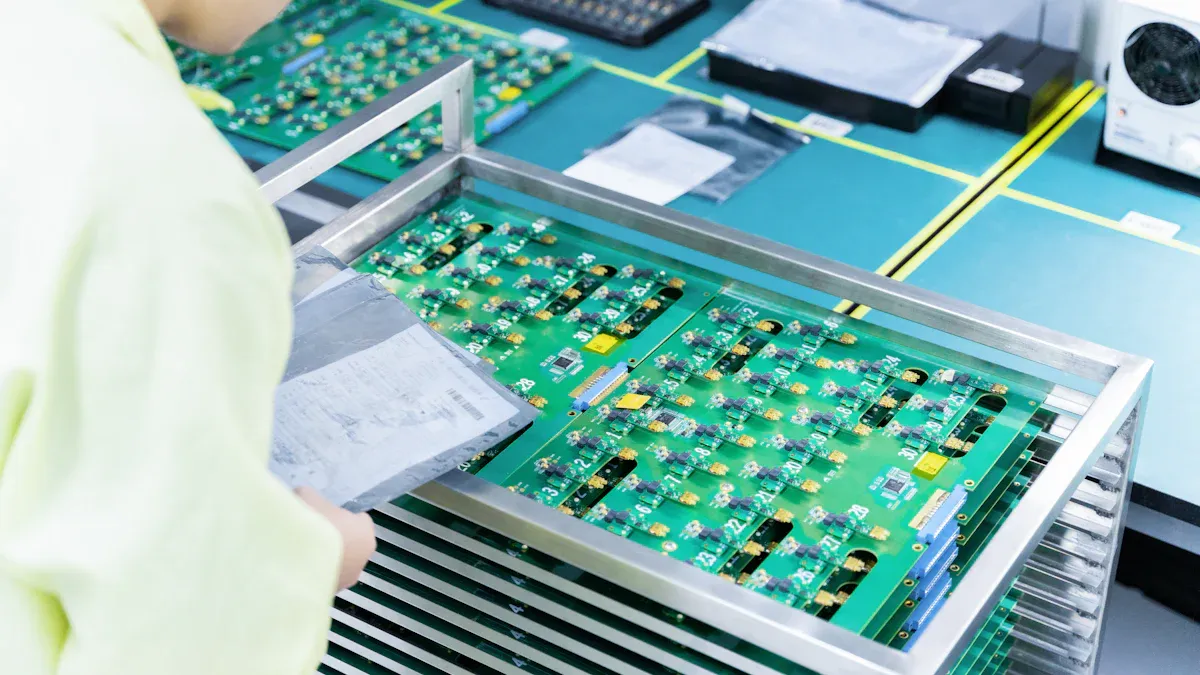
Air quality inspection is very important for electronic manufacturing places. Dust, corrosive gases, and moisture in the air can hurt sensitive parts. Dust collects inside devices and blocks cooling systems. This makes devices get too hot. Corrosive gases make metal rust faster. This can cause short circuits and failures. Moisture in the air makes these problems worse. It gets into parts and causes leaks or breaks things down. Checking air quality often helps lower these risks. It helps keep products working well and lasting longer.
Key Takeaways
-
Regular air checks keep electronic parts safe from dust, water, and bad gases that can hurt them or make them stop working.
-
Factories use special tools and follow testing plans to find air problems early. This keeps products safe and helps workers stay healthy.
-
Clean air systems and good reports help factories follow rules and stop expensive recalls or shutdowns.
-
Picking skilled inspection companies with the right certificates makes sure tests are correct and keeps factories safe for a long time.
-
Good air quality saves money by stopping machines from breaking, making products better, and keeping work going.
Air Quality in Electronics Manufacturing
Contaminant Risks
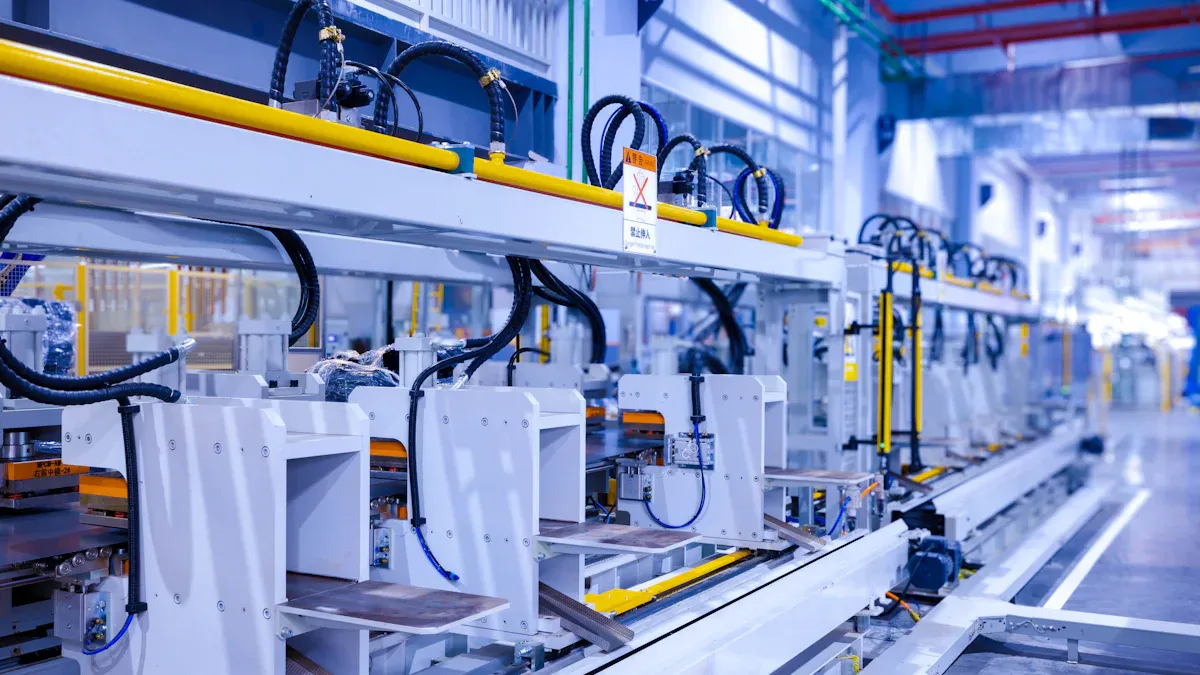
Keeping the air clean is very important in electronics manufacturing. Factories have many problems with air quality that can hurt safety and products. Some common problems are dust, fumes, and VOCs made during work. These things can land on equipment and make it stop working. Workers can also get sick from breathing in bad air. They might have trouble breathing or get sick over time.
Note: Good air systems help stop dust from building up. Too much dust can make floors slippery or even cause explosions.
Making electronics uses chemicals that can be dangerous. Solvents, acids, and gases can spill or leak and start fires. Dust from welding or grinding can catch fire and explode. Flammable liquids and gases make fires more likely. Heavy metals like lead, cadmium, and mercury are in many parts. Air tests show these metals can go over safe levels and harm health. Hard water can leave things like calcium and chlorine on parts, which can hurt how they work. Leftover solvents from cleaning can also make air quality worse.
Impact on Product Integrity
Bad air can hurt products in electronics factories. Dust and small particles can block cooling and make devices too hot. Chemical vapors from things like PVC can let out poisons. These can rust metal and break circuit boards. Mold and moisture can also cause rust and leaks.
Products need good air quality at every step. Even a little bit of heavy metals or leftover solvents can hurt sensitive parts. This can cause products to break or not work right. Keeping the air clean at all times helps protect products. Factories that care about air quality have fewer problems and less pollution. This helps their products last longer and work better.
Common Airborne Threats

Particulates and Dust
Electronics factories have big problems with dust and small particles. These come from many places:
-
Soldering fumes have rosin and metal bits.
-
Chemical fumes come from things like solvents and cleaners.
-
Dust comes from metals, plastics, ceramics, and cleaning stuff.
When people solder, grind, or cut, they make these particles. Factories are often closed spaces, so dust builds up fast. Dust can land on parts and cause them to break. This means fewer good products get made. Workers can also have trouble breathing. Checking the air and keeping it clean helps stop these problems.
VOCs and Chemical Vapors
VOCs and chemical vapors are found in electronics factories. Soldering and cleaning let out solvents like methanol and isopropanol. Other dangerous things are soldering fluxes, hydrofluoric acid, and epoxy resin. These can hurt workers’ skin and lungs. VOCs and vapors can land on parts and make them dirty. This lowers the number of good products. Good air systems and checking the air help keep things safe.
Moisture and Mold
Moisture and mold are bad for electronic parts. Some devices, like semiconductors, soak up water from the air. This can make them rust, break apart, or stop working. When soldering, trapped water can get bigger and break parts. Mold and fungi can grow on boards if it is damp. This can cause short circuits. Keeping the air dry and storing things right helps protect the parts.
ESD Hazards
ESD hazards can hurt sensitive electronics. Static charges pull or push dust onto important parts. ESD can make things break or not work right. This means fewer good products. Stopping static and cleaning often keeps the area safe. Using things like humidity control and antistatic tools helps stop ESD damage.
Tip: Always check the air and keep it clean to stop these problems and help make better products in electronics factories.
Air Quality Inspection Methods
Testing Technologies
Electronics factories use special tools to check the air. These tools help find dust, gases, and other bad things fast. Factories use different equipment to watch for problems in the air. Some tools check for dust and gases all the time. Others can be carried around to test air in different places. The table below shows some of these tools, what they do, and how well they work:
|
Technology / Equipment |
Purpose / Application |
Accuracy / Reliability Indicator |
|---|---|---|
|
Continuous Emission Monitoring Systems (CEMS) |
Real-time monitoring of emissions (PM, SO2, NOx, VOCs) for compliance and process optimization |
Compliance with environmental regulations implies high accuracy |
|
Ambient Air Monitoring Stations |
Continuous measurement of ambient pollutants (PM, SO2, NO2, O3, CO) to assess air quality trends |
Used for regulatory compliance and public health advisories |
|
Volatile Organic Compound (VOC) Analyzers |
Detection and quantification of VOCs using techniques like GC-MS and FID |
Advanced analytical methods ensure precise VOC identification |
|
Portable Air Quality Monitors |
Real-time, on-the-go measurement of PM, CO2, VOCs, formaldehyde for indoor air quality assessments |
Suitable for spot checks; accuracy supported by device standards |
|
Real-Time Data Management & Visualization |
Aggregates data from various monitors for analysis and decision-making |
Enhances data reliability through integration and AI/ML |
|
Artificial Intelligence (AI) and Machine Learning (ML) |
Data analysis, pattern recognition, anomaly detection, and predictive modeling |
Improves accuracy and early detection of air quality issues |
|
Compliance with International Standards |
Standards such as ISO 14001, ISO 8573, ISO 16890, IEC 61000-4-3, IEC 61000-6-2 |
Adherence to these standards implies high measurement accuracy and reliability |
Factories use digital tools to find even tiny amounts of bad stuff. These devices can spot problems before they get worse. The next table compares some tools by how much they can find and how fast they work:
|
Technology Type |
Target Contaminant |
Detection Limit |
Response Time |
Additional Notes |
|---|---|---|---|---|
|
Optical Interference Sensor |
Methane |
Very low (below 50 ppm) |
Fast (T90 < 30 s) |
High sensitivity, immunity to EMI, suitable for harsh environments |
|
Differential Optical Absorption Spectroscopy (DOAS) |
Nitrogen Dioxide (NO2) |
0.4 mg/m³ |
5 seconds total acquisition |
Sensitive, avoids interference, suitable for reactive gases |
|
Chemiluminescence Detector |
Nitrogen Dioxide (NO2) |
5.0 × 10⁻¹¹ (V/V) |
< 1 second peak response |
High accuracy, simple structure, low cost, but possible interference from other nitrogen compounds |
|
Light Scattering Meters |
Particulate Matter |
N/A |
Short response time |
Accurate, stable, suitable for real-time monitoring |
|
Photoelectric Sensors |
Particulate Matter |
N/A |
Short response time |
Accurate measurement, suitable for haze detection |
|
Optical Sensors |
Hydrogen Sulfide (H2S) |
High sensitivity, detection limit ~0.1 ppm (electrochemical) |
Response time ~9 s (electrochemical) |
High sensitivity and stability, but costly and require expert operation; electrochemical sensors affected by environment |
|
Electrochemical Sensors |
Hydrogen Sulfide (H2S) |
Moderate (~0.1 ppm) |
~9 seconds |
Lower cost, simple operation, but influenced by temperature and humidity |
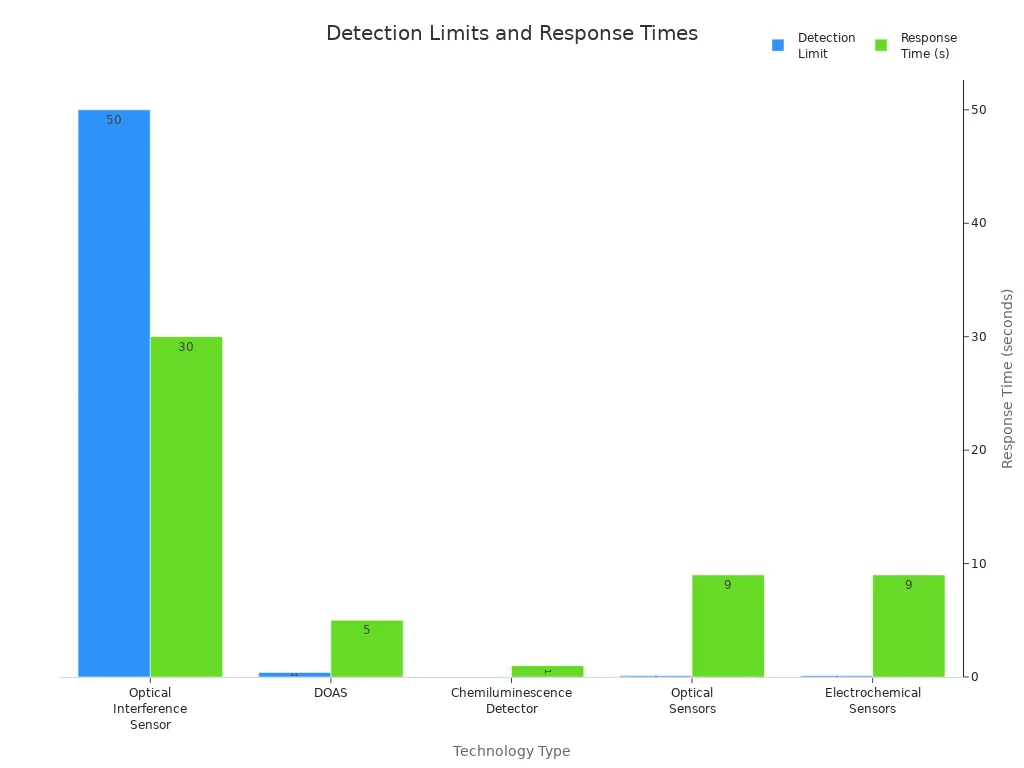
These tools let workers see problems right away. Quick testing helps stop damage to parts and keeps people safe.
Monitoring Protocols
Factories need good rules to keep the air clean. They start by making a plan for regular testing. Experts say to follow these steps:
-
Test the air at least once a year to follow the rules.
-
Test more often if the factory makes risky products or had problems before.
-
Do regular tests, like every month, to see if things change.
-
Take samples at different times and places to know what is normal.
-
Test more often, like every week or month, to find new problems or changes.
-
Check the air during work at different spots and times to catch any issues fast.
These steps help factories find problems early. Checking the air often makes it easier to keep workers and products safe.
Tip: Using both planned and real-time checks helps find all problems fast.
Reporting and Compliance
Air quality reports are very important for safety and following rules. These reports tell what was checked, what was found, and what was done. The table below lists what is in a normal report:
|
Report Section |
Description |
|---|---|
|
Executive Summary |
Overview of inspected systems, critical findings, and compliance status |
|
Measured Parameters |
Recorded environmental data such as temperature, relative humidity, airflow velocity, ACPH, and pressure differentials |
|
Filter & Duct Inspection |
Visual and instrument-based inspection of HEPA filters, ducts, and condensate lines with photographic evidence |
|
Instrument Calibration Log |
Documentation of instruments used (e.g., particle counters, manometers) along with calibration IDs |
|
Non-Conformities/Anomalies |
Identification of deviations from design or standards, such as airflow shortfalls or pressure drops |
|
Root Cause & Corrective Action |
Analysis of causes for non-conformities, corrective steps taken, and retest schedules |
|
Regulatory Checklist Mapping |
Cross-referencing findings with relevant standards like GMP Annex 1, ISO 14644, NABL 112 |
A good report also checks:
-
Filter systems like HEPA and ULPA
-
Airflow and pressure
-
Humidity and temperature
-
Ducts for leaks or mold
-
Air for particles, germs, and VOCs
-
System safety and how well it works
-
Control systems and automation
-
Full records for future checks
These steps help factories follow strict rules. Reports show where to fix things and how to stop problems later. Meeting standards like ISO 14644 and GMP Annex 1 proves the factory cares about air quality and keeps everyone safe.
Inspection Benefits
Defect Prevention
Checking air quality often helps stop problems before they start. Factories use these checks to find dust, fumes, and moisture. These things can hurt sensitive parts. Teams can find problems early with these checks. When they act quickly, they keep products safe.
Quality checks help teams stop dust from building up. They clean work areas and use filters to keep air clean. These steps lower the chance of short circuits, corrosion, and overheating.
Note: Quality audits help teams watch air quality over time. They use this information to make their process better and keep products strong.
When factories check air quality often, they have fewer broken products. More products pass tests and get to customers in good shape. Quality checks and audits help protect both the process and the final product.
Cost Savings
Air quality checks help factories save money. Clean air keeps machines working longer and means fewer repairs. Teams use filters and regular cleaning to stop corrosion and breakdowns. This saves money on fixing or replacing machines.
Factories also save by avoiding work stoppages. Dust or fumes can break machines and stop work. Quality checks help teams find these risks early. They fix problems before they cause big shutdowns.
-
Air quality checks help keep workers safe from dust and fumes. Healthy workers miss less work, so factories get more done.
-
Clean floors and air mean fewer accidents, like slips or dust explosions. Fewer accidents mean lower insurance and repair bills.
-
Quality checks keep products clean. This helps factories meet strict rules and avoid recalls.
-
Cleaning and changing filters often keeps machines running well. This means fewer breakdowns and repair costs.
-
Good air quality helps machines last longer. Teams spend less on new machines and more on making things better.
Tip: Quality audits and regular checks help teams see patterns and plan ahead. This helps save money and control the process for a long time.
Standards Compliance
Following rules is very important in electronics factories. Air quality checks help by giving clear records and proof of safe work. Teams use these checks to show they follow rules from groups like ISO and GMP.
Quality audits help teams find problems in their process. When they find something wrong, they fix it fast. This keeps the factory following data integrity standards and other rules.
-
Regular audits check if the factory meets all the rules.
-
Teams use reports from checks to show inspectors they do things right.
-
Good records help factories pass audits and avoid fines or shutdowns.
-
Following rules helps customers and partners trust the factory.
Note: Following rules is not just about passing checks. It also keeps the process and products safe.
By using regular checks, audits, and cleaning, factories keep their process strong. They protect products, meet data rules, and help the factory succeed for a long time.
Choosing Inspection Services
Provider Criteria
Picking the right air quality inspection company is very important. Companies should choose providers who know a lot about the industry and have good results. The table below shows what to look for:
|
Criterion |
Explanation |
|---|---|
|
Accreditation and Certifications |
Providers should have important accreditations, like IAS FEB Accreditation, to prove their skills. |
|
Technical Expertise and Experience |
Providers need trained engineers who know electronics manufacturing rules and codes. |
|
Comprehensive Service Offerings |
Providers should give many services, like inspection, testing, and advice. |
|
Customer Support and Responsiveness |
Providers must have great customer service and answer quickly when clients need help. |
|
Use of Advanced Technologies |
Providers should use new tools and methods to make work better and faster. |
A good provider should also meet special industry rules. Look for these things:
-
ISO 9001 and AS9100D for quality management
-
IPC-A-610 G for electronic assembly quality
-
cGMP-compliant manufacturing places
-
Quality checks for buying, making, and shipping parts
-
Regular checks and reviews of suppliers
-
Professional engineers for quality checks
Providers should also do these steps in electronics factories:
-
Test for particles with laser particle counters
-
Check airflow and pressure to control contamination
-
Test HEPA/ULPA filters to make sure they work
-
Watch temperature, humidity, and air changes
-
Test for germs in the air
-
Write down and check all results
-
Get recertified often to keep up with rules
-
Use experts for certification
Tip: Picking a provider with these skills helps keep parts safe and gives good results for a long time.
Case Examples
Many electronics companies have done better after picking the right inspection partner. For example, one company had many broken products because of dust. After hiring a provider with better tools and certified engineers, the company had 40% fewer defects in six months. Another company followed ISO rules better and passed checks with no big problems after switching to a provider with good records and regular recertification.
These stories show that picking a skilled inspection service can mean fewer broken products, better rule-following, and stronger products.
Air quality inspection is very important for electronics factories. Checking the air often and using clean air systems helps a lot over time:
-
Very clean air stops machines from breaking and keeps products safe.
-
Controlling humidity protects both workers and products.
-
Taking care of filters saves money and uses less energy.
-
Clean air helps factories follow tough industry rules.
-
Good air systems help stop work from slowing down.
Leaders who spend money on air checks can solve problems faster and follow the rules. This way, the factory becomes safer, more trusted, and does better work.
FAQ
What contaminants do air quality inspections detect in electronics factories?
Air quality inspections look for dust, small particles, VOCs, chemical vapors, moisture, and mold. They also check for static electricity dangers. Each of these can hurt electronic parts or make products worse.
How often should electronics manufacturers schedule air quality inspections?
Most experts say to check the air at least once a year. Factories with more risks or past problems may need checks every month or every few months. Regular checks help keep rules and protect products.
Why do electronics factories need professional air quality inspection services?
Professional services use special tools and trained workers. They find hidden dangers and write clear reports. These services help factories follow rules and stop expensive mistakes.
Can air quality inspections help reduce manufacturing costs?
Yes. Inspections help factories find problems early. This means fewer broken machines, less bad products, and less lost work time. Clean air helps machines last longer and saves money on repairs.
What standards do air quality inspection reports support?
Inspection reports support rules like ISO 14644, ISO 9001, and GMP Annex 1. Following these rules shows a factory cares about quality and safety.