Automotive PCB Assembly: Meeting Durability and Safety Requirements for Modern Vehicles
Automotive PCB assembly is very important in today’s cars. It helps cars stay strong and safe. These printed circuit boards must handle strong shaking, hot and cold weather, and lots of use.
Automotive PCB assembly is very important in today’s cars. It helps cars stay strong and safe. These printed circuit boards must handle strong shaking, hot and cold weather, and lots of use. Car makers have to follow strict rules to make sure cars work well and are safe. As more cars use electronics, the way PCBs are made keeps changing to fix new safety problems. Cars now last about 10 to 12 years because circuit boards and electronics are better.
|
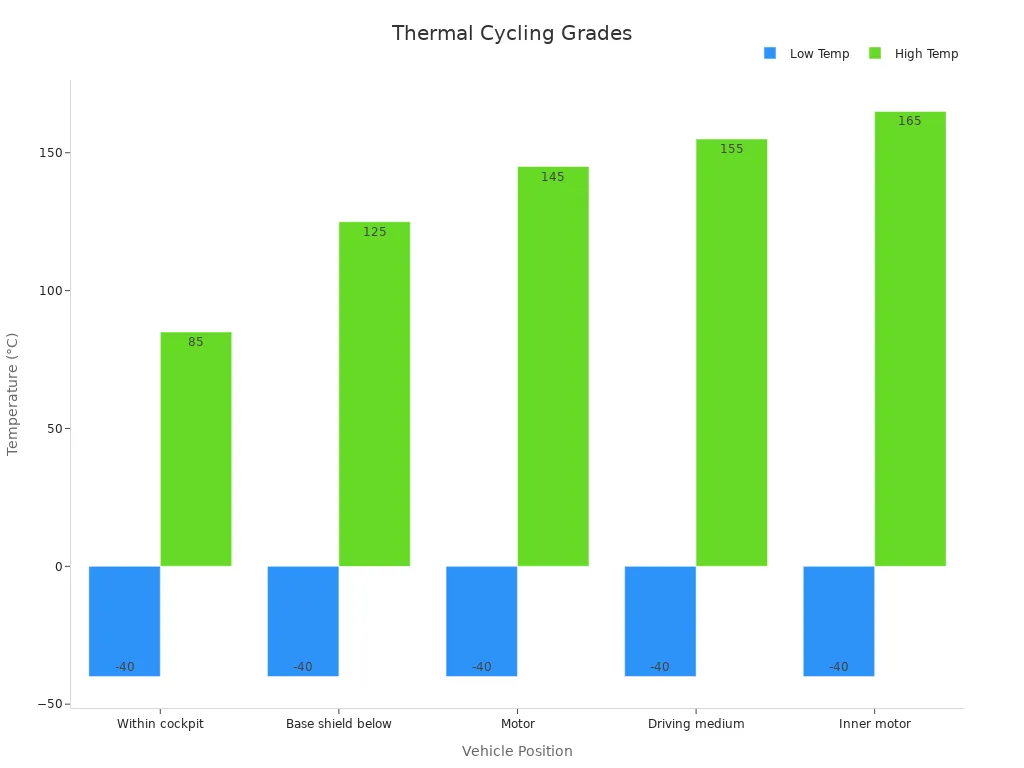
Position |
Grade |
Low Temperature |
High Temperature |
|---|---|---|---|
|
Within cockpit |
A |
-40°C |
85°C |
|
Base shield below |
B |
-40°C |
125°C |
|
Motor |
C |
-40°C |
145°C |
|
Driving medium |
D |
-40°C |
155°C |
|
Inner motor |
E |
-40°C |
165°C |
Factories use math tests, like T-tests, to check every PCB. These checks make sure each board works right. This helps stop mistakes and keeps cars safer.
Key Takeaways
-
Automotive PCBs face heat, cold, shaking, and wetness. These tough conditions test if cars stay safe and work well.
-
Strict rules and careful tests help spot problems early. This makes sure PCBs last a long time.
-
Picking strong materials and good designs makes PCBs last longer. This helps cars use new features safely.
-
New ways to make PCBs use machines and better materials. This makes PCBs smaller, more exact, and more dependable.
-
Working with trusted partners who follow quality rules keeps car electronics safe. It also helps avoid expensive fixes.
Automotive PCB Assembly and Reliability
Automotive Environments
Driving a car means facing tough conditions. Car parts must work in hot, cold, shaky, wet, or dusty places. Automotive PCB assembly helps cars handle these hard environments. PCBs are inside engine control units, electric powertrains, and safety systems. These boards must work in temperatures from -40°C to 165°C. The temperature depends on where the board is in the car.
Note: Highly Accelerated Life Testing (HALT) and drive-in environmental chambers test automotive electronics very hard. These tests use heat, cold, shaking, and wet air to find weak spots before you drive.
Automotive PCBs use strong copper tracks and good materials. This helps them stand up to shaking and heat. These boards are in important systems like engine control units. They cannot fail. Small PCB layouts help stop electronic noise and electromagnetic interference. This keeps your car’s electronics working well.
-
Automotive PCBs last 10–20 years, sometimes longer than the car.
-
Secure soldering keeps parts from coming loose on rough roads.
-
Multi-layer PCBs help new features like infotainment and ADAS work.
-
High-frequency laminates and metal substrates help electric cars manage heat and last longer.
Automotive industry standards say these boards must handle hard conditions. You trust their strength every time you start your car.
Reliability Challenges
You want your car to work every time you start it. High reliability in automotive PCB assembly makes this happen. But many things can cause problems. Manufacturing defects, like layers not lining up or bad via plating, can make circuits fail. Soldering problems, like cold joints or lifted pads, can cause circuits to stop working over time.
Car parts face heat, wet air, shaking, and dust all the time. These things can break down materials and hurt signal quality. People can also make mistakes during assembly, like putting parts in backward or using wrong parts. Even the best PCBs get old, and their materials can wear out. This is why regular testing and checking are needed to keep things working.
-
Temperature testing checks if PCBs can handle hot and cold.
-
Humidity testing checks if wetness will cause rust or short circuits.
-
Vibration and shock tests make sure connections stay tight on bumpy roads.
-
Life and fatigue tests check how long car parts will last in real use.
|
Reliability Challenge |
Impact on Automotive PCB Assembly |
|---|---|
|
Manufacturing defects |
Circuit failures, less reliability, expensive repairs |
|
Environmental stress |
Materials break down, early failure, loss of performance |
|
Soldering issues |
Bad electrical connections, random faults, safety risks |
|
Human assembly errors |
Wrong operation, more failures, safety concerns |
|
Aging and material fatigue |
Weaker signals, need for repair or replacement |
You can make PCBs more reliable by using strict quality checks and better materials. Standards like ISO 26262 and AEC-Q100 need hard tests, like thermal cycling and high-temperature life tests. These steps help find problems early and keep your car’s electronics safe and working.
Standards and Testing
ISO 26262 and ISO/TS 16949
Functional Safety and Quality Management Standards
You want to know your car’s PCB is safe and good quality. ISO 26262 gives steps to keep safety systems working right. This standard helps find risks and set safety levels for each part. ISO/TS 16949, now called IATF 16949, is about quality management. It helps stop mistakes and keeps the supply chain strong. Using both standards lowers failures and keeps your car’s electronics safe.
ISO 26262 and IATF 16949 work together. They help lower safety risks, build trust, and meet car industry rules.
NOVA PBCA’s Approach to Compliance
NOVA PBCA follows these PCB standards very closely. You get products that pass hard safety and quality tests. NOVA PBCA works with engineers from big companies. This teamwork helps follow new rules and best ways to make things. NOVA PBCA’s ERAI membership helps stop fake parts and keeps the supply chain safe.
IPC-6012DA and AEC-Q100
Reliability Standards for Automotive PCBs
You want your car’s PCB to last a long time. IPC-6012DA sets rules for making strong boards. AEC-Q100 checks if chips can handle heat, shock, and shaking. These standards make sure electronics work in tough places, like near the engine.
|
Standard |
Description |
Application Area |
Governing Organization |
|---|---|---|---|
|
IPC-6012DA |
Sets rules and tests for rigid PCBs |
Automotive PCB reliability |
IPC – Association Connecting Electronics Industries |
|
AEC-Q100 |
Checks chips for failure in harsh conditions |
Automotive integrated circuits |
Automotive Electronics Council (AEC) |
Quality Assurance through Trusted Supply Chains
NOVA PBCA uses trusted partners and ERAI to keep the supply chain safe. You get real, high-quality parts every time. NOVA PBCA’s long-term factory partners help avoid delays and mistakes. This means your car’s PCBs meet all safety and reliability needs.
Durability Testing
Common Testing Methods
You need to know your car’s PCB can handle real stress. Common tests are:
-
Thermal cycling heats and cools the board to find weak spots.
-
Thermal shock changes temperature fast to test for sudden breaks.
-
Humidity testing checks if water causes rust or shorts.
-
Vibration and shock shake the board to see if parts stay put.
These tests help find problems before they reach your car.
Ensuring Reliability with NOVA PBCA
NOVA PBCA uses these tests for every project. You get reports, like X-ray and AOI, to show your board’s quality. Early testing finds problems, like rust, before they cause failure. NOVA PBCA’s strong process and testing help you meet all car industry safety and reliability rules.
Best Practices in Assembly
Material Selection
It is important to pick the right materials for your automotive PCB. The material you choose changes how long your board will last. It also affects how well it works. FR4 is used a lot because it costs less and works for many jobs. If you need better heat control, use metal-core PCBs or ceramic substrates. These materials help move heat away from electric parts. This keeps your automotive components safe. Flexible PCBs can fit into small or strange spaces. When picking materials, think about how well they move heat, how strong they are, and how much they cost. Ceramic and aluminum substrates can handle high heat. They also lower stress on solder joints. This helps your automotive components last longer and work better in hard places.
Redundancy and Design
You want your car’s important systems to keep working if something breaks. Redundant design means adding backup paths or circuits. If one part stops, another can take over. This is very important for safety in cars. You can use two pathways, backup power, or self-repairing circuits. Some companies use FPGAs so the board can fix itself if a part fails. These choices help your automotive components stay strong, even in tough places.
Thermal Management
Heat can hurt your automotive PCB and make it work worse. Good thermal management keeps your board cool and safe. You can use thermal vias, heat sinks, and copper pours to move heat away. Place electric parts carefully to spread out the heat. Use materials that move heat well, like metal-core or ceramic, for better cooling. Sometimes, you need fans or liquid cooling for high-power automotive components. These steps help your board last longer and keep your car working well.
Tip: Always check your design with thermal simulation tools before you finish making it. This helps you find and fix heat problems early.
Secure Mounting
You must mount your PCB tightly to protect it from shaking and bumps. Use strong screws, clips, or brackets to hold the board still. Make weak spots stronger where there is more stress. Good mounting stops parts from coming loose. It keeps your automotive components safe. Secure mounting is an important step in making and putting together cars.
Precision PCB Manufacturing Trends
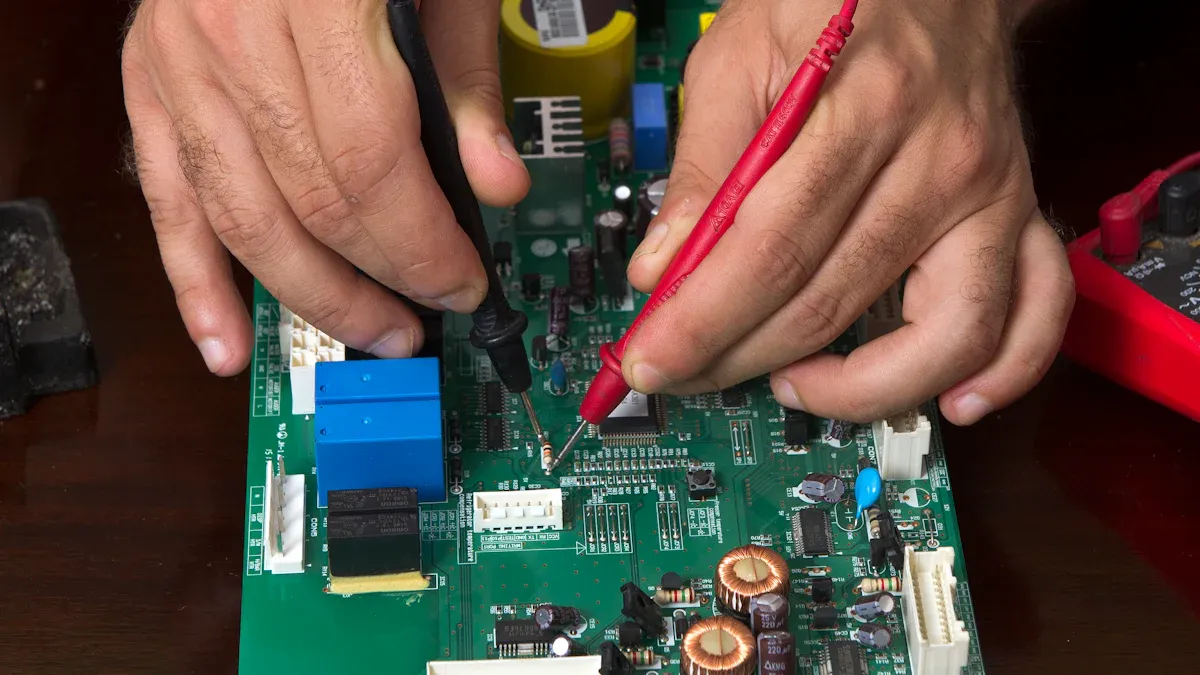
Advanced Materials
New materials are changing how precision pcb manufacturing is done in cars. Now, you can use advanced laminates, ceramics, and metal-core boards. These materials help your pcb handle heat, shaking, and wetness better. Using these strong materials makes your car electronics last longer and work safer. You also get better heat control, which is important for electric vehicles. As more cars use batteries and electric motors, you need materials that move heat away quickly and keep electronics safe.
-
Advanced laminates protect against high heat.
-
Metal-core boards help with heat from power electronics.
-
Ceramics make your pcb stronger and last longer.
Automation and Quality
You want every pcb to work right the first time. Precision pcb manufacturing uses robots and smart machines to make this happen. Automated Optical Inspection (AOI) and X-ray checks find tiny problems people might miss. These tools help you catch mistakes early and keep your car electronics safe.
|
Benefit |
Description |
Impact |
|---|---|---|
|
Automated Soldering |
Robots solder parts with high accuracy |
Fewer mistakes, lower costs |
|
Automated Inspection |
AOI and X-ray spot problems fast |
Early fixes, better quality |
|
Batch Consistency |
Machines keep each batch the same |
Reliable car performance |
|
AI finds mistakes and learns from data |
Less human error, higher reliability |
Tip: Automated systems in precision pcb manufacturing help you save money and make your products safer.
Miniaturization
Car electronics keep getting smaller and smarter. Precision pcb manufacturing lets you fit more features into less space. You can use high-density interconnect (HDI) and flexible boards to make designs compact and light. This helps you build cars with more safety features, like ADAS, without making them heavier.
-
Miniaturized pcbs use HDI to fit more circuits in small spaces.
-
Flexible and rigid-flex boards bend and fold to fit tight spots.
-
Embedded parts inside the pcb save space and boost performance.
Market trends show that miniaturization helps new car designs. You get lighter cars, more features, and better safety. Precision pcb manufacturing makes this possible by letting you design and build complex electronics that last.
Automotive pcb assembly helps keep cars safe and working well. Using strict rules and strong tests makes cars break less. This also saves money on repairs. It helps people trust the car makers.
-
Higher Mean Time Between Failures (MTBF) and Availability mean the car works better.
-
Lower Failure Rate and Error Rate make the car safer.
-
Testing and rules help find problems early and stop recalls.
You should pick partners who care about quality and use new ideas. This way, cars stay safe and last a long time.
FAQ
What makes automotive PCBs different from regular PCBs?
Automotive PCBs use stronger stuff and get checked more. These boards can handle heat, shaking, and wetness better. They last longer and help keep your car’s electronics safe.
How do you test automotive PCBs for durability?
Tests like heating, shaking, and wetness checks are used. These tests show if the PCB can handle real driving. Engineers look at the results to make the boards work better.
Why do automotive PCBs need strict standards?
Strict rules help stop problems and keep people safe. They make sure every board is good and safe to use. You can trust your car more when PCBs follow these rules.
Can automotive PCBs help prevent car breakdowns?
Yes! Good PCBs help your car’s systems keep working. You are less likely to have sudden problems or big repair bills. Good PCBs help your car work when you need it.