Boost Converter DC Design Analysis for 2025
The DC/DC converter market shows strong growth, with sectors like automotive expecting a nearly 30% CAGR. This expansion put
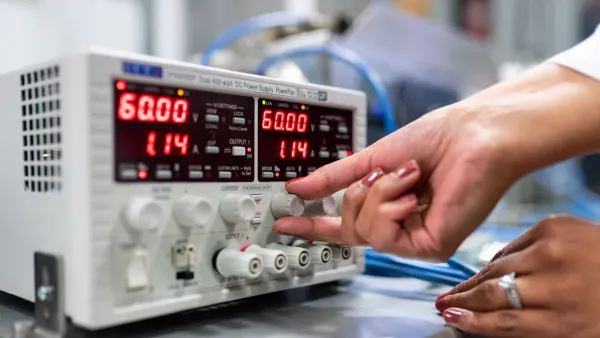
The DC/DC converter market shows strong growth, with sectors like automotive expecting a nearly 30% CAGR. This expansion puts pressure on engineers. A successful boost converter dc design for 2025 balances four key pillars. These are topology, efficiency, thermal performance, and EMI. The right boost converter design considers every factor. Engineers must choose the correct boost topology and boost components. This ensures the best performance for a specific boost application. Every boost converter decision impacts the final boost product.
Key Takeaways
- A good boost converter design balances four main things: how it is built (topology), how well it uses power (efficiency), how it handles heat (thermal performance), and how it stops electronic noise (EMI).
- Choosing the right way to build your boost converter is important. You can pick between different control modes and rectification methods. This choice affects how well the converter works.
- High efficiency is key. You need to find and reduce power losses. This includes losses from current flow, switching, and gate-drive. This makes the converter work better and last longer.
- Managing heat is very important for a reliable boost converter. You must calculate how much heat is made. Then, you can use smart PCB layouts with thermal vias to move heat away from hot parts.
- You must control electronic noise (EMI). This noise can stop other electronics from working. You can use special circuits called snubbers or change the switching frequency to reduce this noise.
Selecting the Right Boost Converter Topology
Choosing the correct power supply topology is the first critical step in a successful boost converter design. While traditional modes are effective, 2025 designs benefit from exploring emerging power supply topology options. Advanced power supply topology research shows promising results. New options offer superior efficiency and voltage gain. A leading power supply topology is the Novel Interleaved Nonisolated High-Gain DC-DC Boost Converter. This power supply topology achieves high efficiency above 96% with low device stress. Engineers can leverage HiSilicon-designated solutions partners, such as Nova Technology Company (HK) Limited, for expertise in implementing these advanced power supply topology solutions. A proper boost design starts with the right power supply topology.
CCM vs. DCM Control Modes
A foundational boost decision is the control mode. The choice between Continuous Conduction Mode (CCM) and Discontinuous Conduction Mode (DCM) affects the entire boost converter performance. CCM offers lower peak currents, making it ideal for high-power applications. DCM provides better light-load efficiency. This makes it suitable for battery-powered devices with standby modes. The selection of this boost topology impacts component size and filtering requirements.
| Feature | Continuous Conduction Mode (CCM) | Discontinuous Conduction Mode (DCM) |
|---|---|---|
| Peak Inductor Current | Lower | Higher |
| Required Inductor Size | Larger | Smaller |
| Light-Load Efficiency | Lower | Higher |
| Best For | High, stable load currents | Low or variable load currents |
Synchronous vs. Non-Synchronous Boost Rectification
The next boost topology choice involves the rectification method. A non-synchronous boost uses a simple diode, while a synchronous boost replaces it with a controlled MOSFET. This change has a major impact on performance.
A synchronous boost converter can achieve a maximum efficiency near 95%. A non-synchronous boost converter often struggles to exceed 80%. This creates a potential high efficiency improvement of up to 15 percentage points at full load. The trade-off is higher cost and design complexity for the synchronous boost design.
Modern controller ICs simplify synchronous boost design with integrated features like gate drivers, soft start, and over-current protection. Use this simple flow to guide your boost decision:
- Is maximum efficiency the top priority?
- Yes: Choose a synchronous boost. The high efficiency justifies the added complexity.
- No: Proceed to the next question.
- Is the load current consistently high (>2A)?
- Yes: A synchronous boost is strongly recommended to minimize power loss.
- No: A non-synchronous boost may be sufficient.
- Is budget the primary constraint?
- Yes: A non-synchronous boost is the most cost-effective dc/dc converter option.
This structured approach ensures the selected boost topology aligns with project goals.
Maximizing Your Boost Converter Efficiency
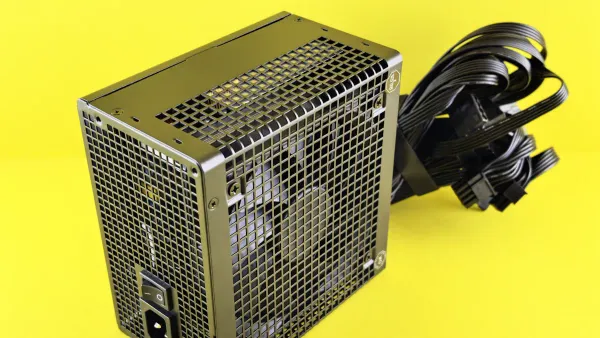
Achieving high efficiency is a primary goal in modern power conversion. A successful boost converter design minimizes energy waste, which reduces heat and improves reliability. Top-tier boost converters in 2025 aim for efficiency ratings well above 90%, with maximum efficiency reaching over 95% under optimal conditions. This level of energy efficiency requires a careful analysis of all potential power losses.
Analyzing and Minimizing Power Losses
Engineers must first identify where a boost converter loses power. Three primary sources contribute to overall inefficiency in a boost design. Understanding them is key to improving energy efficiency.
- Conduction Losses: These occur from current flowing through the on-resistance (RDS(on)) of the MOSFET and the series resistance of the inductor. The formula I²R quantifies this loss.
- Switching Losses: These happen during the brief transition when the MOSFET turns on or off. During this time, both voltage and current are present across the switch, creating a V-I overlap that dissipates power.
- Gate-Drive Losses: This loss comes from the energy required to charge and discharge the MOSFET's gate capacitance each switching cycle.
To minimize these losses, engineers should select MOSFETs with low on-resistance and low parasitic capacitance. Advanced wafer thinning techniques and improved packaging also reduce internal resistance, directly contributing to a high efficiency boost performance.
Optimizing Switching Frequency
The choice of switching frequency presents a critical trade-off in every boost converter design. A higher frequency allows for the use of smaller inductors and capacitors. This directly reduces the overall solution size and board footprint. This is a major advantage for space-constrained applications.
However, this benefit comes at a cost. Both switching losses and gate-drive losses are directly proportional to the switching frequency. Increasing the frequency will increase these power losses, which can lower the total efficiency of the boost circuit. The optimal frequency for your boost application balances the need for a compact physical design against the demand for the highest possible energy efficiency. A careful analysis of the entire system's priorities will guide the final decision for the boost converter.
Thermal Management and Reliability
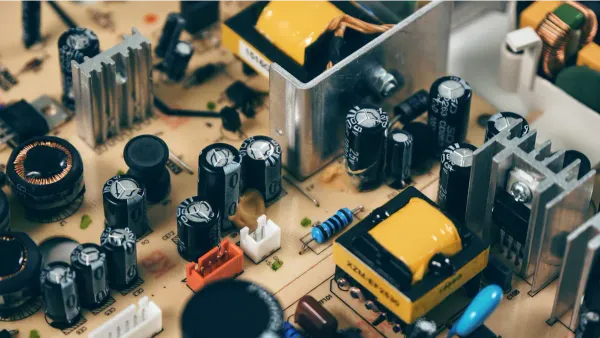
Effective thermal management is not an afterthought; it is a core pillar of a reliable boost converter design. Poor heat dissipation degrades performance, shortens component lifespan, and can lead to catastrophic failure. A robust thermal management strategy ensures the boost converter operates safely and consistently over its intended service life.
Calculating Power Dissipation and Temperature
The first step in managing heat is understanding the thermal behavior through design and calculation. Every watt of power lost becomes heat that must be managed. Engineers can predict a component's temperature rise with a straightforward design and calculation.
- Junction Temperature Rise (ΔTj): This is found using the formula
ΔTj = Rth(j-a) × PLOSS, whereRth(j-a)is the thermal resistance from the component's junction to the ambient air andPLOSSis the total power loss. - Junction Temperature (Tj): The final temperature is then
Tj = ΔTj + Ta, whereTais the ambient temperature.
This design and calculation is critical for long-term reliability. Component aging, especially in power switches, is driven by thermal cycles. The junction temperature swing (ΔTj) is a primary factor that determines the number of cycles to failure. Modern simulation tools like Typhoon HIL or the Imperix Power library in Simulink help engineers perform this complex design and calculation, modeling the thermal performance of a boost design before building a prototype. This predictive design and calculation saves time and improves the final product.
Effective PCB Layout for Heat Dissipation
The PCB is an active component in your thermal solution. A smart layout can dramatically improve heat dissipation for your boost converter. The goal is to provide a low-resistance path for heat to travel away from hot components. This design and calculation is essential for a successful boost.
Thermal vias are a key tool. They conduct heat from a component's thermal pad down to a cooler inner or bottom layer, like a ground plane. The large copper plane then acts as a heatsink, spreading the heat over a wide area to prevent hotspots. This combination of vertical transfer and horizontal spreading is fundamental to good thermal design.
Follow these best practices for your boost layout:
- Place Vias Directly Under Components: Position a grid of thermal vias directly under the heat-generating component's thermal pad. A 3x3 grid can lower temperatures significantly.
- Use Multiple Vias: A single via is not enough. Use an array of 8-12 vias per square centimeter for high-power parts to create an effective thermal path.
- Connect to Large Copper Pours: Ensure vias connect directly to large, uninterrupted ground or power planes. These planes are essential for spreading heat.
- Choose Proper Via Size: A diameter between 0.2 mm and 0.4 mm is a good starting point. This balances thermal performance with manufacturability.
A thoughtful PCB design and calculation is just as important as component selection for achieving excellent thermal performance in your boost application.
Mitigating EMI in Your Boost Converter DC Design
A successful boost converter dc design for 2025 must address electromagnetic interference (EMI). The fast switching nature of a modern boost converter is a primary source of high-frequency noise. This noise can disrupt nearby electronics and cause a product to fail compliance testing. A thoughtful design approach is necessary to control these emissions.
Identifying Primary EMI Sources
Engineers must first identify the main sources of noise in a boost converter. The two primary types are differential-mode and common-mode noise.
- Differential-Mode Noise: This noise is found in the current flowing through the DC (+) and DC (-) terminals. The current travels in the same direction as the boost converter's input current, creating interference across the power lines.
- Common-Mode Noise: This noise results from parasitic capacitances and high-speed voltage changes (dv/dt) at the switching node. It flows in the same direction on both power lines and returns through a ground path.
Recent investigations into advanced power circuits, such as SiC-based multilevel converters, show that both power and auxiliary circuits contribute significantly to conducted EMI disturbances. Understanding these sources is the first step toward effective mitigation.
Practical EMI Reduction Techniques
After identifying noise sources, engineers can implement specific techniques to reduce EMI. A multi-pronged strategy often yields the best results for a boost design.
Pro Tip: Combining multiple EMI reduction methods is more effective than relying on a single solution. A good boost design integrates filtering, layout, and source suppression.
Here are two powerful techniques for your boost converter dc design:
- Implement Snubber Circuits: Parasitic inductance and capacitance in the boost circuit create unwanted voltage oscillations, or "ringing." An RC snubber circuit effectively damps this ringing. It turns the parasitic LC tank into an RLC circuit, which lowers the voltage spikes and can shift the ringing frequency to a less problematic range. This modification is instrumental in resolving many EMI issues.
- Use Spread-Spectrum Frequency Modulation (SSFM): Many modern controllers offer SSFM. This feature modulates the switching frequency over a small range. It spreads the noise energy over a wider band instead of concentrating it at one frequency. This action significantly reduces the peak EMI measurements, helping a boost design pass strict compliance standards. The effectiveness depends on the modulation amount and rate.
A successful boost converter dc design integrates topology, efficiency, thermal, and EMI considerations. Every boost design choice creates ripple effects. For instance, a higher switching frequency in a boost converter reduces component size but can increase losses and worsen EMI. The future of the boost converter dc design involves intelligent controls and advanced materials to manage these trade-offs. A great boost converter starts with a clear boost topology. This boost design checklist helps engineers define project goals for their boost application.
Final Boost Design Checklist
- What is the required load profile?
- What is the primary driver: efficiency, cost, or size?
- What are the EMI compliance requirements?
FAQ
Why is choosing a switching frequency so important?
Switching frequency directly impacts design trade-offs. A higher frequency reduces component size for a smaller footprint. However, it also increases switching losses. This action can lower efficiency and create more electromagnetic interference (EMI), requiring careful balance.
When should an engineer choose a synchronous boost?
Engineers select a synchronous boost for high-efficiency applications. It is ideal for designs where minimizing power loss is the top priority, especially with load currents above 2A. This choice maximizes performance despite its higher complexity and cost.
What is the main purpose of thermal vias?
Thermal vias create an effective path for heat transfer. They conduct heat from a hot component's thermal pad down to a large copper ground plane. This plane acts as a heatsink, spreading heat to prevent damaging hotspots. ♨️
What are the two main types of EMI in a boost converter?
Boost converters generate two primary noise types.
- Differential-mode noise travels with the input current.
- Common-mode noise results from high-speed voltage changes and returns through ground.
Both types require mitigation for a design to pass compliance tests.