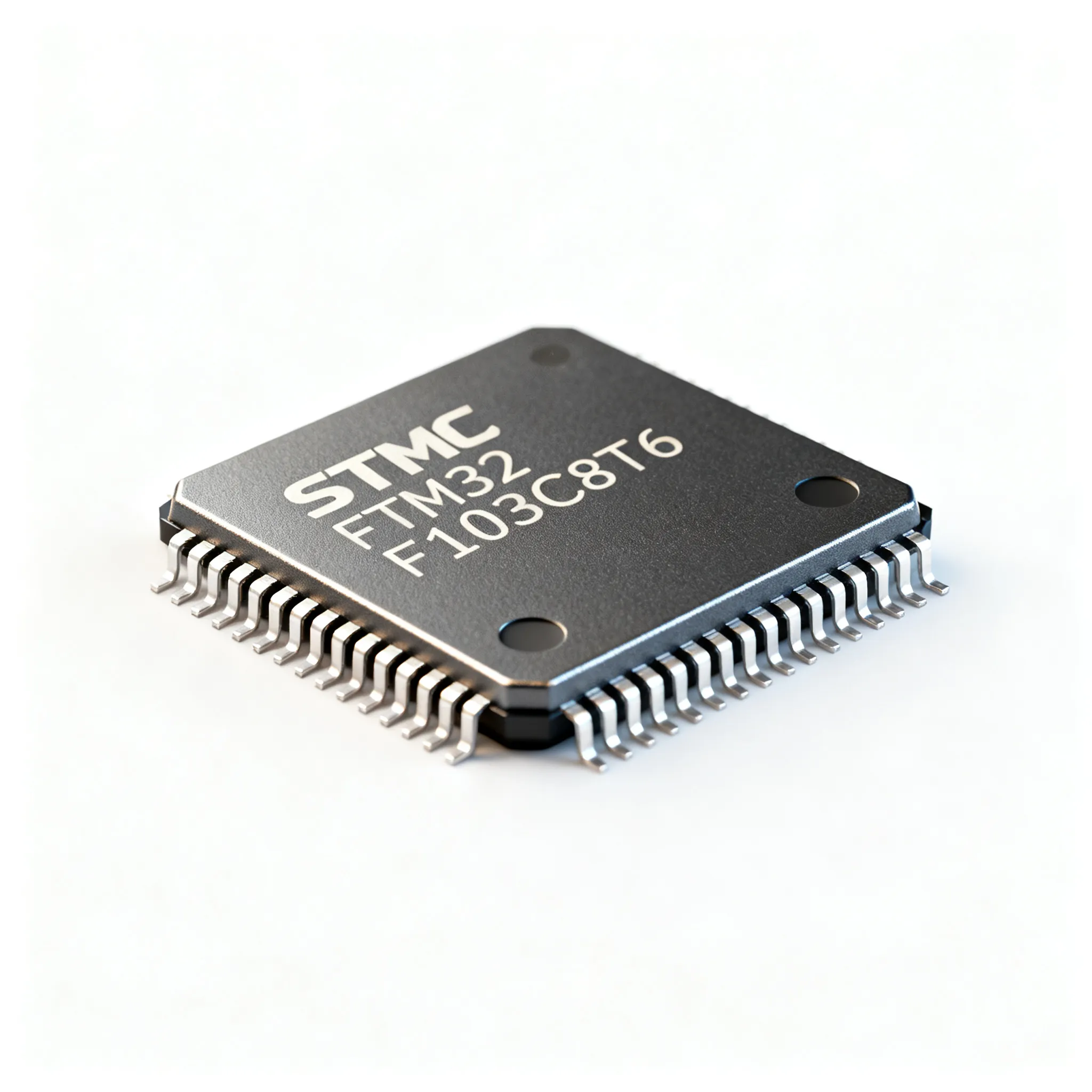
Embedded AI Chips powering next-generation IoT and robotics applications
Embedded ai chips are changing iot and robotics in big ways. They help devices learn, sense, and act right away. Smart homes, healthcare, and factories use these chips a lot now. In 2023, the market for embedded ai chips was over USD 15 billion.
Embedded ai chips are changing iot and robotics in big ways. They help devices learn, sense, and act right away. Smart homes, healthcare, and factories use these chips a lot now. In 2023, the market for embedded ai chips was over USD 15 billion. In 2024, more than 1.4 billion smartphones had ai-powered chips. Experts think there will be over 50 billion ai edge devices by 2030.
|
Sector/Metric |
Statistic/Projection |
|---|---|
|
AI-enabled edge devices by 2030 |
Over 50 billion devices |
|
AI chip market valuation 2023 |
Exceeds USD 15 billion |
|
AI chip market projection 2032 |
Surpasses USD 100 billion with CAGR over 30% |
|
Smartphones with embedded AI chips |
Over 1.4 billion units shipped in 2024 |
|
Healthcare AI market 2024 |
Valued at USD 20.9 billion |
|
Healthcare AI market projection 2029 |
Expected to reach USD 148.4 billion with CAGR 48.1% |
|
AI chip applications in healthcare |
Diagnostics, patient care, portable monitors, wearables |
|
Industrial automation impact |
Predictive maintenance and robotics |
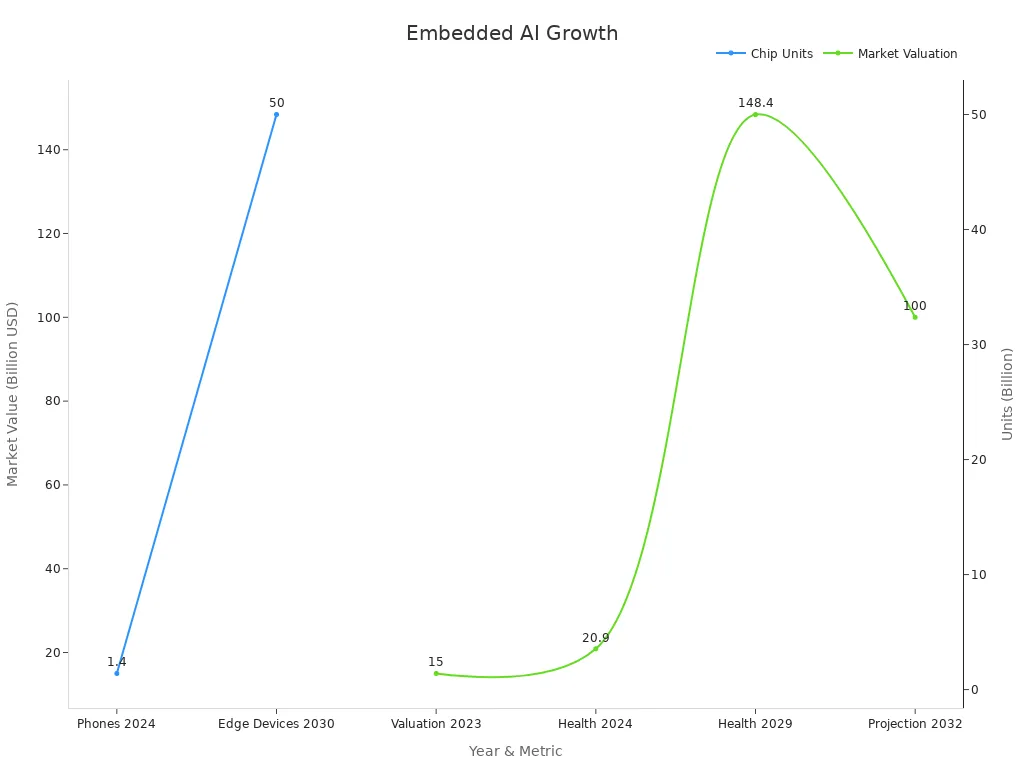
Recent reports say embedded ai chips grow by 25% each year in iot, healthcare, and factories. Learning about trends and top companies helps people see how these chips change smart devices and apps.
Key Takeaways
-
Embedded AI chips help devices get smarter and work faster. They process data right where it is made. This lets devices make quick choices without using the cloud.
-
These chips use less energy and help batteries last longer. They do this with special designs and smart AI models. This makes devices work better and stay on longer.
-
Embedded AI chips keep private data safe by storing it on the device. This lowers the chance of data leaks. It also helps follow privacy rules.
-
These chips help IoT and robotics systems grow easily. More devices can work together without slowing down. They also do not cost more to add.
-
Big companies like NVIDIA, ARM, and Google lead new ideas in embedded AI chips. They make smart homes, healthcare, factories, and robots work better and do more.
Embedded AI Chips: Impact
Smarter Devices
Embedded AI chips have changed how IoT and robotics work. These chips make devices smarter and smaller. They also help devices use less energy. Engineers put these chips in many things, like smart home sensors and robots. The chips use special neural network architectures. Some examples are MobileNetV2 and ProxylessNAS. These models help devices handle data fast and save power. MobileNetV2 uses depthwise separable convolutions. This method cuts down on math work but keeps results accurate. ProxylessNAS helps devices balance speed and energy use. This means devices can last longer on one charge.
There are many ways to use embedded AI chips. In smart homes, AI controls lights, heat, and security. The system learns what people like and changes settings for comfort. It also helps save energy. In healthcare, wearables like the Apple Watch and ADAMM Asthma Monitor track heart rates. They can find health problems early. Doctors can watch patients from far away. This means fewer trips to the hospital. In factories, embedded AI chips help with supply chain monitoring and automation. Factories use AI vision systems to find defects and guide robots. These systems work right away and do not use much power.
Embedded machine vision systems use small hardware and smart software. They process pictures quickly and use less energy. System-on-Chip designs let devices decide things on their own. This lowers wait times and saves power. On-device processing keeps data private. It also means less need to send data to the cloud.
Recent studies show that AI in IoT devices makes things work better. It also helps give people more personal services. Real-time machine learning and edge computing make devices respond faster. These new ideas help in healthcare, factories, and city management. Devices can collect, study, and use data without waiting for the cloud.
Edge AI Shift
Moving from cloud AI to edge AI has helped a lot. Edge AI means devices handle data where it is made. They do not need to send it far away. Embedded AI chips make this possible. They let devices look at information right away. This makes things faster, so devices can react almost at once. For example, self-driving cars use edge AI to check sensor data in real time. Healthcare wearables study body data on the spot. They give users quick feedback. Industrial IoT devices find problems as soon as they happen.
|
Metric |
Edge AI (Embedded AI Chips) |
Cloud AI |
|---|---|---|
|
Latency |
Moderate to high latency (200 ms+; round-trip 300–800 ms) |
|
|
Privacy |
High (on-device data processing) |
Lower (requires data transmission to cloud) |
|
Energy Use |
Power-efficient (specialized NPUs) |
Energy-intensive |
|
Operational Cost |
Minimal ongoing costs |
Ongoing computing and hosting costs |
Edge AI helps keep data private. Devices store sensitive data on-site. This lowers the chance of leaks. It also helps follow rules like GDPR and HIPAA. Devices use less internet because they do not send as much data to the cloud. This saves money and makes things work better, even with weak internet. Special hardware, like neural processing units in microcontrollers and mobile system-on-chips, helps with these jobs. AI model optimization methods like quantization and pruning also help. They make devices run faster and use less energy.
Edge computing lets devices work even when offline. It also makes it easy to add more devices. Factories, hospitals, and homes can grow without overloading cloud servers. Edge AI helps devices make quick choices. This is very important for safety and performance in many uses.
Embedded AI Chips: Overview
Key Features
Embedded ai chips let devices think and act by themselves. These chips use different processors like CPU, GPU, FPGA, and ASIC. Each processor helps with ai tasks in its own way. Most chips are small and use little power. They work inside the device, not outside. This makes them good for smart sensors, robots, and wearables.
Some important things about these chips are:
-
They have strong processing power for fast ai jobs.
-
They have enough memory and storage for big models.
-
They use little power, so batteries last longer.
-
They connect well to share data fast.
-
Their hardware and software are made for ai work.
Many platforms show these features working. NVIDIA Jetson modules help edge devices run ai faster. Raspberry Pi boards let people try ai for less money. ADLINK Edge AI platforms give deep learning and strong connections for industry. Mediatek Genio chips use modular designs and save energy for many ai jobs.
Note: Neuromorphic chips, like IBM’s TrueNorth, can do millions of tasks with very little energy. This helps wearables and drones last longer without charging.
Why They Matter
Embedded ai chips help devices make choices in real time. Devices with on-device ai can sense, process, and act right away. They do not need to wait for the cloud. This means they respond faster and keep data private. For example, a smart audio sensor can listen for machine problems. It only uses ai when needed. This saves power and makes batteries last longer.
|
Compute Unit |
Performance Highlights |
Power Consumption |
Edge AI Relevance |
|---|---|---|---|
|
NPU |
58.54% faster in matrix tasks; 3.2× speedup in language models |
35 W |
Great for energy-limited edge devices |
|
GPU |
22.6% faster in matrix tasks; 2× throughput |
75 W |
Higher power use, less efficient for edge |
On-device ai lets robots and smart devices work offline. Some chips, like Renesas RZ/V2H, make ai work up to 17 times faster than CPUs. They also use only 1/12 the power. Qualcomm’s ai chips are also very good at saving power for object detection. These new chips help devices use ai all day. This makes them smarter and more helpful.
AI Trends in IoT and Robotics
Edge Acceleration
Edge ai is making iot and robotics better. Devices use special chips called neural processing units, or NPUs. These chips help devices do ai jobs much faster. They also use less power than before. For example, NXP's MCX N Series MCUs make machine learning much quicker than normal CPUs. The ARM Cortex A55 with Ethos U65 NPU makes ai inference much faster too. Many iot chips now have ai built in. This means devices can decide things without waiting for the cloud.
-
Fibocom's mowing robot uses a Qualcomm module. It maps where it is and avoids things in its way.
-
Thundercomm's EB3G2 gateway uses a Qualcomm chip. It can find people and follow them.
-
Tiny ai models like MY VOICE AI's NANOVOICE help small devices. They check who is speaking and use very little power.
-
NVIDIA Jetson chips run hard ai models in robots and smart cities.
-
Google Coral Edge TPU and Intel Movidius chips help smart cameras and drones. They process pictures right away.
Edge ai lets devices in factories, homes, and cars act fast. Wearable health devices use edge ai to check body data. They give quick feedback to users. Edge computing helps devices work even if the internet is slow or not working.
Energy Efficiency
Saving energy is very important for embedded ai. New chip designs help iot devices run ai for longer. They do not drain batteries as fast. MIT's Eyeriss hardware reuses data to save energy. This lets devices do ai in real time with less power. The University of Minnesota made a chip called CRAM. It uses much less energy than old chips. Wafer-scale ai accelerators like Cerebras WSE-3 and Tesla's Dojo save even more energy. They also make ai work better. TSMC's new chip-on-wafer technology makes chips much denser. This helps iot devices use ai without wasting power.
Integration
Putting sensors and ai chips together makes iot smarter. Many new devices have sensors, ai, and wireless links in one small part. This helps them collect data, process it, and act fast. The table below shows some real examples:
|
Example / Project |
Description |
Key Data / Metrics |
Application / Outcome |
|---|---|---|---|
|
Multi-camera system |
50 cameras with brain-inspired analog chips |
Real-time object detection at 30 fps, <10W |
Security, warehouse, vehicles |
|
Ultra-low-power ASICs for voice |
Chips connect to audio sensors for low-power operation |
Runs at microwatt levels |
Voice-activated speakers |
|
FASoC |
SoC with sensors and ai for wake word detection |
Very low power speech recognition |
Wake word detection in edge devices |
|
Ambiq Micro |
Ultra-low-power chips for wireless edge devices |
Used in smart watches and rings |
Health and fitness monitoring |
|
CubeWorks |
Tiny wireless sensors with long battery life |
Up to 5 years battery |
Vaccine monitoring, healthcare supply chain |
|
Everactive |
Batteryless monitors powered by harvested energy |
No batteries needed |
Industrial equipment monitoring |
|
Flexible chiplet architectures |
Modular chiplets for adaptable ai hardware |
Faster, higher bandwidth |
Easy ai hardware updates |
These new ideas help iot devices do things like health tracking and security. They also help with factory monitoring. Putting everything together means devices can learn, sense, and act by themselves. This makes iot and robotics much stronger.
Applications

Smart Homes
Smart homes use embedded AI chips to make life easier and safer. Voice assistants, smart thermostats, and security cameras use AI. These devices learn what people do every day. They change lights, temperature, and locks by themselves. AI sensors notice strange things, like a door opening late at night, and send alerts. Smart speakers know who is talking and follow commands. Home robots clean floors and move around things. These uses help save energy and make homes more comfortable.
Healthcare
Healthcare has changed a lot with embedded AI chips in wearables. AI helps find diseases early and track health in real time. Wearables, like smartwatches, use AI to check heartbeats and spot problems like atrial fibrillation. These devices look at millions of data points each day. They warn users or doctors if something is wrong. The table below shows how AI wearables help healthcare:
|
Metric / Aspect |
Details / Results |
|---|---|
|
Detection Accuracy |
|
|
Emergency Interventions |
18% reduction in emergency interventions |
|
Data Volume Processed |
Over 5 million data points processed daily |
|
Time-to-Detection |
Reduced by 25% |
|
User Engagement |
Over 5 million installs in the US |
|
Operational Efficiency |
40% reduction in manual processing time |
|
Technology Used |
Embedded AI chip-powered wearables |
|
Healthcare Impact |
Improved chronic disease management |
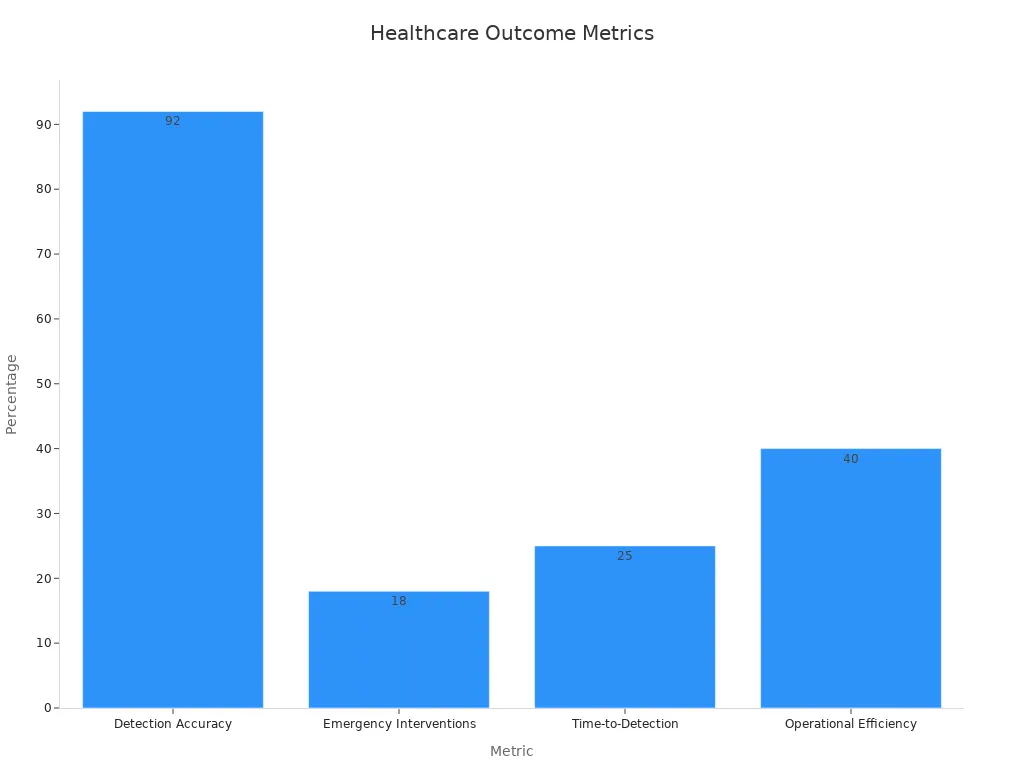
AI in healthcare also removes noise from signals and gives quick results. These uses help doctors decide faster and care for patients better.
Industrial IoT
Industrial IoT uses embedded AI chips to make work safer and faster. Factories use AI for maintenance, finding problems, and checking quality. Smart sensors with AI watch machines and find issues before they break. The table below shows how AI chips help factories:
|
Embedded AI Chip Technology |
Efficiency Gain / Performance Metric |
Operational Impact |
|---|---|---|
|
NXP MCX N Series MCUs |
Faster AI processing, low latency, power efficiency |
|
|
ARM Cortex A55 + Ethos U65 NPU |
11x improvement in AI inference performance |
Enhanced efficiency, reduced CPU load |
|
Qualcomm-based modules |
On-device computation for mapping and avoidance |
Less latency, better real-time decisions |
|
Thundercomm EB3G2 gateway |
Immediate on-device AI model execution |
Lower latency, valuable for security |
These uses help factories work well and stop long breaks.
Robotics
Robotics needs embedded AI chips to make quick choices and work alone. AI helps robots see objects, know where they are, and move by themselves. Robots use sensors to get data and AI chips to study it fast. This helps them not bump into things and plan where to go. Strong GPUs and CPUs let robots use hard AI models. This means robots can work in tough places. These uses make work faster and need less help from people. Robots can deliver things, check places, and clean without anyone’s help.
Leading Vendors
NVIDIA Jetson
NVIDIA Jetson is a top choice for embedded AI chips. Many robots and edge devices use the Jetson platform. NVIDIA controls about 25% of the edge AI market. Its chips have strong GPUs and use CUDA software. Jetson modules like Orin and Xavier work fast but use little power. The new Jetson Thor chip will be even faster and more efficient. NVIDIA’s Blackwell design has 208 billion transistors. It is up to 30 times faster than older chips. This makes it great for generative AI and real-time robotics.
|
Metric |
NVIDIA |
AMD |
Intel |
|---|---|---|---|
|
AI Training Market Share |
~95% |
~5% |
~2% |
|
Operating Margins (2023) |
>40% (66% in AI data center) |
~30% |
~30% |
|
Revenue (2023) |
$26.9 billion (AI-related) |
N/A |
N/A |
Jetson chips are the main choice for robotics and edge AI.
ARM
ARM makes the main design for most embedded AI chips. Over 70% of edge AI chips use ARM’s instruction sets. The Cortex-M85 chip is 30% faster than older ones. ARM’s Helium tech helps with machine learning and signal tasks. ARM works with NXP and Raspberry Pi as partners. The company uses monitoring to make robots more reliable and save power. Project Centauri lets software run on many ARM devices.
Google Edge TPU
Google Edge TPU chips are made for fast AI at the edge. They are used in smart cameras, sensors, and IoT devices. Edge TPU works with TensorFlow Lite models and uses little power. Many developers pick Edge TPU for real-time image and speech jobs in homes and factories.
Intel Movidius
Intel Movidius chips help devices see and understand things. These chips are in smart cameras, drones, and robots. The Movidius VPU does computer vision jobs quickly and saves energy. Intel’s OpenVINO toolkit helps use these chips and makes AI models easy to run.
Others
Other big companies are Qualcomm, Huawei, and STMicroelectronics. Qualcomm chips are in many battery-powered edge devices. Huawei’s Ascend chips are popular in Asia, mostly in smart cities. STMicroelectronics makes chips for cars and factories. Each company has its own special skills in the embedded AI chip market.
Benefits of Embedded AI Chips

Embedded AI chips give IoT and robotics many big benefits. These chips help devices make choices fast, keep data safe, save power, and add more devices easily. Each benefit helps smart systems work better in real life.
Real-Time Decisions
AI chips let devices handle information right where it is made. This means IoT devices can decide things right away. For example, a robot in a factory can see a problem and stop a machine before it breaks. A smart camera can spot a person and send an alert fast. These things happen without waiting for cloud servers.
-
On-device inference is important for jobs that need quick answers, like self-driving cars or medical monitors.
-
Devices use AI to handle lots of data fast, even if the internet is slow or gone.
-
Engineers use tricks like preprocessing and reusing math to make AI faster and use less memory.
-
Edge AI chips can split jobs between GPU, CPU, or NPU to get results quicker.
-
Parallel decoding and sampling help AI models answer faster, which is key for robotics and IoT.
Edge AI lets drones check crops and send alerts about bugs right away. Smart watering systems use local data to water plants only when needed. These examples show how real-time data helps devices act fast and fix problems quickly.
Devices with embedded AI chips can decide things in milliseconds. This speed is very important for safety and working well in many IoT and robotics uses.
Privacy & Security
Many people worry about keeping their data private. Embedded AI chips help keep information safe. Devices process data on the device, so they do not need to send everything to the cloud. This lowers the risk of leaks or hacks.
-
IoT devices with edge AI can follow strict privacy rules, like GDPR and HIPAA.
-
Health monitors can check patient data on the device, keeping personal details private.
-
Smart home sensors can notice movement or sound without sending raw data outside the home.
-
On-device AI means less data goes over the internet, lowering the chance of someone stealing it.
Edge AI also helps with security. Devices can spot threats or strange things and react right away. For example, a security camera can block entry if it sees something odd. This keeps homes, hospitals, and factories safer.
Energy Savings
Saving energy is very important for IoT and robotics. Many devices use batteries or have little power. Embedded AI chips use special designs to use less energy.
-
Edge AI chips use less power than sending data to the cloud for every job.
-
AI on the device means less waiting for answers, so devices can sleep or turn off sooner.
-
Neuromorphic chips and low-power processors help wearables and sensors last longer between charges.
-
Engineers use tricks like quantization and pruning to make AI models smaller and faster, which saves energy.
A table below shows how energy savings compare for different AI chip types:
|
Chip Type |
Power Use (Watts) |
Typical Use Case |
Energy Benefit |
|---|---|---|---|
|
NPU |
1–5 |
Smart sensors, wearables |
Long battery life, low heat |
|
GPU |
10–75 |
Robots, cameras |
High performance, more power |
|
Neuromorphic |
<1 |
Drones, IoT nodes |
Ultra-low power, continuous use |
Devices with edge AI can run all day or even for years without a new battery. This makes them great for faraway places or hard-to-reach spots.
Scalability
AI chips help IoT and robotics systems grow easily. Companies can add more devices without slowing down the network or raising costs too much. Edge AI chips make this possible by letting each device handle its own AI work.
Using hardware accelerators like TPUs, FPGAs, and ASICs lets systems handle more data at once. These chips help with real-time analysis in medical devices, smart cities, and factories. For example, Medtronic uses edge AI in endoscopy and glucose monitors, making it easier to help more patients. NoTraffic uses edge AI to control traffic lights in busy cities, changing signals as traffic changes.
-
Voice assistants in appliances use Arm Cortex-M chips to understand speech in many homes at once.
-
Environmental sensors watch forests and air quality over large areas, sending only important results.
-
Industrial systems use edge AI to cut CO2 and make products better, even as more sensors join the network.
-
Billions of IoT devices now use AI, showing how well these systems can grow.
Edge AI chips lower the need for always using the cloud. This saves bandwidth costs and lets companies put smart devices almost anywhere.
Future of Embedded AI
Evolving Workloads
AI jobs keep changing as new uses show up. Special accelerators like ASICs, NPUs, and TPUs do tasks faster and use less energy. Chip makers build chips that can grow and change, like chiplets and multi-die GPUs. These help run bigger and harder AI models. New tech like silicon photonics and co-packaged optics helps chips move data fast. This fixes problems with speed and moving lots of data. Companies work on saving energy by making low-power chips and better cooling. Edge ai is growing quickly, with NPUs in many smart and IoT devices. These chips let devices make quick choices and act right away. Some companies are even looking at quantum computing and neuromorphic hardware to make things work better. Experts think AI chips will keep growing, especially for healthcare, finance, robots, and self-driving cars.
-
Special AI accelerators make things faster and save energy.
-
Modular chips help handle harder jobs.
-
Edge ai lets smart devices decide things right away.
-
New hardware like quantum and neuromorphic chips could change the future.
Expanding Ecosystem
The world of embedded ai chips keeps getting bigger. Big companies like NVIDIA, Microsoft, Google Cloud, IBM, and Cohere make new chips, software, and tools. NVIDIA now sells both chips and AI models, working with partners like Hugging Face and ServiceNow. Microsoft makes AI chips and tools for its Azure cloud. Google Cloud spends a lot on AI tools and models. Startups like Cohere team up with big companies to bring ai to more people. IBM helps companies use ai with its watsonx platform and partner programs. The market for embedded ai could be worth over $25 billion by 2031. New products, like Safran’s Advanced Cognitive Engine and Quvia’s ai tools, show how fast things change. More IoT devices need edge ai for quick and low-energy work. North America leads the market, but Asia Pacific is growing fast.
Industry Impact
Embedded ai chips bring big changes to many fields. Using ai makes more jobs than it takes away. New jobs show up in training and support, and people can spend more money. Chip makers, tech companies, and software firms get the first benefits. Later, areas like finance, healthcare, and schools also get better. Factories improve too, as robots learn new jobs without new code. Companies using ai say they work better and make more money. The table below shows some main effects:
|
Impact Category |
Quantifiable Metric |
Description |
|---|---|---|
|
AI Chip Performance |
AIU NorthPole AI inference chip is 46.9 times faster than the H100 GPU. |
|
|
Energy Efficiency |
72.7x more efficient |
The same chip consumes 72.7 times less energy than the H100 GPU. |
|
Business Revenue Increase |
25% or more increase reported by 67% of leaders |
Most business leaders report at least 25% revenue growth from AI adoption. |
|
Profit Margin Increase |
25% or more increase reported by 66% of leaders |
Many leaders see profit margin improvements of at least 25% from AI integration. |
|
Global Economic Impact |
Up to 7% GDP growth over 10 years (projected) |
Generative AI adoption is expected to boost global GDP. |
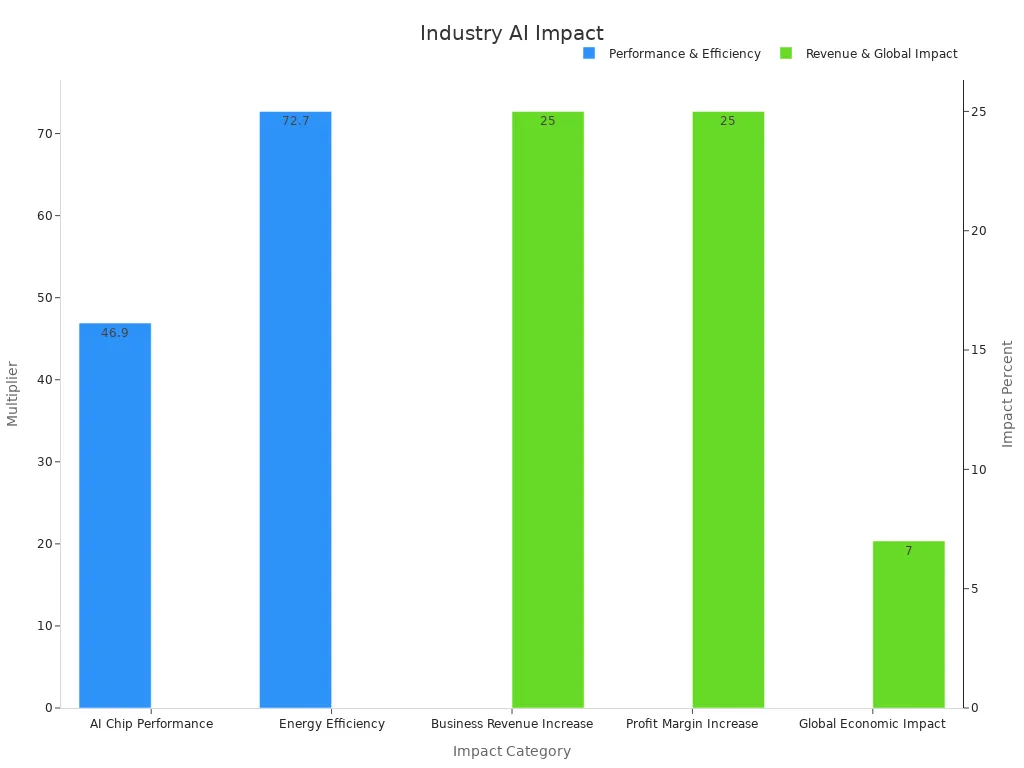
AI helps robots and smart devices work on their own. These systems do better, use less energy, and help people in many ways. As ai chips get better, industries will see even more good changes.
Embedded AI chips are changing IoT and robotics in big ways. These chips help devices work smarter and faster. Reports say AI hardware is growing quickly. Factories now use real-time data to make things right away. Companies find new chances as AI, IoT, and robotics come together. This helps make more jobs automatic and personal. Developers and companies should look at new ideas from vendors. They should also learn about new uses for these chips. In the future, smart systems will get even better. These systems will keep growing and help many different industries.
FAQ
What is an embedded AI chip?
An embedded AI chip is a small computer part that helps devices think and learn. It lets smart devices make decisions quickly without sending data to the cloud.
How do embedded AI chips help save energy?
These chips use special designs to do more work with less power. Devices with embedded AI chips can run longer on batteries and do not need to send data far away.
Where can people find embedded AI chips in daily life?
People see these chips in smart speakers, fitness trackers, security cameras, and home robots. Many new cars and factory machines also use them.
Are embedded AI chips safe for personal data?
Devices with embedded AI chips process data on the device. This keeps personal information private and lowers the risk of data leaks.
Can embedded AI chips work without the internet?
Yes, many devices with embedded AI chips can work offline. They make decisions on their own, even when there is no internet connection.