Evolution of Integrated Circuits and Semiconductor Innovation
Integrated circuits have changed electronic devices a lot. They help power things like smartphones and fast computers. Integrated circuits have grown fast because of new silicon technology.
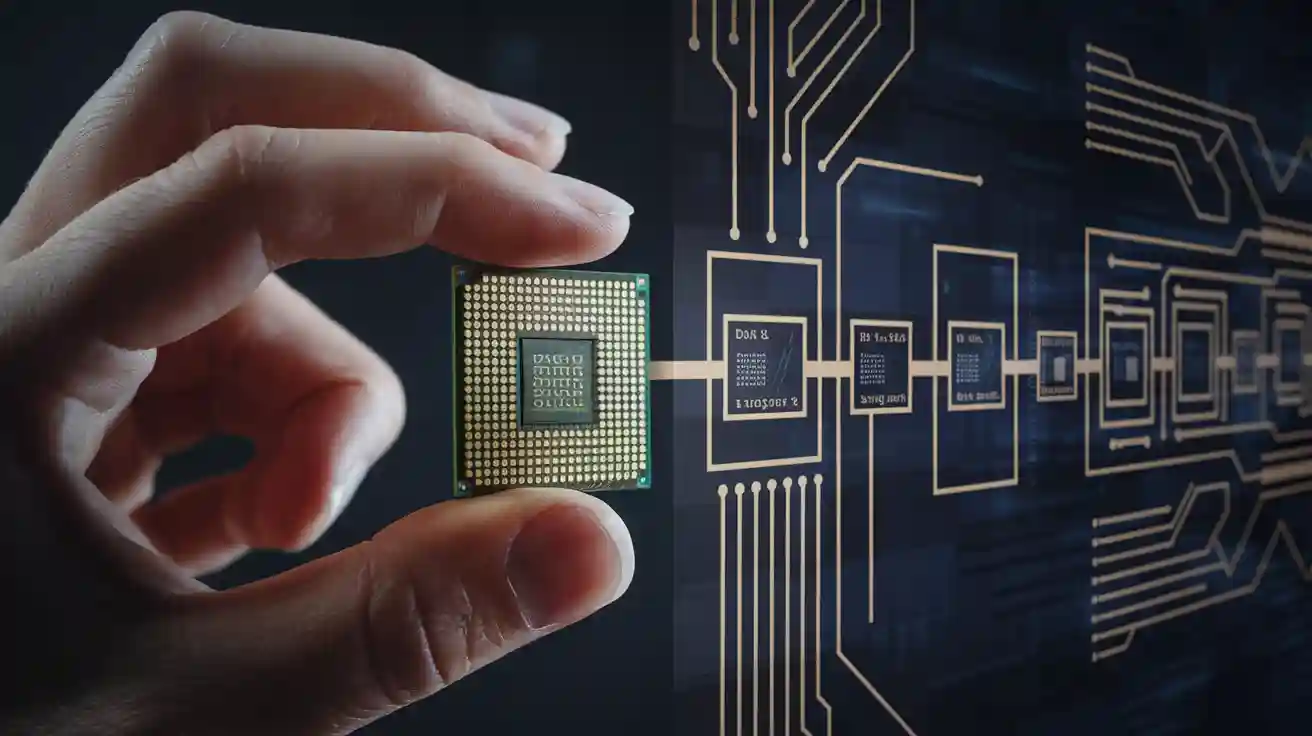
Integrated circuits have changed electronic devices a lot. They help power things like smartphones and fast computers. Integrated circuits have grown fast because of new silicon technology. Silicon valley is a place where engineers work hard to make new things. They move very quickly. In the last few years, silicon valley saw more 5G smartphones shipped. In 2019, only 1% of phones had 5G. In 2020, it was 20%. By 2023, it could be 69%. Silicon-based chips in silicon valley also affect the market. The market could be worth USD 3,718.4 million by 2033. Today, silicon valley companies are making process nodes even smaller. They are making silicon chips as small as 3nm and even smaller. This makes integrated circuits even more important for new devices. The growth of integrated circuits and silicon ideas keeps changing technology around the world.
|
Statistical Trend |
Data Point |
|---|---|
|
Process node scaling |
5nm and 3nm technologies |
|
Next-gen IC market size |
$3,718.4 million by 2033 |
|
5G smartphone shipments |
Key Takeaways
-
Integrated circuits made electronics smaller and faster. They also made them more reliable. These circuits power things like smartphones and computers.
-
Silicon technology helps chips get better every two years. Moore's Law says chips get more transistors and work faster over time.
-
New materials and smart designs help make flexible devices. These devices use less energy and are very powerful.
-
The semiconductor market is growing very fast. This helps economies and lets more people use technology everywhere.
-
Semiconductors help healthcare, AI, and sustainability. They help people stay healthy and protect the planet.
Origins of Integrated Circuits

From Vacuum Tubes to Transistors
Early electronics used vacuum tubes. These glass tubes helped control electricity. They powered things like radios and TVs. Vacuum tubes were big and broke easily. They also needed a lot of power. In 1904, John Ambrose Fleming made the first vacuum tube. Later, Julius Edgar Lilienfeld and Oskar Heil tried new ways to use electricity. Scientists wanted smaller and better parts. In 1947, Bell Labs made the first transistor. This small part used semiconductor materials. It could switch and boost signals. The transistor took the place of vacuum tubes in many devices. More transistors were made fast. Devices became smaller and worked better.
Early Semiconductor Devices
People started learning about semiconductors in the 1800s. In 1821, Thomas Johann Seebeck found the Seebeck effect. Michael Faraday saw that some materials changed with heat. In 1940, Russell Ohl found the p-n junction in silicon. This helped make better transistors. By 1954, Texas Instruments made the first silicon transistor. Silicon was used more because it worked well and cost less. Using silicon made electronics stronger and cheaper.
The semiconductor industry grew and changed the world. In 2022, sales of semiconductors reached $574 billion. This made it the fourth biggest trade product. Over 190 countries traded integrated circuits. This shows strong global links.
|
Indicator |
Description |
Timeframe |
Key Data Points |
|---|---|---|---|
|
Global Semiconductor Sales |
Total global sales value |
2022 |
$574 billion |
|
Number of Economies in Trade Networks |
Participation in trade |
2001-2019 |
ICs: ~190 economies |
|
Trade Network Density |
Connectivity in trade |
2001-2019 |
ICs: 0.127 to 0.163 |
|
Agglomeration Coefficient |
Clustering in trade |
2001-2019 |
ICs: ~0.7 |
Kilby and the First Integrated Circuit
Jack Kilby at Texas Instruments and Robert Noyce at Fairchild Semiconductor worked on new ways to link transistors. In 1958, Kilby made the first integrated circuit with silicon. Noyce made the design better with improved connections. Integrated circuits put many transistors and other parts on one silicon chip. This made electronics smaller, faster, and more reliable. Silicon valley became the main place for this new technology. Making more transistors in silicon valley helped start the computer age.

These first steps in semiconductor and silicon technology helped build the digital world. Integrated circuits now run things like smartphones and cars.
Key Semiconductor Milestones
MOS Technology and Silicon Chips
The metal-oxide-semiconductor (MOS) technology changed electronics a lot. Engineers in silicon valley used MOS to make devices faster and smaller. MOS technology uses a silicon gate structure. This structure helps devices work faster and better. It also makes them more reliable. Switching from old materials to silicon was important. Silicon is easy to find and good for making integrated circuits.
Silicon chips with MOS technology made very large-scale integration, or VLSI, possible. VLSI means putting thousands or millions of transistors on one chip. This made devices smaller and stronger. The silicon-gate process let engineers put a whole CPU on one chip. This was a big step forward.
Some important things from MOS and silicon chips are:
-
The silicon gate structure made circuits faster and more reliable.
-
The Schottky Barrier Diode made TTL memory and logic twice as fast.
-
Intel’s i1103 Dynamic RAM replaced magnetic core memory with cheaper memory.
-
The silicon-gate process let engineers build microprocessors on one chip.
-
IBM’s process scaling helped make MOS memories even smaller.
-
EPROM memory made it easy to change microprocessor systems quickly.
-
The TMS 1000 microcontroller led to many new digital devices.
Silicon valley became the main place for these changes. Engineers there worked hard to improve VLSI and silicon technology. Making electronics smaller happened because of these changes. Now, almost every electronic device uses silicon chips with MOS technology.
Moore’s Law and Miniaturization
Gordon Moore, who helped start Intel, saw a pattern in 1965. He noticed that the number of transistors on a chip doubled every two years. This idea is called Moore’s Law. Moore’s Law explains how semiconductor technology keeps getting better. It means more transistors, better speed, and lower costs.
Moore’s Law helped make electronics smaller. Engineers made transistors tinier and put more on each chip. This made computers faster and less expensive. The process node size went from micrometers to nanometers. For example, in 1971, the Intel 4004 chip used a 10-micrometer process and had 2,300 transistors. By 2018, the Core i9 chip used a 5-nanometer process and had over 2 billion transistors.
|
Year |
Process Node Size |
Transistor Count |
|---|---|---|
|
1971 |
~10 micrometers |
2,300 (Intel 4004) |
|
1974 |
N/A |
6,000 (Intel 8080) |
|
1985 |
~1.5 micrometers |
275,000 (Intel 80386) |
|
2006 |
~90 nanometers |
291 million (Core 2 Duo) |
|
2018 |
~5 nanometers |
Over 2 billion (Core i9) |

Some facts about Moore’s Law and miniaturization are:
-
Moore’s Law says transistor count doubles every two years, making chips stronger.
-
Smaller transistors mean chips cost less and work faster.
-
Transistor size dropped from micrometers to nanometers from the 1970s to 2010s.
-
New transistor designs like FinFETs and GAA nanosheets help keep up with Moore’s Law.
-
Advanced lithography, like EUV, lets engineers make even smaller silicon features.
-
3D packaging and chiplet designs make chips work even better.
-
Now, engineers also focus on saving energy and making special chips.
-
Domain-specific chips, like GPUs and TPUs, help computers do more things.
Moore’s Law still inspires new ideas in silicon valley. Engineers use VLSI to make smaller, faster, and better semiconductor devices. Making electronics smaller has changed how people use technology every day.
Microprocessors and Memory
Microprocessors started a new time in semiconductor history. Microprocessors are chips that act as the brain of computers and other devices. Silicon valley companies led the way in making these chips with VLSI. The first microprocessors had only a few thousand transistors. Now, they have billions.
The growth of microprocessor and memory technology shows the power of silicon and VLSI. The global microprocessor market was worth $74.55 billion in 2023. Experts think it will reach $139.94 billion by 2033. The market grows at a rate of 6.5% each year. ARM-based processors now have over 49% of the market. These chips are used in smartphones, PCs, and many other devices.
|
Metric/Segment |
Value/Projection |
Time Period |
|---|---|---|
|
Global Microprocessor Market Size |
USD 74.55 billion (2023) to USD 139.94 billion (2033) |
2023 - 2033 |
|
CAGR of Microprocessor Market |
6.5% |
2023 - 2033 |
|
ARM MPU Segment CAGR |
8.8% |
2024 - 2030 |
|
ARM MPU Market Share |
Over 49% |
2023 |
|
Smartphone Segment CAGR |
9.0% |
Projected period |
|
Smartphone Users Projection |
7.516 billion users |
By 2026 |
|
Key Technological Advancements |
Miniaturization, power efficiency, architecture improvements (e.g., ARM processors) |
Ongoing |
|
Memory Semiconductor Development |
Adoption of PCIe 5.0 test platforms accelerating data handling |
Recent years |
Memory chips have also improved a lot. Early computers used magnetic core memory. Silicon-based memory, like DRAM and EPROM, took the place of old systems. These new memory chips store more data and work faster. PCIe 5.0 platforms now help move data even quicker.
Microprocessors and memory together help technology grow. VLSI and silicon technology make this possible. Silicon valley keeps leading in new ideas, pushing what semiconductor devices can do. The progress in computing, powered by VLSI and silicon, shapes the future of technology.
Innovations in Integrated Circuits

Advanced Fabrication
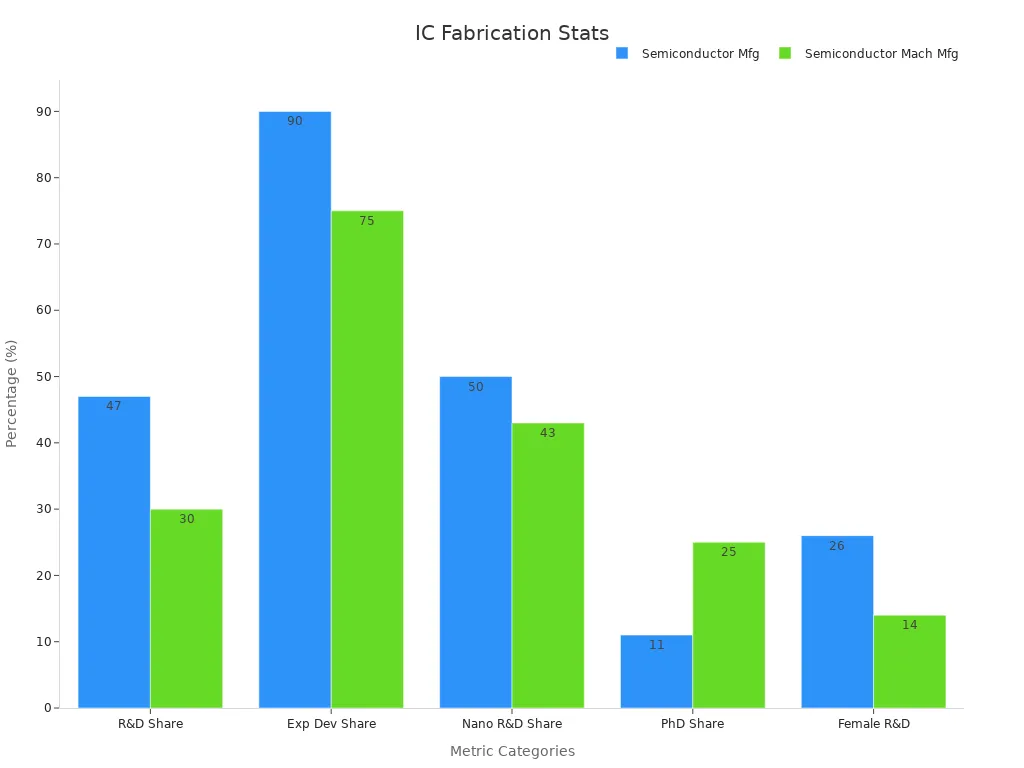
New ways to make integrated circuits have changed how engineers work. Companies now spend more money on research to build better chips. In 2021, the semiconductor industry spent $47.4 billion on R&D. This was a 9.8% increase from before. Much of this money goes to new technology and nanotechnology. About half of the research now helps make smaller and stronger chips. Most spending is for new machines and tools to build these chips.
Engineers use 3D IC technology to stack circuit layers. This saves space and uses less power. AI design tools help make circuits faster and better. Photonic integrated circuits use light instead of electricity. This moves data faster and uses less energy. These new ideas show how semiconductors keep getting better.
New Materials Beyond Silicon
Silicon has been used in chips for many years. Now, new materials can make chips work even better. Gallium nitride and silicon carbide help chips switch faster and handle more power. Graphene and carbon nanotubes are flexible and switch very fast. Polymers and thin films let engineers make flexible electronics. These can be used in smart clothes and medical sensors. These materials help make low-power devices and new uses for integrated circuits.
Finding better materials is important for new chips. Companies use these materials to make chips that bend or stretch. Some chips can work in tough places. This is a big step for vlsi and semiconductor technology.
System-on-Chip Evolution
System-on-chip designs put many parts on one chip. These parts include CPUs, memory, and network interfaces. This makes devices smaller and fits more parts together. Modern SoCs use 5nm and 3nm processes to fit billions of transistors. 3D stacking with through-silicon vias lets engineers build more complex systems.
Chiplet designs break big chips into smaller pieces. These chiplets are joined in one package. This makes chips work better and cost less. AMD uses this idea in their processors. SoC evolution shows how vlsi and semiconductors keep improving what chips can do.
Artificial intelligence is helping semiconductors grow. AI chips, like GPUs and CPUs from Nvidia and Intel, help with deep learning and language tasks. These changes show how innovation in integrated circuits keeps making things better.
Impact on Technology and Society
Economic Growth and Accessibility
Silicon valley helps the economy grow with semiconductors. The global integrated circuit market was USD 616.90 billion in 2023. Experts think it will reach USD 1,901.95 billion by 2032. This is because silicon is used in phones, cars, and smart gadgets. Silicon valley companies make many of these chips. North America and Asia Pacific both want more silicon chips. Asia Pacific could have 67.5% of the digital IC market by 2037. The area grows from new cars, electronics, and 5G networks. India works on making its own chips and factories. These actions help more people get technology everywhere.
|
Metric/Region |
Value/Projection |
Notes/Drivers |
|---|---|---|
|
Global IC Market Size (2023) |
USD 616.90 billion |
Baseline market valuation |
|
Projected Market Size (2032) |
USD 1,901.95 billion |
Expected growth over forecast period (2024-2032) |
|
CAGR (2024-2032) |
13.4% |
Compound annual growth rate indicating rapid expansion |
|
North America Market (2023) |
USD 272.04 billion |
Significant share driven by automotive microcontrollers and automotive manufacturing clusters |
|
Asia Pacific Digital IC Share |
~67.5% revenue share by 2037 |
Dominated by advancements in automobile tech, consumer electronics, IoT, and 5G development |
|
Economic Benefits (Asia Pacific) |
USD 133 billion by 2030 |
Generated by 5G technology and related sectors |
|
Key Growth Drivers |
Smartphone use, mechatronics, electric/autonomous vehicles |
Enhance IC demand and market accessibility globally |
|
Government Initiatives |
India’s indigenous chip design and fabrication push |
Supports market expansion and accessibility |

AI, IoT, and Healthcare
Silicon valley helps AI, IoT, and healthcare with silicon chips. These chips power smart gadgets, medical tools, and big data systems. In hospitals, silicon sensors help doctors do robotic surgeries and watch patients live. Biosensors use silicon to turn body signals into data. This helps find sickness early and treat it better. AI uses silicon chips to study lots of medical data. This helps doctors find diseases faster and more correctly.
|
Technology Domain |
Performance Metrics |
Applications and Impact |
Description |
|---|---|---|---|
|
Precision, real-time responsiveness, accuracy, reliability |
Robotic surgeries, smart ICU units, advanced prosthetics |
Integrated circuits enable sensors and actuators to collect and process real-time patient data, improving surgical precision and continuous monitoring, reducing errors and recovery time. |
|
|
Biosensors |
Real-time data processing, accuracy, data integrity |
Monitoring physiological parameters, chronic disease management |
Convert biological signals into electrical signals for instant feedback, enabling early diagnosis and personalized treatment through AI and IoT integration. |
|
Big Data Analytics & AI |
Speed, accuracy, predictive capability |
Disease prediction, personalized medicine, operational efficiency |
AI algorithms analyze large datasets from IoT devices to provide predictive analytics, improving early diagnosis and proactive care. |
|
IoT Healthcare |
Real-time responsiveness, power consumption, cost-efficiency |
Wearable devices, smart inhalers, glucose monitors, heart rate sensors |
IoT devices continuously monitor patient health, transmitting data for AI analysis to alert providers and patients, reducing emergencies and hospital readmissions. |
|
Energy Efficiency |
Power consumption, battery life |
Wearable and continuous monitoring devices |
Integrated circuits optimize power usage in devices, enabling prolonged monitoring despite limited battery capacity. |
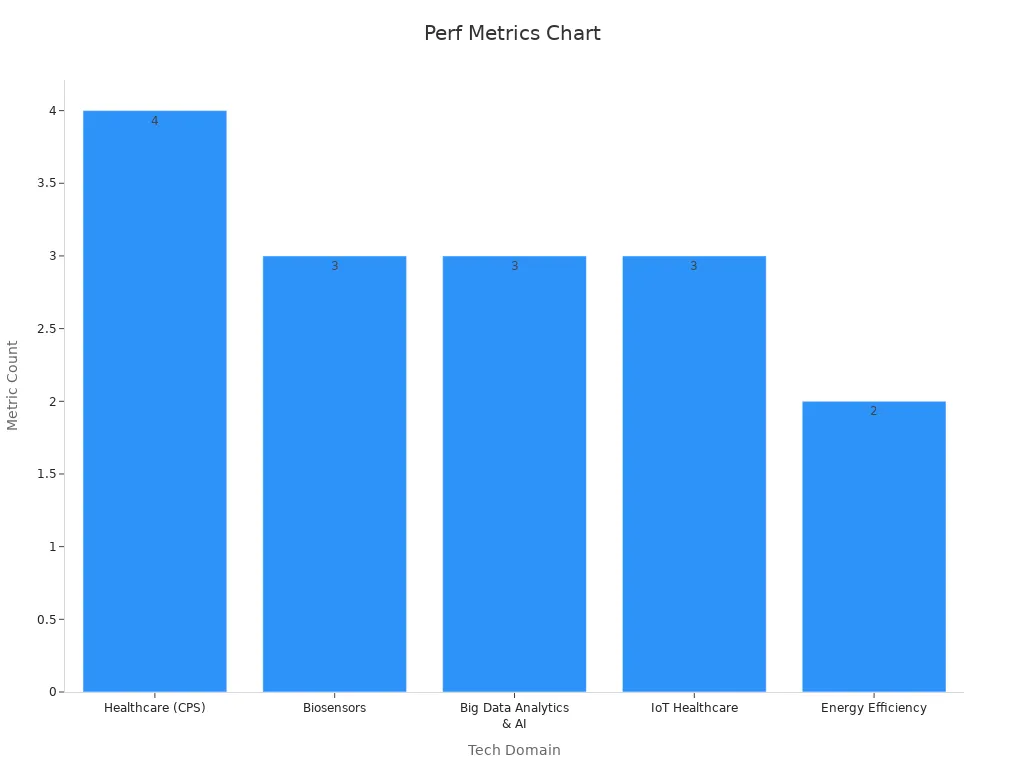
Silicon valley engineers use silicon to make devices that help people stay healthy. These devices work faster, use less energy, and cost less.
Sustainability and Future Trends
Silicon valley wants to make chip production better for the earth. Companies use life cycle assessment (LCA) to check chip impact. LCA tracks carbon, water, and energy use. Additive manufacturing cuts environmental harm by 86%. LCA also helps design products that are easy to recycle. Modular electronics and green designs come from these ideas. Silicon valley uses LCA to follow rules and get green awards. Circular economy ideas, like recycling and reuse, grow with silicon products.
-
LCA checks the impact of silicon chips from start to end.
-
Companies use LCA to save energy and water.
-
Additive manufacturing lowers the harm of making chips.
-
Modular designs help people fix and recycle devices.
-
LCA helps companies plan for a greener world.
Silicon valley leads in making technology that helps people and the planet. Silicon and semiconductor progress will help build a greener future.
Integrated circuits are important for today’s technology and world markets. They help run things at home, in hospitals, and in cars. The industry is growing fast, and the market could be $1,922.2 billion by 2032. Big companies like Intel and Samsung are leading this growth. The table below shows how these changes matter:
|
Statistic/Aspect |
Value/Description |
|---|---|
|
Market Size 2022 |
$487.2 billion |
|
Market Size 2032 |
$1,922.2 billion (forecast) |
|
CAGR (2023-2032) |
12.7% |
|
Growth Drivers |
IoT, AI, consumer electronics, data growth |
Ongoing research will bring new ideas to more people and help the world’s economy.
FAQ
What are integrated circuits and why do they matter?
Integrated circuits are small chips with many electronic parts. These parts include things like transistors and resistors. Integrated circuits help devices work faster and use less energy. Because of them, computers, phones, and cars are smarter and more dependable.
How did the first integrated circuit change technology?
Jack Kilby made the first integrated circuit by putting several parts on one chip. This new idea made electronics much smaller. It helped computers get better, started microprocessors, and made silicon valley famous for new technology.
What is Moore’s Law and how does it affect electronic devices?
Moore’s Law says chips get twice as many transistors every two years. This makes electronics smaller and helps technology move forward. Devices become faster, cost less, and fit in your pocket.
Why is silicon important in semiconductor innovation?
Silicon is used to make integrated circuits because it is easy to find. It works well for making transistors. Silicon lets engineers put millions of transistors on one chip. This helps new ideas and progress in many areas.
How do advancements in semiconductor technology impact daily life?
Better semiconductor technology powers things people use every day. These include smartphones, computers, and medical equipment. These changes help at home, in school, and in hospitals, making life safer and easier.
Tip: Making electronics smaller and improving semiconductors will keep changing the future.