FPGA vs Microcontroller Understanding the Pros and Cons
Should you choose an FPGA or a microcontroller for your next embedded system project? Each option brings unique benefits and
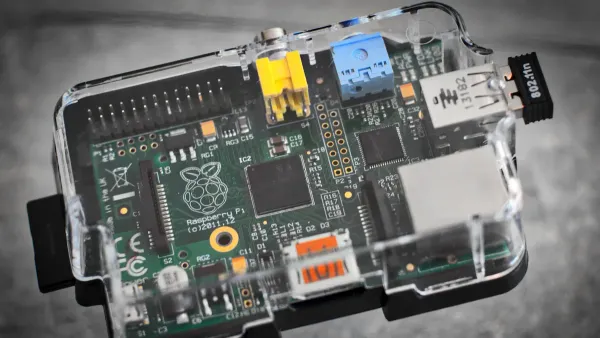
Should you choose an FPGA or a microcontroller for your next embedded system project? Each option brings unique benefits and challenges. FPGAs give you high customization and handle multiple tasks at once, but they require more complex programming and higher costs. Microcontrollers offer simplicity, energy efficiency, and lower prices, though they may struggle with demanding tasks.
| Technology | Strengths | Weaknesses |
|---|---|---|
| FPGAs | Customization, parallel processing | Higher cost, complex programming |
| Microcontrollers | Simplicity, power efficiency, affordability | Limited performance |
The FPGA market is growing fast, driven by AI and automotive needs, while microcontrollers remain the backbone of many affordable embedded systems. As you read, think about your project's needs for performance, cost, complexity, and power. The fpga vs microcontroller choice will shape your design’s success.
Key Takeaways
- FPGAs offer high customization and parallel processing, making them ideal for complex tasks that require real-time data handling.
- Microcontrollers are cost-effective and energy-efficient, perfect for simple applications like home appliances and IoT devices.
- Consider your project's needs: choose FPGAs for high performance and flexibility, and microcontrollers for simplicity and low cost.
- FPGAs require specialized programming skills, while microcontrollers are easier to program with common languages like C.
- Use a checklist to assess your project's requirements, including processing power, power consumption, and budget, to make the best technology choice.
What Is an FPGA?
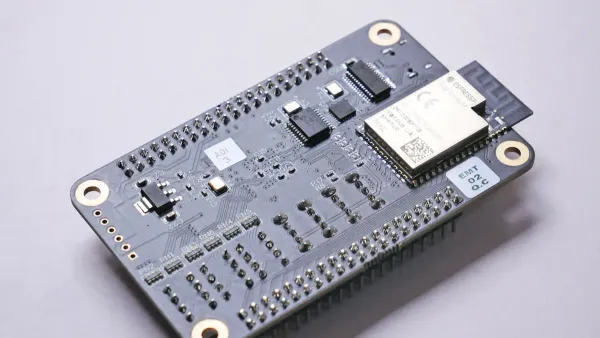
FPGA Definition
You may wonder what makes field-programmable gate arrays special in the world of electronics.
- An FPGA is an integrated circuit that lets you create custom logic for rapid prototyping and system design.
- You can reconfigure an FPGA even after manufacturing, which means you can upgrade features or fix bugs without replacing the hardware.
- This device combines hardware performance with software flexibility, giving you control over how it works.
When you compare fpga vs microcontroller, you notice that an FPGA offers much more freedom to change its function. You can use it to build circuits that match your exact needs.
How FPGAs Work
FPGAs work differently from other programmable devices. You program them using hardware description languages (HDL), which let you control every part of the chip. The chip contains thousands of small logic blocks connected by flexible routing paths. You decide how these blocks connect and operate.
Here is a table that shows how FPGAs compare to another programmable device called CPLD:
| Feature | FPGA | CPLD |
|---|---|---|
| Logic Capacity | Hundreds of thousands of gates | A few thousand to a few hundred gates |
| Architecture | Small logic blocks with flexible routing | Larger macrocells with a simpler network |
| Design Entry Methods | Uses HDL for complete control | Logic equations for limited control |
| Performance | High performance for complex tasks | More constrained performance |
| Clock Management | Advanced clock management capabilities | Limited clock management |
| Development Tools | Advanced design toolchains | Simpler logic compilers |
| Application Suitability | Ideal for complex, compute-intensive tasks | Suitable for simpler logic tasks |
You can see that FPGAs offer higher performance and more control, which makes them perfect for demanding applications.
FPGA Applications
FPGAs play a key role in many industries. You find them in places where speed and flexibility matter most. Here are some top application areas:
| Application Area |
|---|
| Aerospace & Defense |
| Telecommunication Infrastructure |
| Data Center (HW Acceleration) |
| Automotive (ADAS and AD) |
| Healthcare |
You use FPGAs for tasks like signal processing, hardware acceleration, and advanced driver assistance systems. Their ability to adapt and deliver high performance makes them valuable for modern electronic development.
What Is a Microcontroller?
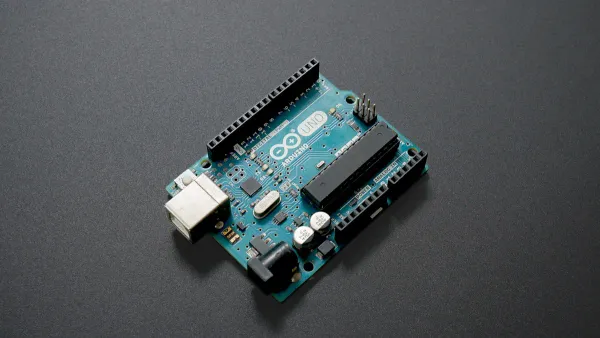
Microcontroller Definition
A microcontroller is a small computer built into a single chip. You find it inside many electronic devices, from washing machines to remote controls. This chip contains a processor, memory, and input/output (I/O) ports. You use a microcontroller to control simple tasks, like turning on a light or reading a sensor. Unlike a general-purpose computer, a microcontroller handles specific jobs in embedded systems. When you compare fpga vs microcontroller, you see that a microcontroller offers a simple and cost-effective solution for many everyday electronics.
How Microcontrollers Work
You can think of a microcontroller as the brain of your device. It follows a program stored in its memory to perform tasks. Here is a table that shows the main parts inside a microcontroller and what they do:
| Component | Function |
|---|---|
| CPU | Executes program instructions and determines performance. |
| Memory | Stores temporary data (RAM) and program code (ROM/Flash). |
| I/O Interfaces | Enable data exchange with external devices. |
| Timers/Counters | Provide timing functions and track events. |
| ADC/DAC | Convert signals for CPU processing. |
| Watchdog Timer | Resets the system to prevent errors. |
When you power up a microcontroller, it checks itself and loads its program. The CPU starts running instructions, such as blinking an LED or reading a button. If something happens outside, like a button press, the microcontroller can pause its work and handle the event right away. Most programs run in a loop, so the device keeps working until you turn it off.
Microcontroller Applications
You see microcontrollers in many areas because they are small, cheap, and easy to use. Here are some common applications:
- Home appliances, like microwaves and washing machines
- Industrial automation and process control
- Smart devices and communication technology
- Medical electronics and instruments
- Automotive electronics, such as airbags and engine control
You use microcontrollers in these fields because they deliver reliable performance and make development simple. Their flexibility helps engineers create new products quickly and at a low cost.
FPGA: Pros and Cons
FPGA Advantages
When you look at the strengths of an FPGA, you see why it stands out in the fpga vs microcontroller debate. You can design custom hardware for your project, which means you get true customization. This lets you optimize the chip for high-speed data processing or specific algorithms, such as matrix multiplication or cryptography. You gain flexibility because you can reprogram the FPGA after manufacturing. This helps you adapt to new requirements or fix bugs without changing the hardware.
You also benefit from strong performance. FPGAs handle many tasks at once, which is perfect for applications that need real-time results. You often see lower power use compared to traditional processors, especially when you run parallel tasks. This makes FPGAs a good choice for battery-powered devices. You can also use them for rapid prototyping, which speeds up development and testing.
- Custom acceleration for specific tasks
- Energy efficiency for parallel workloads
- Real-time processing with low latency
- High performance for complex computations
- Flexibility to update functions after deployment
- Cost-effectiveness for small production runs
- Fast development cycles for new ideas
Tip: FPGAs shine in applications where you need high-speed data processing and the ability to change your design quickly.
FPGA Disadvantages
FPGAs also come with some challenges. You need to learn special hardware description languages, like VHDL or Verilog, to program them. This makes the development process more complex than working with a microcontroller. You must understand digital systems well to get the most out of an FPGA.
The cost can be higher, especially if you plan to make many units. FPGA tools and hardware are expensive, and you may need to hire experts for your project. When you scale up production, the cost per unit does not drop as much as it does with other chips.
- Programming complexity due to specialized languages
- Complex design process that needs expert knowledge
- High development cost for tools and hardware
- Higher cost per unit in large-scale production
You should weigh these disadvantages against the benefits before choosing an FPGA for your project.
Microcontroller: Pros and Cons
Microcontroller Advantages
You will find that microcontrollers offer several important benefits for electronic projects. Their compact design means you can fit them into small devices, which is perfect for space-constrained applications like wearables or smart sensors. You get low power consumption, so your battery-powered devices last longer and stay efficient. Microcontrollers also help you keep costs down, especially when you need to produce many units for consumer electronics.
- Compact design integrates processing, memory, and I/O on a single chip 🟢
- Low power consumption makes them ideal for battery-operated devices
- Cost-effective for large-scale production and cost-sensitive projects
You can use microcontrollers in many applications, from home appliances to industrial controls. Their flexibility allows you to adapt to different needs without major changes to your hardware. You also benefit from straightforward development, which helps you bring products to market quickly. When you compare fpga vs microcontroller, you see that microcontrollers excel in simple, cost-driven designs where customization is less critical.
Microcontroller Disadvantages
While microcontrollers have many strengths, you should also consider their limitations. Some advanced embedded systems need higher performance or more customization than a microcontroller can provide. Security vulnerabilities can pose risks, especially in connected devices. You may also face compatibility issues when integrating with older systems or specialized hardware. Initial development costs and licensing fees can add up, even though the per-unit cost is low.
| Limitation | Description |
|---|---|
| Security Vulnerabilities | ARM-based microcontrollers can be susceptible to hardware exploits, firmware attacks, and side-channel attacks. |
| Compatibility Issues | You may encounter challenges when integrating with legacy systems, which can hinder performance and functionality. |
| Cost Considerations | Initial development costs, licensing fees, and component costs can be significant for some projects. |
You might notice that microcontrollers sometimes struggle with real-time processing or demanding tasks. Their performance may not match that of more advanced integrated circuits. If your project requires high-speed data handling or frequent updates, you may need to look for alternatives that offer greater flexibility.
FPGA vs Microcontroller: Differences
Architecture
When you look at the architecture of an FPGA, you see a chip filled with programmable logic blocks. These blocks connect through a flexible routing system. You can change how these blocks work together, even after you finish manufacturing the chip. This means you can create custom digital circuits for your project. FPGAs use configurable logic blocks (CLBs) and programmable interconnects. This setup gives you a high level of flexibility and customization.
Microcontrollers have a different structure. They come as compact systems-on-a-chip. Each microcontroller has a processor core, memory, and input/output ports built in. The hardware design is fixed, so you cannot change how the chip works at the hardware level. You can only update the software, not the hardware. This makes microcontrollers easy to use for specific tasks, but limits their flexibility.
- FPGAs are highly reconfigurable and support custom digital circuits.
- Microcontrollers have a fixed architecture designed for specific applications.
- FPGAs excel at parallel processing, while microcontrollers process tasks one after another.
If you need to build a unique circuit or want to change your design after production, an FPGA gives you the freedom to do so. For simple, well-defined tasks, a microcontroller’s fixed structure works best.
Performance
You will notice a big difference in performance between FPGAs and microcontrollers. FPGAs can handle many operations at the same time. This parallel processing makes them perfect for high-speed data processing and real-time systems. You can use FPGAs in applications that need to process multiple data streams at once, like digital signal processing or image analysis.
Microcontrollers work in a sequential way. They process one instruction at a time. This can slow things down if your project needs to handle lots of data quickly. Microcontrollers are better for simple control tasks that do not require much speed.
- FPGAs achieve low latency and high throughput, which is important for real-time applications.
- Microcontrollers may introduce delays because they execute instructions one after another.
- FPGAs provide deterministic timing, which is critical for real-time systems.
If your project needs fast, reliable results—like in high-speed data processing or real-time systems—an FPGA is the better choice. For less demanding tasks, a microcontroller will do the job.
Power and Cost
Power and cost are important factors when you choose between these two components. Microcontrollers usually use less power. They have energy-saving modes and run at lower speeds. This makes them ideal for battery-powered devices. FPGAs, on the other hand, use more energy. Their flexible design and extra logic blocks require more power.
When you compare cost, microcontrollers are much more affordable. You can find microcontrollers for just a few dollars. They are used in many products, so manufacturers can keep prices low. FPGAs cost more because they use more silicon and have more complex designs. Entry-level FPGA cards can cost thousands of dollars. This higher price comes from the extra hardware and the smaller market.
- Microcontrollers are more power-efficient, especially in battery-powered devices.
- FPGAs consume more energy due to their complex architecture.
- Microcontrollers are cost-effective for most embedded applications.
- FPGAs are more expensive, both for the chip and for development.
For projects with tight budgets or battery-powered needs, microcontrollers are the smart pick. If you need advanced features and can handle higher costs, FPGAs offer more options.
Comparison Table
Here is a quick table to help you compare the main differences:
| Feature | FPGA | Microcontroller |
|---|---|---|
| Architecture | Reconfigurable hardware, custom circuits | Fixed hardware, integrated peripherals |
| Processing Style | Parallel processing | Sequential processing |
| Performance | High, suitable for high-speed data processing | Moderate, best for simple tasks |
| Power Efficiency | Lower, uses more energy | Higher, uses less energy |
| Cost | Expensive, higher development and unit cost | Affordable, cost-effective |
| Flexibility | High, supports hardware and firmware changes | Limited, firmware changes only |
| Customization | Superior, can tailor hardware for applications | Limited to software changes |
| Real-Time Capability | Excellent for real-time systems | Good for basic real-time control |
Use this table as a quick reference when you decide which component fits your project best.
Typical Use Cases
When to Use FPGA
You should choose an FPGA when your project needs high performance, flexibility, or real-time data processing. FPGAs work well in advanced embedded systems where you must process large amounts of data quickly. For example, you see FPGAs in 5G base stations. These devices adjust to changing bandwidth needs, which helps keep communication fast and reliable. In automotive electronics, FPGAs power advanced driver-assistance systems. They process images from cameras with low latency, making features like lane departure warnings possible.
You also find FPGAs in aerospace and defense. Here, they provide the flexibility needed for mission-critical applications. Medical devices use FPGAs for fast and accurate data processing, which is important for diagnostic imaging. If you work on robotics, cryptographic applications, or digital signal processing, FPGAs give you the custom hardware you need for rapid prototyping and development.
| Application Area | Why Use FPGA? |
|---|---|
| Telecommunications | Dynamic bandwidth and real-time data processing |
| Automotive (ADAS) | Low-latency image processing for safety features |
| Aerospace & Defense | Flexibility and reliability in mission-critical systems |
| Medical Devices | Fast, accurate data handling in diagnostic tools |
Tip: Use an FPGA when your project demands speed, adaptability, or custom hardware solutions.
When to Use Microcontroller
You should pick a microcontroller for projects that need simplicity, low power, and low cost. Microcontrollers fit best in battery-powered devices like smart home sensors and wearable gadgets. These chips help you build products that run for months or years without changing the battery. Environmental monitoring systems and wireless sensor nodes also use microcontrollers because they need to operate for long periods with little energy.
If you design portable medical devices, microcontrollers offer reliable and energy-efficient control. Smart meters and energy harvesting systems, such as those using solar panels, also benefit from microcontrollers. You can use them in many embedded applications where you want easy development and affordable production.
- Smart home sensors and wearables
- Environmental monitoring and wireless sensor nodes
- Portable medical devices
- Smart meters and energy harvesting systems
Note: Choose a microcontroller when you want simple control, long battery life, and low production cost.
Choosing the Right Technology
Assessing Needs
You want to make the best choice for your embedded project. Start by looking at what your system needs. Think about how complex your design is and how much performance you need. If your project uses advanced algorithms or needs real-time processing, an FPGA might fit better. For simple control tasks, a microcontroller often works well.
Power and size matter too. FPGAs usually need more power and space. Microcontrollers use less energy and fit into smaller devices. Cost and development time also play a big role. FPGAs cost more and take longer to develop. Microcontrollers help you save money and get your product ready faster. If you need to update your design later, FPGAs let you reconfigure hardware. Microcontrollers may need a full redesign for big changes.
Here is a table to help you compare:
| Factor | FPGA Consideration | Microcontroller Consideration |
|---|---|---|
| Project Complexity & Performance | Great for complex, real-time tasks | Best for simple, routine tasks |
| Power & Size Constraints | Needs more power and space | Efficient for small, battery-powered devices |
| Budget & Time-to-Market | Higher cost, longer development | Lower cost, faster prototyping |
| Scalability & Future-Proofing | Easy to reconfigure for new features | May need redesign for new requirements |
Tip: Always match your choice to your project’s main goals and limits.
Decision Checklist
You can use a checklist to guide your decision. This helps you focus on what matters most for your electronic systems.
| Criteria | FPGAs | Microcontrollers |
|---|---|---|
| Complexity | Needs digital design skills | Easier programming |
| Design Limitations | Some hardware limits | Flexible integration |
| Durability | Shorter lifespan | Lasts for decades |
| Power Consumption | Uses more power | Very energy efficient |
| Flexibility | Custom hardware possible | Easy software changes |
| Cost | More expensive | More affordable |
- Ask yourself these questions:
- Does my project need high performance or parallel processing?
- Is low power use important for my device?
- How much can I spend on development and production?
- Will I need to update or change the hardware later?
- Do I have the skills or team for complex digital design?
Note: If you need fast prototyping and low cost, microcontrollers are often the best choice. For high-speed, flexible designs, FPGAs stand out.
You need to match your technology choice to your project’s needs. Start by listing your requirements:
- Define processing power and speed.
- Check power consumption for battery life.
- Measure size and space.
- Plan for security and future upgrades.
- Set your budget.
FPGAs work best for high-performance, complex, and parallel tasks like real-time image processing. Microcontrollers excel in simple, cost-effective, and energy-saving applications such as home appliances and IoT devices. Use the comparison table and checklist to guide your decision. 🚀
FAQ
What is the main difference between an FPGA and a microcontroller?
You program an FPGA to create custom hardware circuits. A microcontroller uses fixed hardware and runs software instructions. FPGAs offer flexibility for complex tasks. Microcontrollers work best for simple, repetitive jobs.
Can you use both an FPGA and a microcontroller in one project?
Yes, you can combine both. You use the FPGA for high-speed data processing. The microcontroller handles simple control tasks. This approach gives you the strengths of each component in one system.
Which is easier to program, an FPGA or a microcontroller?
You will find microcontrollers easier to program. You use common languages like C or Python. FPGAs require hardware description languages, such as VHDL or Verilog. These languages need more specialized knowledge.
Are FPGAs more expensive than microcontrollers?
Yes, FPGAs usually cost more. You pay higher prices for the chip and development tools. Microcontrollers are more affordable, especially for large production runs.
When should you choose a microcontroller over an FPGA?
You should pick a microcontroller for simple, low-power, and cost-sensitive projects. Microcontrollers work well in devices like home appliances, toys, and basic sensors.