How Does a Relay Starter Motor Work in Electronics?
You use a relay starter motor to control a starter motor in electronic systems. This device lets you handle high-c
You use a relay starter motor to control a starter motor in electronic systems. This device lets you handle high-current circuits with a low-voltage signal. You improve safety by preventing accidental current flow. Understanding how it works helps you troubleshoot problems and design reliable circuits.
Key Takeaways
- A relay starter motor controls high-current circuits with a low-voltage signal, enhancing safety and preventing accidental current flow.
- Understanding the operation of a relay starter motor helps you troubleshoot issues and design reliable electronic systems.
- Regular maintenance and inspection of your relay starter motor improve efficiency, extend its life, and ensure safe operation.
Relay Starter Motor Basics
Definition and Purpose
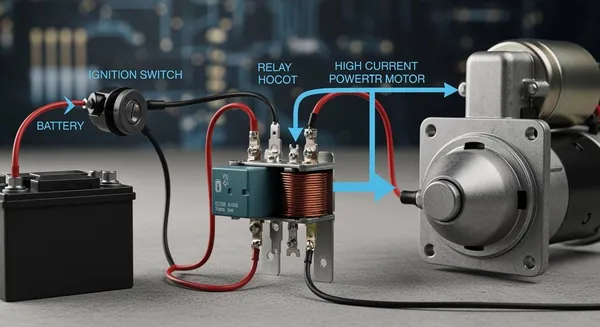
You use a relay starter motor in electronic systems to manage current flow to the starter motor. This device relies on electromagnetic operation to switch high currents safely and efficiently. When you activate the relay, a low-voltage signal energizes the coil inside the solenoid. The solenoid then creates a magnetic field, which moves the armature and closes the contacts. This action allows battery power to reach the starter solenoid, engaging the starter motor. You protect key components from electrical stress and reduce the risk of damage. The relay starter motor ensures reliable engine starting and prevents excessive current from reaching the ignition switch.
Most high-performance starter solenoids use two wires: a main wire for power and an activation wire for the signal. The activation wire builds the coil inside the solenoid and pulls it. When the solenoid moves far enough, the bus bar passes power to the starter solenoid and starter motor.
Modern relay starter motors have evolved to meet demanding electronic system requirements. You now see solid-state designs using MOSFETs for electronic current switching. These advancements provide silent operation, faster switching, and eliminate contact wear. You benefit from improved efficiency, adaptability, integrated thermal management, and long service life, especially in high-vibration environments.
Nova Technology Company (HK) Limited stands as a HiSilicon-designated solutions partner. You gain access to chip-level solutions, advanced system integration, and tailored application scenarios for the integrated circuit industry. Their expertise supports reliable relay starter motor designs in automotive and industrial electronics.
Key Components
You find several key parts in a relay starter motor. Each component serves a specific function:
| Component | Function |
|---|---|
| Relay Casing | Protects internal components and provides electrical insulation. |
| Coil and Iron Core | Generates a magnetic field to operate the relay with minimal power. |
| Hinged Armature | Moves in response to the magnetic field, changing the position of the relay contacts. |
| Spring | Returns the armature to its default position when de-energized. |
| Normally Open Contact | Allows battery power to flow to the starter solenoid when energized. |
| Normally Closed Contact | Disconnects when the relay is activated, often unused in starter relays. |
| Bonding Strap | Ensures consistent current flow while allowing mechanical movement. |
| Yoke | Completes the magnetic circuit and guides the magnetic field efficiently. |
| Insulator | Prevents unintended electrical contact and improves safety. |
You rely on the relay, solenoid, and starter solenoid to coordinate the activation sequence. The relay controls the solenoid, which then engages the starter solenoid and starter motor. This process ensures safe and efficient operation in electronic systems.
Operation and Safety

How It Works Step-by-Step
You control a relay starter motor by following a clear sequence. This process helps you manage motor starters and maintain safety in your system. Here are the steps you follow:
- You turn the ignition key to “Start.”
- The solenoid activates and receives a signal from the relay.
- The pinion gear engages with the engine’s flywheel.
- The main circuit connects, allowing high current to flow.
- The starter motor rotates and begins cranking the engine.
- The engine starts, and the overrunning clutch prevents damage.
- The relay disengages, stopping current flow.
- The starter motor stops, and the pinion gear retracts.
You rely on this sequence for frequent start/stop cycles and speed control. The relay starter motor ensures you avoid overload and maintain efficiency. You use motor controllers to manage start/stop control and speed control in variable speed applications. You benefit from fault detection and phase-loss protection, which protect your system from overload and ensure reliable operation.
Safety and Compliance Considerations
You must prioritize safety when you use motor starters in any system. The relay starter motor prevents accidental high-current flow and protects your system from overload. You rely on overload protection to keep your system safe and efficient. You use thermal protection, electronic overload relays, and magnetic overload relays to detect and respond to overload conditions. These protection functions help you avoid damage and maintain energy efficiency considerations.
| Type of Overload Protection | Function Description |
|---|---|
| Thermal Overload Relays | Detect excessive heat using bimetallic strips. |
| Electronic Overload Relays | Provide digital monitoring for precise protection. |
| Magnetic Overload Relays | React to sudden high-current spikes, often with circuit breakers. |
You use under-voltage protection and phase-loss protection to keep your system stable. You rely on upstream protection and motor control centers to manage overloads and protection relays. You must follow international standards for safety and compliance considerations. NEMA standards guide motor starters in the United States. IEC standards provide a global framework for modularity and interchangeability in motor starter design. You look for UL and CE certifications to ensure your system meets safety requirements.
| Application Type | Current Range |
|---|---|
| Automotive Starter Relays | 20 A to 40 A |
| Industrial Heavy-Duty | 150 A to 600 A |
You must inspect and maintain your system regularly. Maintenance and inspection help you identify overload and prevent failures. You use motor controllers to monitor efficiency and speed control. You rely on motor control systems to manage frequent start/stop cycles and ensure overload protection.
Tip: Always check for proper ventilation and cooling to avoid excessive motor heating and overload. Regular maintenance and inspection improve efficiency and extend the life of your system.
Common Issues and Troubleshooting
You may encounter several issues with motor starters in your system. You must address overload, speed control, and start/stop control problems quickly to maintain safety and efficiency. You use motor controllers and motor control centers to monitor and manage these issues.
| Motor Starter Issues | Possible Causes | Troubleshooting Steps |
|---|---|---|
| Failure to Start | Faulty wiring, defective starter switch, motor issues | Check for loose or damaged wiring connections, test the starter switch, verify the motor’s condition |
| Tripping Circuit Breakers | Overloaded circuits, short circuits, motor winding issues | Identify and rectify overloaded circuits, inspect for short circuits, examine motor windings |
| Excessive Motor Heating | Insufficient ventilation, overloading, cooling system issues | Ensure proper ventilation, check for overloading, inspect cooling system |
| Unusual Noises During Startup | Misalignment, worn-out bearings, mechanical issues | Investigate misalignment, inspect bearings, check for mechanical issues |
| Inconsistent Motor Speed | Voltage fluctuations, power supply issues, internal component problems | Stabilize power supply, resolve electrical system issues, inspect internal components |
| Frequent Starter Burnouts | Overloading, electrical surges, poor quality components | Avoid overloading, use high-quality components, install surge protectors |
| Starter Continuously Running | Stuck contacts, malfunctioning circuit, defective starter switch | Check for stuck contacts, inspect control circuit, replace starter switch |
| Uneven Motor Operation | Mechanical obstructions, misalignment, load issues | Inspect for obstructions, align motor, adjust load |
| Intermittent Starter Failures | Loose connections, wiring issues, control system faults | Tighten connections, inspect wiring, use diagnostic tools |
| Excessive Vibrations | Misalignment, imbalanced loads, worn bearings | Realign motor, balance loads, replace bearings |
You use essential testing tools such as a digital multimeter, non-contact voltage tester, and insulated hand tools. Visual inspection helps you spot burned contacts, melted wire insulation, and loose terminals. You rely on motor controllers for fault detection and speed control. You use overload protection to prevent frequent starter burnouts and excessive motor heating. You must address overload quickly to maintain efficiency and safety in your system.
Note: You improve system reliability by using high-quality starter motor components and performing regular maintenance and inspection. You reduce overload and increase efficiency by monitoring speed control and start/stop control with motor controllers.
You rely on relay starter motor designs to manage overload and maintain safety in your system. You use motor starters, motor controllers, and overload protection to ensure efficient operation and prevent failures. You benefit from protection functions such as under-voltage protection, phase-loss protection, and overloads and protection relays. You improve energy efficiency considerations and maintain compliance with safety and compliance considerations in your system.
You see how a relay starter motor works in electronic systems. The table below highlights key functions:
| Key Function | Description |
|---|---|
| Electrically Controlled Switch | Separates low-current control from high-current power. |
| Activation Process | Energizes the relay coil with a low-current signal. |
| Power Flow | Closes contacts for battery power to reach the solenoid. |
| Engine Cranking | Engages the starter motor to crank the engine. |
| Safety Mechanism | Cuts power to prevent over-cranking. |
You improve troubleshooting and design by understanding relay starter motor operation.
- You identify faults quickly.
- You ensure reliable switching.
- You protect components from heavy loads.
- You boost starting efficiency.
Starter relays help you achieve smooth motor operation in many applications.
Apply this knowledge to maintain safety and improve performance in your electronic systems.
FAQ
What is the main purpose of a relay starter motor?
You use a relay starter motor to control high-current circuits. You improve safety and provide protection for your electronic system during engine startup.
How does a relay starter motor provide protection?
You rely on the relay starter motor for protection against overload. You use thermal, electronic, and magnetic protection to keep your system safe and efficient.
You must check protection devices regularly to prevent failures and maintain system reliability.
Why should you inspect protection features in relay starter motors?
You inspect protection features to avoid overheating and electrical faults. You improve performance and extend the life of your system with proper protection.