Microprocessors vs. Integrated Circuits: Key Differences and Relationships Explained
Think of a small brain inside your devices. That’s a microprocessor. It’s a special type of chip that does math and controls things. An integrated circuit is different; it puts many electronic components into one tiny chip. This chip is made from materials called semiconductors. It’s small but very strong. Microprocessors are part of the electronic components integrated circuits family. These technologies work together to make devices run. Without integrated circuits, microprocessors wouldn’t be here, and electronics wouldn’t be so advanced today.
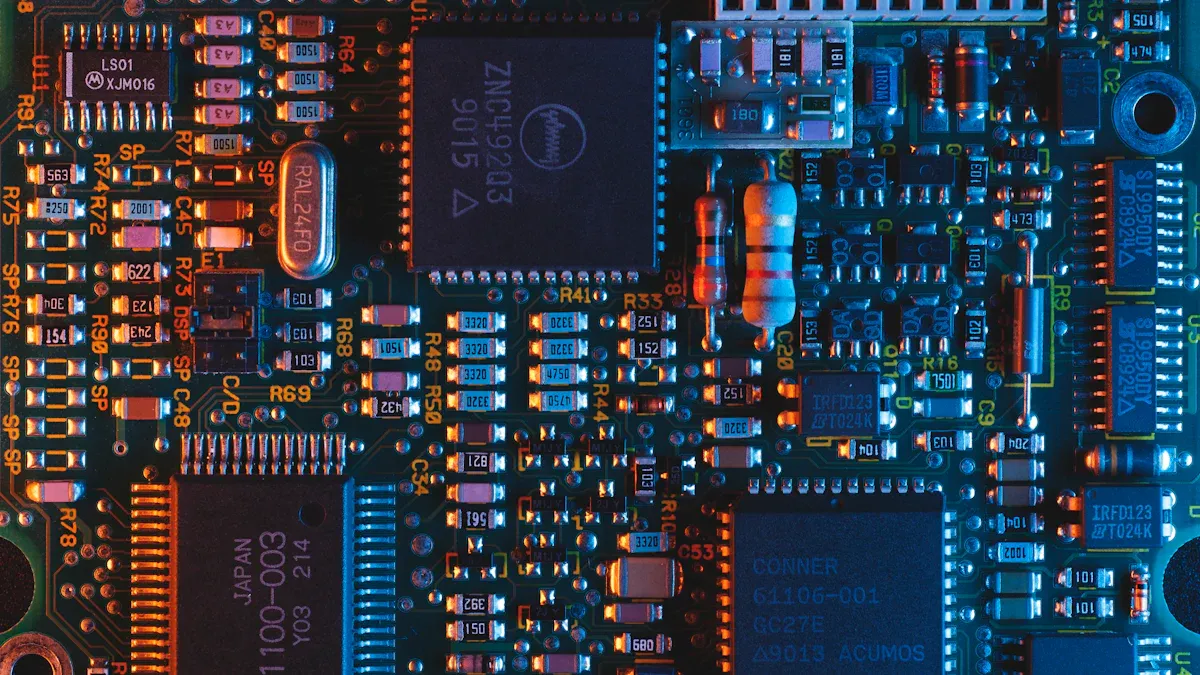
Think of a small brain inside your devices. That’s a microprocessor. It’s a special type of chip that does math and controls things. An integrated circuit is different; it puts many electronic components into one tiny chip. This chip is made from materials called semiconductors. It’s small but very strong. Microprocessors are part of the electronic components integrated circuits family. These technologies work together to make devices run. Without integrated circuits, microprocessors wouldn’t be here, and electronics wouldn’t be so advanced today.
Key Takeaways
-
Microprocessors are like the brain of devices. They handle hard tasks and multitasking. They are used in computers, phones, and cars.
-
Integrated circuits put many electronic parts into one tiny chip. They do specific jobs well, like controlling power or signals.
-
Microprocessors and integrated circuits work together to make technology better. Microprocessors handle data, while integrated circuits control power and signals.
-
Picking the right tool is important: use microprocessors for big computing jobs and integrated circuits for saving energy.
-
Both are important in today’s devices, like smartphones and electric cars. They help make devices smarter and more useful.
Understanding Microprocessors
Definition and Purpose
A microprocessor acts like the brain of your gadgets. It’s a special chip that does math and controls tasks. You can find it in computers, phones, and cars. This chip is also called the central processing unit (CPU). It handles data, follows instructions, and keeps devices running smoothly. Microprocessors changed technology by making computing faster and more reliable.
In the past, microprocessors improved a lot. In the 1940s and 1950s, transistors replaced vacuum tubes. This made devices smaller and used less energy. By the 1970s, integrated circuits helped create microprocessors, leading to personal computers. Today, new ideas like multi-core systems and quantum computing keep improving what microprocessors can do.
|
Era |
Key Development |
Impact on Microprocessors |
|---|---|---|
|
1940s - 1950s |
Transistors invented |
Replaced vacuum tubes, making devices smaller and more efficient. |
|
1970s - 1980s |
Integrated Circuits and Microprocessors introduced |
Helped create personal computers for everyday people. |
|
2000s - 2010s |
Multi-Core Systems developed |
Improved multitasking and saved energy in computing. |
|
2020s - Present |
Quantum Computing emerged |
Uses qubits to solve very hard problems. |
Components and Structure
Microprocessors have important parts that work together to handle data. These include:
-
Arithmetic Logic Unit (ALU): Does math and compares numbers.
-
Control Logic: Runs instructions and organizes tasks.
-
Register File: Holds temporary data while working.
-
Buffers: Help connect to outside data and address lines.
The design of a microprocessor helps it work better. It combines the ALU, control logic, and register file into one chip. This small design makes data move faster and parts work well together. But, limits like heat and space affect how complex it can be.
Microprocessor diagrams also show other parts like cables and lines. These include data cables, input/output lines, address lines, control cables, and power cables. These parts help the microprocessor connect with the rest of the system.
Types of Microprocessors
There are different kinds of microprocessors for different jobs. General-purpose microprocessors are flexible and used in things like computers and phones. Embedded microprocessors are made for specific tasks, like running appliances or car systems.
The microprocessor market is growing fast. In 2023, it was worth $114.26 billion and might reach $224.8 billion by 2033. Consumer electronics are the biggest users, making up 35% of U.S. sales. Smartphones lead this growth, with over 90% of Americans owning one.
|
Category |
2023 Value (USD) |
2033 Value (USD) |
CAGR (%) |
Market Share (%) |
|---|---|---|---|---|
|
Global Microprocessor & GPU Market |
114.26 Billion |
224.8 Billion |
7% |
37% (Asia Pacific) |
|
Sector |
2023 Demand (Units) |
Projected 2024 Demand (Units) |
Growth Rate (%) |
|---|---|---|---|
|
Consumer Electronics |
431 Billion |
465 Billion |
8% |
|
Automotive |
308 Billion |
345 Billion |
12% |
Applications in Electronics
Microprocessors are very important in today’s electronics. They power the devices you use every day. These chips make systems work well and reliably. Let’s see how microprocessors help in different areas.
Consumer Electronics
Your phones, tablets, and computers need microprocessors to work. They help run apps, browse online, and play games. These chips process data fast for smooth use. Cache memory in microprocessors makes data access quicker. Bigger cache sizes improve speed and performance. Studies show faster memory access and better system results.
Automotive Systems
Cars use microprocessors to control engines, brakes, and navigation. These systems keep cars safe and efficient. Managing heat in microprocessors is very important for cars. Heatsinks help cool them down, lowering high temperatures by 11.36%. This keeps them working well, even in tough conditions.
Aerospace and UAVs
Microprocessors are key in drones used for farming and security. They help control drones and make decisions. Research shows they manage drone groups and single controls offline. This improves how drones work and makes better system choices.
Industrial Automation
Factories use microprocessors in robots and machines to do tasks. These chips process commands quickly for accurate work. Better heat control, reduced by 80%, makes microprocessors last longer in factories.
Healthcare Devices
Medical tools like MRI machines and health trackers use microprocessors. They check data in real time for accurate results. Faster processing, improved by 17.24%, helps in emergencies and critical care.
Microprocessors are the heart of modern electronics. From gadgets to cars and healthcare, they make systems run smoothly and efficiently.
Exploring Integrated Circuits
Definition and Role in Electronics
An integrated circuit is a tiny chip with many electronic parts. It uses materials like silicon to do different jobs. These circuits replaced old technologies like vacuum tubes. This change made devices smaller and work better. Integrated circuits have improved industries by making systems faster and more reliable.
You can find integrated circuits in most modern gadgets. They help computers, phones, and appliances work. Their job is to process data, control systems, and store information. Over time, integrated circuits became more advanced. Moving from separate parts to integrated circuits made designs smaller and stronger. This change allowed them to be used in farming, banking, and entertainment.
|
Generation |
Materials Used |
Common Uses |
|---|---|---|
|
First |
Germanium (Ge), Silicon (Si) |
Military, Factories |
|
Second |
Gallium Arsenide (GaAs), Indium Phosphide (InP) |
Communication, Transport |
|
Third |
Silicon Carbide (SiC), Gallium Nitride (GaN) |
Power Systems, Radio Signals |
Components of Integrated Circuits
Integrated circuits have parts that work together to do tasks. These parts include:
-
Transistors: Control how electricity flows.
-
Diodes: Let electricity flow one way only.
-
Resistors: Slow down electricity and divide voltage.
-
Capacitors: Hold electrical energy for a short time.
These parts are arranged to make the integrated circuit work well. For example, digital circuits use transistors to handle binary data. This helps them compute quickly and accurately. Combining these parts into one chip makes integrated circuits very powerful.
|
Part Type |
What It Does |
|---|---|
|
Transistors |
Switch electricity on/off and make signals stronger. |
|
Diodes |
Let electricity flow one way, used for converting currents. |
|
Resistors |
Slow down electricity, used for dividing voltage. |
|
Capacitors |
Store energy briefly, used for timing and filtering. |
Types of Integrated Circuits
There are different kinds of integrated circuits, each for specific jobs:
-
Monolithic Integrated Circuits: Combine active and passive parts on one chip. Used in electronics like TVs.
-
Digital Integrated Circuits: Handle binary data, important for computers and phones.
-
Monolithic Microwave Integrated Circuits (MMICs): Work at high frequencies for communication tools.
-
Multichip Integrated Circuits: Have many chips joined together for complex tasks.
New designs in integrated circuits brought inventions like wireless tech and quantum computing. These changes replaced older systems, like traditional phones, with faster solutions. Integrated circuits keep improving and shaping the future of technology.
Applications Across Industries
Integrated circuits are important in many industries. They power devices and systems we use daily. These small chips, made from special materials, combine many parts into one unit. They are flexible and work well, making industries faster and more reliable.
Telecommunication
Integrated circuits help send data quickly in telecommunications. In 2023, over 1 billion devices connected to 5G networks. These circuits make communication stable and support faster internet speeds.
Industrial Automation
Factories use integrated circuits to automate tasks. Over 60% of industrial IoT devices now use special chips called ASICs. These chips improve performance and save energy, making production smoother.
Automotive
Modern cars, especially electric ones, need integrated circuits. In 2023, over 2.3 million EVs used ASICs to manage batteries. These circuits help batteries last longer and work better. They also make driving safer with advanced systems.
Consumer Electronics
Integrated circuits are key in gadgets like phones and laptops. In 2023, nearly 85% of top smartphones used custom ASICs. These chips handle hard tasks like storing data and processing images, making devices faster and easier to use.
Security and Cryptocurrency
Integrated circuits are used in security tools like cameras. They process data safely for monitoring systems. In 2023, over 70% of Bitcoin mining operations used ASICs, showing their importance in cryptocurrency.
|
Application Area |
Key Data |
|---|---|
|
Telecommunication |
|
|
Industrial |
Over 60% of industrial IoT devices incorporate ASICs. |
|
Automotive |
Over 2.3 million EVs sold in 2023 featured ASICs for battery management. |
|
Consumer Electronics |
Nearly 85% of flagship smartphones used custom ASICs in 2023. |
|
Security |
ASICs are essential for secure data processing in surveillance systems. |
|
Others |
Over 70% of Bitcoin mining operations utilize ASICs in 2023. |
Integrated circuits have changed industries by combining many parts into one chip. They are used in areas like telecommunications, cars, and electronics. These circuits make devices smarter and better at handling tough tasks. They are a big part of new technology today.
Microprocessor vs Integrated Circuit: Key Differences
Functionality and Purpose
A microprocessor works like the brain of a device. It handles hard math, follows instructions, and does many tasks at once. You’ll see it in computers, phones, and systems that need fast multitasking.
An integrated circuit, however, focuses on one job. It combines parts like transistors and resistors into one chip. This chip does specific tasks, like controlling temperature or managing power. Unlike microprocessors, it doesn’t multitask but is great at doing one thing well.
|
Metric |
Microprocessor Role |
Integrated Circuit Role |
|---|---|---|
|
Speed |
Fast for hard calculations |
Made for single tasks |
|
Complexity |
Handles many jobs |
Built for focused functions |
|
Power Use |
Uses more energy, adjusts speed |
Saves energy, good for small devices |
|
Task Type |
Runs many instructions |
Does one job efficiently |
This table shows how microprocessors and integrated circuits differ. Microprocessors are for heavy computing, while integrated circuits save energy and work reliably on specific tasks.
Architectural Design
The design of a microprocessor is detailed and built for speed. It has parts like the Arithmetic Logic Unit (ALU) and control logic. These parts work together to process data and run instructions. Microprocessors are made for changing workloads, making them perfect for fast and flexible devices.
Integrated circuits have simpler designs for specific jobs. They combine active and passive parts to do tasks like boosting signals or controlling voltage. Digital integrated circuits use transistors for binary data, while analog ones handle smooth signals. This makes them small and efficient for gadgets like TVs and washing machines.
Tip: Think of a microprocessor as a multitasker and an integrated circuit as a specialist. Both are important but serve different roles in technology.
Complexity and Size
Microprocessors are more complicated than integrated circuits. They have millions or billions of transistors in one chip. This lets them do advanced math and manage many tasks at once. But this complexity makes them bigger and use more power.
Integrated circuits are smaller and simpler. They are made for specific jobs, which keeps their size and energy use low. For example, they control motors or measure temperature in small systems. Their compact design is great for portable gadgets and devices with limited space.
Note: Microprocessors focus on powerful computing, while integrated circuits aim for simplicity and efficiency. Together, they help electronics meet different needs, from fast computers to energy-saving tools.
Power Consumption and Efficiency
When comparing microprocessors and integrated circuits, energy use is important. Microprocessors need more power because they do hard tasks. Integrated circuits are made to save energy. They focus on one job, using less power.
The energy use of microprocessors depends on their design and purpose. Some are built for speed, while others save energy. For example, the Odroid XU4 uses less power but balances performance well. The Rock960 uses the most energy but is very powerful. The Nezha D1 uses steady energy but isn’t as efficient as others.
|
Microprocessor Model |
Power Use Rank |
Energy Use Pattern |
Efficiency Level |
|---|---|---|---|
|
Odroid XU4 |
2nd |
Similar patterns |
Balanced |
|
Rock960 |
Highest |
Similar patterns |
High power, high output |
|
Nezha D1 |
Stable |
Highest in benchmarks |
Lower efficiency |
Integrated circuits are great for saving energy. Their small size and specific jobs make them perfect for sensors and small systems. These circuits help devices work well without wasting power.
Tip: Use integrated circuits for energy-saving tasks and microprocessors for heavy computing.
Applications in Technology
Microprocessors and integrated circuits have different roles in technology. Microprocessors are like the brain, running computers, phones, and systems. Integrated circuits handle specific tasks like managing signals or power.
In gadgets, microprocessors help with multitasking and fast data work. Integrated circuits control power and make devices last longer. For example, your phone’s microprocessor runs apps, while its integrated circuit manages the battery.
Cars need both technologies. Microprocessors control engines and navigation. Integrated circuits manage sensors and safety features. Electric cars use integrated circuits to make batteries last longer.
In factories, integrated circuits control machines and check systems. Microprocessors handle hard data, helping robots do exact tasks. Together, they make factories faster and better.
Note: Microprocessors and integrated circuits work together to improve technology. From healthcare to space, they help create new and better systems.
The Relationship Between Microprocessors and Integrated Circuits
Microprocessors as Specialized Integrated Circuits
Microprocessors are a special kind of integrated circuit made for tough tasks. They pack millions of transistors into one chip to handle hard jobs. The word "core" means a single processor inside a microprocessor. Many cores in one chip make it faster and more powerful. This design has changed how computers work by making them quicker and more efficient.
For example:
-
In 1994, microprocessor chips had over three million transistors.
-
Chips with over one million transistors are called ULSI (Ultra-Large Scale Integration).
These changes show how microprocessors grew from simple integrated circuits into advanced systems. They can now do many tasks at once. With multiple cores in one chip, they are key in devices like computers and gadgets.
How Integrated Circuits Enable Microprocessor Functionality
Integrated circuits are very important for microprocessors to work well. They give the base design that helps microprocessors do their job. By combining transistors, resistors, and capacitors in a small chip, integrated circuits help microprocessors process data quickly and save energy.
The number of transistors affects how well a microprocessor works. More transistors mean bigger cache sizes and better power use. But, it also causes problems like more heat and higher energy use.
|
Key Aspect |
Explanation |
|---|---|
|
Transistor Count |
More transistors increase cache size but use more power. |
|
Power Use |
Power limits depend on the number of transistors and cores. |
|
Performance Boost |
Better designs and more transistors improve performance. |
|
Energy Saving |
Energy-efficient designs are needed for future improvements. |
|
Core Design Techniques |
Methods like pipelining and out-of-order execution make microprocessors faster. |
Integrated circuits allow microprocessors to use these advanced methods. Without them, microprocessors couldn’t work as fast or efficiently as they do now.
Collaboration in Modern Electronics
Microprocessors and integrated circuits work together in today’s devices. This teamwork helps create new and better technology. Microprocessors handle computing, while integrated circuits manage power and signals.
In small systems, this partnership is clear. Microprocessors run programs and process data. Integrated circuits save energy and control extra parts. For example, in phones, the microprocessor runs apps, and integrated circuits manage the battery and signals.
This teamwork is also seen in cars and healthcare. In electric cars, microprocessors control engines and navigation. Integrated circuits manage the battery to save energy. In medical tools, microprocessors check patient data, while integrated circuits keep the tools steady and accurate.
Tip: Think of microprocessors as the brain and integrated circuits as the nerves. Together, they make smart and efficient devices.
The teamwork between microprocessors and integrated circuits shows how modern technology connects. Together, they help devices do hard tasks while saving energy and staying reliable.
Examples of Systems Using Both
Modern devices depend on both microprocessors and integrated circuits. These two parts work together to make gadgets smarter and faster. Below are examples showing how they team up.
Smartphones 📱
Smartphones are a great example of using both technologies. The microprocessor, or CPU, runs apps, loads websites, and processes pictures. Integrated circuits handle the battery, control the touchscreen, and manage wireless signals.
Fun Fact: The Snapdragon 8 Gen 2 chip in many top phones can handle 15 trillion tasks per second. Integrated circuits help keep the phone cool and save energy.
Electric Vehicles 🚗
Electric cars need microprocessors and integrated circuits to work. Microprocessors control the engine, maps, and entertainment systems. Integrated circuits manage the battery, check sensors, and control power flow. Together, they make EVs safer and more efficient.
|
Component |
Role in EVs |
|---|---|
|
Microprocessor |
Runs engine, navigation, and entertainment systems. |
|
Integrated Circuit |
Improves battery use and checks safety sensors. |
Gaming Consoles 🎮
Gaming consoles like PlayStation or Xbox use microprocessors to run games and handle graphics. Integrated circuits manage power, sound, and connections like Wi-Fi. This teamwork makes games smooth and fun to play.
Tip: When gaming, the microprocessor handles graphics while integrated circuits keep the console cool and connected.
Medical Devices 🩺
Medical tools like MRI machines and fitness trackers use both technologies. Microprocessors study patient data and give quick results. Integrated circuits keep the device steady, control sensors, and manage power. This helps doctors check patients accurately.
Smart Home Systems 🏠
Smart home gadgets, like thermostats and cameras, use microprocessors to follow commands and connect online. Integrated circuits control sensors and power, making them work smoothly. Together, they make homes smarter and easier to manage.
Note: When your smart thermostat changes the temperature, the microprocessor processes your input, and integrated circuits control the heating or cooling.
Aerospace Systems 🚀
Satellites and spacecraft rely on microprocessors for navigation, communication, and data work. Integrated circuits manage power, control sensors, and keep systems stable in space. This teamwork makes space exploration possible.
Industrial Robots 🤖
Factories use robots with microprocessors to do exact tasks like welding. Integrated circuits control motors, check sensors, and manage power. This teamwork makes robots faster and more accurate.
Takeaway: From phones to space, microprocessors and integrated circuits work together. They make devices smarter, faster, and more reliable.
Microprocessors and integrated circuits are important in electronics today. Microprocessors do hard jobs like processing data and multitasking. They are found in devices like smartphones and smart home systems. Integrated circuits handle simpler tasks like boosting signals, storing memory, and sending messages. These two technologies work together to make electronics function well. Reports show companies spend over 80% of their money on computing tools. This shows how vital these technologies are for improving industries and creating new ideas.
FAQ
What’s the big difference between microprocessors and integrated circuits?
Microprocessors are like the brain of a device. They do hard jobs like math and multitasking. Integrated circuits are chips with parts like transistors and resistors. They do one job, like controlling power or signals.
Can integrated circuits work without microprocessors?
Yes, integrated circuits can work alone. They do special jobs like boosting signals or controlling voltage. Microprocessors need integrated circuits to work well. Integrated circuits give them the parts and design to process data.
Why are microprocessors harder to make than integrated circuits?
Microprocessors have millions or billions of transistors. This helps them do tough math and multitasking. Integrated circuits are simpler and do one job. They need fewer parts, so they’re smaller and easier to make.
How do microprocessors and integrated circuits work together in devices?
Microprocessors handle data and follow instructions. Integrated circuits manage power, signals, and sensors. In phones, microprocessors run apps, while integrated circuits control the battery and screen.
Are integrated circuits better at saving energy than microprocessors?
Yes, integrated circuits save more energy. They focus on one job, so they use less power. Microprocessors need more energy because they do many tasks and have complex designs.