Selecting the Right IGBT Module for Your Power Electronics Projects: A Practical Guide
Selecting the Right IGBT Module for Your Power Electronics Projects: A Practical Guide table { border-coll
Introduction
In the rapidly evolving field of power electronics, selecting the right Insulated Gate Bipolar Transistor (IGBT) module is crucial for the success of your projects. As global demand for efficient energy conversion systems increases, the use of IGBT modules in applications such as renewable energy systems, electric vehicles, and industrial drives has become more prevalent. According to the Semiconductor Industry Association, the global semiconductor market is projected to reach $595.2 billion by 2026. This growth underscores the importance of understanding how to choose the right IGBT module to meet your specific application requirements.
Technical Overview
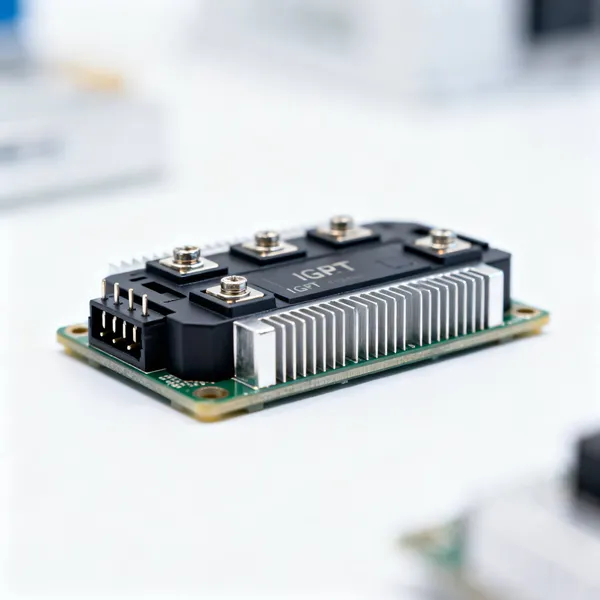
IGBT modules are essential components in modern power electronics, combining the high efficiency and fast switching of a MOSFET with the high-current and low-saturation-voltage capability of a bipolar transistor. These modules are widely used in high-voltage and high-current applications due to their robustness and ability to handle large power loads. The core principle behind IGBTs is their ability to switch electrical power efficiently, minimizing losses and improving overall system performance. Understanding the electrical, thermal, and mechanical specifications of IGBT modules is vital for engineers to make informed decisions. Resources like EE Times provide valuable technical insights into the latest advancements in IGBT technology.
Detailed Specifications
Table 1: Electrical Specifications
| Parameter | Value | Units | Notes |
|---|---|---|---|
| Collector-Emitter Voltage (VCES) | 1200 | V | Maximum voltage |
| Continuous Collector Current (IC) | 100 | A | At 25°C |
| Gate-Emitter Voltage (VGE) | ±20 | V | Maximum allowable |
| Turn-On Delay Time (td(on)) | 50 | ns | Typical value |
| Turn-Off Delay Time (td(off)) | 150 | ns | Typical value |
| Switching Frequency | 20 | kHz | Maximum |
| Power Dissipation (PD) | 300 | W | Maximum |
| Short-Circuit Withstand Time | 10 | µs | Typical |
| Input Capacitance (Cies) | 5000 | pF | Typical |
| Output Capacitance (Coss) | 300 | pF | Typical |
Table 2: Thermal & Mechanical Specs
| Parameter | Value | Units | Notes |
|---|---|---|---|
| Thermal Resistance, Junction-to-Case (RθJC) | 0.1 | °C/W | Typical value |
| Operating Junction Temperature (TJ) | -40 to 150 | °C | Range |
| Storage Temperature (TSTG) | -55 to 150 | °C | Range |
| Module Weight | 150 | g | Typical |
| Case Material | Plastic | - | With high thermal conductivity |
| Mounting Torque | 1.5 | Nm | Recommended |
| Isolation Voltage | 2500 | V | RMS for 1 minute |
| Package Type | TO-247 | - | Standard package |
Table 3: Application Comparison
| Application | IGBT Type | Benefits | Considerations |
|---|---|---|---|
| Renewable Energy Systems | High Voltage | Efficiency, Reliability | Thermal Management |
| Electric Vehicles | Low Loss | Range, Efficiency | Cost, Weight |
| Industrial Drives | High Current | Durability, Control | Switching Speed |
| Inverters | Fast Switching | Efficiency, Compactness | EMI Considerations |
| HVAC Systems | Rugged | Reliability, Longevity | Size, Cost |
The tables above provide detailed insights into the specifications of IGBT modules, which are crucial for engineers to make informed decisions. Electrical specifications such as collector-emitter voltage and continuous collector current determine the performance limits of the module. Meanwhile, thermal and mechanical specifications, including thermal resistance and operating junction temperature, impact the module's reliability and integration into systems. Application comparisons highlight the suitability of different IGBT types for specific use cases, emphasizing benefits and considerations relevant to each application.
Design Considerations
When designing with IGBT modules, engineers must consider several critical factors to ensure optimal performance and longevity. First, understanding the power requirements of your application is essential. The IGBT module must be capable of handling the maximum expected current and voltage. Additionally, thermal management is vital; IGBT modules generate significant heat, and adequate heat sinks or cooling systems must be employed to maintain safe operating temperatures.
Another key consideration is the switching frequency. Higher frequencies can improve efficiency but may also increase the risk of electromagnetic interference (EMI). Engineers must carefully balance these factors, potentially using filters or shielding to mitigate EMI effects. The choice of gate driver circuit is also crucial, as it influences the switching speed and overall efficiency of the IGBT module. Proper gate resistor selection can minimize switching losses and prevent oscillations.
Furthermore, engineers should evaluate the mechanical aspects of the IGBT module, including the package type and mounting methods. Ensuring secure mounting with appropriate torque will reduce mechanical stress and improve thermal contact. The environmental conditions, such as ambient temperature and humidity, should also be considered, as they can affect the module's performance and lifespan. Finally, engineers must ensure compliance with relevant standards and regulations, such as those related to safety and electromagnetic compatibility (EMC).
Step-by-Step Guide
- Define Application Requirements: Analyze the power, voltage, and current needs of your application. Determine the maximum and typical operating conditions.
- Select IGBT Specifications: Based on the application requirements, choose an IGBT module with appropriate electrical, thermal, and mechanical specifications. Use resources like DigiKey Electronics for detailed datasheets.
- Design Thermal Management: Calculate the heat dissipation and select suitable heat sinks, fans, or liquid cooling systems to maintain safe operating temperatures.
- Choose Gate Driver Circuit: Design or select a gate driver circuit that matches the IGBT's switching characteristics, considering gate charge and switching speed.
- Implement EMI Mitigation: Use filtering techniques and shielding to minimize electromagnetic interference, especially at high switching frequencies.
- Test and Validate: Build a prototype and conduct thorough testing under various operating conditions. Validate performance, efficiency, and thermal characteristics.
- Optimize Design: Based on test results, make necessary adjustments to improve efficiency, reliability, and compliance with standards.
- Finalize and Document: Once the design is optimized, finalize the component selection and document the design for production, including schematics and bill of materials (BOM).
Common Issues & Solutions
1. Overheating: Ensure adequate cooling and thermal management. Use heat sinks, fans, or liquid cooling to dissipate heat effectively.
2. Switching Losses: Optimize gate driver circuits and select appropriate gate resistors to minimize switching losses and improve efficiency.
3. Electromagnetic Interference (EMI): Implement filtering and shielding techniques to mitigate EMI, especially at high switching frequencies.
4. Mechanical Stress: Ensure proper mounting and torque specifications to reduce mechanical stress and improve thermal contact.
5. Short-Circuit Failures: Design protection circuits, such as current limiters or fuses, to prevent damage from short-circuit conditions.
Applications & Use Cases
IGBT modules are integral to a wide range of applications due to their efficiency and reliability in handling high-power loads. In renewable energy systems, such as solar inverters and wind turbines, IGBTs enable efficient energy conversion and grid integration. In electric vehicles, IGBTs are used in motor drives and battery management systems, enhancing vehicle range and performance. Industrial drives benefit from IGBTs due to their durability and precise control, essential for applications like conveyor belts and pumps. HVAC systems also utilize IGBTs for efficient heating and cooling control, contributing to energy savings and reduced operational costs.
Selection & Sourcing Guide
Selecting and sourcing the right IGBT module is crucial for project success. Engineers can explore comprehensive databases and component distributors like IC Online to search and source IGBT modules that meet their specific requirements. These platforms offer competitive pricing, fast delivery, and extensive datasheets to aid in the selection process.
FAQ
1. What is the main advantage of using IGBT modules? IGBT modules combine the high efficiency and fast switching of a MOSFET with the high-current and low-saturation-voltage capability of a bipolar transistor, making them ideal for high-power applications.
2. How do I manage the heat generated by IGBT modules? Implement effective thermal management strategies such as heat sinks, fans, or liquid cooling systems to dissipate heat and maintain safe operating temperatures.
3. Can IGBT modules be used in both AC and DC applications? Yes, IGBT modules are versatile and can be used in both AC and DC applications, providing efficient power conversion and control.
4. What are the key considerations when selecting a gate driver for an IGBT module? Consider the gate charge, switching speed, and voltage requirements to select a gate driver that optimizes performance and minimizes losses.
5. How can I reduce electromagnetic interference (EMI) in my IGBT-based design? Use filtering techniques, shielding, and careful layout design to minimize EMI, especially in high-frequency applications.
6. What are the common failure modes of IGBT modules? Common failure modes include overheating, short-circuit conditions, and mechanical stress. Proper design and protection circuits can mitigate these issues.
7. How do I ensure compliance with industry standards? Familiarize yourself with relevant standards for safety and electromagnetic compatibility, and incorporate them into your design and testing processes.
8. What role do IGBTs play in electric vehicles? IGBTs are critical in electric vehicles for motor drives and battery management, contributing to improved efficiency and range.
9. Are there specific IGBT modules designed for renewable energy applications? Yes, there are IGBT modules specifically designed for renewable energy applications, offering high efficiency and reliability.
10. How do I choose the right package type for my IGBT module? Consider factors such as thermal management, mounting requirements, and space constraints to select the appropriate package type.
Conclusion
Selecting the right IGBT module is a critical step in ensuring the success of power electronics projects. By understanding the detailed specifications, design considerations, and application requirements, engineers can make informed decisions that enhance performance and reliability. Resources like EE Times and DigiKey Electronics provide valuable insights and tools for engineers to stay updated with the latest advancements in IGBT technology. With careful selection and design, IGBT modules can provide efficient and reliable solutions across a wide range of applications.