The Story Behind the 47k Resistor Color Code
You can identify a standard 47k ohm resistor by its specific series of colors: Yellow, Violet, and Orange. These bands are o
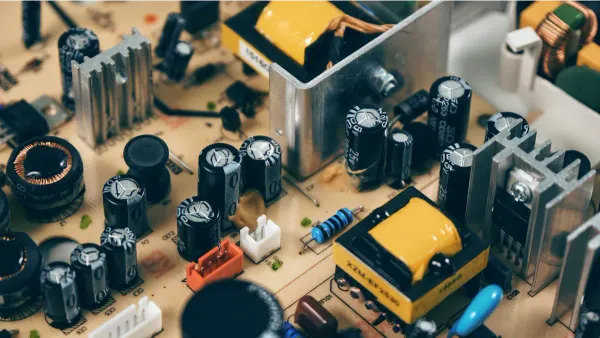
You can identify a standard 47k ohm resistor by its specific series of colors: Yellow, Violet, and Orange. These bands are often followed by a fourth Gold band for tolerance. This visual system is a simple language for electronics.
Note: The 47k resistor color code directly represents the component's value of 47,000 ohms (47kΩ).
This code allows you to find the correct 47k ohm resistor quickly and without measurement tools. Accurate identification is crucial when you build or repair electronic circuits.
Key Takeaways
- The 47k resistor has a specific color code: Yellow, Violet, and Orange. This code tells you its value of 47,000 ohms.
- You can decode a resistor's value by reading its color bands. The first two bands are digits, the third is a multiplier, and the fourth shows tolerance.
- The 47k resistor is very common. It is used in many circuits like voltage dividers and timing circuits.
- Always read resistor bands in the correct order. The tolerance band (often Gold or Silver) goes on the right side.
- Understanding the 47k resistor color code helps you choose the right part for your electronic projects.
Decoding the 47k Resistor Color Code
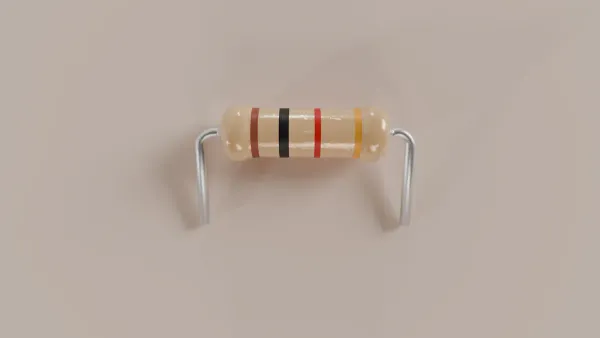
The colors on a resistor tell a story. This visual system is a standard that helps you quickly identify a resistor's value without any measurement tools. The international standard IEC 60062 defines this color coding system. Before this standard, things were chaotic.
A Quick History Lesson 📜
- In the early days, every manufacturer used their own marking system.
- The Radio Manufacturers Association (RMA) created a standard color code in the 1920s.
- The International Electrotechnical Commission (IEC) later standardized it in 1952.
- Today, the current standard is IEC 60062:2016, which covers both resistors and capacitors.
This system makes building and repairing electronics much simpler. Let's break down the 47k resistor color code band by band.
Band 1 & 2: The Digits (Yellow, Violet)
The first two bands on a standard 4-band resistor give you the first two digits of its resistance value. For a 47k ohm resistor, these colors are Yellow and Violet.
- Band 1 (Yellow): Yellow represents the number 4.
- Band 2 (Violet): Violet represents the number 7.
Together, these bands give you the number "47". You can use the following chart to see the values for each color.
| Color | Digit (Bands 1 & 2) | Multiplier (Band 3) | Tolerance (Band 4) |
|---|---|---|---|
| Black | 0 | 1 | - |
| Brown | 1 | 10 | ± 1% |
| Red | 2 | 100 | ± 2% |
| Orange | 3 | 1,000 | - |
| Yellow | 4 | 10,000 | - |
| Green | 5 | 100,000 | ± 0.5% |
| Blue | 6 | 1,000,000 | ± 0.25% |
| Violet | 7 | 10,000,000 | ± 0.1% |
| Gray | 8 | 100,000,000 | ± 0.05% |
| White | 9 | 1,000,000,000 | - |
| Gold | - | 0.1 | ± 5% |
| Silver | - | 0.01 | ± 10% |
| None | - | - | ± 20% |
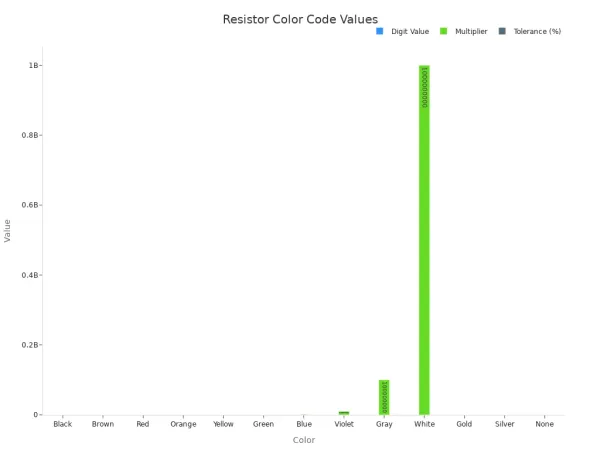
Tip: Remembering the color sequence can be tricky. Many people use a mnemonic phrase to help. A popular one is: "Big Boys Race Our Young Girls But Violet Generally Wins."
Band 3: The Multiplier (Orange)
The third band is the multiplier. It tells you how many zeros to add after the first two digits. The 47k ohm resistor color code uses an Orange band here.
- Band 3 (Orange): Orange represents a multiplier of 1,000 (or 10³).
You can calculate the final resistance value with a simple formula. You take the first two digits and multiply them by the value of the third band.
Resistance (Ω) = (First Digit × 10 + Second Digit) × Multiplier
For the 47k ohm resistor:
- (4 × 10 + 7) × 1,000
- 47 × 1,000 = 47,000 Ω
This is why we call it a "47k" resistor. The "k" stands for "kilo," which means one thousand. The Orange band is the key to the 47k resistor color code.
Band 4: The Tolerance Band
The fourth and final band tells you the resistor's tolerance. Tolerance is the acceptable range of error for the resistor's value. A 47k ohm resistor is not always exactly 47,000 ohms. The tolerance band tells you how close it is to that value.
Most common 47k ohm resistors have a Gold or Silver band.
- Gold: ±5% tolerance
- Silver: ±10% tolerance
A 47k ohm resistor with a Gold (±5%) band can have an actual resistance anywhere between 44,650 Ω and 49,350 Ω. For most hobbyist projects, a 5% or 10% tolerance is perfectly fine.
However, tolerance is very important in sensitive circuits.
- Precision: In circuits like medical devices or measurement equipment, a small deviation can cause big problems. These applications need resistors with tight tolerances (like ±1% or less) to ensure accuracy.
- Cost: Tighter tolerance resistors are more expensive. You must balance the need for precision with your budget. Using a loose tolerance resistor in a non-critical part of a circuit can help reduce costs.
- Performance: In timing circuits, tolerance directly affects frequency and stability. An incorrect resistance value can make a digital clock run at the wrong speed.
Understanding the 4-band resistor color code gives you all the information you need to choose the right component for your project.
Applications of the 47k Ohm Resistor
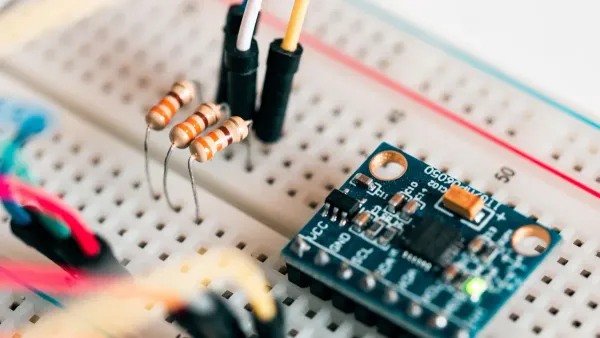
The 47k ohm resistor is not just another component; it is a versatile tool in an electronics designer's kit. Its moderate resistance value makes it a popular choice for a wide range of circuits. You will find it in everything from simple hobby projects to complex industrial systems. This section explores why the 47k value is so common and where you can expect to see it in action.
A Preferred Value: The E-Series Standard
Have you ever wondered why you see values like 47k and not 46k or 48k? The answer lies in the E-series, a system of preferred numbers for electronic components. The Electronic Industries Association (EIA) created this standard to simplify manufacturing and inventory. Instead of making every possible resistor value, manufacturers produce a limited set of values that cover all ranges based on their tolerance.
The series name tells you how many values are in each decade (e.g., between 10k and 100k). The 47k value comes from the E12 and E24 series.
- E12 Series: Contains 12 values per decade, typically for resistors with ±10% tolerance.
- E24 Series: Contains 24 values per decade, used for resistors with ±5% tolerance.
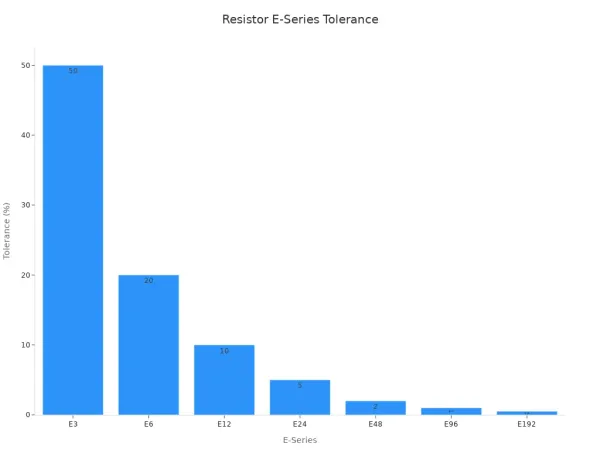
Because 5% and 10% are very common tolerances, the values from the E12 and E24 series, including 47, are manufactured in huge quantities. This makes the 47k ohm resistor both widely available and affordable. The table below shows how the E-series corresponds to different tolerances.
| Series | Tolerance | Common Use |
|---|---|---|
| E6 | 20% | Rarely used today |
| E12 | 10% | Common (Silver band) |
| E24 | 5% | Very common (Gold band) |
| E48 | 2% | Precision circuits |
| E96 | 1% | High-precision circuits |
| E192 | < 1% | Scientific instruments |
Common Circuits and Uses
The versatility of the 47k ohm resistor allows you to use it in many different electronic applications. Its value is high enough to limit current effectively but low enough to avoid problems with noise in sensitive circuits.
Here are some common places you will find it:
- Pull-up and Pull-down Resistors: In digital circuits with microcontrollers, you need to ensure that a pin has a defined state (high or low) when nothing is connected to it. A 47k ohm resistor can "pull" the pin to a default voltage level, preventing it from floating and causing unpredictable behavior.
- Voltage Dividers: You can use two resistors to create a voltage divider. This circuit reduces a higher input voltage to a lower output voltage. For example, you can pair a 47k ohm resistor with a sensor like a Light-Dependent Resistor (LDR). As the light changes, the LDR's resistance changes, which alters the output voltage of the divider. This allows a microcontroller to sense changes in light.
- Timing Circuits: The 47k ohm resistor often works with a capacitor to set the timing in an oscillator or a 555 timer circuit. The resistance value directly controls how quickly the capacitor charges and discharges, which determines the frequency of the output signal.
- Audio Circuits: In audio equipment, you can use it to control amplifier gain or match impedance between different parts of a circuit. This ensures a clean and stable audio signal.
- End-of-Line (EOL) Resistors: Fire alarm and security systems use a 47k ohm resistor at the end of a sensor loop. The control panel constantly monitors the circuit's resistance. If the wire is cut or shorted, the resistance changes, and the system triggers an alarm.
These practical applications are the foundation of modern electronics. Companies that design advanced systems, like Nova Technology Company (HK) Limited, rely on these fundamental principles. As a HiSilicon-designated solutions partner, they integrate components like resistors into complex solutions for a variety of industries, showing how a simple part can be crucial to a high-tech product.
Controlling Current Flow
At its core, a resistor's job is to resist the flow of electrical current. The 47k ohm resistor excels at controlling small currents in a precise and stable way. This function is critical for protecting sensitive components and ensuring a circuit operates as designed.
Key Functions in Current Control ⚡
- Transistor Biasing: A transistor needs a specific, small current at its base to turn on or to amplify a signal correctly. You can use a 47k ohm resistor to set this "bias" current, ensuring the transistor operates in the desired mode without drawing too much power.
- Feedback Loops: Operational amplifiers (op-amps) are powerful components, but they can become unstable. A 47k ohm resistor is often used in a feedback loop to send a portion of the output signal back to the input. This stabilizes the op-amp's performance and controls its gain.
- Current Limiting for LEDs: While a lower value is more common, you can use a 47k ohm resistor to limit current to an LED in high-voltage, low-current situations, making it glow very dimly or act as a simple indicator.
By managing current flow, the 47k ohm resistor helps maintain signal integrity, protect components, and ensure the overall stability and reliability of an electronic circuit.
A Practical Identification Guide
Knowing the theory is one thing, but identifying a resistor in your hand is the real test. This guide gives you practical steps to read the colors correctly and avoid common mix-ups.
Reading the 47k Ohm Resistor Color Code
Before you can decode the colors, you must hold the resistor the right way. Reading the bands in the wrong order is a frequent error that leads to incorrect values.
- Find the Tolerance Band: Look for a Gold or Silver band. You should place this band on the right side.
- Check the Spacing: The other bands are usually grouped closer together. You start reading from this side.
Even with the correct orientation, mistakes can happen. You should be aware of these common pitfalls:
- Poor Lighting: Bad lighting can make it hard to tell colors apart, especially red, orange, and brown. Always work in a well-lit area.
- Misinterpreting Colors: Some colors look very similar. When in doubt, you can use a multimeter to confirm the value.
- Forgetting the Code: It is easy to forget what each color means. Using a resistor color code chart is a great way to get a quick and accurate reference.
Distinguishing Similar Resistors
A single color change can alter a resistor's value by a factor of ten or more. The multiplier band is the most important color for getting the value right. The first two bands, Yellow and Violet (47), stay the same for many related values. The third band tells the real story.
Let's compare the 47k ohm resistor with two similar-looking components. Notice how only the third band changes.
| Resistance Value | Bands 1 & 2 (Digits) | Band 3 (Multiplier) | Full 4-Band Code |
|---|---|---|---|
| 4.7k Ω | Yellow-Violet | Red (x100) | Yellow-Violet-Red-Gold |
| 47k Ω | Yellow-Violet | Orange (x1,000) | Yellow-Violet-Orange-Gold |
| 470k Ω | Yellow-Violet | Yellow (x10,000) | Yellow-Violet-Yellow-Gold |
The Orange band is the unique identifier in the 47k ohm resistor color code. Changing it to Red reduces the value to 4.7k Ω, while changing it to Yellow increases it to 470k Ω. This exponential change shows why you must pay close attention to the multiplier.
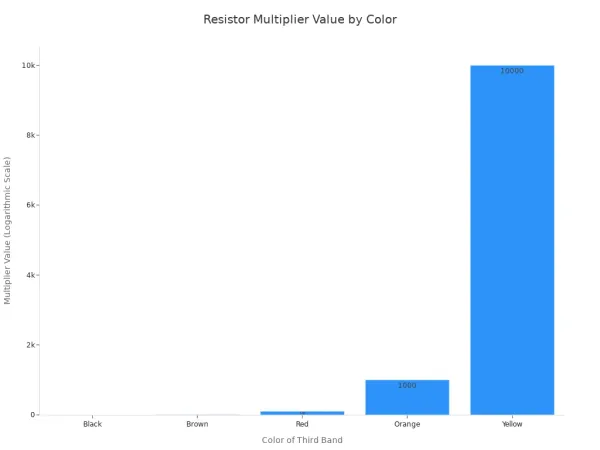
Mastering the multiplier band is the key to quickly and accurately identifying your components.
The Yellow-Violet-Orange sequence is the universal 47k resistor color code. You can now identify this essential component with confidence. Its role as a standard part makes it vital for countless electronic applications. You will find it in:
- Audio equipment for clear sound.
- Sensor circuits for accurate measurements.
- Hobbyist projects and complex industrial systems.
Mastering the 47k ohm resistor color code is a key step. It helps you understand the language of electronics. After resistors, you can explore capacitors, which store energy and are crucial for filtering and timing.
FAQ
What if my resistor has five bands instead of four?
Your resistor is likely a precision type. You read the first three bands as digits. The fourth band is the multiplier, and the fifth band shows the tolerance. This system allows for more specific resistance values.
Why is the 47k ohm value so common?
The 47k value is part of the E-series standard. Manufacturers produce these "preferred values" in large amounts. This makes the 47k resistor cheap and easy to find for your projects.
Can I use a multimeter to confirm the value? 🧐
Yes, you can. Set your multimeter to the resistance (Ω) mode. Place one probe on each end of the resistor. The reading will confirm its value and check if it is within its tolerance range.
What happens if I read the resistor backward?
You will get a completely wrong value. For a 47k resistor (Yellow-Violet-Orange-Gold), reading it backward might look like Gold-Orange-Violet-Yellow. This does not compute to a standard value and will cause circuit errors.