Top 10 Integrated Circuits Revolutionizing Autonomous Driving Technology
magine a world where cars drive themselves and keep you safe. This is no longer science fiction—it’s real, thanks to tiny chips.
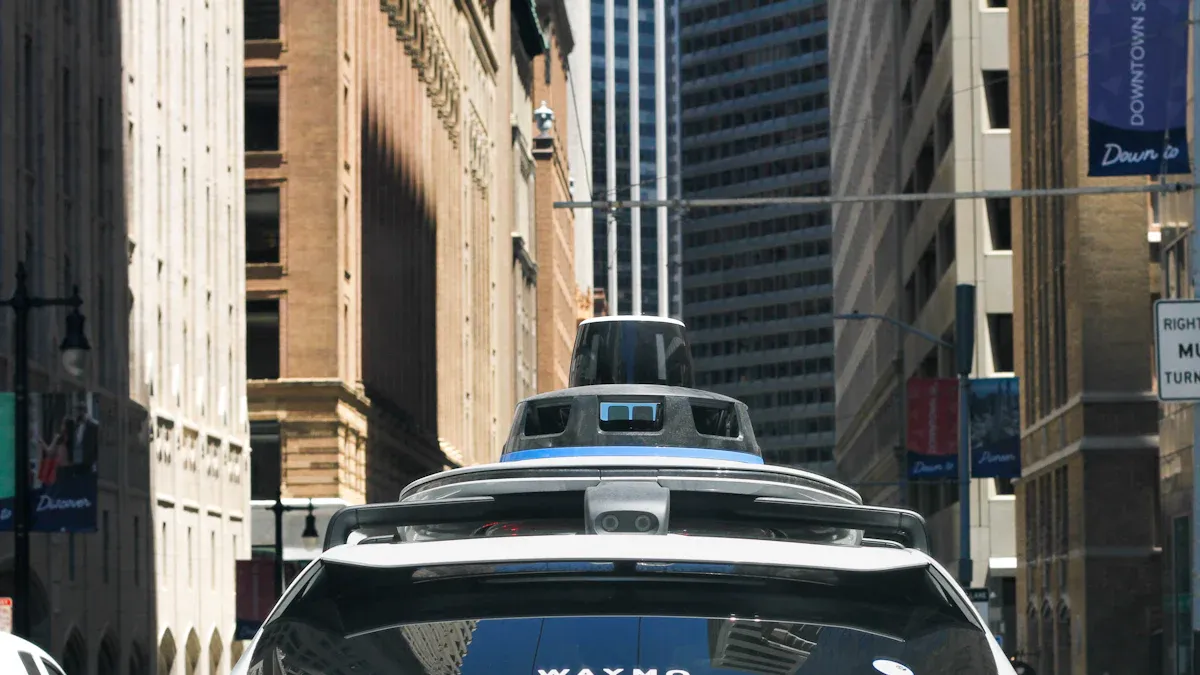
Imagine a world where cars drive themselves and keep you safe. This is no longer science fiction—it’s real, thanks to tiny chips. These small integrated circuits are the hidden stars of self-driving cars. They handle data from cameras, LiDAR, and radar systems. This helps cars move on roads safely and accurately.
The global car chip market was worth $40 billion in 2020. By 2025, it could grow to $70 billion. This growth is due to the need for tech like ADAS and electric cars.
The need for these chips is growing fast. Car makers want safer, smarter, and more efficient vehicles. These chips save energy and help cars make quick decisions. Integrated circuits are changing how cars work every day.
Key Takeaways
-
Integrated circuits are key parts of self-driving cars. They help process data and make fast decisions.
-
Advanced Driver Assistance Systems (ADAS) use these circuits to improve safety. They support features like emergency braking and staying in lanes.
-
LiDAR and radar chips help cars 'see' around them. They work even in bad weather to guide the car safely.
-
Power Management Integrated Circuits (PMICs) save energy and make batteries last longer in electric cars.
-
Secure controllers keep cars safe from hackers. They protect data and keep systems working properly.
Advanced Driver Assistance Systems (ADAS) Processors
Real-Time Decision-Making
Think about driving on a busy road. Your car suddenly needs to decide to stop or turn to avoid something. This quick thinking is done by Advanced Driver Assistance Systems (ADAS) processors. These processors are like your car's brain. They use data from cameras, radar, and sensors to make fast choices that keep you safe.
ADAS processors use artificial intelligence (AI) to handle lots of information quickly. Studies show AI makes driving safer and easier. For example, these processors can guess traffic flow, change speed, and talk to other cars to prevent crashes. As technology improves, cars are getting smarter. They work better with drivers for a smoother ride.
Collision Avoidance and Lane-Keeping
Have you noticed your car gently steering back into the lane or stopping quickly to avoid hitting something? That’s ADAS processors doing their job. These systems mix data from cameras and radar to understand the surroundings. This helps your car spot dangers, check blind spots, and stay in its lane.
Here’s what they do:
-
Blind spot alerts warn you about cars you can’t see.
-
Lane-keeping helps your car stay straight, even on sharp turns.
To make these features work well, ADAS processors handle clear data instantly. They combine sensor information to make fast, smart decisions. This accuracy is key to avoiding crashes and making driving smooth. Integrated circuits power these processors, helping them do tough jobs easily.
LiDAR Signal Processing Integrated Circuits
Understanding LiDAR Data for 3D Maps
Ever think about how self-driving cars "see" things? LiDAR acts like their eyes, using lasers to scan and make 3D maps. But raw LiDAR signals are just messy data until processed. That’s where LiDAR signal processing chips help.
These chips take raw LiDAR data and make it useful. They measure distances, find objects, and map areas in real-time. Picture a car driving in a busy city. These chips help it spot buildings, people, or even small things like a shopping cart. Without them, the car wouldn’t know where to go or what to avoid.
LiDAR chips handle huge amounts of data very fast. They give the car a clear 3D view, even at high speeds. This accuracy is what makes self-driving cars work.
Improving Vehicle Awareness
Let’s talk about awareness. Cars need to "see" and understand objects. LiDAR chips are key to this. They work with cameras and radar to give the car a full view.
For example, these chips tell if a car is parked or moving. They also figure out object sizes and shapes. Is that a person crossing or just a shadow? These chips help the car know the difference.
What’s amazing? They work in all weather. Whether it’s sunny or foggy, these chips keep the car’s vision sharp. By combining sensor data, they create a clear and reliable view. This makes driving safer and easier for everyone.
Radar Transceiver Integrated Circuits
Finding Objects and Measuring Distance
Ever wonder how self-driving cars spot things around them? Radar transceiver chips make this happen. They send radio waves and check how fast they return. This tells the car how far, fast, or where objects are.
Radar is great at spotting things very accurately. For example, it can see if a car ahead is slowing down or if a bike is coming from the side. These chips work with cameras and LiDAR to give a full view of the surroundings.
Tests show radar chips are very reliable. Studies found radar data matches real objects closely, with scores between 0.75 and 0.93. Errors are small too, averaging just 5.42. This proves radar chips are trustworthy for self-driving cars.
Working in Bad Weather
Rain, fog, or snow can make driving hard. Radar chips work well in these conditions. Unlike cameras, radar can "see" through bad weather using radio waves.
Picture driving on a foggy day. You might miss a car ahead, but radar won’t. It warns the system and helps the car slow down or stop. This makes radar super important for safe driving.
Even better, radar works with other sensors to keep you safe. By mixing data from different tools, radar chips help cars drive safely, no matter the weather.
Vision Processing Units (VPUs)
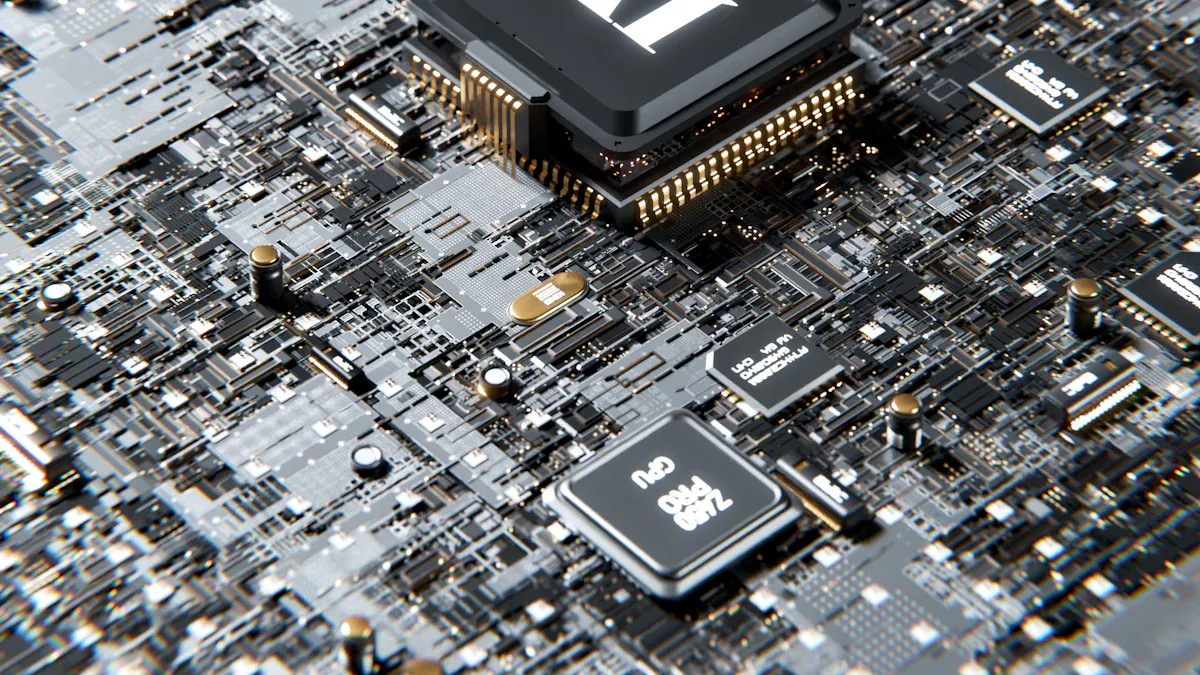
How Cameras Help Cars See
Think about your car noticing a person or a stop sign. Vision Processing Units (VPUs) make this happen. These chips quickly process camera data to help cars understand their surroundings.
VPUs work like the car’s eyes and brain. They study pictures from cameras to find shapes, colors, and patterns. For instance, they can tell if something is a moving bike or a parked car. This helps the car react the right way in different situations.
VPUs are fast and handle tough tasks easily. They use smart methods to ignore unimportant details and focus on what matters. This speed lets the car make quick choices, like stopping for someone crossing the street. Integrated circuits power VPUs, helping them do these hard jobs smoothly.
Making Cars More Aware
Cars need to know what’s around them to drive safely. VPUs help by giving a clear view of the environment. They don’t just see—they understand what they see.
VPUs have changed how cameras work. They now think and act on what they see.
Here’s how VPUs help cars stay aware:
-
They use AI to find objects accurately, avoiding mistakes.
-
They check many camera views at once for a full picture.
-
They help cars focus on important things, like nearby dangers.
VPUs can spot a bike in a blind spot or read signs in dim light. They turn raw images into useful information fast. This makes driving safer, even when conditions are tough.
Neural Network Accelerators
AI-Driven Decision-Making
Neural network accelerators are like the car’s thinking engine. They help cars make smart choices quickly. Imagine your car at a busy intersection. It needs to decide whether to stop, turn, or go forward. These accelerators process data from cameras, radar, and LiDAR to make fast decisions.
These chips are built for tasks like recognizing images and analyzing sensor data. They handle the tough math that artificial intelligence (AI) needs. For example:
-
Chips like Google’s Edge TPU speed up AI tasks in real time.
-
They help cars spot objects, guess movements, and react fast.
-
New designs make these chips smaller and use less energy, ideal for compact systems.
With these improvements, neural network accelerators are changing how cars think. They make driving safer and smarter every day.
Training and Inference for Autonomous Systems
Training and inference are key steps for teaching cars to drive. Training means feeding the car’s AI lots of data to learn patterns. Inference is when the car uses what it learned to make choices on the road. Neural network accelerators make both steps faster and better.
Here’s how they help:
-
Tesla’s Full Self-Driving (FSD) computer processes 1,050 frames per second using only 15 watts. This lets cars analyze surroundings without wasting battery power.
-
Special chips, called ASICs, are made for specific tasks. They quickly detect pedestrians or read traffic signs with high accuracy.
To save money and improve performance, researchers use smart methods. Tesla’s Autopilot system uses scheduling tricks to work better. Studies show these methods save energy and reduce delays, making self-driving cars more dependable.
Neural network accelerators are the quiet heroes of self-driving cars. They help cars learn faster, think smarter, and drive better.
|
Key Contributions |
What They Do |
|---|---|
|
Workload Characterization |
Studies tasks in Tesla’s system, like finding features and giving results. |
|
Performance Breakdown |
Tests how hardware handles tasks using advanced tools. |
|
Scheduling Algorithm |
Organizes tasks to save energy and reduce delays. |
|
Evaluation |
Compares results to make systems more reliable. |
Power Management Integrated Circuits (PMICs)
Saving Energy Smartly
Ever think about how self-driving cars save energy? PMICs are the reason. These small chips act like energy managers. They make sure each car part gets the right power.
PMICs watch and control how much power the car uses. They adjust electricity levels to fit the car’s needs. For instance, if sensors need more power, PMICs provide it without wasting energy. This keeps the car running well and saves power.
Here’s how PMICs manage energy:
|
Feature |
What It Does |
|---|---|
|
Power Use |
Tracks energy use to avoid waste. |
|
Voltage Control |
Keeps electrical levels steady. |
|
Current Flow |
Controls electricity flow to stop overloads. |
|
Noise Reduction |
Cuts unwanted signals that can cause problems. |
|
Efficiency Boost |
Turns input power into usable energy effectively. |
|
Power Stability |
Delivers steady power for smooth operation. |
|
Energy Tracking |
Watches total energy use to improve performance. |
By managing these features, PMICs help cars work better while using less energy.
Making Batteries Last Longer
If you drive an electric car, you want the battery to last. PMICs help by using energy wisely. They stop waste and keep the battery healthy.
These chips use smart methods to balance the battery’s charge. This stops some parts from working too hard, which can damage the battery. PMICs also guess how long the battery will last, helping you plan trips.
Here’s why PMICs are great:
-
They balance energy use to make batteries last longer.
-
Smart models predict how much life the battery has left.
-
They combine charge balancing with life prediction for better results.
Tests show PMICs improve performance a lot. Cars went from 88% to 98.6% of their best possible efficiency. This means your car can go farther on one charge and keep the battery in good shape.
PMICs are the quiet helpers of energy saving in cars. They make sure every bit of power is used well, making cars more reliable and efficient.
Connectivity Integrated Circuits
Helping Cars Communicate with Everything (V2X)
Ever think about how cars "talk" to each other or traffic lights? That’s called Vehicle-to-Everything (V2X) communication. It’s like giving cars a way to share important messages. Connectivity integrated circuits make this happen by handling data super fast. These chips let cars send and get signals to avoid crashes, cut delays, and keep people safe.
V2X links cars to other vehicles, roads, and even people walking. This lets cars share info like speed, location, and road conditions. For example, if a car ahead stops suddenly, your car gets warned right away. This gives you extra time to act.
Here are key technologies that power V2X:
-
DSRC/ITS-G5: Uses Wi-Fi-like tech for quick communication.
-
C-V2X: Works with 5G networks for better range and reliability.
These systems handle huge amounts of data instantly. They help cars make fast decisions, even in busy or tricky situations. Without these chips, V2X wouldn’t be as quick or dependable.
Making Traffic Safer and Smoother
Imagine roads without traffic jams or accidents. Connectivity integrated circuits help make this possible. By enabling V2X, these chips help cars work together to improve safety and traffic flow.
For example, cars can share their speed and position to avoid crashes. Traffic lights can also talk to cars to adjust signal timing. This reduces waiting and keeps traffic moving better.
Here’s how these chips help:
-
They keep cars at safe distances.
-
They let emergency vehicles move through traffic faster.
-
They save fuel by reducing stop-and-go driving.
These chips are great in tough situations, like bad weather or heavy traffic. They process data fast to guide cars safely. With connectivity integrated circuits, roads become smarter, safer, and easier for everyone.
Sensor Fusion Integrated Circuits
Combining Data from Different Sensors
Think about your car using cameras, radar, LiDAR, and ultrasonic sensors together. Each sensor gives some information, but alone, it’s not enough. Sensor fusion integrated circuits solve this problem. They mix data from all sensors to create a clear picture.
Why does this matter? Imagine your car at a busy intersection. Radar measures how fast cars are moving. Cameras spot traffic lights and people. LiDAR shows a 3D map, and ultrasonic sensors find nearby objects. Without sensor fusion, your car couldn’t understand all this data. These circuits make everything work smoothly, helping your car make better choices.
Building a Complete View of the Road
Sensor fusion doesn’t just mix data—it creates a full view of what’s around. Your car doesn’t just see things; it knows their size, shape, and movement. For example, it can tell if a shadow is just a shadow or a person walking.
This complete view makes self-driving cars safer and more reliable. Even in tough weather, like rain or fog, these circuits help your car stay alert. They remove useless data and focus on important things, like a bike in your blind spot or a car stopping suddenly.
With these circuits, your car becomes smarter and more aware, making driving safer and easier.
High-Performance Microcontrollers
Managing Complex Vehicle Systems
Ever think about how self-driving cars do so much? High-performance microcontrollers make it happen. These small chips are like the car's boss. They control everything, from the engine to safety features. They make sure all parts work well together, even in tricky situations.
For example, companies use these chips to make things easier. BCS Automotive Interface Solutions made a touchscreen controller using NXP i.MX RT1170. This cut their work time in half. BOMAG built myCOCKPIT HMI, which combines screens and controls for simpler use. These examples show how microcontrollers make cars more efficient and reliable.
Microcontrollers are also important for heavy machines. Novatron used them to keep data flowing smoothly and show sensor visuals. This accuracy is super important for self-driving cars, where every second matters.
Ensuring Reliability and Responsiveness
When you're in a self-driving car, you want it to act fast. High-performance microcontrollers help with this. They process information quickly so the car can react right away. Whether it's avoiding something or adjusting parts, these chips keep the car working well.
The results are impressive. Microcontrollers have made rides 12.3% smoother and handling 15.6% better. They’ve also reduced suspension wear by 11.7% and improved suspension movement by 51.6%. Check out the chart below to see how they improve performance:
These chips are tough too. They can handle surprises, like a sudden 20% weight increase, without big problems. This makes self-driving cars safer and more dependable.
High-performance microcontrollers, powered by integrated circuits, are the heart of modern self-driving systems. They make sure your car is smart, safe, and quick to respond.
Secure Embedded Controllers
Keeping Cars Safe from Hackers
Think of your car as a castle. It needs strong defenses to stop hackers from breaking in. Secure embedded controllers act like guards, protecting your car’s systems. They use smart tools to block hackers and keep your car safe.
How do they do this? They follow strict rules like the Cyber Resilience Act and ISO/SAE 21434. These rules help find risks early and keep the car updated. Here’s what these controllers focus on:
-
Fixing problems before they cause trouble.
-
Using safe settings to lower risks.
-
Locking data so no one can steal it.
-
Limiting who can access important systems.
-
Checking data to make sure it hasn’t been changed.
These controllers don’t just stop attacks—they also prepare for them. By adding security at every step of the car’s design, they build strong protection. Whether it’s keeping your brakes or GPS safe, secure embedded controllers make sure everything works right.
Making Sure Data Stays Safe
Your car needs good data to make smart choices. Secure embedded controllers keep this data safe and correct. They act like a shield, stopping errors and blocking hackers. For example, if someone tries to change sensor data, these controllers stop it.
ISO/SAE 21434 helps with this too. It sets rules to manage cybersecurity risks. This includes protecting data from the time it’s collected until it’s used. These controllers also lock sensitive info so hackers can’t read it.
Here’s why this is important:
-
Sensors need correct data to avoid crashes.
-
GPS systems need safe info to guide you.
-
Cars must share trusted data to prevent accidents.
Secure embedded controllers, powered by integrated circuits, make all this happen. They don’t just protect your car—they make sure it’s safe and reliable every time you drive.
Integrated circuits are the hidden stars of self-driving cars. They help cars think, save energy, and stay safe. As more people want smarter cars, chip-making is growing fast. Experts say chip sales could grow 29% each year for 10 years. These chips are helping create cars that can drive themselves at levels 3 and 4. This means cars will soon handle more tasks without drivers. Fully self-driving cars are becoming real, making roads safer and travel easier for everyone.
FAQ
What are integrated circuits, and why are they important for self-driving cars?
Integrated circuits are small chips with many electronic functions. They help self-driving cars think, react, and stay safe. Without them, cars couldn’t process data or make quick decisions.
How do integrated circuits handle bad weather conditions?
Radar and LiDAR chips use smart technology to "see" in bad weather. They help cars stay aware during rain, fog, or snow.
Can integrated circuits improve battery life in electric cars?
Yes! Power Management Integrated Circuits (PMICs) save energy and stop waste. They keep the battery balanced, helping cars drive farther on one charge.
How do integrated circuits protect self-driving cars from hackers?
Secure embedded controllers act like guards for your car’s systems. They block hackers, protect data, and follow safety rules to keep your car secure.
Are integrated circuits used in all levels of autonomous driving?
Yes! Integrated circuits help with basic driving tasks and full self-driving. They handle lane-keeping, avoiding crashes, and AI-powered decisions at every level.