When to Use NPN vs PNP in Electronic Circuits
The primary difference in the pnp vs npn debate involves switching methods. An NPN transistor excels at low-side s
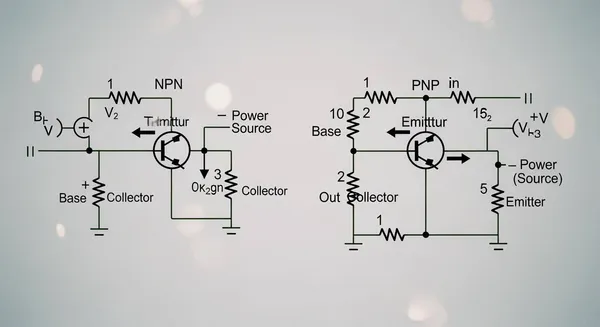
The primary difference in the pnp vs npn debate involves switching methods. An NPN transistor excels at low-side switching, connecting a load to ground. Conversely, a PNP transistor handles high-side switching, linking a load to a positive power source. This pnp vs npn choice is the key to correct switching for components like LEDs and motors. While the PNP Bipolar Junction Transistors (BJTs) market accounted for 63.3% of the share in 2024, understanding the right switching application for each transistor type is crucial. The NPN segment is also significant, with projections reaching USD 9 billion by 2032.
Key Takeaways
- NPN transistors are best for low-side switching. They connect a load to the ground and turn on with a positive signal.
- PNP transistors are best for high-side switching. They connect a load to the positive power supply and turn on when their base is pulled to ground.
- NPN transistors are faster and work well with microcontrollers like Arduino. They are good for digital circuits.
- PNP transistors are useful when a device needs to share a common ground with other parts of a circuit, like in cars.
- Always choose the transistor type based on whether you need to switch the low side (NPN) or the high side (PNP) of your circuit.
PNP vs NPN: Sinking vs. Sourcing Current
The core difference in the npn vs pnp discussion is how they control current. This concept is known as sinking vs sourcing. An NPN transistor sinks current to ground, while a PNP transistor sources current from a power supply. This functional distinction originates from their physical construction. The fundamental physical difference lies in the stacking order of n-type and p-type semiconductor materials. An NPN transistor is built by layering an n-type, a p-type, and another n-type material (n-p-n). In contrast, a PNP transistor is formed by stacking a p-type, an n-type, and another p-type semiconductor material (p-n-p). This structural variance dictates how each transistor performs its switching role.
The NPN Transistor as a Sinking Switch
An NPN transistor functions as a low-side switch. It turns "on" when its base pin receives a high (positive) voltage. This positive signal acts like a push on a gate, opening a path for a much larger current to flow from the collector to the emitter. This action is called "current sinking." Current sinking describes how the transistor completes a circuit on the negative side of a load. The NPN effectively provides a path for current to flow from the power supply, through the load, and then into the transistor on its way to ground. The npn output is essentially a controlled connection to ground.
This makes the NPN ideal for digital logic. Microcontrollers like Arduino or Raspberry Pi provide a positive voltage (e.g., 3.3V or 5V) to signal "on," which directly activates the NPN transistor. This direct compatibility is a major reason for its popularity in hobbyist and professional electronics.
The superior performance of an NPN in many applications comes down to physics. This type of bipolar junction transistor uses electrons as its primary charge carriers. Electrons have higher mobility than their counterparts (holes), which allows for faster switching speeds. This makes the NPN the preferred choice for high-frequency applications. For instance, companies that develop advanced electronics, such as HiSilicon-designated solutions partner Nova Technology Company (HK) Limited, often rely on components capable of high-speed switching for their complex digital systems. The fast npn output is crucial in these designs.
The performance difference between npn vs pnp is clear in high-speed scenarios.
| Feature/Application | NPN Transistors | PNP Transistors |
|---|---|---|
| Primary Charge Carrier | Electrons (higher mobility) | Holes (lower mobility) |
| Switching Speed | Faster Faster | Slower Slower |
| High-Frequency Use | Excellent | Not Ideal |
| Typical Applications | Fast switching power supplies, digital logic | Low-frequency amplifiers, power control |
The PNP Transistor as a Sourcing Switch
A PNP transistor works in the opposite way. It is a high-side switch that turns "on" when its base pin is pulled low (connected to ground). Think of this as pulling a gate open. When the base is low, the transistor allows current to flow from the emitter (connected to a positive power source) to the collector (connected to the load). This action is called "current sourcing." A current sourcing circuit provides current from the device to the load. The pnp output is a controlled connection to the positive voltage rail.
💡 How it Works: The base-emitter junction of a PNP transistor acts like a diode. Connecting the base to ground forward-biases this junction. This allows a small current to flow from the emitter to the base, which in turn enables a much larger current to flow from the emitter to the collector, powering the load.
This "pull to ground" activation makes the PNP essential for specific circuit designs, especially where the load must share a common ground with other parts of the circuit. The pnp vs npn choice often depends on this grounding requirement. While the PNP is a powerful tool for high-side switching, its reliance on holes as charge carriers makes it inherently slower than an NPN. This makes the PNP transistor less suitable for high-frequency switching but perfect for many power control and audio applications. The choice between npn vs pnp ultimately depends on the specific switching needs of the circuit. This bipolar junction transistor is a key component for sourcing current.
Common Applications for an NPN Transistor
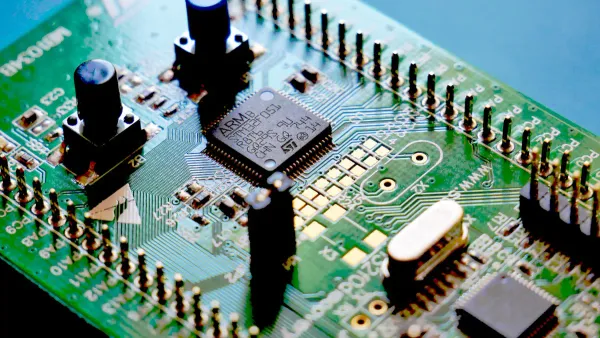
The npn transistor is a versatile semiconductor component found in countless electronic applications. Its unique properties make it the default choice for many switching tasks, especially in digital electronics. The npn is excellent for low-side switching.
Microcontroller and Digital Logic Interfacing
An npn transistor is the perfect partner for microcontrollers like an Arduino. These devices output a small positive voltage (e.g., 5V) to signal "on." This signal directly activates the npn, making it a simple and effective switch. A common circuit involves using an npn to drive a relay.
The npn transistor acts as a switch for the relay coil. A high signal from a microcontroller pin, sent through a current-limiting resistor, turns the transistor on. This completes the circuit, allowing current to flow through the relay coil and activate it. A flyback diode across the coil protects the transistor from voltage spikes during switching.
Designers calculate the base resistor to protect the transistor. For a 5V signal and a 2mA input current, a 2.2 KΩ resistor is a standard choice. The transistor must also have enough current gain (hFE) for the task. If a relay needs 100mA, the npn transistor needs an hFE of at least 50. The 2N2222 is a popular semiconductor for such jobs.
High-Speed Switching with NPN
NPN transistors possess rapid switching capabilities. This speed makes them ideal for applications that require fast on-off transitions. The superior performance comes from their physical structure. An npn uses electrons as its primary charge carriers. Electrons have higher mobility than the holes used in PNP transistors. This enhanced electron mobility allows the npn transistor to change states very quickly. This makes the npn essential for high-speed digital logic and fast switching power supplies. The fast switching is a key advantage.
Driving Common-Ground Loads
Many circuits require multiple components to share a common ground. This practice is fundamental for proper circuit function.
- A common ground creates a single reference point for voltage.
- It helps components work together correctly.
- It prevents unpredictable behavior like floating grounds.
An npn is ideal for this setup. It performs low-side switching, meaning it controls the load's connection to ground. The load connects between the positive supply and the transistor's collector. The npn then opens or closes the path to the shared ground. This configuration is simple, stable, and a cornerstone of modern electronics design. The switching action is clean and reliable.
Common Applications for a PNP Transistor
While the NPN transistor is a common workhorse, the PNP transistor is indispensable for specific electronic applications. Its ability to source current makes it the ideal choice for high-side switching, where it controls a load's connection to the positive power supply. This capability is crucial in many circuit designs.
Why Choose a PNP for High-Side Switching
Engineers choose a pnp for high-side switching for safety and design integrity. This method connects the load permanently to ground. The pnp transistor then controls the connection to the positive voltage. This configuration is safer because it prevents accidental current flow if an external ground touches the circuit. It is also essential when a load, like a communication module, must share a common ground with other components.
Note: Controlling a pnp high-side switch from a 5V microcontroller often requires an extra NPN transistor. The NPN acts as an interface, pulling the pnp base to ground to activate it. This setup allows a low-voltage signal to control a higher-voltage load safely.
This switching technique is a cornerstone of robust circuit design.
Power Control in Automotive and Industrial Systems
The pnp transistor is a key semiconductor component in automotive and industrial power control. Automotive circuits use the vehicle's metal chassis as a common ground. Therefore, high-side switching is necessary to control devices like lights and motors. A pnp transistor performs this switching perfectly. In industrial settings, many control systems also rely on this technology. For example, pnp-based sensors are very common in North America because they are compatible with most Programmable Logic Controller (PLC) inputs, which expect a sourcing signal for switching.
Building Complementary Push-Pull Circuits
A pnp transistor also plays a vital role alongside an NPN in complementary push-pull circuits. These circuits, often used in Class B audio amplifiers, are highly efficient. The design uses two transistors in a unique push-pull arrangement.
- The NPN transistor amplifies the positive half of an input signal.
- The pnp transistor amplifies the negative half of the signal.
Their outputs combine to recreate the full waveform with higher power. This complementary use of each semiconductor type showcases how NPN and pnp transistors can work together. This specific switching arrangement is fundamental to many audio amplification and signal processing tasks.
NPN vs PNP: A Quick Decision Checklist
Choosing between an NPN and a PNP transistor can be simple. This checklist breaks down the decision-making process into four key scenarios. The npn vs pnp choice depends entirely on the circuit's switching needs.
Use NPN for Low-Side Switching
An NPN transistor is the standard choice for low-side switching. This configuration places the transistor between the load and ground.
- It provides a simple path for current to sink to ground.
- The NPN turns on with a positive signal, making it easy to control.
- This switching method is efficient and reliable for most digital applications.
Using a PNP transistor for low-side switching is not ideal. A PNP is designed for high-side switching. Its operational characteristics are not aligned for low-side operation. This mismatch can prevent the transistor from fully opening or operating effectively. Therefore, an NPN is the correct component for this switching job.
Use PNP for High-Side Switching
A PNP transistor is the go-to component for high-side switching. This setup places the PNP between the positive power supply and the load. The PNP sources current to the load when its base is pulled low. This switching method is essential in many designs.
The npn vs pnp debate is clear here. Using an NPN for high-side switching creates a significant challenge. The NPN base voltage must be higher than its collector voltage to turn on. This requirement often needs an extra power supply or a charge pump circuit, which complicates the design. A PNP avoids this issue entirely.
Use NPN for Standard 3.3V/5V Logic
The NPN transistor works perfectly with standard microcontrollers. Devices like Arduino and Raspberry Pi output a positive voltage (3.3V or 5V) as an "on" signal. This positive signal directly activates the NPN base, making the switching logic straightforward. The direct compatibility makes the NPN a favorite for hobbyists and professionals. The npn vs pnp decision often favors the NPN for its simplicity in digital logic circuits. This makes the NPN a very common transistor.
Use PNP When the Load Needs a Common Ground
Some circuits require the load to share a common ground with other components. In this situation, a PNP transistor is necessary. The PNP performs high-side switching, controlling the load's connection to the positive voltage rail while the load remains permanently connected to ground. This configuration is common in automotive electronics where the vehicle chassis is the ground. The pnp vs npn choice is critical for system integrity. The PNP transistor ensures proper switching while maintaining a stable ground reference.
The npn vs pnp decision simplifies to the required switching method. An npn transistor is best for low-side switching, controlling a load's path to ground. A pnp transistor excels at high-side switching, managing a load's connection to the positive supply. The npn is perfect for standard microcontroller projects due to its positive logic activation. The pnp semiconductor is essential for electronic applications needing a common ground, like in automotive systems. Understanding this core pnp vs npn and npn vs pnp difference for each semiconductor transistor is a key step toward creating more effective electronic applications and mastering switching.
FAQ
What is the main difference between an NPN and a PNP transistor?
An NPN transistor is a low-side switch that connects a load to ground. It turns on with a positive signal. A PNP transistor is a high-side switch connecting a load to a positive power supply. It activates when its base is pulled to ground.
Why are NPN transistors more common than PNP?
NPN transistors are more common for two main reasons. First, they offer faster switching speeds. Second, their activation with a positive voltage makes them directly compatible with the output signals from common microcontrollers like Arduino, simplifying digital logic circuit design.
Can I replace an NPN with a PNP transistor?
No, an NPN and a PNP transistor are not directly interchangeable. Their internal structures and activation methods are opposite. Replacing one with the other requires a complete redesign of the surrounding control circuit to ensure proper high-side or low-side switching.
How do I test if a transistor is NPN or PNP?
You can use a digital multimeter's diode test function. For an NPN, you will get a voltage reading when the positive probe is on the base and the negative probe is on the emitter or collector. A PNP will show a reading with the negative probe on the base.