Why a Big Capacitor for Car System Isn't Always Better
You might blame your automotive audio for dimming lights. While issues like burnt bulbs or wiring problems can be the cause,
You might blame your automotive audio for dimming lights. While issues like burnt bulbs or wiring problems can be the cause, power draw is a common culprit.
- Burnt Out Bulb: A simple bulb replacement often solves this.
- Lens Oxidation: Foggy lenses can dim light and require restoration.
- Wiring Troubles: A faulty fuse or harness can disrupt power.
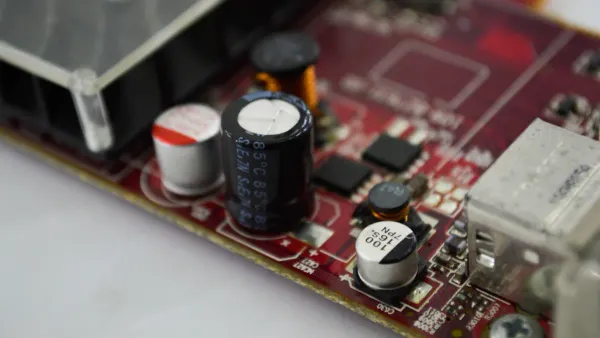
If power is the issue, your first thought might be a giant capacitor for car system. However, a capacitor's true job is supplying quick current bursts, known as ripple. The capacitor's internal resistance (ESR) limits this speed. A smaller capacitor with low ESR can offer better performance and system stability than a large one with high ESR.
Key Takeaways
- A car audio capacitor helps your amplifier get quick power for bass, stopping lights from dimming.
- The 'Farad' number is not the most important thing; how fast a capacitor gives power matters more.
- Look for 'low ESR' (Equivalent Series Resistance) in a capacitor; this means it can deliver power quickly and stay cool.
- Place the capacitor very close to your amplifier with short, thick wires for the best sound.
- Using several smaller, good-quality capacitors together can work better than one large one.
The Role of a Capacitor for Car System
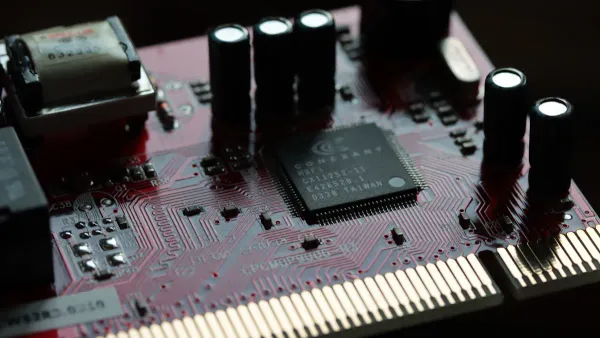
You can think of a capacitor as a small, temporary battery for your amplifier. It stores electrical energy and releases it very quickly. This helps your automotive electrical system in several key ways.
- It acts as a power reservoir for peak demands.
- It stabilizes the DC voltage going to your amplifier.
- It helps with DC input filtering, removing unwanted noise.
A capacitor for car system is wired in parallel with your amplifier. It provides the instant power needed for demanding bass notes, preventing your headlights from dimming.
What is Ripple Current?
Your amplifier does not draw power smoothly. It pulls energy in quick, high-amplitude pulses to reproduce bass sounds. This pulsing demand creates an unsteady electrical signal called ripple. This ripple current is the main problem a capacitor solves.
💡 Did You Know? Ripple is a periodic waveform that comes from the power source. It can also refer to the pulsed current that devices like amplifiers consume. This ripple increases heat in system components, which is why managing it is so important.
This process of DC input filtering is crucial. An effective capacitor smooths out this ripple, providing your amplifier with a clean and stable power source. This allows for better DC output filtering from the amplifier itself, resulting in cleaner sound.
Why Farad Rating Isn't Everything
Many people follow a simple rule: use 1 Farad of capacitance for every 1000 watts of amplifier power. This is a decent starting point, but it misses the most important part of the story. The Farad rating only tells you how much energy a capacitor can store. It does not tell you how fast it can deliver that energy.
A capacitor with a high Farad rating but poor internal quality cannot release its energy quickly enough to handle a high ripple current. Its large size becomes useless. The goal is not just to have a large tank of power. The goal is to have a fast-acting capacitor that can instantly respond to the amplifier's needs. A quality capacitor for car system prioritizes speed over sheer size.
Why Low ESR is a Critical Spec
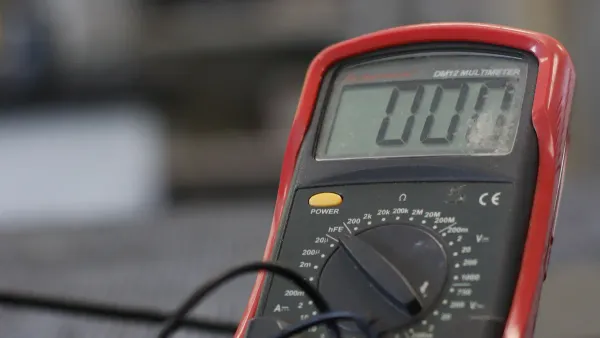
You now know that a capacitor's speed is more important than its size. The single most critical factor determining that speed is a specification called Equivalent Series Resistance, or ESR. A high ESR value acts like a bottleneck, choking the flow of power and preventing the capacitor from doing its job effectively. Understanding this specification is the key to choosing a component that actually improves your audio system.
Defining Equivalent Series Resistance
You can think of ESR as the capacitor's internal resistance. Imagine it as a speed limit on the electrical highway between the capacitor and your amplifier. An ideal capacitor would have zero resistance, allowing for instantaneous power delivery. However, real-world components are not perfect.
ESR represents the combined resistive losses from the physical materials used to build the capacitor. These sources of resistance include:
- The metal leads and internal electrodes.
- The dielectric material itself.
- The electrolyte in 'wet' electrolytic capacitors, which is a major contributor.
This internal resistance is a crucial part of a capacitor's equivalent circuit model. Engineers use this model to understand how a real capacitor behaves. Factors like frequency, temperature, and the capacitor's age all influence its ESR value. A quality capacitor is designed to keep this resistance as low as possible.
The Impact of Heat and Lifespan
High ESR does more than just slow down current. It actively works against your system by generating heat. When the high ripple current from your amplifier flows through this internal resistance, it dissipates power in the form of heat.
The Heat Formula 🌡️ You can calculate this wasted energy using the power formula:
Power Loss (Heat) = (Ripple Current)² x ESRThis equation shows that heat increases exponentially with current and directly with ESR. Doubling the ESR doubles the heat, but doubling the current quadruples the heat.
This heat generation is the primary enemy of a capacitor. It creates a dangerous cycle. As the capacitor heats up, its ESR can increase, which in turn generates even more heat. This process, known as thermal runaway, accelerates the degradation of the capacitor's internal components. The electrolyte can dry out, causing the ESR to skyrocket and rendering the capacitor useless. This is a common cause of premature component failure.
The effect of temperature on lifespan is dramatic. A well-known guideline in electronics is the "rule of 10":
For every 10°C (18°F) increase in operating temperature, a capacitor's lifespan is cut in half.
This means a capacitor that might last 8,000 hours at 85°C will only last 4,000 hours at 95°C. Choosing a capacitor with low equivalent series resistance is vital. A low ESR component runs cooler, maintains better ESR stability over time, and delivers the performance you need for a long life expectancy.
Layout and Placement: Proximity is Paramount
Even the highest-quality capacitor with the lowest ESR will fail to perform if you install it incorrectly. The distance between your capacitor and your amplifier is just as critical as the component's internal specifications. In the world of high-current automotive audio, every inch of wire matters. Proximity is not just a suggestion; it is a fundamental requirement for performance.
The Problem with Long Wires
Long power wires are the enemy of a fast-acting capacitor. They introduce two parasitic problems that directly undermine the capacitor's job: resistance and inductance.
- Resistance: All wires resist the flow of electricity. This resistance turns electrical energy into heat and creates a voltage drop, slowing the current. While thick wires help, no wire is perfect. Even high-quality 4-gauge automotive power wire adds measurable resistance.
| Wire Gauge (AWG) | Resistance (Ohms per 1000 ft) |
|---|---|
| 4 | 0.2485 |
This table shows that a few feet of wire between your capacitor and amp adds a small but significant bottleneck.
- Inductance: More importantly, long wires act as inductors. An inductor resists changes in current flow. Your amplifier demands power in rapid pulses, and the capacitor's purpose is to supply this changing current instantly. The inductance from a long wire chokes this rapid flow, defeating the entire purpose of installing a capacitor in the first place.
Optimal Automotive Capacitor Layout
To get the performance you paid for, you must create the shortest, most efficient electrical path possible. The goal is to minimize both resistance and inductance by following strict placement rules.
You should mount the capacitor as close as physically possible to your amplifier's main power and ground terminals. We are not talking about feet; we are talking about inches. Use short lengths of thick-gauge wire for the connections. This minimizes the loop area for the current, which is a key principle in professional electronics design to reduce inductance.
💡 Pro Tip: Electronics engineers design circuit boards with extremely short and wide connections between a capacitor and the device it supports. They avoid long, thin traces at all costs. You should apply the same logic to your automotive installation. Think of the wire between your capacitor and amp as a trace on a circuit board—keep it as short and thick as you can.
A properly placed capacitor for car system ensures that its stored energy can reach the amplifier instantly, stabilizing voltage and delivering clean power for powerful bass.
Choosing a Capacitor with High Ripple Capability
You are now ready to select a capacitor that delivers real results. This means shifting your focus from the large Farad number to the specifications that govern speed and durability. You should prioritize components with low ESR and a high ripple current rating. These two values tell you how well a capacitor can handle the intense, rapid power demands of your amplifier. A capacitor with high ripple capability is the key to unlocking better performance and reliability.
Reading the Specifications
When you look at a capacitor's datasheet, the ripple current rating is a critical number. This specification tells you the maximum continuous ripple current the component can handle without overheating. Manufacturers determine this rating based on how much heat the capacitor can dissipate. The heat comes from current flowing through its internal resistance (ESR).
This rating is not always straightforward. Manufacturers may use different testing standards or frequencies (e.g., 100kHz vs. 120kHz), which makes direct comparisons tricky. However, you can still spot the difference between a quality component and a cheap one. Look for datasheets that clearly list both ESR and ripple current.
💡 What to Look For on a Datasheet A reputable manufacturer provides clear data. Vague or missing specifications are a major red flag. For automotive use, a component with an automotive aec-q200 qualification ensures it has passed strict stress tests for reliability.
| Good Spec Sheet (Example) | Poor Spec Sheet (Example) |
|---|---|
| Capacitance: 1,000µF | Capacitance: 1 Farad (1,000,000µF) |
| ESR: 10 mΩ (@ 100kHz) | ESR: Not Listed |
| Ripple Current: 5A RMS (@ 105°C, 100kHz) | Ripple Current: Not Listed |
| Lifespan: 5,000 hrs @ 105°C | Lifespan: Not Listed |
In this example, the smaller capacitor provides the data you need to trust its performance. The giant capacitor hides the information that truly matters.
The Role of Frequency and Temperature
A capacitor's performance is not static. Its ESR and ripple handling ability change dramatically with frequency and temperature. Understanding this relationship helps you choose the right type of capacitor for the job.
First, ESR is frequency-dependent. An amplifier draws current across a wide range of frequencies to create sound. A capacitor's internal resistance changes across this range.
- At lower frequencies, the dielectric material is a primary factor in ESR.
- At very high frequencies, the physical construction, including the metal electrodes and leads, contributes more to resistance due to effects like the skin effect.
Generally, a quality capacitor like an aluminum polymer capacitor will maintain a lower ESR across a broader frequency range compared to a standard aluminum electrolytic capacitor.
Second, temperature is the enemy of performance. A capacitor's ripple current rating is usually specified at a high temperature, like 105°C.
Your car's trunk can get extremely hot, directly impacting your capacitor. Operating at a lower ambient temperature allows a capacitor to handle more ripple current because it can dissipate heat more effectively. Conversely, as the temperature rises, its ability to handle current decreases significantly.
This is why choosing a capacitor designed for high-temperature operation, such as a robust aluminum polymer capacitor, provides better stability and a longer lifespan in a demanding automotive environment.
Using Multiple Smaller Capacitors
One of the most effective strategies for achieving ultra-low ESR is to use multiple smaller capacitors in parallel instead of one single large one. This approach, often called a capacitor bank, offers significant performance advantages.
When you connect identical capacitors in parallel, you change the total capacitance and total ESR in a very favorable way.
- Total Capacitance is the sum of the individual capacitors.
- Total ESR is the individual ESR divided by the number of capacitors.
// For N identical capacitors in parallel:
Capacitance_Total = N * Capacitance_Individual
ESR_Total = ESR_Individual / N
This means that by using four identical capacitors, you get four times the capacitance but you slash the total ESR to just one-quarter of the original value. For this to work best, you should use capacitors of the same type and value. Mixing a large aluminum electrolytic capacitor with a small aluminum polymer capacitor is a more complex technique used for wide-frequency dc input filtering, but for pure ESR reduction, identical units are ideal.
This lower total ESR allows the capacitor bank to deliver its stored energy much faster than a single large capacitor could. This results in better voltage stability for your amplifier and cleaner dc output filtering, which you hear as tighter, more accurate bass.
| Feature | Single Large Capacitor | Bank of Smaller Capacitors |
|---|---|---|
| Total ESR | Higher | Much Lower |
| Current Delivery | Slower response time | "Nimble" and faster response time |
| Heat Generation | More heat concentrated in one component | Heat is distributed across multiple components |
| Overall Performance | Can be a bottleneck if ESR is high | Superior ripple filtering and voltage stability |
Ultimately, building a bank of high-performance capacitors is a superior engineering solution. It directly tackles the problem of ESR, ensuring your amplifier gets the instantaneous current it needs for peak performance.
You should now see that the best capacitor is not the biggest, but the "fastest." Your automotive system's performance hinges on three key factors: a capacitor with low esr, the ability to handle high ripple current, and close placement to the amplifier.
Some experts remain skeptical, noting, "I've yet to see a capacitor make an audible difference."
This often happens when the wrong capacitor is used. For a real boost in performance and system stability, look beyond the Farad rating. You should invest in a quality capacitor for car system and install it correctly. This ensures better sound quality and electrical stability.
FAQ
Can I still use the "1 Farad per 1000 watts" rule?
You can use this rule as a rough starting point. However, you should prioritize a capacitor's specifications. A capacitor with low ESR and a high ripple current rating will perform better than a large one with poor specs, regardless of the Farad rating.
Is a capacitor the same as a second battery?
No, they serve different purposes. A battery provides large amounts of current over a long time. A capacitor provides very fast bursts of current for brief moments, like for a deep bass note. It supports your electrical system, but it does not replace a battery.
Will a capacitor fix my dimming lights?
A capacitor can fix dimming lights caused by your amplifier's power demands. It stabilizes voltage during quick bass hits. However, it will not solve problems with a weak alternator, a bad battery, or faulty wiring. You should check your charging system first.
What type of capacitor is best for car audio?
You should look for capacitors designed for high performance. Aluminum polymer capacitors often have very low ESR and excellent heat resistance. They are a great choice for demanding automotive environments. Always check the datasheet for low ESR and high ripple current ratings.