Exploring 1620 Battery Equivalent Options for 2026
1620 battery equivalent options for 2026: compare specs, compatibility, and performance for consumer and industrial electronics applications.
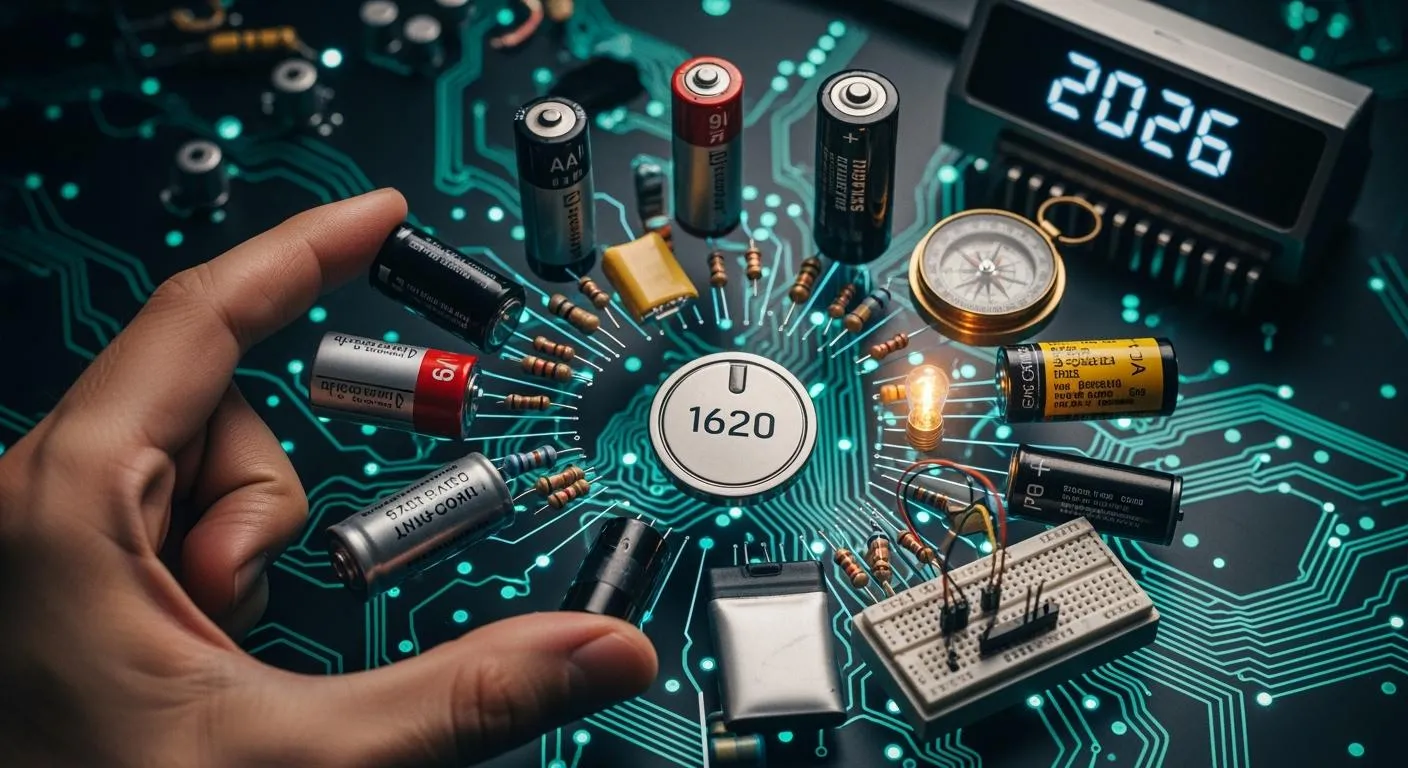
You often see the cr1620, DL1620, Energizer ECR1620, and Panasonic CR1620 as the most common 1620 battery equivalent options. Manufacturers like Maxell and Panasonic produce batteries with the same specifications. You can compare these options in the table below:
| Battery Equivalent | Description |
|---|---|
| BR1620 | Physically identical to cr1620, with a nominal voltage of 3 volts, suitable for compatible devices. |
| DL1620 | Same voltage and size as BR1620, can be used in many applications with verified compatibility. |
| Energizer ECR1620 | Similar performance to cr1620, part of Energizer's lineup, often interchangeable. |
| Panasonic CR1620 | Direct replacement for cr1620, providing necessary power and performance. |
| Maxell CR1620 | Manufactured by Maxell, offers same specifications as other brands' cr1620 batteries. |
Understanding battery equivalents helps you match battery types to device requirements. You improve performance and reliability by selecting the right battery. This matters for both consumer devices and industrial electronics. You see these batteries in coin shapes, powering small electronics. Technology will keep changing, so knowing which cr1620 replacements work best ensures your devices stay reliable.
Key Takeaways
- Know the common 1620 battery equivalents like CR1620, DL1620, and ECR1620. They share the same size and voltage, ensuring compatibility with your devices.
- Always check the specifications before replacing a battery. Matching voltage and size prevents device malfunctions and ensures reliable performance.
- Consider alternative options like CR1632 only if your device can accommodate the extra thickness. Compatibility is key to avoiding issues.
- Store batteries properly to extend their life. Keep them in a cool, dry place and avoid loose storage to prevent short circuits.
- Recycle used batteries responsibly. Proper disposal protects the environment and conserves valuable resources.
1620 Battery Overview

Specifications and Chemistry
You often see the cr1620 battery in small electronics because of its compact size and reliable performance. This battery uses lithium chemistry, which gives it a stable voltage and long shelf life. You can check the main specifications in the table below:
| Parameter | Value |
|---|---|
| Diameter | 16.0 mm |
| Thickness | 2.0 mm |
| Voltage | 3 volts |
| Capacity | About 70 mAh |
| Cathode Material | Manganese dioxide (MnO2) |
| Anode Material | Lithium metal (Li) |
| Electrolyte | Organic solvent with lithium salt |
| Separator Material | Microporous polyethylene or polypropylene film |
| Housing Material | Stainless steel |
You get a cr1620 battery with a lithium/manganese dioxide (Li/MnO2) chemistry. This combination helps the battery deliver steady power for your devices. The lithium anode and manganese dioxide cathode work together to provide a consistent 3-volt output. The organic electrolyte and separator materials keep the battery safe and efficient. You benefit from a stainless steel housing that protects the internal components from damage and leakage.
- Diameter: 16.0 mm
- Thickness: 2.0 mm
- Voltage: 3 volts
- Capacity: About 70 mAh
- Chemistry: Lithium/Manganese Dioxide (Li/MnO2)
Tip: Always check the specifications before you choose a cr1620 battery replacement. Matching the voltage and size ensures your device works as expected.
Common Uses
You find the cr1620 battery in many everyday devices. Its small size and stable voltage make it ideal for compact electronics. You often use this battery in car key fobs, watches, calculators, and fitness trackers. Medical devices like glucose meters and heart rate monitors also rely on the cr1620 battery for dependable power. Some remote controls and small toys use this battery because it fits tight spaces and lasts a long time.
You see the cr1620 battery in both consumer and industrial applications. In factories, engineers use this battery in sensors and backup memory for integrated circuits. You can trust the cr1620 battery to deliver reliable performance in critical systems. Its chemistry and construction help it resist leaks and withstand temperature changes.
You should always choose a cr1620 battery when your device manual recommends it. Using the correct battery keeps your electronics safe and working well.
1620 Battery Equivalent Options
Direct Equivalents: CR1620, DL1620, ECR1620
You often need to compare several direct equivalents when searching for a 1620 battery equivalent. The most common options include cr1620, DL1620, and ECR1620. These lithium coin cell batteries share nearly identical specifications, making them interchangeable in most devices. You can check their size and voltage in the table below:
| Battery | Voltage | Diameter (mm) | Thickness (mm) |
|---|---|---|---|
| CR1620 | 3.0 V | 16 | 2 |
| DL1620 | 3.0 V | 16 | 2 |
| ECR1620 | 3.0 V | 16 | 2 |
You see that each cr1620 battery equivalent offers the same voltage and physical dimensions. This ensures compatibility with devices designed for cr1620 batteries. The lithium coin cell chemistry provides stable power and a long shelf life. You benefit from low self-discharge rates, which means your devices stay powered for extended periods.
You can also compare performance and lifespan among these equivalents. The cr1620 battery typically delivers a capacity between 70 and 100 mAh. You get reliable performance for both consumer electronics and industrial systems. The table below highlights key performance features:
| Battery Type | Voltage | Capacity (mAh) | Rechargeable | Lifespan Characteristics |
|---|---|---|---|---|
| CR1620 | 3V | 70-100 | No | Low self-discharge, good for long-term use |
| LiR1620 | 3V | 40-70 | Yes | Can be recharged up to 500 times, loses 2-3% charge per month |
| DL1620 | 3V | 70-100 | No | Stable performance, interchangeable with cr1620 |
| ECR1620 | 3V | 70-100 | No | Consistent output, trusted for reliability |
Note: You should always check the device manual for recommended equivalents. Matching voltage and size guarantees compatibility and prevents damage.
You find these lithium coin cell batteries in car key fobs, medical devices, calculators, and industrial sensors. You can trust cr1620 battery equivalents to deliver consistent performance in both consumer and industrial applications. You improve device reliability by selecting the right replacement options.
Alternative Options: CR1632 Compatibility
You sometimes consider alternative options when a direct 1620 battery equivalent is unavailable. The cr1632 battery is a popular substitute because it shares the same diameter as cr1620. You can review the specifications in the table below:
| Battery Type | Diameter (mm) | Thickness (mm) | Voltage (V) |
|---|---|---|---|
| CR1632 | 16 | 3.2 | 3 |
| BR1632 | 16 | 3.2 | 3 |
| DL1632 | 16 | 3.2 | 3 |
| ECR1632 | 16 | 3.2 | 3 |
You notice that cr1632 batteries are thicker than cr1620 batteries. The cr1632 measures 3.2 mm in thickness, while the cr1620 battery is only 2.0 mm thick. This difference can affect compatibility. You may encounter issues such as the battery compartment not closing properly or electrical contacts failing to connect. You must check the device’s battery compartment before using a cr1632 as a replacement.
Tip: You should only use cr1632 batteries as alternatives when the device allows extra thickness. Always test compatibility to avoid damaging your electronics.
You see that cr1632 batteries offer the same voltage and diameter as cr1620. This makes them suitable for some devices, especially those with flexible battery compartments. You must consider compatibility for both consumer and industrial devices. You protect your electronics by choosing the right lithium coin cell and avoiding forced fits.
You improve device performance and reliability by selecting the correct 1620 battery equivalent. You ensure compatibility by matching voltage, size, and chemistry. You avoid risks by following manufacturer guidelines and testing replacement options.
Callout: Nova Technology Company (HK) Limited is a HiSilicon-designated solutions partner. You benefit from their expertise in integrated circuit design, chip-level solutions, and system integration. Nova Technology Company (HK) Limited supports industrial applications that require high-performance coin cell batteries and advanced compatibility for semiconductor devices.
You make informed decisions by understanding the differences among cr1620 battery equivalents and alternatives. You keep your devices running smoothly by prioritizing compatibility and reliability.
Choosing the Right Equivalent
Key Factors: Voltage, Size, Chemistry
You need to evaluate several factors when selecting a cr1620 battery equivalent. Voltage, size, and chemistry play a major role in device performance and safety. If you choose a cr1620 battery with the wrong voltage, your device may malfunction or fail to start. Size differences can cause poor contact, leading to intermittent power loss or unpredictable behavior. Chemistry affects how long the battery lasts and how safe it is for your device.
Here is a table that compares common cr1620 battery types:
| Battery Type | Voltage | Capacity (mAh) | Rechargeable | Discharge Rate | Applications |
|---|---|---|---|---|---|
| CR1620 | 3V | 70-100 | No | Low drain | Watches, calculators |
| LiR1620 | 3V | 40-70 | Yes | Moderate drain | Bluetooth trackers, medical devices |
| ML1620 | 3V | Lower than CR1620 | Yes | Moderate drain | Varies based on device needs |
You see that voltage stability varies between battery types. Size differences can lead to improper fitting in devices. Chemistry influences longevity and safety features. Rechargeable options like LiR1620 and ML1620 offer different discharge rates and may not suit every device.
Note: The CR1620 and CR2016 batteries both provide 3 volts, but their physical dimensions and energy capacity affect compatibility and performance. Always check your device manual for the recommended cr1620 battery equivalent.
Replacement Tips
You can avoid common mistakes by following these replacement tips for cr1620 battery equivalents:
- Keep cr1620 batteries in their original packaging or a secure container.
- Store batteries out of sight and reach of children and pets.
- Avoid leaving batteries loose on surfaces, in drawers, or in bags.
- Store in a cool, dry place away from high temperatures and direct sunlight.
- Do not carry batteries loose with keys, coins, or other metal objects to prevent short circuits.
- Dispose of used batteries at designated collection or recycling points, not with household waste.
- Ensure terminals do not touch each other or other metals while awaiting disposal.
- Never recharge, disassemble, incinerate, or expose batteries to extreme heat.
You should also check for proper fit when installing a cr1620 battery replacement. Poor contact due to size differences can cause intermittent power loss. Shorter battery life may result in more frequent replacements. Device malfunctions such as resets or unpredictable behavior often occur when you use the wrong cr1620 battery equivalent.
Tip: Always match voltage, size, and chemistry for your cr1620 battery replacement. You protect your device and improve reliability by following these guidelines.
Future Trends
Advances in Battery Technology
You will see rapid changes in battery technology as you approach 2026. Manufacturers continue to improve energy density, lifespan, and charging speed. Devices demand more power and longer-lasting batteries every year. You notice that smartphones, wearables, and industrial sensors require higher capacity and faster charging. The global lithium-ion battery market for consumer electronics is projected to reach $100 billion by 2030. You can review the table below to understand how device requirements and battery performance have evolved:
| Evidence | Description |
|---|---|
| Battery Demand Growth | The demand for better, longer-lasting, and faster-charging batteries in consumer electronics is rising every year. |
| Lithium-Ion Market Projection | The global lithium-ion battery market for consumer electronics is projected to reach $100 billion by 2030. |
| Smartphone Battery Capacity | The average smartphone battery capacity has increased from 2,500mAh in 2015 to over 4,500mAh in 2023. |
You see that the cr1620 battery remains popular for small devices, but new rechargeable options like LiR1620 offer up to 500 cycles. The table below compares current and emerging battery types:
| Battery Type | Capacity (mAh) | Lifespan | Rechargeable | Voltage Stability |
|---|---|---|---|---|
| CR1620 | 70 to 100 | ~10 years | No | Stable at 3V |
| LiR1620 | 40 to 70 | Up to 500 cycles | Yes | Varies with charge level |
You benefit from advances in battery chemistry and manufacturing. Devices will require batteries with higher capacity and improved safety features. You should expect more rechargeable coin cells and smart battery management systems in both consumer and industrial applications.
Availability and Sustainability
You must consider sustainability and availability when choosing a cr1620 battery equivalent. Manufacturers face challenges with battery production and disposal. Improper disposal introduces hazardous compounds such as lead, cadmium, cobalt, and nickel into the waste stream. Low recycling rates for certain battery types lead to toxic materials contaminating the environment. Wasted lithium-ion batteries contain valuable resources like lithium and cobalt that could be recycled.
- You protect the environment by recycling batteries at designated collection points.
- You reduce hazardous waste by avoiding improper disposal.
- You support sustainability by choosing batteries from manufacturers with strong recycling programs.
You will see more regulations and recycling initiatives by 2026. Manufacturers will focus on eco-friendly materials and improved recycling processes. You can expect better access to cr1620 battery equivalents and alternatives that meet environmental standards. You play a role in sustainability by following safe disposal practices and supporting responsible battery manufacturers.
Tip: Always check for recycling symbols and manufacturer sustainability policies when you purchase a cr1620 battery. You help conserve resources and protect the environment.
Applications

Consumer Devices
You rely on cr1620 batteries in many consumer applications. These batteries power key fobs, fitness trackers, wearable electronics, and medical sensors. You find them in devices that need a compact power source and long-lasting performance. The cr1620 battery has a minimal self-discharge rate, so your devices stay ready even after long periods of inactivity. This feature improves your experience with key fobs and remote controls, since you do not need to replace batteries often.
- You use cr1620 batteries in key fobs for cars, garage doors, and security systems.
- Fitness trackers and wearable devices depend on cr1620 batteries for reliable power.
- Medical sensors, such as glucose meters and heart rate monitors, use these batteries for accurate readings.
- Watches, calculators, and small electronic toys also use cr1620 batteries for their slim design and steady voltage.
You benefit from the adaptability of cr1620 batteries. Their compact size fits into tight spaces, making them ideal for wearable electronics and fitness trackers. The enduring performance of these batteries supports uninterrupted function in your daily devices.
Industrial Uses
You see cr1620 battery applications in industrial settings where reliability and compactness matter. Key fobs for access control, medical sensors, and portable devices all require stable power. The table below shows common industrial applications and their reliability needs:
| Application Type | Reliability Requirement |
|---|---|
| Portable electronic devices | Consistent power supply |
| Medical equipment | Stability and reliability |
| Consumer electronics | Compactness and durability |
| Calculators | Slim design for portability |
| Garage door openers | Long-term reliability |
| Electronic toys | Lightweight and robust power solution |
| Wireless doorbell systems | Long-term reliability |
| Health tracking devices | Lasting power and minimal size |
| Medical devices (e.g., glucose meters) | Stability and portability |
| Sporting goods (e.g., stopwatches) | Prolonged operation and precise timing |
You depend on cr1620 batteries for medical sensors and key fobs in industrial environments. These batteries support applications that require lasting power and minimal size. You trust cr1620 batteries to deliver consistent performance in both consumer and industrial uses.
Nova Technology Company (HK) Limited serves as a HiSilicon-designated solutions partner. You benefit from their expertise in chip-level solutions, system integration, and advanced application scenarios in the integrated circuit industry. Their support ensures reliable cr1620 battery integration for medical sensors, automotive key fobs, and industrial electronics.
You see that choosing the right 1620 battery equivalent improves device performance across many applications. The table below highlights advantages and disadvantages for each battery type:
| Battery Type | Advantages | Disadvantages |
|---|---|---|
| BR2016 | Small size, high voltage, long shelf life, wide temperature range, leak resistance | Limited capacity, higher cost, availability issues, environmental concerns |
| LiR2016 | Suitable for high-drain applications, lightweight, durable casing | Limited capacity compared to larger batteries |
Safety and compatibility matter for all applications. You must match specifications to avoid risks, especially in devices used by children and pets. Future battery replacements will benefit from new technologies like sodium-ion, which promise lower costs and better compatibility for many applications. You should stay informed as applications and device requirements evolve.
FAQ
What devices use a 1620 battery?
You find 1620 batteries in watches, car key fobs, calculators, and fitness trackers. Many medical sensors and small electronic toys also use this battery. These batteries support a wide range of applications that require compact and reliable power.
Can you use a CR1632 instead of a CR1620?
You can use a CR1632 only if your device allows extra thickness. The CR1632 is thicker than the CR1620. Always check your device’s battery compartment before making a substitution.
How do you safely dispose of used 1620 batteries?
You should recycle used batteries at designated collection points. Do not throw them in household trash. Proper disposal helps protect the environment and prevents hazardous materials from entering the waste stream.
Are rechargeable 1620 batteries available?
You can find rechargeable versions like LiR1620. These batteries offer up to 500 charge cycles. Always confirm that your device supports rechargeable batteries before using them.
Why is choosing the right battery important for different applications?
You ensure device safety and performance by selecting the correct battery. Each application has specific voltage and size requirements. Using the wrong battery can cause malfunctions or damage.