2SB1116A Supply Risk Assessment: What to Ask Before You Buy
Assess 2SB1116A sourcing risks before you buy. RFQ questions on traceability, date codes, testing, alternatives, and supply continuity for procurement teams.
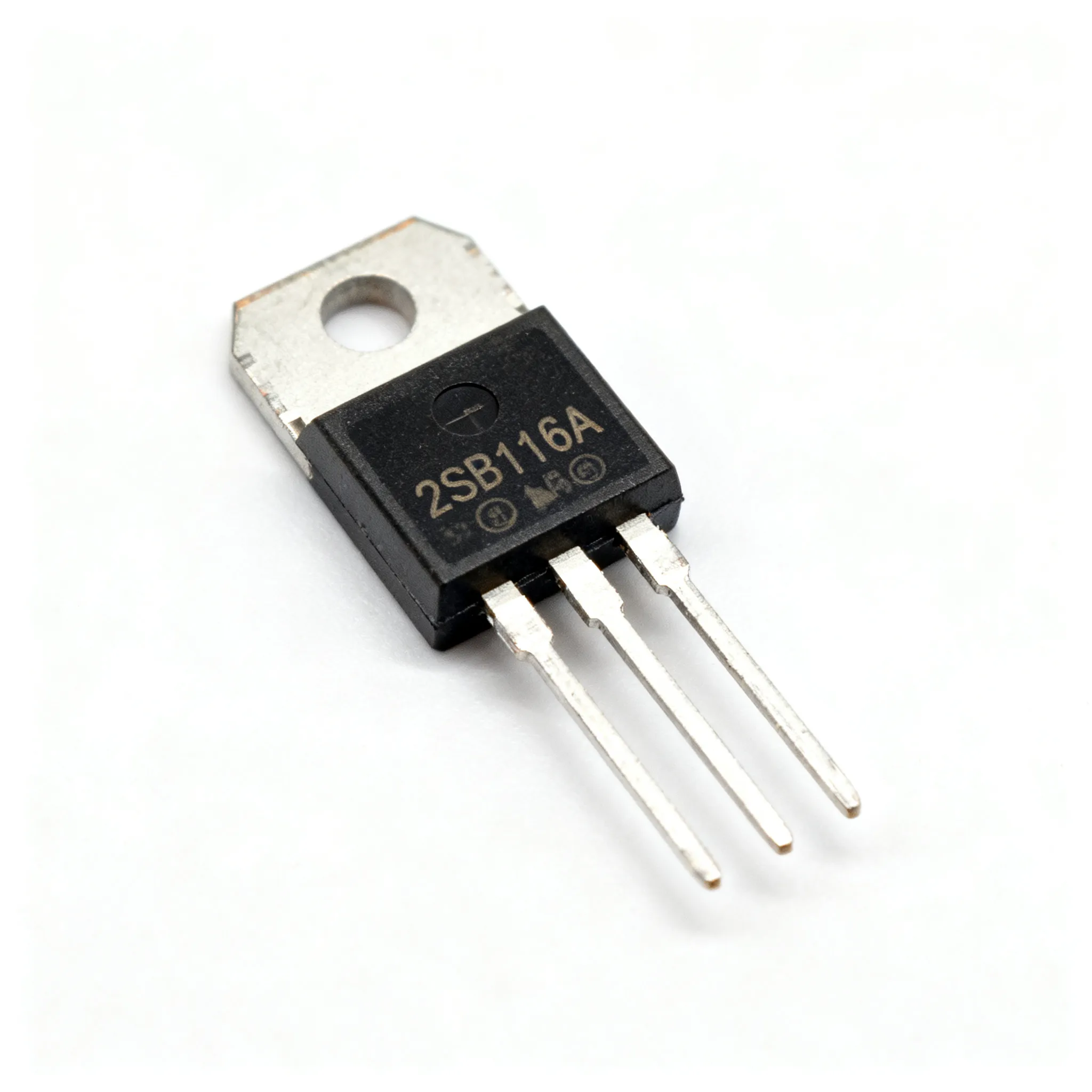
Why One Obsolete PNP Transistor Can Freeze Your Assembly Line
A single-sourced legacy component like the2SB1116A carries risk disproportionate to its penny-level cost. When production lines stop because a distributor oversold allocation or a broker shipped remarked rejects, the financial damage arrives in minutes—not weeks. Recent supply chain disruption patterns, documented in FDA and CPSC recall databases, illustrate how even mature, low-complexity parts become choke points when manufacturer capacity shifts to newer packages and higher-margin product lines (FDA Recalls, Market Withdrawals & Safety Alerts) (CPSC Recalls & Product Safety Warnings).
The CPSC Recall Handbook reinforces a principle that translates directly to electronic component procurement: the cost of corrective action after a failed batch reaches the assembly floor dwarfs the cost of upstream verification (CPSC Product Safety Planning, Reporting, and Recall Handbook). For the 2SB1116A—a PNP epitaxial silicon transistor used in audio output stages, voltage regulators, and general-purpose switching—the verification burden often falls on the buyer because the part's age and commodity status mean authorized distribution channels carry inconsistent inventory depth.
Secureframe's 2025 analysis of supply chain risk assessment practices identified a recurring gap: most organizations maintain risk assessment frameworks that fail to accommodate how disruption actually propagates through niche component categories (Supply Chain Risk Assessment: How to Actually Evaluate Third-Party Risk in 2026). When a TO-92 PNP transistor like the 2SB1116A moves from steady-state availability to allocation, the procurement team that lacks a pre-built RFQ checklist discovers the problem only after the last reel ships.
Key Takeaway: The 2SB1116A is not currently the subject of a public recall or safety alert. The risk lies in what you don't ask before committing to a purchase order—and how long it takes to recover if the parts that arrive don't match the datasheet.
The Anatomy of 2SB1116A Supply Risk: What's Under the Hood
Understanding supply risk for the2SB1116A begins with its physical and parametric identity. This is a PNP silicon epitaxial transistor originally introduced by Sanyo Semiconductor (now part of onsemi), typically housed in a TO-92 or TO-92MOD through-hole package. Its target applications—audio frequency power amplification, low-speed switching, and series voltage regulation—mean it appears in designs where the PCB layout and thermal envelope were validated against a specific mold compound height, lead spacing, and hFE bin decades ago.
The table below summarizes the parameters procurement teams should verify against the manufacturer's datasheet before accepting any lot:
| Parameter | Typical Datasheet Value/Range | Verification Priority |
|---|---|---|
| Collector-Base Voltage (VCBO) | -80 V | Confirm with manufacturer's latest revision |
| Collector-Emitter Voltage (VCEO) | -60 V | Critical for replacement qualification |
| Emitter-Base Voltage (VEBO) | -5 V to -6 V | Verify against application rail limits |
| Collector Current (IC) | -1 A (continuous) | High; derating curve must match application |
| Peak Collector Current (ICM) | -2 A (pulse) | Confirm pulse width and duty cycle limits |
| DC Current Gain (hFE) | 100–400 (varies by bin and IC) | Highest; binning affects circuit biasing |
| Collector-Emitter Saturation Voltage VCE(sat) | -0.3 V to -0.5 V typical at IC=-500 mA | Verify test conditions match your load |
| Package | TO-92 / TO-92MOD (through-hole) | Confirm mold compound, lead finish, and stand-off height |
| Operating Junction Temperature (Tj) | +150°C (max) | Validate against enclosure ambient + self-heating |
| Manufacturer / Brand | onsemi (original Sanyo design); KEC and others may produce under license | Require manufacturer traceability documentation |
2SB1116A is shaped less by electrical complexity and more by market position: it is a mature through-hole part in an industry that has largely migrated to surface-mount packaging. Supplier risk assessment frameworks from TÜV SÜD emphasize evaluating a supplier's process stability for legacy products—specifically whether the manufacturer maintains dedicated production capacity for older package types or runs them in diminishing batch sizes with lengthening intervals (Guide to Supplier Risk Assessment Templates and Best Practices | TÜV SÜD).
Applying the EcoVadis five-step supplier risk assessment process to a component-level decision means mapping the 2SB1116A against categories that include: manufacturer financial stability, geographic concentration of production, single-source dependency, and the availability of authorized distribution partners willing to hold buffer stock (How to Conduct a Supplier Risk Assessment | EcoVadis). When the part is sourced through independent brokers rather than authorized channels, Apex Analytix's findings on phantom inventory become directly relevant—distributors may list stock that doesn't physically exist in their warehouse, creating a false sense of supply security until the order fails fulfillment (Supplier Risk Assessment Guide | Real-World Data & Results from Apex Analytix).
Note: Verify single-source risk via manufacturer and distributor documentation. The 2SB1116A may have licensed second sources or functionally equivalent alternatives bearing different part numbers. Do not assume absolute sole-source status without confirming current production status with the original manufacturer or its authorized channel partners.
When to Substitute: Comparing the 2SB1116A Against Alternative PNP Transistor Options
Design teams facing allocation on the2SB1116A often ask whether a footprint-compatible alternative exists. The answer depends on how substitution is defined—electrical equivalence, mechanical interchangeability, or both. A lead-time-driven comparison methodology, analogous to the approach steel buyers use when evaluating processing capability and queue position alongside raw material availability (Steel Supply Comparison When Lead Time Drives Cost | Kai Chi Steel), reveals that the cost of revalidating a substitute often rivals the cost of waiting for original-stock replenishment—but only if the replenishment date is guaranteed.
The comparison table below evaluates candidates that procurement and engineering teams should assess when 2SB1116A supply tightens:
| Comparison Metric | 2SB1116A (Reference) | KSB1116A (SMD Alternative) | 2SB1116 (Non-A Suffix Variant) | Selection Criteria & Failure Boundary |
|---|---|---|---|---|
| Package | TO-92 / TO-92MOD (through-hole) | SOT-89 (surface-mount) | TO-92 (through-hole) | Footprint mismatch is the #1 substitution failure mode; verify PCB layout compatibility before ordering samples |
| VCEO Rating | -60 V | -50 V (verify against datasheet revision) | -50 V (verify bin and suffix) | Equal voltage rating does not guarantee identical SOA curves; request full SOA charts from supplier |
| IC (Continuous) | -1 A | -1 A (verify thermal derating) | -1 A (confirm for your hFE bin) | Package thermal resistance differs between TO-92 and SOT-89; recalculate junction temperature at worst-case ambient |
| hFE Range | 100–400 (bin-dependent) | 100–400 (verify bin availability) | 100–400 (may differ from A-suffix) | Circuit bias points shift if the replacement hFE bin differs by more than ±20% from the validated design center |
| VCE(sat) at IC=-500 mA | -0.3 V to -0.5 V typical | Verify against datasheet for identical test conditions | Verify; non-A suffix may have different saturation behavior | Excess saturation voltage increases power dissipation; critical in battery-operated designs |
| Supply Channel | Authorized distribution + independent brokers | Authorized distribution channels typically broader | Diminishing; verify allocation status | KSB1116A in SOT-89 may have shorter lead times due to wider active-production base, but requires PCB redesign |
Tip: Before committing to any alternative for the 2SB1116A, request sample lots from at least two independent production batches. Test hFE and VCE(sat) at the exact bias conditions your circuit applies—not at the datasheet's generic test points. A part that passes at IC=-100 mA may fail at IC=-800 mA.
Pre-Purchase Due Diligence: A Practical Question Set for Sourcing 2SB1116A
Generic supplier checklists rarely probe deeply enough for semiconductor procurement. Drawing on the structured approach used in secondary packaging supplier risk assessments—where criteria span design fit, production capacity, continuity planning, and inventory management options (Secondary Packaging Supplier Risk Assessment Checklist | OEM Materials)—the following question set is adapted specifically for sourcing the2SB1116A through any channel.
Micron's Supplier Requirements Standard provides a useful benchmark: serious component buyers should demand documentation rigor at a level comparable to what semiconductor manufacturers require from their own supply base (Micron Supplier Requirements Standard (SRS)). For a commodity transistor, that means traceability, change notification, and conformance documentation—not just a packing slip.
The table below organizes the critical RFQ questions procurement teams should deploy:
| RFQ Question | What to Accept | Red Flag Response |
|---|---|---|
| Who is the original manufacturer of this specific lot? | Named manufacturer with verifiable production location | "Multiple sources" or refusal to disclose |
| Can you provide full lot traceability documentation including wafer fab location and date code? | Lot number, fab location, date code, and assembly site on manufacturer letterhead or portal screenshot | "We don't have that level of detail" or blacked-out fields |
| What is the allocation-backed lead time for the quantity quoted? | Written confirmation from authorized distributor with manufacturer PO reference | Verbal promise without documentation; "subject to change without notice" without escalation path |
| Do you provide a Certificate of Conformance (CoC) tied to the specific batch you are shipping? | CoC with matching lot number, date code, and quantity | Generic CoC not tied to a specific batch; CoC that predates the date code on the parts |
| What is the date code range for the offered stock? | Within 2–3 years of current production; older stock acceptable only with bake-and-test certification | Date codes >5 years old without moisture sensitivity handling documentation |
| Can you supply a sample lot for incoming inspection before we commit to the full order? | Yes, with the understanding that the sample comes from the same batch as the production order | Refusal to supply samples; sample from a different batch than the order |
| What is your change-notification process if the manufacturer issues a PCN (Product Change Notice) affecting this part? | Written commitment to forward PCNs within 48 hours of manufacturer issuance | "We'll let you know if anything changes" without a documented process |
| Are you an authorized distributor for the manufacturer of these parts? | Verifiable via manufacturer's website distributor-locator tool | "Authorized partner" language without manufacturer listing; "we source from authorized channels" |
Actionable Pre-Purchase Checklist for 2SB1116A:
- Validate distributor authorization through the original manufacturer's official distributor-locator portal. For
2SB1116A, check whether the supplier appears in onsemi's or KEC's current authorized channel listings. - Request a 25-piece sample lot from the exact shipment batch. Perform curve-tracer validation of hFE at three collector current points (10 mA, 100 mA, and 500 mA) and compare against the datasheet spread for your target bin.
- Require batch-specific CoC documentation that includes the assembly site location, date code, and a statement of compliance with the original manufacturer's RoHS and REACH declarations.
- Confirm allocation-backed lead time in writing before releasing any purchase order. If the supplier cannot tie the delivery date to a manufacturer commitment, treat the quoted lead time as indicative only.
- Inspect packaging upon receipt: TO-92 parts should arrive in anti-static packaging with moisture-barrier protection if date codes exceed two years. Mismatched mold compound color, inconsistent marking fonts, or missing manufacturer logo are immediate quarantine triggers.
- Escalate any price that is >40% below authorized distribution pricing for formal authenticity review. Legitimate surplus occasionally trades at a discount, but deep discounts on active-distribution parts are the single most reliable counterfeit indicator.
2SB1116A Supply Risk FAQs: Lead Times, Substitutions, and Verification
Q: What is the typical factory lead time for 2SB1116A in 2025?
Standard factory lead times for through-hole PNP transistors in the TO-92 package class range from approximately 12 to 20 weeks, depending on the original manufacturer's production schedule and die bank inventory. However, for 2SB1116A specifically, many authorized distributors operate on allocation—meaning the quoted lead time applies only to the volume already reserved in the manufacturer's build plan. Independent distributors may offer shorter delivery windows, but this speed often carries elevated risk of date-code aging, incomplete traceability, or counterfeit substitution. Buyers should treat any commitment not backed by a manufacturer allocation reference as unverified until confirmed through the authorized channel. Always ask: "Is this lead time allocation-backed or indicative?"
Q: Can I directly replace 2SB1116A with KSB1116A?
Electrically, the 2SB1116A and KSB1116A share comparable collector current ratings and voltage breakdown specifications in their respective datasheets. The critical difference is mechanical: 2SB1116A ships in a TO-92 or TO-92MOD through-hole package, while KSB1116A uses an SOT-89 surface-mount package. This means PCB layout, pad geometry, and thermal management are fundamentally different. Even if the electrical parameters match on paper, the SOT-89 package has lower thermal mass and different junction-to-ambient thermal resistance than TO-92, which shifts the safe operating area in continuous-duty applications. Before committing to KSB1116A as a substitute, validate thermal performance at worst-case ambient temperature, confirm the circuit's bias stability with the replacement hFE bin, and review the SOA curves for both parts at your specific operating point. Do not treat this as a drop-in replacement without full revalidation.
Q: How do I assess a broker's stock authenticity before committing to a large order?
Start with a sample lot drawn from the exact batch the broker intends to ship. Test electrical parameters at minimum, nominal, and maximum operating points relevant to your circuit—at minimum, measure hFE at three collector current levels and VCE(sat) at the highest current your design draws. Request full manufacturer lot traceability documentation that identifies the wafer fab, assembly site, and date code. Cross-reference the lot number against authorized distributor databases where possible. Insist on a Certificate of Conformance tied to the specific batch, not a generic organizational quality certificate. Any supplier that resists providing traceability or refuses to supply samples from the actual order batch should be disqualified regardless of price advantage. For high-volume orders, consider third-party electrical test lab verification of a random sample from the received lot before releasing the full shipment to production.
Q: What are the red flags that a 2SB1116A batch might be counterfeit?
The most reliable counterfeit indicators for the 2SB1116A include: inconsistent marking fonts or character spacing compared to known-authentic samples from authorized distribution; variation in mold compound color or surface texture across parts within the same lot; date codes that are either older than five years or inconsistent with the original manufacturer's known production history for this package type; pricing that falls more than 40% below authorized distributor quotes for comparable volume; absence of moisture-barrier packaging on date codes exceeding two years; and a supplier's inability to produce a CoC tied to the specific batch being offered. Additional physical inspection points: measure the package dimensions (body width, height, lead spacing) against the manufacturer's mechanical drawing; suspect batches often show small but measurable deviations from the official outline.
Q: When should we consider a lifetime buy versus qualifying a new part?
The lifetime-buy decision for 2SB1116A hinges on two variables: remaining production volume and the original manufacturer's lifecycle status. If the manufacturer has issued a formal EOL (End-of-Life) or NRND (Not Recommended for New Design) notice, and your production extends beyond 24 months, a lifetime buy may be the only path to avoid a mid-production-line requalification. However, lifetime buys carry their own inventory carrying costs, moisture-sensitivity management obligations for long-stored TO-92 parts, and the risk of miscalculating buffer quantities. For designs with substantial remaining volume, initiating a formal engineering change order to qualify a replacement—whether a surviving through-hole variant like 2SB1116 (non-A suffix, if still active and electrically validated) or a modern SMD alternative requiring a PCB respin—often proves more economical over a multi-year horizon. Run the total cost of ownership comparison: lifetime buy (purchase cost + storage + potential scrappage of excess) versus requalification (engineering time + PCB revision + test validation + potential production downtime during cutover).
Procurement teams that treat the 2SB1116A as a routine commodity transistor without a formal supply-risk RFQ process are the ones most likely to encounter production disruption. The part's mature status and through-hole package place it in a category where manufacturer attention is waning, authorized distributor inventory is thinning, and independent-channel risk is rising. None of this means the 2SB1116A is unavailable—it means availability is conditional on asking the right questions before the purchase order goes out. A structured RFQ that demands traceability, allocation confirmation, batch-specific conformance documentation, and sample-level electrical verification turns a blind buy into an informed sourcing decision.
Ready to secure your 2SB1116A supply? Upload your BOM or request a quote through IC-Online. Our platform supports mixed BOM procurement with flexible MOQ—connect with verified distributors who can provide the traceability and allocation-backed lead times your production schedule demands.
References & Further Reading
- FDA Recalls, Market Withdrawals, & Safety Alerts — U.S. Food and Drug Administration recall database illustrating supply chain disruption patterns relevant to component procurement.
- CPSC Recalls & Product Safety Warnings — Consumer Product Safety Commission recall announcements demonstrating upstream verification failure costs.
- CPSC Product Safety Planning, Reporting, and Recall Handbook — Framework for corrective action planning applicable to electronic component batch-risk management.
- Supply Chain Risk Assessment: How to Actually Evaluate Third-Party Risk in 2026 — Secureframe analysis of gaps in organizational supply chain risk practices.
- Guide to Supplier Risk Assessment Templates and Best Practices | TÜV SÜD — Supplier risk evaluation methodology including process stability assessment for legacy products.
- How to Conduct a Supplier Risk Assessment | EcoVadis — Five-step supplier risk assessment process with category mapping applicable to component-level decisions.
- Supplier Risk Assessment Guide | Real-World Data & Results | Apex Analytix — Tactics for identifying phantom inventory and unauthorized resellers in electronic component supply chains.
- Steel Supply Comparison When Lead Time Drives Cost | Kai Chi Steel — Lead-time-driven comparison methodology adaptable to semiconductor substitution decisions.
- Risk Management in Supply Chains | Oxford College of Procurement and Supply — Continuous risk monitoring principles for procurement professionals managing sole-sourced components.
- Supply Chain Risk Management (SCRM): Complete Guide 2026 | Ivalua — Cross-category supply chain risk planning framework with likelihood-consequence assessment methodology.
- Secondary Packaging Supplier Risk Assessment Checklist | OEM Materials — Repeatable supplier comparison checklist adaptable to semiconductor procurement due diligence.
- Micron Supplier Requirements Standard (SRS) — Semiconductor manufacturer supplier documentation benchmark applicable to component buyer quality expectations.