Effective Cost Optimization Strategies for Selecting Analog Devices: Maximizing Value with ADSP-BF707 and ADXL345
Expert guide on Effective Cost Optimization Strategies for Selecting Analog Devices: Maximizing Value with ADSP-BF707 and ADXL345. Technical specs, applications, sourcing tips for engineers and buyers.
Introduction
The contemporary electronics landscape demands high-performance, cost-effective solutions to meet the increasing complexity of applications. Selecting the right components, such as the ADSP-BF707 processor and the ADXL345 accelerometer, can significantly impact the overall value and efficiency of a project. This article delves into effective strategies for optimizing costs while selecting analog devices, focusing on the specifications of these two components that are pivotal in diverse applications, from industrial automation to consumer electronics.
Technical Overview
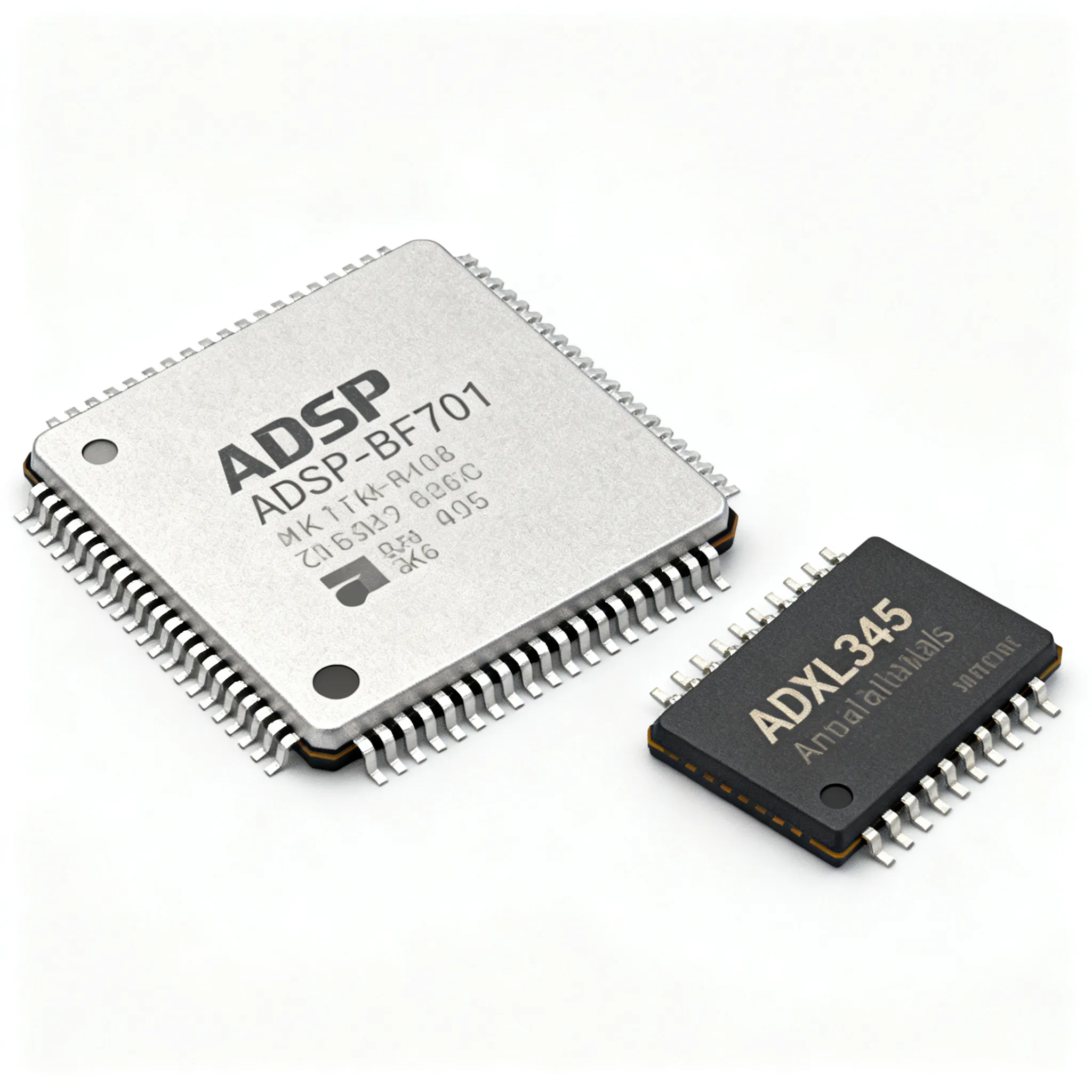
Understanding the core principles behind the ADSP-BF707 and ADXL345 is crucial for making informed decisions. The ADSP-BF707 is a high-performance, low-power DSP processor from Analog Devices, featuring a 400 MHz clock speed and integrated peripherals that make it ideal for audio and video processing applications. Its architecture is designed to handle complex algorithms efficiently, making it a versatile choice for various embedded systems.
On the other hand, the ADXL345 is a low-power, 3-axis accelerometer known for its high-resolution (13-bit) measurement capabilities. It is widely used in motion detection applications, including smartphones, gaming devices, and fitness equipment. Its digital output and flexibility in bandwidth settings provide designers with the ability to tailor the accelerometer's performance to specific application needs.
Detailed Specifications
Below are detailed tables outlining the electrical, thermal, and mechanical specifications of the ADSP-BF707 and ADXL345, as well as a comparison of their application scenarios.
| Parameter | ADSP-BF707 | ADXL345 | Units | Notes |
|---|---|---|---|---|
| Core Voltage | 0.9 to 1.2 | 2.0 to 3.6 | V | Core voltage range |
| Operating Frequency | 400 | N/A | MHz | Maximum clock speed |
| Power Consumption | 0.5 | 0.1 | W | Typical power usage |
| I/O Voltage | 1.8 to 3.3 | 1.8 to 3.6 | V | I/O voltage range |
| ADC Resolution | N/A | 13 | Bits | Resolution of accelerometer |
| Communication Protocol | SPI, UART | I2C, SPI | - | Available interfaces |
| Temperature Range | -40 to 85 | -40 to 85 | °C | Operating temperature |
| Package Type | LQFP | LGA | - | Package format |
| Data Rate | N/A | 3200 | Hz | Maximum data rate |
| Flash Memory | 1 MB | N/A | MB | Internal flash storage |
| Parameter | ADSP-BF707 | ADXL345 | Units | Notes |
|---|---|---|---|---|
| Junction Temperature | 125 | 105 | °C | Maximum allowable temperature |
| Thermal Resistance (Junction-to-Case) | 10 | 6 | °C/W | Thermal resistance value |
| Thermal Resistance (Junction-to-Ambient) | 32 | 22 | °C/W | Thermal resistance value |
| Package Dimensions | 14x14 | 3x5 | mm | Length x Width |
| Weight | 0.5 | 0.1 | g | Component weight |
| Mounting Type | SMD | SMD | - | Surface mount device |
| Humidity Sensitivity Level | 3 | 3 | - | JEDEC standard |
| Pin Count | 88 | 14 | - | Number of pins |
| Application | ADSP-BF707 | ADXL345 | Notes |
|---|---|---|---|
| Audio Processing | Yes | No | Used in DSP applications |
| Motion Detection | No | Yes | Ideal for accelerometer applications |
| Video Processing | Yes | No | Supports video codecs |
| Consumer Electronics | Yes | Yes | Used in various consumer devices |
| Industrial Automation | Yes | Yes | Applicable in industrial settings |
Design Considerations
When designing with the ADSP-BF707 and ADXL345, several factors must be considered to optimize performance and cost. The ADSP-BF707 requires careful attention to power supply design, given its low core voltage and high operating frequency. Designers should ensure that the power supply can deliver the required current with minimal ripple to maintain system stability.
For the ADXL345, PCB layout is crucial to minimize noise and ensure accurate readings. Placing the accelerometer away from high-frequency components and providing a clean ground plane can significantly enhance performance. Additionally, using appropriate filters in the signal path can help in reducing unwanted noise.
Thermal management is another critical aspect. The ADSP-BF707 can generate significant heat during operation, necessitating the use of heat sinks or thermal pads to dissipate heat effectively. The ADXL345, being a low-power device, has minimal thermal concerns but should still be considered in the overall thermal design of the system.
Step-by-Step Guide
Designing a system with the ADSP-BF707 and ADXL345 involves several steps:
- Define the Application Requirements: Clearly outline the system's functional requirements, including processing speed, sensor accuracy, and communication protocols.
- Select the Components: Based on the defined requirements, choose the appropriate variant of the ADSP-BF707 and ADXL345 that meets the specifications.
- Design the Schematic: Create a detailed schematic diagram incorporating the ADSP-BF707 and ADXL345, ensuring proper connections and signal integrity.
- PCB Layout: Design the PCB layout, paying attention to component placement, trace routing, and thermal management. Use ground planes and decoupling capacitors to minimize noise.
- Prototype Development: Assemble a prototype of the system to validate the design. Test for functionality, performance, and reliability under various operating conditions.
- Testing and Validation: Conduct thorough testing to ensure the system meets all specifications. Use tools like oscilloscopes and logic analyzers to verify signal integrity and timing.
- Optimization: Based on test results, optimize the design for cost, performance, and power efficiency. Consider alternative components or design adjustments if necessary.
- Final Production: Once validated, move the design to production. Ensure quality control measures are in place to maintain consistency and reliability.
Common Issues & Solutions
Designers may encounter several challenges when working with the ADSP-BF707 and ADXL345. Here are some common issues and solutions:
- Issue: Power Supply Noise - Ensure proper decoupling and filtering in the power supply design to minimize noise.
- Issue: Signal Integrity - Use proper trace routing and impedance matching techniques to maintain signal integrity.
- Issue: Thermal Management - Implement adequate thermal management solutions, such as heat sinks or thermal pads, to prevent overheating.
- Issue: Communication Errors - Verify communication protocols and ensure correct configuration of I2C or SPI interfaces.
- Issue: Sensor Calibration - Calibrate the ADXL345 to ensure accurate readings and compensate for any offsets or biases.
- Issue: Mechanical Stress - Ensure proper mounting and mechanical design to prevent stress on the ADXL345, which could affect accuracy.
Applications & Use Cases
The ADSP-BF707 and ADXL345 find applications in various fields. The ADSP-BF707 is commonly used in audio and video processing systems, such as home theater systems and video conferencing solutions. Its high processing power and low power consumption make it ideal for portable devices.
The ADXL345 is widely used in motion detection applications, including smartphones, wearable fitness devices, and gaming controllers. Its ability to provide precise motion data makes it invaluable in these applications.
Both components are also used in industrial automation systems, where the ADSP-BF707 processes data from multiple sensors, including the ADXL345, to control machinery and optimize processes.
Selection & Sourcing Guide
When selecting and sourcing the ADSP-BF707 and ADXL345, consider factors such as availability, cost, and supplier reliability. Authorized distributors like IC Online offer competitive pricing and fast delivery, ensuring timely access to components. Use their parametric search tools to compare specifications and select the best variant for your application.
FAQ
- Q: What is the maximum clock speed of the ADSP-BF707?
A: The maximum clock speed is 400 MHz. - Q: Can the ADXL345 be used for gesture recognition?
A: Yes, its high-resolution measurement capabilities make it suitable for gesture recognition applications. - Q: What communication protocols does the ADXL345 support?
A: It supports I2C and SPI communication protocols. - Q: How do I manage heat dissipation for the ADSP-BF707?
A: Use heat sinks or thermal pads to effectively dissipate heat. - Q: Are there any specific considerations for PCB layout with the ADXL345?
A: Yes, ensure minimal noise by placing the accelerometer away from high-frequency components and using a clean ground plane. - Q: What is the typical power consumption of the ADXL345?
A: The typical power consumption is 0.1 W. - Q: How is the ADSP-BF707 suitable for audio processing?
A: It has a high-performance DSP engine that efficiently handles audio algorithms. - Q: What is the operating temperature range for the ADXL345?
A: The operating temperature range is -40 to 85 °C. - Q: Can the ADSP-BF707 be used in battery-powered devices?
A: Yes, its low power consumption makes it suitable for battery-powered applications. - Q: What is the maximum data rate of the ADXL345?
A: The maximum data rate is 3200 Hz.
Conclusion
The ADSP-BF707 and ADXL345 are powerful components that offer significant value in various applications. By understanding their specifications and carefully considering design and sourcing factors, engineers can optimize costs and enhance the performance of their systems. As the electronics industry continues to evolve, selecting the right components remains a critical factor in achieving success in the market.