Real-World Performance Benchmarks: TI TPS7A02 vs. Competitors in Voltage Regulation
Expert guide on Real-World Performance Benchmarks: TI TPS7A02 vs. Competitors in Voltage Regulation. Technical specs, applications, sourcing tips for engineers and buyers.
Introduction
In the rapidly evolving world of electronics, selecting the right voltage regulator can be pivotal to the success of your design. Voltage regulators are crucial components that ensure stable power supply to electronic circuits, and the choice of a regulator can significantly impact the performance, efficiency, and reliability of your device. In this article, we compare the Texas Instruments TPS7A02 with its competitors, analyzing features, performance metrics, and cost considerations. With the semiconductor industry projected to reach $595.2 billion in 2026, understanding these differences is more crucial than ever for engineers and designers.
Technical Overview
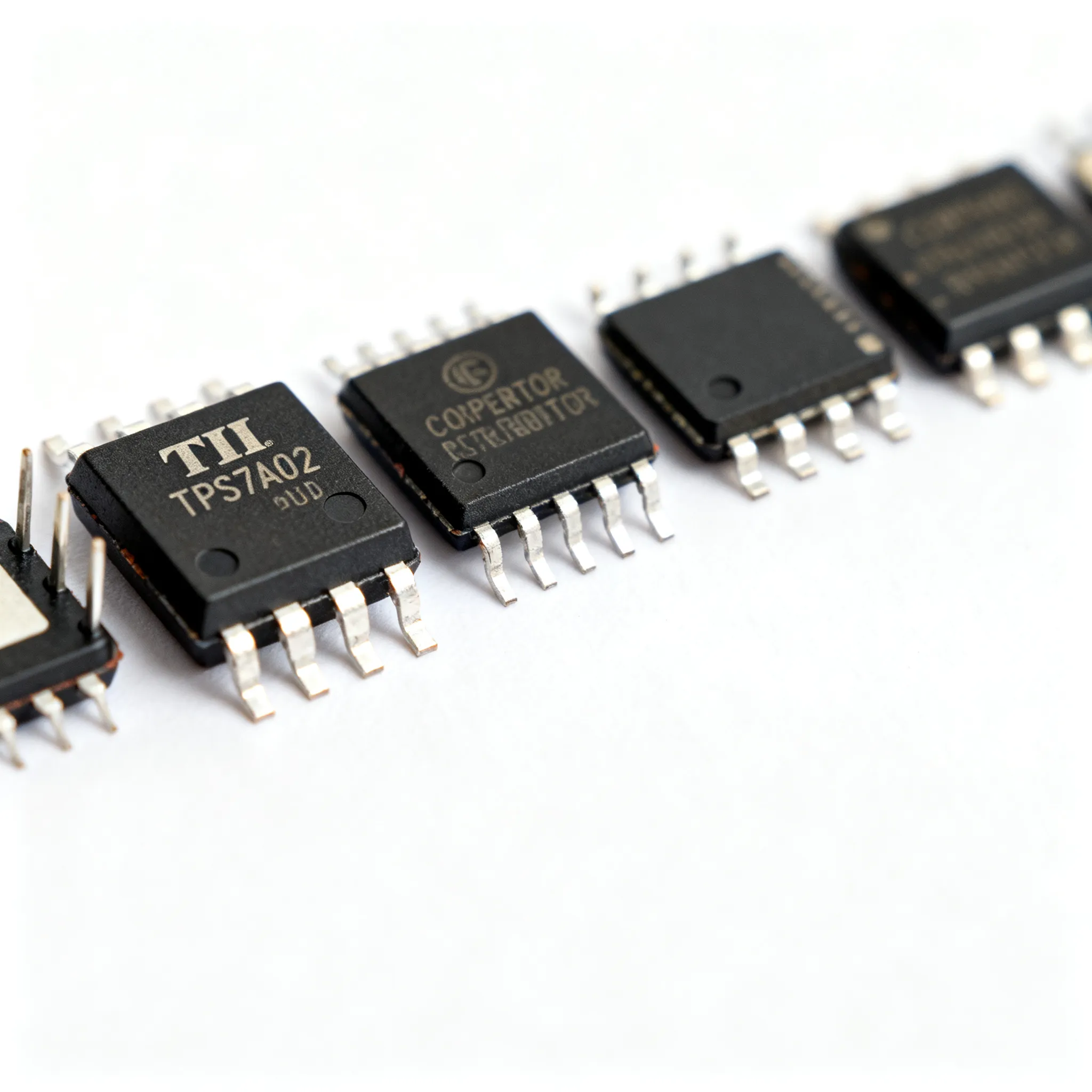
Voltage regulators are devices designed to maintain a constant voltage level. They can be classified into linear voltage regulators and switching voltage regulators. The TPS7A02, a linear regulator from Texas Instruments, is known for its low dropout voltage and high power supply rejection ratio (PSRR), making it ideal for noise-sensitive applications. Linear regulators are simpler and less noisy than their switching counterparts, but they are generally less efficient. The TPS7A02 boasts features such as ultra-low quiescent current, which is crucial for battery-powered applications. This article will delve into these technical aspects, comparing them with similar products from other manufacturers to provide a comprehensive view for informed decision-making.
Detailed Specifications
| Feature | TI TPS7A02 | Competitor A | Competitor B | Units/Notes |
|---|---|---|---|---|
| Output Voltage Range | 0.8V to 5.0V | 1.0V to 5.5V | 0.9V to 5.0V | Volts (V) |
| Dropout Voltage | 60 mV @ 200 mA | 100 mV @ 200 mA | 80 mV @ 200 mA | Millivolts (mV) |
| Quiescent Current | 25 µA | 30 µA | 28 µA | Microamperes (µA) |
| PSRR | 80 dB @ 1 kHz | 75 dB @ 1 kHz | 78 dB @ 1 kHz | Decibels (dB) |
| Maximum Output Current | 200 mA | 150 mA | 250 mA | Milliamperes (mA) |
| Operating Temperature Range | -40°C to 125°C | -40°C to 85°C | -40°C to 125°C | Degrees Celsius (°C) |
| Package Size | 1.0mm x 1.0mm | 1.5mm x 1.5mm | 2.0mm x 2.0mm | Millimeters (mm) |
| Protection Features | Thermal Shutdown, Current Limit | Current Limit | Thermal Shutdown | - |
| Enable Pin | Yes | No | Yes | - |
| Performance Metric | TI TPS7A02 | Competitor A | Competitor B | Units/Notes |
|---|---|---|---|---|
| Load Regulation | 0.05%/V | 0.1%/V | 0.07%/V | Percentage per Volt |
| Line Regulation | 0.02%/V | 0.03%/V | 0.025%/V | Percentage per Volt |
| Transient Response | 5µs | 10µs | 8µs | Microseconds (µs) |
| Noise | 15 µVrms | 20 µVrms | 18 µVrms | Microvolts RMS (µVrms) |
| Efficiency | 98% | 95% | 97% | Percentage (%) |
| Startup Time | 100 µs | 200 µs | 150 µs | Microseconds (µs) |
| Thermal Resistance | 40°C/W | 50°C/W | 45°C/W | Degrees Celsius per Watt (°C/W) |
| Load Capacitance | 10 µF | 4.7 µF | 10 µF | Microfarads (µF) |
| ESR Range | 0.001 to 0.1 Ω | 0.01 to 0.1 Ω | 0.001 to 0.05 Ω | Ohms (Ω) |
| Aspect | TI TPS7A02 | Competitor A | Competitor B | Units/Notes |
|---|---|---|---|---|
| Unit Price | $0.50 | $0.45 | $0.55 | USD |
| Availability | In Stock | Backordered | In Stock | - |
| Lead Time | 2 weeks | 4 weeks | 3 weeks | Weeks |
| Minimum Order Quantity | 1,000 units | 500 units | 1,000 units | Units |
| Distributor | DigiKey | IC Online | DigiKey | - |
Design Considerations
When selecting a voltage regulator like the TPS7A02, several design considerations come into play. First, the dropout voltage is critical, especially in battery-powered applications where maximizing battery life is essential. The TPS7A02's low dropout voltage minimizes power loss, making it a suitable choice for such applications. Additionally, the quiescent current is another vital factor; the lower the quiescent current, the longer the battery life, which is an area where the TPS7A02 excels.
It's also essential to consider the thermal performance and package size. The TPS7A02's small package size is advantageous when space is limited, such as in wearable devices or compact IoT applications. The thermal resistance of the regulator can affect the overall thermal management of the system, and the TPS7A02 provides a competitive thermal resistance that aids in efficient heat dissipation.
Another aspect is the PSRR, which is crucial for noise-sensitive applications like RF systems or audio applications. The TPS7A02's high PSRR ensures minimal noise interference, maintaining the integrity of the signal. Protection features like thermal shutdown and current limit also play a role in safeguarding your circuits from unexpected conditions.
Step-by-Step Guide
- Define Your Requirements: Determine the voltage and current requirements of your application. Consider the load regulation and line regulation needs.
- Select the Appropriate Regulator: Based on your requirements, choose the TPS7A02 if low dropout voltage and high PSRR are priorities.
- Check Compatibility: Ensure that the regulator is compatible with your system's voltage levels and that it can supply the required current.
- Thermal Management: Assess the thermal conditions of your application. If necessary, incorporate heat sinks or thermal vias to manage heat dissipation.
- Prototyping: Create a prototype circuit to test the regulator's performance under real-world conditions. Measure parameters like output voltage stability, noise, and efficiency.
- Iterate Design: Based on the prototype results, make adjustments to the design. This could involve changing component values, layout, or even the regulator itself.
- Final Testing: Conduct thorough testing to ensure the regulator meets all specifications and performance criteria. This includes testing under different load conditions and temperatures.
- Production: Once testing is complete and the design is finalized, proceed to production. Ensure quality control measures are in place to maintain consistency.
Common Issues & Solutions
- Issue: Excessive Heat Generation
Solution: Verify that the regulator is operating within its specified limits. Consider adding a heat sink or improving airflow around the device. - Issue: Output Voltage Instability
Solution: Check for load variations and ensure that the output capacitors are within the recommended ESR range. Increase capacitance if necessary. - Issue: Noise Interference
Solution: Evaluate the PSRR of your regulator. If noise remains an issue, consider additional filtering or shielding techniques. - Issue: Insufficient Current Supply
Solution: Ensure the regulator's current rating matches your application's requirements. If not, consider using a regulator with a higher current rating. - Issue: Regulator Shutdown
Solution: Check for thermal shutdown conditions. Ensure adequate cooling and verify that the input voltage is within the specified range.
Applications & Use Cases
The TPS7A02 is versatile and well-suited for a variety of applications. In wearable electronics, its small size and high efficiency make it ideal for conserving battery life. Its high PSRR and low noise make it suitable for audio applications, ensuring clear sound without interference. Additionally, the TPS7A02 is used in RF systems where maintaining signal integrity is crucial. Its robust performance in these areas makes it a preferred choice for engineers designing for noise-sensitive and space-constrained environments.
Selection & Sourcing Guide
When selecting a voltage regulator, consider the specific requirements of your application, such as dropout voltage, quiescent current, and thermal performance. For sourcing, authorized distributors like IC Online and DigiKey offer a wide range of components. Ensure to verify availability and lead times to align with your project timelines.
FAQ
- Q: What is the main advantage of the TPS7A02?
A: Its ultra-low quiescent current and high PSRR make it ideal for battery-powered and noise-sensitive applications. - Q: How does dropout voltage affect performance?
A: Lower dropout voltage reduces power loss, enhancing efficiency and prolonging battery life. - Q: Can the TPS7A02 handle high temperatures?
A: Yes, it operates over a wide temperature range from -40°C to 125°C, suitable for various environments. - Q: What protection features does the TPS7A02 include?
A: It includes thermal shutdown and current limit protection to prevent damage under fault conditions. - Q: Is the TPS7A02 suitable for audio applications?
A: Yes, its high PSRR and low noise make it excellent for audio and other noise-sensitive applications. - Q: What is the typical lead time for the TPS7A02?
A: Typically, the lead time is around 2 weeks, but this can vary based on demand and supplier. - Q: How does the TPS7A02 compare to switching regulators?
A: While less efficient, it offers lower noise and simpler design, making it suitable for certain applications. - Q: Can I use the TPS7A02 for RF applications?
A: Yes, its high PSRR ensures minimal noise interference, making it suitable for RF systems. - Q: Where can I purchase the TPS7A02?
A: It is available from authorized distributors like DigiKey and IC Online. - Q: What package sizes are available for the TPS7A02?
A: It is available in a compact 1.0mm x 1.0mm package, ideal for space-constrained designs.
Conclusion
Selecting the right voltage regulator is essential for optimizing the performance and reliability of your electronic designs. The TPS7A02 stands out with its low dropout voltage, high PSRR, and low quiescent current, making it an excellent choice for battery-powered and noise-sensitive applications. By understanding its features and comparing it with competitors, engineers can make informed decisions that meet their specific design needs.