Troubleshooting Power Management IC Issues: Common Pitfalls and Solutions for Engineers
Introduction In the rapidly evolving landscape of electronics, Power Management Integrated Circuits (PMICs) are crucial components that ensure effic
Introduction
In the rapidly evolving landscape of electronics, Power Management Integrated Circuits (PMICs) are crucial components that ensure efficient energy usage and battery management in devices ranging from smartphones to industrial machinery. As global semiconductor revenue reached $595.2 billion in 2024, marking a 19% increase from the previous year, the demand for robust PMIC solutions continues to grow according to the Semiconductor Industry Association. However, troubleshooting PMIC issues remains a significant challenge for engineers, leading to costly downtimes and performance inefficiencies.
Technical Overview
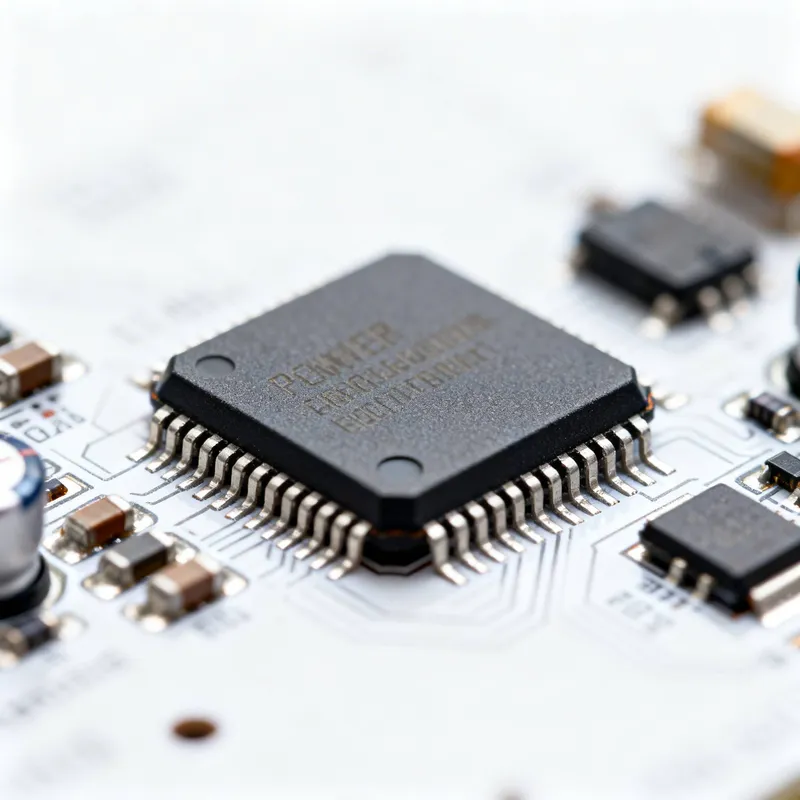
Power Management ICs are designed to manage the power requirements of host systems by regulating the voltage and current required by the system's components. They integrate several power management functions, such as voltage regulation, battery charging, power sequencing, and energy monitoring, into a single chip. PMICs are typically employed in systems with complex power requirements, where precision and efficiency are paramount. Understanding their architecture and specifications is essential for effective troubleshooting.
Architecture and Functionality
PMICs generally consist of multiple linear regulators, DC-DC converters, and specialized control logic. They are designed to handle various input and output voltage ranges, making them versatile for different applications. For instance, a typical PMIC might include a buck converter for stepping down voltage and a boost converter to increase voltage, thereby ensuring stable power delivery to microcontrollers and other ICs.
Key Specifications Table
| Parameter | Value | Description |
|---|---|---|
| Input Voltage Range | 2.7V - 5.5V | Typical range for battery-powered devices |
| Output Voltage | 0.8V - 3.3V | Adjustable to meet specific component needs |
| Efficiency | Up to 95% | High efficiency reduces heat and power loss |
| Operating Temperature | -40°C to 85°C | Suitable for industrial applications |
| Quiescent Current | < 50 µA | Low power consumption in standby mode |
Applications & Use Cases
PMICs are critical in numerous applications where energy efficiency and power management are essential. Here are some real-world use cases:
- Smartphones and Tablets: PMICs manage battery charging, optimize power consumption, and extend battery life.
- Wearable Devices: Due to space and energy constraints, PMICs are used to ensure efficient power usage in fitness trackers and smartwatches.
- Automotive Systems: PMICs are employed in infotainment systems and advanced driver-assistance systems (ADAS) to manage power from the vehicle's battery.
- IoT Devices: In smart home devices and sensors, PMICs help manage limited power resources effectively.
Selection & Sourcing Guide
When selecting a PMIC, engineers should consider factors such as voltage range, efficiency, thermal performance, and integration level. It's also important to assess the specific power requirements of the application to ensure compatibility. For sourcing PMICs, IC Online offers a comprehensive selection of components with competitive pricing and fast delivery, making it a reliable partner for procurement professionals.
FAQ
- What is the primary function of a PMIC?
A PMIC manages and regulates the power supply in electronic devices, ensuring efficient energy usage and stable power delivery to all components.
- How do I troubleshoot a faulty PMIC?
Start by checking the input and output voltages, monitoring for overheating, and verifying connections. It may also be necessary to review the datasheet for specific diagnostic procedures.
- What are common pitfalls in PMIC design?
Common issues include improper voltage regulation, high quiescent current, and inadequate thermal management, which can lead to inefficiencies and device failures.
- Can a PMIC be used in high-temperature environments?
Yes, many PMICs are designed to operate in temperatures ranging from -40°C to 85°C, suitable for industrial applications.
- Why is PMIC efficiency important?
High efficiency reduces power loss and heat generation, leading to longer battery life and improved device performance.