Understanding Integrated Circuit Switches: Types, Applications, and Selection Guide for Electronic Designs
Integrated circuit switches come in different types for various uses. Knowing these types helps you pick the right one. Below are some common types of integrated circuit switches.
-
Integrated circuit switches are important parts of modern electronics.
-
They help control electrical signals in circuits for specific tasks.
-
These switches make circuits work together and automate processes.
-
This improves how well the system works overall.
You can find these switches in automated test systems.
They link devices to tools that measure signals, cutting errors.
This also lowers costs and allows flexible testing for different needs.
They keep signals clear by reducing problems, which is very important.
-
In signal processing, these switches detect phase changes and sync actions.
-
For example, zero-cross detectors help with exact timing in devices.
-
This control saves energy and makes electronics work better.
Key Takeaways
-
Integrated circuit switches help control electrical signals in devices. They make systems work better and last longer.
-
There are different kinds of switches: analog, digital, and mixed-signal. Pick the right one for what your circuit needs.
-
Look at voltage and current limits when choosing switches. Make sure they can handle your circuit to avoid problems.
-
Think about heat and moisture around the switches. Choose ones tested to work well in tough conditions for long use.
-
Always read the datasheet to check if it fits your design. This avoids mistakes and keeps your circuit working properly.
Types of Integrated Circuit Switches
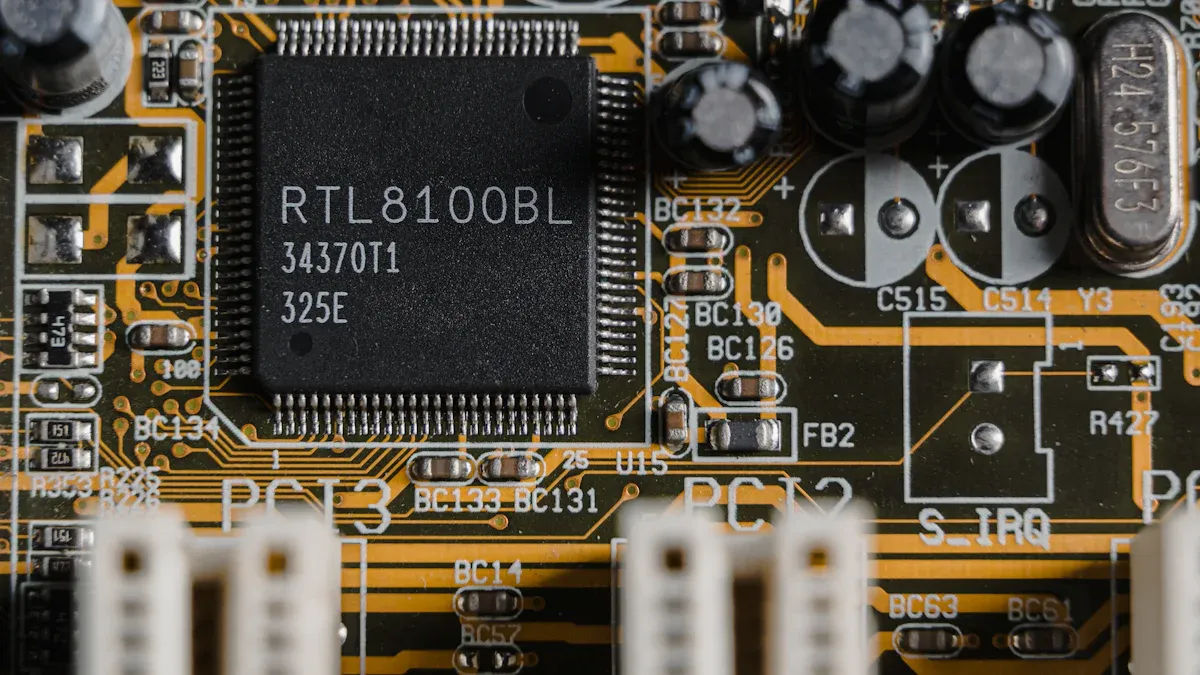
Integrated circuit switches come in different types for various uses. Knowing these types helps you pick the right one. Below are some common types of integrated circuit switches.
Analog Switches
Analog switches handle continuous signals in circuits. They control signals like audio or video without much distortion. These switches are used in audio mixers, signal processors, and testing tools.
A big benefit of analog switches is their reliability. Metrics like MTBF and failure rate show how dependable they are. For example:
|
Metric |
What It Means |
|---|---|
|
Mean Time Between Failures (MTBF) |
Average time a switch works before breaking. |
|
Failure Rate |
How often failures happen, linked to MTBF. |
|
Availability |
How much time the switch works without issues. |
When picking an analog switch, think about insertion loss, crosstalk, and power use. These factors help the switch work well in your circuit.
Digital Switches
Digital switches work with signals in binary (0s and 1s). They are key in digital circuits, controlling data flow and logic tasks. You’ll see them in microcontrollers, memory chips, and communication devices.
Digital switches are faster and more precise than analog ones. They are great for quick signal changes with little delay. Their small size fits well in advanced circuits where space matters.
These switches are used in ASICs and power management circuits. Such uses need high efficiency and dependability, which digital switches provide.
Multiplexers and Demultiplexers
Multiplexers (MUX) and demultiplexers (DEMUX) handle multiple input and output signals. A multiplexer picks one input and sends it to one output. A demultiplexer does the opposite.
These switches are vital for routing signals. For example:
-
Multiplexers save space by reducing wires and pins.
-
They help transfer data in memory like RAM and flash.
-
In CPUs, they manage data flow effectively.
Multiplexers also make systems flexible by handling many data sources. Their ability to route signals is key in modern electronics.
When choosing a multiplexer or demultiplexer, check speed, bandwidth, and power use. These features ensure the switch fits your needs.
Solid-State Relays
Solid-state relays (SSRs) are special switches using semiconductors to work. Unlike old mechanical relays, SSRs have no moving parts. This makes them last longer and work better over time. They are often used in power control systems needing strong and efficient parts.
Inside an SSR, there’s an LED and a light-sensitive part. When the LED lights up, it activates a power device to switch signals. This happens without any moving parts, so SSRs last longer and need less fixing.
SSRs switch signals quickly and don’t make noise. These features are great for precise tasks like factory machines and HVAC systems. They also work well in tough conditions, making them very reliable.
When picking an SSR, think about how much load it can handle. Also, check its voltage limits and how it manages heat. These things help the relay work well in your system. SSRs show how modern circuits mix strength with efficiency.
Mixed-Signal Switches
Mixed-signal switches handle both analog and digital signals together. They are important in devices that need both types of signals. You’ll see them in things like audio systems, communication tools, and data devices.
These switches are good at managing tricky signal tasks. Things like speed, accuracy, and power use affect how well they work. Designers must balance these factors to make them perform their best.
A cool feature of mixed-signal switches is their matching ability. They connect analog parts to digital ones smoothly. This makes signal processing faster and more accurate.
When choosing a mixed-signal switch, look at signal quality and speed. Also, check how much power it uses. These details help you pick the right switch for your needs. Mixed-signal switches show how circuits combine analog and digital tech to work better.
Applications of Integrated Circuit Switches
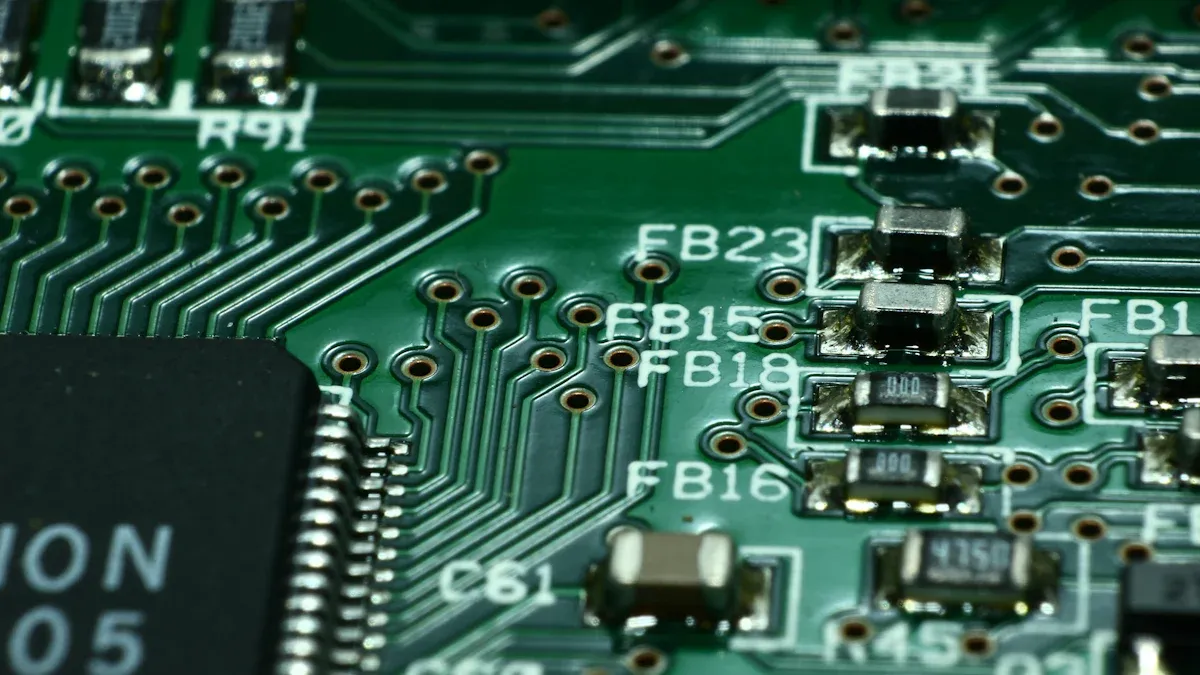
Integrated circuit switches are crucial in many industries. They help control signals and manage data efficiently. Below are some important uses of these switches.
Consumer Electronics
Integrated circuit switches are key in today’s electronics. They guide signals in devices like phones, laptops, and smart gadgets. These switches help parts work together, improving performance and reliability.
-
The global bus switch IC market was worth $1.5 billion in 2023. It may grow to $2.8 billion by 2032 due to electronics demand.
-
The detection switch market could reach $4 billion by 2033, driven by smart device automation.
You’ll find these switches in touchscreens, audio systems, and power circuits. They are vital for IoT devices because they handle fast data transfer.
Tip: Choose switches with low power use and high reliability. This improves how well your devices work.
Industrial Automation
In factories, these switches control machines and help them communicate. They are important for tasks needing precise timing and reliability.
|
Metric |
What It Means |
|---|---|
|
Time a signal takes to travel, key for real-time tasks. |
|
|
Jitter |
Changes in signal timing, which can affect communication. |
|
Determinism |
Ensures signals arrive on time, important for automation. |
|
Reliability |
Shows how long systems work without breaking. |
|
Availability |
Measures how often systems are ready to use, aiming for 99.999%. |
These switches are used in robots, conveyor belts, and PLCs. They handle fast signals and keep systems steady, ensuring smooth factory operations.
Automotive Systems
Integrated circuit switches are changing car systems by adding advanced features. They are used in infotainment, ADAS, and power controls.
-
Cars rely on bus switch ICs to manage their systems.
-
These switches send data quickly, which is vital for modern cars.
For example, in ADAS, switches process sensor data to improve safety. In infotainment, they manage audio and video for a better experience.
Note: Car systems need switches that can handle heat, vibrations, and last long.
Communication Devices
Integrated circuit switches are key parts of communication devices. They direct signals, helping data move smoothly through networks. You can find them in smartphones, routers, and satellites. These switches handle high-frequency signals, making them very useful.
Performance measures show how well these switches work. For example:
|
Metric |
Value |
Frequency |
|---|---|---|
|
Insertion Loss |
310 GHz |
|
|
Isolation |
15 dB |
310 GHz |
|
Switching Speed |
< 20 ps |
3 GHz (large signal), 95 GHz (small signal) |
These numbers show the speed and accuracy of these switches. Low insertion loss keeps signals strong, while high isolation stops interference. Fast switching helps process data quickly, which is needed for high-speed tasks.
In 5G networks, these switches manage different frequency bands. They also improve network performance with advanced signal methods. For satellites, they keep signals clear over long distances, ensuring steady communication.
Tip: Pick switches with low insertion loss and high isolation. These features improve signal strength and device efficiency.
Medical Equipment
Integrated circuit switches are crucial in medical tools for their accuracy. They control signals in machines like MRIs, ultrasounds, and monitors. These switches help collect and process data correctly, which is vital for patients.
In imaging tools, switches send signals between sensors and processors. This helps create clear pictures with little noise. In monitors, they handle data from sensors to track vital signs in real time.
These switches are also very durable. Medical tools need parts that work nonstop without breaking. Integrated circuit switches last long and perform reliably.
You’ll also see these switches in portable medical devices. They make devices smaller by reducing the number of parts. This makes them easier for patients to use and carry.
Note: Always pick switches that meet medical-grade rules. This ensures they are safe and reliable for important uses.
Selection Guide for Integrated Circuit Switches
Functionality and Purpose
Think about what the switch needs to do. Each type of switch has a special job. Analog switches work well with signals like sound or video. Digital switches are great for handling 0s and 1s in data. Multiplexers and demultiplexers help manage many signals at once. Solid-state relays are best for fast, quiet switching in power systems.
Ask yourself: What is the switch's job in your circuit? For example, if you need to route signals in a phone, a multiplexer might work best. If you're making a medical tool needing exact signal control, a mixed-signal switch could be better.
Tip: Match the switch to your circuit's needs. This helps it work well and last longer.
Voltage and Current Ratings
Check how much voltage and current the switch can handle. Every switch has limits. Going over these limits can break the switch or damage your circuit.
For example, if your circuit uses 5V and 100mA, pick a switch rated for at least that. It's safer to choose one with a slightly higher rating for unexpected changes.
Note: Look at the "on-resistance" of the switch. Lower resistance means less power loss and better efficiency, especially for high-current circuits.
In devices like portable gadgets, low-power switches are important. They save battery life and keep the circuit cool, which helps everything work better.
Environmental Considerations
Switches often face tough conditions like heat, moisture, or shocks. These can affect how long they last. To make sure they’re reliable, companies test them in different ways.
|
Test Type |
What It Checks |
|---|---|
|
Handles hot and cold changes. |
|
|
Humidity Testing |
Resists water damage. |
|
Vibration Testing |
Works under shaking or movement. |
|
Shock Testing |
Stays strong after sudden impacts. |
These tests mimic real-life situations. For example, temperature cycling checks if a switch works when temperatures change quickly, like in cars.
Other tests include:
-
Burn-in tests to find weak parts by using high heat and voltage.
-
Overvoltage tests to see if the switch can handle sudden voltage spikes.
-
Overclocking tests to check performance under extreme use.
If your circuit will be in harsh places, like factories or cars, pick switches that pass strict tests. Look for certifications that prove they’re tough.
Tip: Check the switch's environmental ratings. Make sure it fits your circuit's working conditions. This keeps it reliable for a long time.
Compatibility with Circuit Design
When picking switches, make sure they fit your circuit. If they don’t match, your circuit might not work well or could break. First, figure out what your circuit needs. For example, if it uses analog signals, pick switches that keep signals clear. For digital circuits, choose switches that handle fast on-off actions.
Think about the size of your circuit too. Space is often limited in small devices, so smaller switches are better. Also, check how the pins on the switch line up with your circuit. They need to connect properly for everything to work.
Another thing to check is the voltage and current your circuit uses. The switch must handle these without problems. For example, if your circuit runs at 3.3V, pick a switch made for that range. Using the wrong one can cause overheating or failure.
Finally, see how the switch works with other parts in your circuit. Some switches can cause noise or interference, which might mess up sensitive parts. Look for switches with low resistance and little crosstalk to keep signals strong.
Tip: Always read the switch datasheet to make sure it fits your circuit. This can save time and avoid costly errors.
Cost and Availability
The price and availability of switches are important to think about. High-quality switches are great, but they might cost too much. Decide how much you can spend without going over your project budget. Then, find switches that give good performance for the price.
Make sure the switches you need are easy to get. Some advanced switches might take a long time to arrive or be hard to find. This could delay your project. To avoid this, pick switches that are in stock and sold by many suppliers.
Also, think about how long the switch will be available. If your design will be used for years, make sure the switch won’t be discontinued. If it is, you might have to redesign your circuit, which can be expensive and take time.
Buying in bulk can save money if you need lots of switches. Many suppliers give discounts for large orders. But don’t buy too many, as unused parts can become outdated.
Note: Balance cost and availability with quality. Don’t pick cheap switches that might fail later, as this could cause bigger problems.
Knowing about integrated circuit switches helps in building better electronics. These switches control signals and keep circuits running smoothly. You’ve seen their types, like analog, digital, and mixed-signal switches, and how they are used in things like phones, cars, and medical tools.
When picking switches, think about what they do and their voltage limits. Make sure they fit your design and can handle tough conditions. Choosing the right switch improves how well your electronics work and last.
Tip: Check datasheets and test switches in real situations to ensure they work for your project.
FAQ
What do integrated circuit switches do?
Integrated circuit switches manage electrical signals in circuits. They help devices complete tasks by directing, boosting, or separating signals. You can find them in areas like signal control, data movement, and power systems.
How can you pick the right switch for your project?
First, figure out what your circuit needs. Think about voltage, current, and signal type. Make sure the switch works with your design and fits its environment. Always check the datasheet for exact details.
Tip: Try the switch in real-life setups before deciding.
Can integrated circuit switches work with high-frequency signals?
Yes, many switches are made for high-frequency uses. For example, communication tools use switches with low signal loss and strong isolation to keep signals clear. Always check the datasheet for the frequency range.
Are solid-state relays better than mechanical ones?
Solid-state relays last longer and switch faster since they have no moving parts. They also work quietly and handle tough conditions well. But they might cost more than mechanical relays.
Why are mixed-signal switches useful?
Mixed-signal switches link analog and digital parts in a circuit. They make signal processing smooth in devices like audio systems and communication gadgets. Their ability to handle both types of signals is key for modern electronics.
Note: Pick mixed-signal switches that use less power for better performance.