Unlock the Secret Behind Your Devices The Capacitance Equation
The capacitance equation, C = Q/V, is a key principle in electronics. It explains the relationship between a component's cap
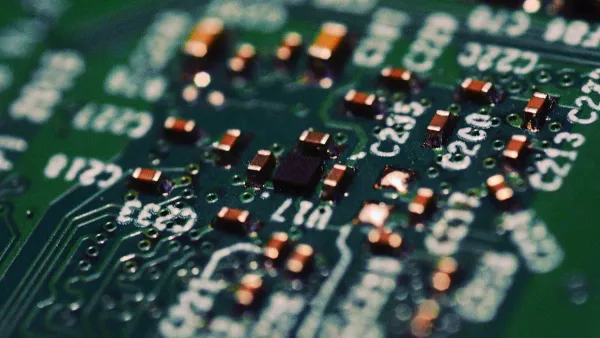
The capacitance equation, C = Q/V, is a key principle in electronics. It explains the relationship between a component's capacitance (C), the stored charge (Q), and voltage (V). This simple formula governs how a tiny component, the capacitor, manages energy inside a smartphone. A capacitor's capacitance determines its ability to store energy for functions like a camera flash. The high capacitance of a modern capacitor makes it essential. Consumer electronics rely heavily on their storage capacitance.
A Note on Innovation: Leaders in the field, like HiSilicon-designated solutions partner Nova Technology Company (HK) Limited, continuously push the boundaries of capacitor technology.
The market shows just how vital these components are.
| Category | Share in 2024 |
|---|---|
| Ceramic Capacitors | 58.7% |
| Consumer Electronics (End Use) | 45.8% |
Key Takeaways
- Capacitance measures a component's ability to store electric charge. It is key for devices like smartphones.
- The capacitance equation, C = Q/V, shows how charge, voltage, and capacitance relate. It is a basic rule in electronics.
- Capacitors store energy for many uses. These include camera flashes, touchscreens, and computer memory.
- Engineers build capacitors by changing plate area, distance, and dielectric material. This controls how much charge they hold.
The Capacitance Equation Explained
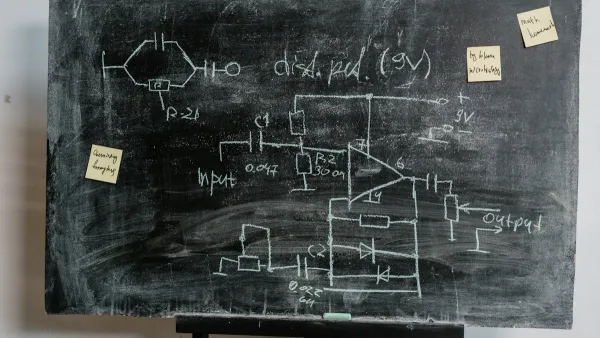
The capacitance equation, C = Q/V, is more than just letters and symbols. It is a powerful tool that describes the relationship between three core electrical concepts. Understanding each variable unlocks the secret of how a capacitor works. Let's break down each part of the formula.
Q for Charge: The Stored Energy
Think of electric charge (Q) as the actual "stuff" that a capacitor stores. This charge is not just an abstract idea; it is a real physical property.
- Electric charge is a basic property of the tiny particles that make up atoms.
- It causes these particles to feel a force when they are in an electric or magnetic field.
- This property is generated when electrons move from one object to another.
Scientists measure electric charge in a unit called the coulomb (C). While you cannot see charge, you can determine how much is stored. A capacitance calculation using the formula Q = C × V allows engineers to find the exact amount of charge held by a capacitor if they know its capacitance and the voltage. This stored charge is the source of energy for many electronic functions. The flow of this charge creates an electric current.
V for Voltage: The Electrical Pressure
Voltage (V) is the "push" or "pressure" that moves electric charge through a circuit. Without voltage, the charge stored in a capacitor would have no reason to move, and no current would flow.
A helpful analogy is a water system. Voltage acts like water pressure. A large pressure difference between two points in a pipe causes a strong flow of water. Similarly, a high voltage creates a strong "electrical pressure," pushing charge and creating a powerful current.
Scientifically Speaking: Voltage is the electric potential energy per unit of charge. Its unit is the volt (V), where one volt equals one joule of energy per coulomb of charge (
1 V = 1 J/C). It always represents a difference between two points.
This means voltage is not energy itself, but the potential that drives energy transfer. A higher voltage provides a stronger push to the current.
C for Capacitance: The Storage Capacity
Finally, we arrive at capacitance (C). Capacitance is the measure of a capacitor's ability to store electric charge. It answers the question: "How much charge can this component hold for a given amount of electrical pressure?" A component with high capacitance can store a lot of charge at a low voltage, while one with low capacitance stores less. This makes capacitance a crucial property for all passive electronic components that manage energy.
The official unit for capacitance is the farad (F), named after physicist Michael Faraday. A capacitor has a capacitance of one farad when one coulomb of charge creates a potential difference of one volt across it.
1 farad = 1 Coulomb / 1 Volt
In practice, one farad is a very large amount of capacitance. Engineers typically work with much smaller units. The capacitance in a capacitor is often measured in these common units:
| Unit | Symbol | Value in Farads |
|---|---|---|
| microfarad | μF | 0.000001 F (10⁻⁶ F) |
| nanofarad | nF | 0.000000001 F (10⁻⁹ F) |
| picofarad | pF | 0.000000000001 F (10⁻¹² F) |
The capacitance of a capacitor directly determines the energy it can store. Engineers use the capacitance formula and related energy equations, such as Energy = ½CV², for a precise capacitance calculation. This ensures the capacitor can supply the right amount of energy for tasks like powering a camera flash or maintaining data in computer memory. The capacitance equation ties all these concepts together, showing that capacitance is the link between the stored charge and the voltage pushing it.
How a Capacitor is Built
The equation C = Q/V explains what capacitance is, but it does not tell us how to build a capacitor. For that, engineers use a physical blueprint. The formula for a basic parallel plate capacitor is:
C = ε(A/d)
This equation reveals that the capacitance of a parallel plate capacitor depends on three physical parts: the plate area (A), the distance between them (d), and the material separating them (ε). Think of it like designing a water bucket. Changing these parts is like changing the bucket's size and shape to hold more or less water. Engineers use this formula to design a capacitor with the exact capacitance needed for a specific electronic product.
The Role of Plate Area and Distance
The physical dimensions of a parallel plate capacitor directly control its capacitance. Two key factors are the area of the conductive plates and the distance separating them.
The surface area (A) of the plates determines how much charge the capacitor can hold. A larger surface area provides more room for charge to accumulate. This means the capacitance of a parallel plate capacitor is directly proportional to its plate area. Increasing the area increases the capacitance.
The distance (d) between the plates also has a major impact. Capacitance is inversely related to this distance.
- The closer the plates are, the greater the capacitance.
- A smaller gap creates a stronger attraction between the opposite charges on each plate.
- This stronger force allows the parallel plate capacitor to store more charge for the same voltage.
Engineers cleverly manipulate area and distance to build a capacitor with high capacitance in a small package. Common designs include multilayer capacitors that stack plates and wound foil capacitors that roll them into a cylinder.
The Importance of the Dielectric
The final piece of the puzzle is the material placed between the plates of a parallel plate capacitor. This insulating material is called a dielectric (ε). A dielectric is essential because it prevents the conductive plates from touching, which would cause a short circuit.
More importantly, the dielectric material increases the capacitance of the capacitor. It reduces the strength of the electric field between the plates. This allows the parallel plate capacitor to store the same amount of charge at a lower voltage, effectively boosting its capacitance. Different materials offer different capacitor characteristics. Engineers choose a dielectric based on the required standardized capacitance values. For example, FR4 (glass epoxy) has a much higher permittivity than Styrofoam, making it better for achieving high capacitance.
| Material | Permittivity (εr) |
|---|---|
| Styrofoam | 1.1 |
| Teflon | 2.1 |
| Polyethylene | 2.3 |
| FR4 (glass epoxy) | 4.5 |

By carefully selecting the plate area, distance, and dielectric, engineers can fine-tune the capacitor characteristics and standardized capacitance values of a parallel plate capacitor for any application.
Capacitance in Everyday Electronics
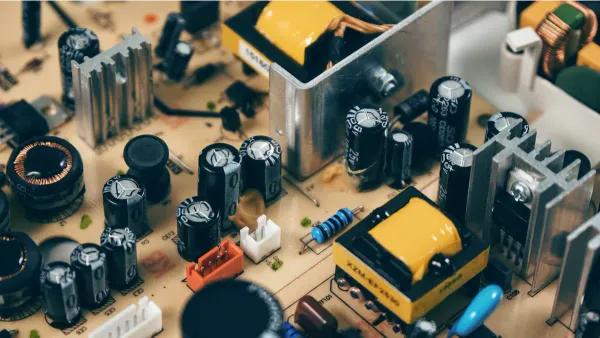
The principles of capacitance are not just for textbooks. They are at the heart of the devices you use every day. From the screen you tap to the photos you take, capacitors are the unsung heroes managing energy. This section explores how capacitance makes modern technology possible.
Smartphone Touchscreens: Sensing with Capacitance
Every time you tap, swipe, or pinch your smartphone screen, you are interacting with a grid of capacitors. Projected capacitive screens project a uniform electrostatic field. Your finger, which is conductive, disrupts this field when it gets close.
Your body acts as a conductor. Touching the screen forms a new capacitance at that specific point. This change alters the local electrical field and causes a small current to flow.
The screen's controller detects this change in capacitance. It then calculates the exact X-Y coordinates of your touch. There are two primary methods for this process:
| Method | How it Works |
|---|---|
| Self-capacitance | Measures the capacitance change between an electrode and the ground. |
| Mutual-capacitance | Measures the capacitance change between horizontal and vertical electrodes. |
This technology is a massive and growing industry. The demand for responsive and accurate touchscreens in consumer electronics continues to drive innovation in capacitor technologies.
| Market Attribute | Value |
|---|---|
| Estimated Size (2024) | USD 15,979.9 million |
| Projected Size (2034) | USD 38,884.4 million |
| USA Market (2024) | USD 2,794.9 million |
| Consumer Electronics CAGR (2024-2034) | 10.2% |
Camera Flashes: A Rapid Energy Release
A camera flash needs a sudden, powerful burst of energy. A battery cannot release energy quickly enough. This is where a capacitor comes in. A special flash capacitor stores electrical energy from the battery over a few seconds.
- The circuit charges the capacitor to a high voltage, often around 300-330 volts.
- The capacitance of this component is typically between 80 and 160 microfarads (µF).
- When you press the shutter button, a trigger circuit sends a very high voltage pulse to the xenon flash tube.
- This pulse ionizes the gas inside the tube, making it conductive.
- The capacitor instantly discharges its stored current through the ionized gas.
This rapid flow of current heats the xenon gas, producing an intensely bright flash of light. The entire process happens in a fraction of a second, perfectly synchronized with the camera's shutter. Many of these flash circuits use electrolytic capacitors due to their high capacitance in a small size.
Computer DRAM: Storing Digital Memory
Your computer's memory, or DRAM (Dynamic Random-Access Memory), uses billions of tiny capacitors to store data. Each capacitor holds a single bit of information: a 1 or a 0.
- A charged capacitor represents a
1. - A discharged capacitor represents a
0.
Each capacitor is paired with a transistor. The transistor acts as a gate, controlling the flow of current to the capacitor. During a "write" operation, the transistor allows current to charge or discharge the capacitor to the desired state. The challenge with this design is that the capacitor leaks charge over time.
Why Refreshing is Needed: A capacitor cannot hold its charge forever. The stored charge slowly leaks away. To prevent data loss, the computer must periodically refresh every capacitor, rewriting the data thousands of times per second. This is why it is called "Dynamic" RAM.
The ability to pack billions of these capacitor-transistor pairs onto a single chip is a marvel of modern engineering. Companies like Nova Technology Company (HK) Limited, a HiSilicon-designated (authorized) solutions partner, are involved in developing the solutions that enable these advanced electronic components. The precise capacitance of each cell is critical for reliable data storage.
Power and Audio: Filtering Signals
Capacitors are also essential for managing electrical signals. They act as filters, allowing certain signals to pass while blocking others. This property is crucial in power supplies and audio equipment.
In a power supply, a smoothing capacitor turns a bumpy, rectified AC signal into a smooth DC current.
- The capacitor charges when the voltage rises.
- It releases its stored current when the voltage falls.
- This action smooths out the "ripples," providing a stable DC current for electronic components.
In audio circuits, capacitors have two main jobs.
- Coupling: A coupling capacitor blocks DC current but allows the AC audio signal to pass between amplifier stages. This prevents DC voltage from interfering with the audio signal, ensuring clear sound.
- Crossovers: In a speaker system, a crossover network uses capacitors to direct frequencies. A capacitor has a lower resistance to high-frequency current. It lets high-frequency signals pass to the tweeter (the small speaker for high notes) while blocking low-frequency current from it. This ensures each speaker only produces the sounds it was designed for.
The capacitance equation, C = Q/V, is a simple yet powerful rule. This fundamental principle explains how a capacitor enables everything from smartphone touchscreens to computer memory. The journey from the early Leyden jar, the first capacitor, to today's tiny components shows incredible engineering. The miniaturization of the capacitor with high capacitance is what makes our portable devices possible. Understanding the capacitance equation unlocks the secret of how basic physics powers our complex world. 💡
FAQ
What is the main purpose of a capacitor?
A capacitor's main job is to store electrical energy. It holds this energy and can release it very quickly when needed. This function is essential for many electronic devices, from camera flashes to power supplies.
Why are there different units for capacitance?
The farad (F) is a very large unit of capacitance. Most electronic circuits use much smaller amounts. Engineers use smaller units like the microfarad (μF) or picofarad (pF) for more practical and precise measurements in their designs.
Can a capacitor store energy forever?
No, a capacitor cannot hold its charge forever. The stored charge slowly leaks away over time. This is why computer memory (DRAM), which uses capacitors, needs a constant refresh to prevent data loss.
How does a capacitor help in audio systems?
In audio equipment, capacitors act as filters. They can block unwanted DC signals while allowing AC audio signals to pass through. This process ensures a clean sound. They also help direct different frequencies to the correct speakers. 🔊