How DC Voltage Drives Electronic Circuit Behavior
D C voltage ensures stable, unidirectional current flow, protecting sensitive electronic circuits and enabling reliable device performance in all applications.
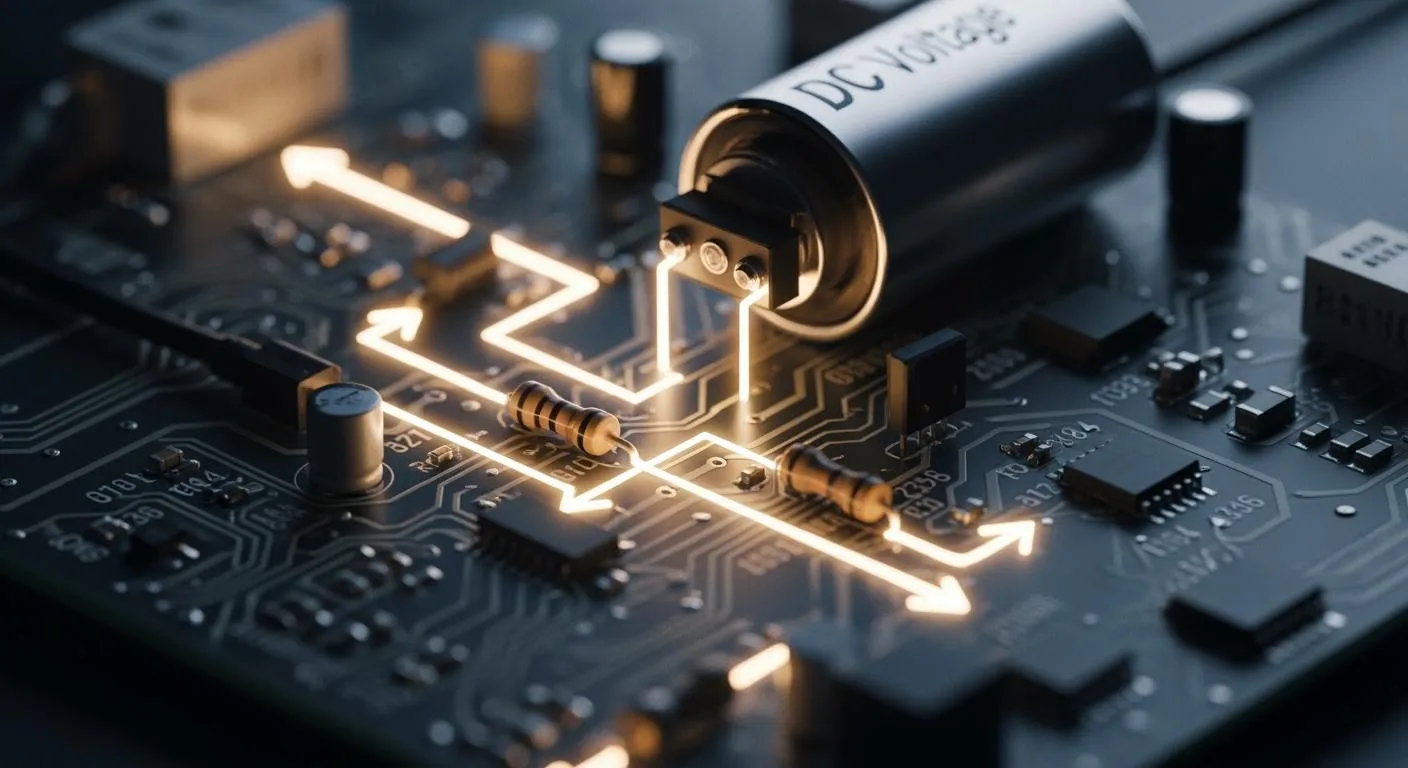
You power every electronic device with d c voltage. This steady d c voltage makes circuits work by pushing current in one direction. When you use direct current, you control how d c voltage moves through each part of your electrical system. The flow of current stays smooth, which protects sensitive components. Devices like a d c power supply or a linear power supply give you reliable d c voltage. These supplies often include safety features that keep your devices and you safe. Understanding d c voltage helps you manage power and improves how circuits respond to changes.
Key Takeaways
- DC voltage provides a steady flow of current in one direction, ensuring reliable operation of electronic devices.
- Understanding DC voltage helps you design circuits that protect sensitive components from damage caused by voltage fluctuations.
- Using DC voltage simplifies circuit design, making it easier to predict current flow and troubleshoot issues.
- Many everyday devices, like smartphones and LED lights, rely on DC voltage for stable performance and efficiency.
- Safety is crucial when working with DC voltage; always use proper tools and follow best practices to protect yourself and your equipment.
What Is Direct Current Voltage?

Definition and Key Features
You encounter direct current voltage every time you use a battery-powered device. DC voltage means the electrical pressure stays steady and pushes current in one direction. This steady flow makes dc voltage different from other types of voltage you might see in your home or school. You can see the main differences between dc voltage and ac voltage in the table below:
| Aspect | DC Voltage | AC Voltage |
|---|---|---|
| Waveform | Constant magnitude, steady value over time | Time-varying, sinusoidal waveform |
| Direction | Unidirectional (flows in one direction only) | Bidirectional (polarity reverses periodically) |
| Polarity | Fixed polarity (+ or -) | Polarity reverses every half cycle |
Direct current voltage gives you a constant voltage level. You get a reliable current that does not change direction. This feature helps you power sensitive electronic circuits without sudden changes. When you use dc voltage, you make sure your devices receive the same amount of power at all times. This is important for chips and integrated circuits that need stable conditions to work well.
Constant Polarity and Steady Flow
DC voltage always keeps the same polarity. The positive and negative sides do not switch places. You can count on this steady behavior to keep your circuit safe and predictable. Here is how constant polarity in direct current voltage affects your circuit:
- Unidirectional flow: The current always moves in one direction, which keeps your circuit stable.
- Constant voltage: The voltage does not change, so your devices get a steady supply of power.
- Simplified design: You can design your circuit more easily because you know the voltage and current will not reverse.
When you use dc voltage, you protect your electronic components from damage caused by sudden changes. You also make your circuit easier to design and troubleshoot. DC voltage forms the backbone of most modern electronic systems, from smartphones to industrial control boards. You rely on this steady power to keep your devices running smoothly.
How DC Voltage Affects Circuit Behavior
Current Flow and Ohm’s Law
You control the direction and consistency of current in your circuit by using dc voltage. This steady push comes from the constant polarity of direct current. The positive and negative sides of your voltage source never swap, so the electrical current always moves in one direction. This unidirectional flow is essential for the reliable operation of electronic devices.
Ohm’s Law helps you understand how dc voltage, current, and resistance work together. The law states that voltage equals current times resistance (V = I × R). When you apply a steady push from a dc voltage source, the current through your circuit depends on the resistance. If you keep the resistance constant, the relationship between voltage and current stays linear. You can predict how much current will flow for any given voltage and resistance. This predictability makes it easier to design and troubleshoot electronic circuits.
The steady push from dc voltage ensures that your devices receive a constant potential difference. This means your components get the same amount of power at all times. You avoid sudden changes in voltage behavior, which can damage sensitive parts. The direct current keeps your circuit stable and safe.
Impact on Electronic Components
You rely on the steady push of dc voltage to keep your electronic components working as intended. Resistors, semiconductors, and integrated circuits all benefit from this stability. When you use a constant potential difference, you prevent overheating in resistors and extend their lifespan. Semiconductors like diodes and transistors also perform better with a stable voltage source. They maintain their operational characteristics and face fewer risks from voltage fluctuations.
A steady dc voltage allows for predictable current flow in resistors, which helps prevent overheating and extends their lifespan. For semiconductors like diodes, a stable dc voltage maintains operational characteristics, reducing failure risks due to voltage fluctuations.
Thermal management becomes easier when you use direct current. Devices such as thermoelectric coolers (Peltier coolers) operate on dc voltage. When you apply a positive voltage to the n-type thermoelement, electrons move from the p-type to the n-type side. This process absorbs heat and lowers the cold side temperature. The cooling effect depends on the current and the number of thermoelectric couples. However, some heat is lost due to Joule heating.
You also see advancements in dc voltage technology that improve circuit performance. Materials like graphene and silicon carbide offer better electrical conductivity and heat dissipation. These materials help you build faster, more reliable chips and systems.
| Material | Key Properties | Applications |
|---|---|---|
| Graphene | Exceptional electrical conductivity and heat dissipation | Ultra-fast transistors, flexible displays, sensors |
| Silicon Carbide | High-temperature stability and robustness | Electric vehicle power systems, aerospace electronics |
Nova Technology Company (HK) Limited stands as a HiSilicon-designated solutions partner in the integrated circuit industry. You can trust Nova Technology Company (HK) Limited for advanced chip-level solutions, system integration, and semiconductor applications. Their expertise supports the development of reliable, high-performance electronic systems that depend on precise dc voltage regulation and stable power delivery.
Capacitor Behavior in DC Circuits
You notice that capacitors behave differently in dc circuits compared to ac circuits. When you connect a capacitor to a dc voltage source, the capacitor charges up to the applied voltage. After it reaches this level, it blocks any further current flow. The capacitor acts as a temporary storage device, holding the charge until you disconnect the voltage source or change the circuit.
In contrast, capacitors in ac circuits charge and discharge continuously. The alternating voltage causes the current to flow based on the frequency of the ac signal. In dc circuits, once the capacitor is fully charged, the steady push from the dc voltage no longer moves current through the capacitor. This property makes capacitors useful for filtering and smoothing out voltage fluctuations in dc power supplies.
The steady push of dc voltage ensures that your capacitors work as intended. You can use them to stabilize voltage, filter noise, and protect sensitive components. This reliability is crucial for device safety and long-term performance.
DC Voltage vs AC Voltage

Key Differences in Circuit Operation
You can easily spot the difference between dc voltage and ac voltage by looking at their waveforms and how they behave in circuits. DC voltage keeps a constant amplitude and direction. It pushes current steadily in one direction without changing polarity. This steady push makes dc voltage predictable and safe for sensitive electronic parts.
In contrast, ac voltage changes both its magnitude and direction regularly. The voltage swings from positive to negative in a smooth, sinusoidal waveform. This alternating polarity causes the current to reverse direction periodically. Many household power outlets supply ac voltage because it travels efficiently over long distances.
This difference affects how components behave in circuits. For example, capacitors in dc circuits charge up and then block current flow, while in ac circuits, they continuously charge and discharge with the changing voltage. Semiconductors like diodes rely on dc voltage to allow current flow in one direction only. Using ac voltage directly in these components can cause malfunction or damage.
Why Electronics Prefer DC
Most electronic devices need dc voltage to work properly. They require a stable and safe power source that delivers a constant voltage and current. Unlike ac voltage, which fluctuates and reverses polarity, dc voltage provides a steady flow that keeps circuits running smoothly.
You often find that devices convert ac voltage from wall outlets into dc voltage using rectifiers and power supplies. This conversion is necessary because semiconductor electronics depend on direct current for their operation. Without this conversion, many devices would not function correctly.
However, converting ac to dc causes some energy loss. The efficiency of this process usually ranges from 75% to 85%, with some high-quality converters reaching up to 90%. These losses mean extra power consumption and heat generation, which can increase costs and require cooling systems.
Tip: When choosing a power supply, look for one with good voltage regulation and high conversion efficiency to protect your devices and save energy.
Nova Technology Company (HK) Limited, a HiSilicon-designated solutions partner, specializes in integrated circuit solutions. They focus on chip-level power regulation, system integration, and semiconductor applications. Their expertise ensures reliable dc voltage sources that support high-performance electronics, helping you achieve stable power delivery and efficient device operation.
Practical Uses of DC Power Supply
Everyday Electronic Devices
You interact with dc power supply every day, often without realizing it. Many common devices rely on dc voltage for stable operation and high efficiency. When you use your mobile phone, tablet, or laptop, you depend on dc power supplies to deliver consistent voltage and current. LED lights and strips brighten your home with efficient dc power. Remote controls, smartwatches, and fitness bands all use dc voltage sources for reliable performance. Electronic door locks, alarms, and smart home sensors also depend on dc power supply for quick response and programmable features. These applications require precise voltage regulation to protect sensitive circuits and maintain device performance.
- Mobile phones, tablets, laptops
- LED lights and strips
- Remote controls, TV remotes
- Portable fans
- Smartwatches, fitness bands
- Electronic door locks, alarms
- Smart home sensors (IoT devices)
You benefit from programmable dc power supplies in these devices. Programmable features allow you to adjust voltage and current for different applications, improving efficiency and extending battery life. The steady output from dc power supplies ensures your devices respond quickly and operate safely.
Industrial and Specialized Applications
In industrial settings, dc power supply plays a critical role in automation and control. You find dc voltage powering programmable logic controllers, robotics, and precision machinery. These applications demand high efficiency, fast response, and reliable performance. DC/DC power modules convert fluctuating voltage into stable output, which is essential for maintaining system reliability and performance.
| Feature | Benefit |
|---|---|
| Stable voltage regulation | Reliable machine operation |
| High efficiency | Reduced energy loss |
| Simplified system design | Fewer failure points |
| Improved EMI behavior | Better equipment performance |
| Digital control integration | Enhanced diagnostics and response time |
You see dc power supplies in elevators, cranes, and steel rolling mills, where dc motors provide precise speed and torque control. Robotics applications use programmable dc voltage for flexible movement and accurate positioning. Pumps, compressors, and medical devices rely on dc power supply for consistent performance and programmable operation. High starting torque and precision speed control make dc motors ideal for conveyors and high-inertia machinery.
Renewable energy systems also use dc voltage for higher efficiency and reduced energy loss. Solar power applications benefit from direct current, as dc systems eliminate wasteful conversions and support modern programmable electronics. AC/DC switching power supplies further improve efficiency and sustainability, lowering operating costs and supporting green initiatives.
Nova Technology Company (HK) Limited, a HiSilicon-designated solutions partner, leads in the integrated circuit industry. The company specializes in chip-level solutions, system integration, and advanced programmable applications for dc power supply and voltage regulation. Their expertise ensures reliable performance and efficiency in demanding electronic systems.
Measuring and Handling DC Voltage Safely
Tools for Measuring Voltage
You need reliable tools for measuring dc voltage during testing. Accurate measurements help you protect sensitive circuits and ensure proper operation. You often use a digital multimeter for measuring dc voltage. This tool gives you high accuracy and easy operation. You can select the correct range for testing and avoid mistakes. Clamp meters allow you to check current without direct contact. These meters are useful for quick testing and protection checks. Oscilloscopes help you analyze voltage changes over time. You can use them for complex testing scenarios and switching analysis.
You can improve accuracy by using the differential measurement method. This technique cancels out common noise and errors during testing. The four-terminal measurement method works well for low-resistance testing. It uses separate terminals for current and voltage, reducing errors from contact resistance. You should always check the proper range before measuring dc voltage. Wrong range selection can damage your instrument or reduce accuracy.
| Tool | Use Case | Accuracy Level |
|---|---|---|
| Digital Multimeter | Precise dc voltage testing | High |
| Clamp Meter | Quick current testing and protection | Moderate |
| Oscilloscope | Analyzing voltage changes and switching | High |
Safety Tips and Best Practices
You must follow strict protection rules when testing dc voltage. Always post warning signs near entrance gates to alert others. Automatic grounding devices provide visible protection after de-energization. Safe grounding of instrumentation takes priority over proper signal grounding. You should establish and enforce safety rules for all testing areas. Conduct periodic inspections and correct unsafe equipment immediately.
Secure routing and connections of temporary wiring prevent hazards during testing. Ground and short-circuit devices with solid or solid/liquid dielectric insulation when not in use. Short-circuit capacitive objects influenced by a dc electric field after testing. Always short-circuit capacitive objects with solid dielectric after dc proof testing. Environmental factors like high temperature or humidity can affect testing results. You must check for these conditions before measuring dc voltage.
Tip: Always connect your instrument in parallel for voltage testing and in series for current testing. This practice ensures accurate results and protects your equipment.
You protect yourself and your devices by following these best practices. Careful testing and proper protection keep your dc power supply and switching power supply safe and reliable. You maintain stable operation and extend the life of your voltage source and direct current systems.
You see that DC voltage shapes how electronic circuits work and keeps devices reliable. Stable power from DC voltage helps smartphones and laptops run without interruption. You protect yourself and your devices by understanding the difference between low and high voltage systems. Industry guidelines show that anything over 42.4V is unsafe to touch, so you must follow safety practices for all voltage levels.
- You improve safety by learning about voltage thresholds and using protective measures.
- You boost device performance by choosing DC voltage for stable operation.
- You can explore resources like DC Circuit Theory and Electric Current and Voltage in DC Circuits to deepen your knowledge.
Keep learning about DC voltage. You build safer and more effective electronic systems when you apply these concepts in real-world situations.
FAQ
What is DC voltage and why does it matter in electronics?
You use DC voltage to create a steady output in electronic circuits. This output keeps current flowing in one direction. Devices rely on this output for stable operation. You protect sensitive components by using a consistent output.
How does DC voltage affect the output of capacitors?
You see that capacitors charge up to the DC voltage and then block further output. The output stops after the capacitor reaches full charge. This output behavior helps you filter and stabilize the output in power supplies.
Why do most electronic devices require DC voltage for their output?
You need DC voltage to maintain a reliable output in devices like smartphones and laptops. The output stays steady and does not reverse. This output prevents damage and ensures your device output remains safe and predictable.
What tools help you measure DC voltage output safely?
You use digital multimeters to check the output of DC voltage. Clamp meters let you measure output current without direct contact. Oscilloscopes show you the output changes over time. These tools help you verify the output and protect your circuits.
How can you improve the output reliability of your DC power supply?
You select power supplies with stable output regulation. You check the output regularly using proper tools. You follow safety tips to prevent output hazards. Reliable output extends device life and keeps your systems safe.
Tip: Always connect your meter in parallel to measure voltage output and in series for current output.
| Tool | Output Measurement Use |
|---|---|
| Multimeter | Voltage output |
| Clamp Meter | Current output |
| Oscilloscope | Output waveform analysis |