Understanding 12 Volt Diodes and Their One Way Current Control
A 12 volt diode one way acts as a gatekeeper in electronic systems, allowing current to flow in one direction while blocking
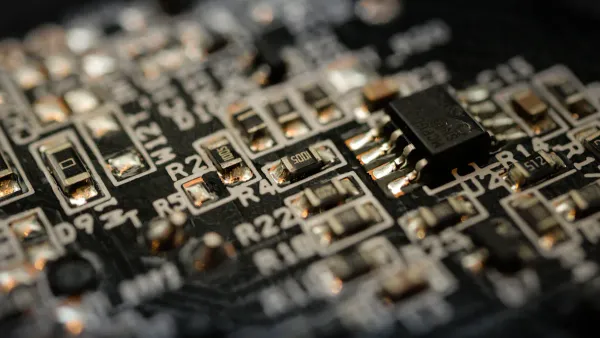
A 12 volt diode one way acts as a gatekeeper in electronic systems, allowing current to flow in one direction while blocking it in the opposite. This crucial function protects sensitive electronic components from reverse current and voltage spikes. In automotive electrical circuits, the diode helps maintain direct current flow between the alternator and battery, preventing battery drain and safeguarding against electrical noise. The diode, much like a one-way valve, ensures that current only travels where needed, which keeps voltage stable and circuits safe. Students and hobbyists rely on these electronic devices to keep their 12V systems functioning reliably.
Key Takeaways
- A 12 volt diode lets electric current flow in only one direction, protecting circuits from damage caused by reverse current or voltage spikes.
- Diodes work by using a special P-N junction that acts like a one-way gate, opening for current in forward bias and blocking it in reverse bias.
- Different diode types, like Zener diodes and current regulating diodes, help control voltage and keep current steady in 12V systems.
- Diodes play key roles in circuits by converting AC to DC, protecting against wrong current flow, and regulating voltage for safe and reliable operation.
- Choosing the right diode and testing it with a multimeter ensures your 12V circuit works well and stays protected from electrical problems.
12 Volt Diode One Way Function
Diode Basics
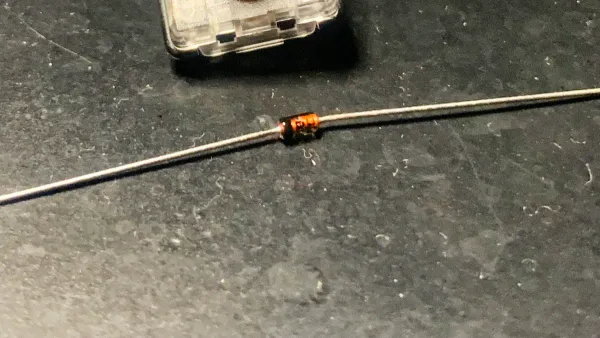
A 12 volt diode one way serves as a fundamental building block in many electronic circuits. This small, two-terminal device consists of an anode and a cathode. The main property that sets a diode apart from other electronic components is its ability to allow current to pass in only one direction. When the anode connects to a higher voltage than the cathode, the diode conducts. If the voltage reverses, the diode blocks current flow. This unique behavior is called rectification and is essential for converting alternating current (AC) to direct current (DC).
The structure of a diode relies on a p-n junction, which forms when p-type and n-type semiconductor materials meet. At this junction, a depletion region acts as a barrier to electron movement. When forward biased, the barrier shrinks, and current flows. When reverse biased, the barrier grows, stopping current flow. The forward voltage drop for a typical silicon diode is about 0.6 to 0.7 volts. This property makes the 12 volt diode one way a reliable choice for controlling current in 12V systems.
Tip: Think of a diode as a one-way street for electricity. Cars (current) can only travel from the entrance (anode) to the exit (cathode). If a car tries to go the wrong way, the street blocks it, just like a diode blocks reverse current.
Diode Current Flow
Diode current flow describes how current moves through a diode under different conditions. In a 12 volt diode one way, current flows easily when the anode is at a higher voltage than the cathode. This is called forward bias. The diode acts like a gate that opens, letting current pass through. When the voltage reverses, the diode becomes reverse biased. The gate closes, and current flow stops almost completely. Only a tiny leakage current may pass, but it is so small that it does not affect most circuits.
In practical 12V circuits, the 12 volt diode one way performs several important roles:
- It allows current to flow from the power supply to the load, but blocks any attempt for current to return.
- It prevents batteries from discharging back into the power source.
- It isolates different parts of a circuit, stopping unwanted current flow that could cause false signals or damage.
- It protects sensitive electronic components from voltage spikes by providing a safe path for excess current.
A Zener diode, a special type of diode, can also control current flow in reverse when the voltage reaches a certain level. For example, a 12V Zener diode will start conducting in reverse if the voltage goes above 12 volts. This action helps regulate voltage and protect circuits from overvoltage.
The diode current flow in a rectifier circuit is easy to see. During the positive half of an AC cycle, the diode conducts and allows current to reach the load. During the negative half, the diode blocks current, turning AC into pulsating DC. This process is the foundation of rectification in power supplies.
The effectiveness of diodes in controlling current flow has been proven in many experiments. For example, blocking diodes in DC power supplies act as electronic check valves. They let current flow from the supply to the load but stop it from flowing back, protecting both the supply and the load.
How Diodes Work
P-N Junction
The heart of every diode is the P-N junction. This junction forms when p-type and n-type semiconductor materials meet inside the diode. The meeting point creates a special area called the depletion region. This region acts as a barrier to the flow of charge carriers. The P-N junction gives the diode its one-way current control.
- The depletion region at the P-N junction acts as a barrier that allows current to flow in only one direction.
- Forward bias reduces the barrier, enabling charge carriers to cross and current to flow.
- Reverse bias increases the barrier, blocking current flow.
- This property is fundamental to the diode's ability to control current direction.
The physical properties of the P-N junction affect how much voltage is needed for current to flow in a 12V diode. The table below shows how these properties influence the voltage threshold:
| Physical Property | Effect on Voltage Threshold for Current Flow in 12V Diodes |
|---|---|
| Built-in Potential Barrier | Creates an initial energy barrier at the P-N junction that must be overcome by forward voltage to allow current flow. |
| Depletion Region Width | Wider depletion region increases barrier; forward bias narrows it, lowering the threshold voltage needed for current to flow. |
| Forward Bias Voltage (V) | Reduces the built-in potential barrier (V0) by the applied voltage, enabling majority carriers to cross the junction and increase current. |
| Doping Levels | Influence the height of the built-in potential and width of the depletion zone, thus affecting the forward voltage threshold. |
| Reverse Bias | Increases barrier height and depletion width, blocking current flow until breakdown voltage is reached, which is much higher than forward threshold. |
| Material Properties | Semiconductor type affects built-in potential and carrier mobility, impacting the voltage threshold and diode behavior under bias. |
The P-N junction is what makes the diode act like a one-way gate for current. This unique structure explains how diodes work in 12V circuits.
Forward and Reverse Bias
The behavior of a diode changes depending on the direction of the voltage applied. In the forward bias region, the anode connects to a higher voltage than the cathode. This reduces the depletion region and allows current to flow easily. The current increases rapidly once the voltage passes a certain threshold. The voltage drop across the diode stays almost the same, even if the current changes a lot.
In the reverse bias region, the cathode connects to a higher voltage than the anode. This widens the depletion region and blocks current flow. Only a tiny leakage current passes through, which is so small that it usually does not affect the circuit. The reverse bias region keeps the diode from conducting until the voltage becomes very high, which can damage the diode unless it is designed for that purpose.
The forward bias region is important for letting current flow in one direction. The reverse bias region is important for blocking current in the other direction. These two regions explain how diodes work as one-way controllers in 12V systems. The forward bias region and reverse bias region together make the diode a key part of many electrical circuits.
Note: The forward bias region is used in rectifiers and LED drivers, while the reverse bias region is used in voltage regulators and protection circuits. Both regions play a role in how diodes work in 12V applications.
Key Diode Types in 12V Circuits
Current Regulating Diode
A current regulating diode keeps the current steady in 12V electronic circuits. This diode, also called a constant current diode, uses a special structure inside. It often contains a JFET with the gate tied to the source. This design lets the diode change its resistance to keep the current the same, even if the voltage changes. In a 12V circuit, the diode senses the current and adjusts itself. This helps protect sensitive parts from too much current. Many automotive and industrial systems use these diodes to power lights, fans, and sensors. The diode works by following Ohm’s law, making sure that if the voltage goes up or down, the resistance changes to keep the current stable.
Tip: Current regulating diodes are important for battery charging and power supply control in 12V systems.
Zener Diode
A Zener diode is different from a regular rectifier diode. It can control voltage in both directions, but it is best known for its work in reverse bias. When the voltage across the diode reaches a certain point, called the breakdown voltage, the Zener diode starts to conduct. This keeps the voltage steady, even if the current changes. In 12V electronic circuits, a 12V Zener diode will hold the voltage close to 12V. The Zener diode is heavily doped, which gives it a precise breakdown voltage. This makes it perfect for voltage regulation and surge protection.
| Parameter/Aspect | Standard Diode | Zener Diode |
|---|---|---|
| Operation | Conducts in forward bias only | Conducts in forward and reverse (at Zener voltage) |
| Directionality | Uni-directional | Bi-directional (at breakdown voltage) |
| Breakdown Voltage | High, not precise | Low, precise, designed for regulation |
| Typical Applications | Rectification, signal control | Voltage regulation, surge protection |
Power Diode
A power diode handles large amounts of current and voltage in 12V electronic circuits. These diodes are often used as rectifiers in power supplies. They can carry high current, sometimes up to hundreds of amps, and block high voltage in reverse. Power diodes have low forward resistance, which means less power is lost as heat. Many power diodes are mounted on heatsinks to keep them cool. In 12V systems, power diodes protect against reverse polarity and voltage spikes. They also help convert AC to DC in rectifier circuits.
| Diode Type | Characteristics & Differences | Typical Use in 12V Circuits |
|---|---|---|
| Rectifier Diode | Handles current from 1 amp upwards; standard PN junction; used for AC to DC conversion | Power supply rectification |
| Schottky Diode | Lower forward voltage drop (0.15-0.4V) vs silicon diode (~0.6V); metal-semiconductor junction | Efficient rectification with low voltage drop |
| Zener Diode | Operates in reverse bias; stable reference voltage; breaks down at specific voltage | Voltage regulation and reference voltage in power supplies |
| Small Signal Diode | Designed for small current signals; minimal effect on operating point | Signal processing and small current applications |
Note: Power diodes in 12V systems must handle both high current and high voltage. Good thermal management prevents failure from overheating.
Applications in Electrical Circuits
Rectification
Rectification is a key process in many 12V electrical systems. The rectifier converts alternating current into direct current. In a half-wave rectification process, a single diode allows only one half of the AC waveform to pass, creating a pulsating DC output. This method produces a high ripple and lower mean voltage. Many simple power supplies use this approach.
A full-wave rectifier uses four diodes in a bridge configuration. This setup converts both halves of the AC waveform into positive voltage. The result is a smoother DC output with less ripple. Full-wave rectifier circuits are common in electronic circuits that need stable 12V DC power. Bridge rectifiers improve efficiency and reduce ripple voltage, making them ideal for sensitive devices.
- Half-wave rectifier: One diode, high ripple, simple design.
- Full-wave rectifier: Four diodes, lower ripple, better for most 12V electronic circuits.
- Bridge rectifiers: Used in power supplies for reliable DC output.
Rectifier diodes play a central role in these circuits. They ensure current flow in only one direction, blocking reverse current and protecting the circuit.
Circuit Protection
Diodes provide essential circuit protection in 12V electrical systems. Blocking diodes prevent current from flowing in the wrong direction. This protects batteries and other components from damage due to reverse polarity. Schottky diodes are often used for this purpose because they have a low voltage drop and fast switching speed.
TVS diodes protect circuits from voltage spikes. When a spike occurs, the TVS diode quickly clamps the voltage to a safe level. This action diverts excess current away from sensitive parts. Blocking diodes also help prevent backfeed, which can cause false signals or damage.
Note: Proper circuit protection with diodes reduces the risk of overvoltage protection failures and keeps electronic circuits safe.
Voltage and Current Regulation
Voltage regulation and current control are important in 12V electronic circuits. Zener diodes maintain a steady voltage by conducting in reverse when the voltage exceeds a set value. This keeps the output voltage stable, even if the input changes. Many 12V systems use Zener diodes for voltage regulation.
Current regulator diodes keep current flow constant, protecting LEDs and sensors from surges. Some circuits use a 7805 voltage regulator with diodes and capacitors to provide a stable 5V output from a 12V source. Bridge rectifiers and LM317 regulators work together to convert AC to stable DC voltages. These designs reduce ripple voltage and improve reliability.
A table below summarizes common diode uses in 12V circuits:
| Application | Diode Type | Function |
|---|---|---|
| Rectification | Rectifier diode | Converts AC to DC, reduces ripple |
| Circuit protection | Blocking diodes | Prevents reverse current flow |
| Overvoltage protection | TVS diode | Clamps voltage spikes |
| Voltage regulation | Zener diode | Maintains steady output voltage |
| Current regulation | Current regulator | Keeps current flow constant |
Diodes, rectifier circuits, and blocking diodes all work together to ensure safe, efficient, and reliable operation in 12V electrical and electronic circuits.
Selecting and Testing Diodes
Choosing the Right Diode
Selecting the correct diode for a 12V circuit ensures reliable operation and protects sensitive components. Several important factors guide this choice:
- Current rating: The diode must handle more current than the circuit’s maximum load. For example, a 30-amp load requires a diode rated for at least 60 amps. This prevents overheating and failure.
- Reverse voltage rating: The diode’s reverse voltage rating should be much higher than the system’s voltage. In a 12V system, a rating of at least 30V is recommended. This avoids breakdown when the voltage spikes.
- Forward voltage drop: Each diode has a forward voltage drop, usually between 0.5 and 1.1 volts. This drop affects efficiency, especially in high-current circuits.
- Heat dissipation: Power loss occurs when current flows through the diode. For instance, a 1V drop at 30A results in 30W of heat. Good heat management is necessary.
- Application needs: Some circuits, like relay coils, need specific diodes such as the 1N4007 for flyback protection. Packaging and availability also influence the choice.
| Criterion | Details / Examples |
|---|---|
| Current rating | Example: 96mA coil current (low current, no power diode needed) |
| Reverse voltage rating | 1N4001: 50V, 1N4004: 400V, 1N4007: 1000V |
| Application | Flyback diode for relay coils, connected opposite coil polarity |
| Practical advice | Choose a reverse voltage rating well above 12V; 1N4007 is a good general-purpose choice |
| Packaging | 1N4001, 1N4004, 1N4007 share the same packaging |
In low-voltage circuits, the diode’s voltage rating must always exceed the circuit voltage. Popular choices like the 1N4003 or 1N4007 offer flexibility for different current and voltage needs.
Tip: Always check the diode’s datasheet for current and voltage ratings before installation.
Testing Methods
Testing a diode in a 12V system confirms its health and function. The most common tool is a digital multimeter with a diode test mode. Models such as the AstroAI 6000 and Crenova MS8233D work well for automotive and hobbyist projects.
Basic multimeter testing steps:
- Set the multimeter to diode mode.
- Connect the red probe to the anode and the black probe to the cathode.
- A healthy diode shows a forward voltage drop of about 0.6 to 0.7 volts for silicon types.
- Reverse the probes. The display should show “OL” or “1,” meaning no current flows in reverse.
For Zener diodes, slowly increase the supply voltage and watch for the voltage to stabilize at the breakdown point. This confirms proper voltage regulation. LEDs can be tested by connecting the probes in forward bias; a working LED will glow.
Advanced users may use curve tracers or functional circuit testing to see how the diode responds to changing current and voltage. These methods help spot non-linear behavior or thermal issues.
Note: Always remove power from the circuit before testing a diode to avoid incorrect readings or damage.
Diodes play a vital role in 12V circuits by ensuring current flows in only one direction and protecting sensitive components.
- Devices like the 1N4001 prevent damage from reversed polarity and overvoltage.
- Diodes act as guardians, blocking harmful reverse currents and supporting reliable circuit operation. Selecting the correct diode type and rating keeps circuits safe and efficient. Hands-on experimentation with diodes helps students and hobbyists build confidence, understand electronics, and prepare for more advanced projects.
Practical experience with diodes strengthens problem-solving skills and deepens knowledge of current flow and voltage control.
FAQ
What does a 12 volt diode do in a car?
A 12 volt diode lets current flow in one direction. It stops current from going backward. This protects the battery and other parts from damage.
Tip: Mechanics use diodes to stop battery drain when the engine is off.
How can someone tell if a diode is bad?
A digital multimeter helps test a diode. A good diode shows a voltage drop in one direction and blocks current in the other. A bad diode shows zero or infinite reading both ways.
Can a 12 volt diode handle more than 12 volts?
Yes. Most 12 volt diodes have a higher voltage rating. Always check the datasheet. The reverse voltage rating should be much higher than 12 volts for safety.
| Diode Type | Typical Reverse Voltage Rating |
|---|---|
| 1N4001 | 50V |
| 1N4007 | 1000V |
Why do 12V circuits need diodes?
Diodes protect circuits from reverse current. They help convert AC to DC. They also keep voltage steady. Without diodes, sensitive parts could break or stop working.