How Induction Electric Motors Power Modern Devices
Induction electric mtor used for powering appliances, industrial machines, and electric vehicles with reliable, efficient performance.
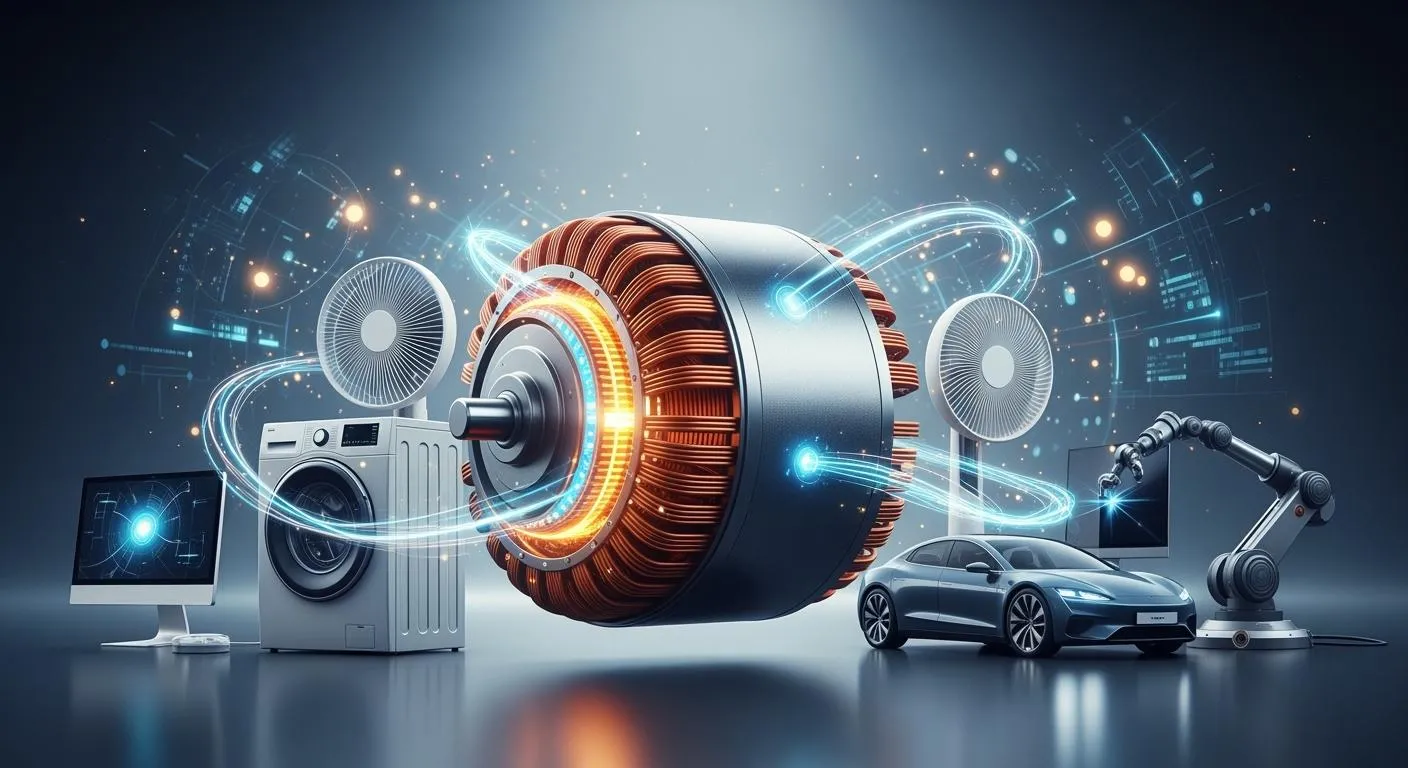
Induction electric motors power most devices you use every day. You find them in your home and in factories because they offer outstanding reliability and energy efficiency. These motors keep running for years, even in tough environments like steel factories or coal mines. Their design allows them to handle continuous operation and support high production efficiency.
The demand for high-efficiency motors continues to rise as industries look for ways to save energy and improve productivity.
Here’s how common induction electric motors are today:
| Application Type | Percentage Using Induction Motors |
|---|---|
| Household Appliances | 80% |
| Industrial Machines | 68% |
You see induction electric mtor used for everything from washing machines to massive industrial machines, making them a critical part of modern technology.
Key Takeaways
- Induction motors are reliable and energy-efficient, making them essential for both home appliances and industrial machines.
- These motors operate using electromagnetic induction, which allows them to run without direct electrical connections to the rotor.
- Single-phase motors are ideal for household appliances, while three-phase motors excel in industrial applications due to their efficiency and durability.
- Induction motors require less maintenance and can last 15-20 years, saving you money on repairs and energy costs.
- Choosing induction motors helps reduce energy consumption and supports compliance with energy regulations, benefiting both consumers and industries.
What Is An Induction Motor

Basic Principle
You see an induction motor at work in many devices, but what makes it run? The answer lies in the science of induction. When you supply alternating current (AC) to the stator, it creates a rotating magnetic field. This field passes through the air gap and reaches the rotor. The changing magnetic field induces an electric current in the rotor. As a result, the rotor starts to spin, and you get mechanical motion. This process forms the core of how an induction motor operates.
The beauty of this design is that you do not need any direct electrical connection to the rotor. The motor uses electromagnetic induction to transfer energy, making it simple and reliable.
How It Works
You can break down the operation of an induction motor into a few key steps:
- Induction motors use electromagnetic induction, where the stator’s rotating magnetic field induces current in the rotor.
- The stator generates this rotating field when you energize it with AC power.
- The rotor receives the induced voltage and current, which interact with the stator’s field to create torque.
- This torque spins the rotor, powering everything from fans to industrial machines.
You find induction motors in many places, such as industrial drives, HVAC systems, home appliances, and electric vehicle support systems.
Here are the main components that make an induction motor work:
| Component | Construction | Function |
|---|---|---|
| Stator | Laminated steel core with slots for copper windings | Generates the rotating magnetic field that induces current in the rotor. |
| Rotor | Sits inside the stator; squirrel cage or wound type | Carries induced current, creating a magnetic field to produce torque. |
| Air Gap | Small space between stator and rotor | Allows the stator’s field to induce current in the rotor. |
When you look at these parts together, you see how the induction motor turns electrical energy into useful motion with high efficiency and durability.
Types Of Induction Motors
You can find two main types of induction motors in modern devices: single-phase and three-phase. Each type has unique features and serves different needs in homes and industries.
Single-Phase Motors
You often see single-phase induction motors in household appliances. These motors run on a single-phase AC supply. The stator has one main winding and a rotor, usually of the squirrel cage type. To start the motor, you need a starting winding and a capacitor. This setup helps the rotor begin to spin.
You use single-phase induction motors in many home devices because they are compact and efficient. Here are some common applications:
- Washing machines
- Refrigerators
- Dishwashers
- Fans
These motors work best for lighter loads. Their efficiency depends on the design. For example, capacitor-start or capacitor-run types can improve performance. However, single-phase induction motors usually have lower efficiency than three-phase motors, especially when the load changes.
Three-Phase Motors
Three-phase induction motors power most industrial equipment. They use a three-phase power supply and have a stator with three windings. This design creates a strong rotating magnetic field, so you do not need a special starting mechanism. The rotor can be a squirrel cage or slip ring type.
You find three-phase induction motors in factories and large machines. They offer high efficiency and reliability for continuous operation. Here are some typical uses:
| Application Category | Specific Uses | Key Motor Characteristics Required |
|---|---|---|
| Pumps and Compressors | Water pumps, oil pumps, air compressors, refrigeration systems | Constant speed, high efficiency, reliability |
| Conveyor Systems | Material handling in factories, warehouses, mines | High starting torque, robust construction |
| HVAC Systems | Large fans, blowers, chillers | Quiet, efficient, VFD compatibility |
Three-phase induction motors help save energy in industrial settings. They reduce electricity costs, improve reliability, and support compliance with energy standards.
Tip: When you choose between types of induction motors, consider the power supply and the load requirements of your device.
| Feature | Single-Phase Induction Motor | Three-Phase Induction Motor |
|---|---|---|
| Power Supply | Runs on a single-phase AC supply | Runs on a three-phase power supply |
| Construction | Stator with one main winding and a rotor | Stator with three windings creating a rotating field |
| Starting Mechanism | Uses a starting winding and capacitor for rotation | No starting mechanism needed; rotating field induced |
| Common Applications | Used in homes and small machines (fans, pumps) | Used in factories and large machines |
| Rotor Type | Usually squirrel cage type | Can be squirrel cage or slip ring type |
You now understand the main types of induction motors and how they fit into different applications.
Induction Electric Motor Used For Modern Devices

Induction electric mtor used for modern devices plays a vital role in your daily life. You see these motors in many applications, from the appliances in your home to the machines that drive entire industries. Their versatility and reliability make them the preferred choice for both simple and complex systems. Let’s explore how you benefit from induction motors in different settings.
Home Appliances
You rely on induction electric mtor used for many household appliances. These motors provide smooth, quiet, and efficient operation. You find them in devices that require steady motion and long-lasting performance. Here are some common applications:
- Washing machines use induction motors to spin and agitate clothes.
- Refrigerators depend on these motors to drive compressors and circulate air.
- Air conditioners use induction electric mtor used for fans and compressors, keeping your home cool.
- Ceiling fans and exhaust fans rely on induction motors for consistent airflow.
- Dishwashers use them to power water pumps and spray arms.
You benefit from induction motors in household appliances because they require little maintenance and last for years. Their simple design reduces the risk of breakdowns, so you enjoy reliable service every day.
Industrial Equipment
Factories and large facilities depend on induction electric mtor used for industrial applications. These motors handle heavy loads and run for long hours without overheating. You see them in equipment that demands high efficiency and durability. Some key applications include:
- Pumps and compressors move fluids and gases in manufacturing plants.
- Conveyor systems use induction motors to transport materials across production lines.
- Industrial fans and blowers maintain air quality and temperature control.
- Machine tools, such as lathes and milling machines, rely on induction electric mtor used for precise motion.
You can see how design improvements and advanced control systems boost productivity and reliability in industrial machinery. The table below shows how these enhancements make a difference:
| Evidence Type | Description |
|---|---|
| Design Improvements | Optimizing rotor and stator configurations, using advanced materials, and better cooling systems improve production efficiency. |
| Control Systems | Sophisticated algorithms and real-time monitoring optimize motor operation, increasing energy efficiency and reducing wear. |
| Energy Recovery | Energy recovery systems capture and reuse energy lost during braking, lowering power consumption. |
| Smart Technologies | IoT integration enables predictive maintenance and remote monitoring, reducing downtime. |
You benefit from these advancements because they help factories save energy, reduce costs, and keep machines running smoothly. Induction electric mtor used for industrial applications supports high production rates and reliable operation.
Other Common Uses
Induction electric mtor used for goes beyond homes and factories. You find these motors in many emerging and specialized applications. Here are some examples:
- Electric vehicles use induction motors for traction systems, offering high torque and reliability.
- Wind turbines and hydroelectric generators rely on induction electric mtor used for efficient energy conversion in renewable energy systems.
- Robotics and automation systems use induction motors for precise motion control.
- Medical devices, such as respiratory therapy pumps, depend on induction motors for safe and steady operation.
- Aerospace industry uses induction electric mtor used for actuating systems and components in aircraft.
- Solar tracking systems use induction motors to follow the sun and maximize energy capture.
- Torque motors appear in throttle controls for gasoline engines and in video or data tape machines.
Induction motors help reduce energy waste and carbon emissions in renewable energy and electric vehicle applications. You see their impact in the growing electric vehicle market, where they deliver high performance and efficiency.
You also find innovation in the semiconductor industry, where companies like Nova Technology Company (HK) Limited play a key role. As a HiSilicon-designated solutions partner, Nova Technology Company (HK) Limited specializes in chip-level solutions and system integration for the integrated circuit industry. Their expertise supports advanced applications, including smart control systems and efficient power management in devices that use induction electric mtor used for modern technology.
Induction motors continue to shape the future of technology. You benefit from their presence in everything from everyday appliances to advanced industrial and renewable energy systems.
Advantages Of Induction Motors
Durability & Low Maintenance
You benefit from the robust design of an induction motor. These motors have fewer moving parts than other types, which means less wear and tear. You do not have to worry about brushes or commutators failing, so the risk of breakdowns drops. This design lets the motor run for years, even in harsh environments like factories or mines. In fact, you can expect a high-efficiency induction motor to last 15–20 years in systems such as HVAC units and conveyors.
Induction motors can reduce servicing needs by up to 40% compared to DC motors, saving facilities as much as $18,000 per motor each year.
However, you should know that regular checks are still important. Bearings and windings can wear out over time, especially if the motor faces overheating or frequent starts and stops. Proactive maintenance helps you avoid unexpected downtime.
Here’s a quick comparison of key advantages:
| Advantage | Description |
|---|---|
| Low Maintenance | Fewer parts to service, less frequent repairs needed |
| Robustness | Handles continuous operation and harsh conditions with ease |
| Reliability | No brushes or commutators, so fewer parts can fail |
Energy Efficiency
You save energy every time you use an induction motor. These motors convert most of the electricity they use into useful work. Modern designs reach efficiency ratings between 85% and 96%. For example, a 15 kW induction motor can achieve up to 90.1% efficiency under IEC IE3 standards.
- Induction motors are designed for optimal efficiency, which lowers your energy bills.
- The U.S. Department of Energy estimates that improved motor standards will save 7.0 quads of energy from 2016 to 2045.
- Efficient motors also mean less downtime and fewer repairs, which helps both homes and businesses.
| Motor Type | Efficiency Rating (%) | Standard Level |
|---|---|---|
| Modern Induction | 85-96 | IE3, IE4 |
| 15 kW Induction | 90.1 | IEC IE3 |
| 15 kW Induction | 89.5 | NEMA Premium |
Cost Benefits
You notice cost savings right from the start. Induction motors usually cost less to buy and install than other electric motors. Their simple design means you spend less on repairs and maintenance over the years. You also save money on electricity because of their high efficiency.
| Motor Type | Initial Cost | Operational Cost | Additional Components Needed |
|---|---|---|---|
| Induction Motors | Lower | Lower | Yes (for starting/speed control) |
| Other Electric Motors | Higher | Higher | Varies |
Manufacturers and consumers both gain from these savings. You benefit from lower energy bills, fewer breakdowns, and better product quality. Industries also meet energy regulations more easily and help reduce strain on power grids.
Choosing an induction motor gives you a reliable, efficient, and cost-effective solution for powering modern devices.
You depend on induction electric motors every day, often without noticing. These motors power devices in your home, your workplace, and even in wearable health technology.
- They boost energy efficiency in health devices and allow precise control for important tasks.
- Their small size makes modern gadgets lighter and more comfortable.
You see their impact in many fields:
| Contribution Area | Description |
|---|---|
| Electric Vehicles | Improved efficiency and lighter weight for better performance. |
| Industrial Applications | Reliable torque and steady speeds for machines and tools. |
| Energy Efficiency | Lower energy use in homes and factories. |
| Technological Innovations | New designs combine the best features for smarter solutions. |
You can appreciate how these motors offer reliability, efficiency, and versatility. When you understand their role, you see why they remain essential in modern technology.
FAQ
What makes induction motors different from other electric motors?
You do not need brushes or commutators in induction motors. The design uses electromagnetic induction to create motion. This makes the motor more reliable and reduces maintenance compared to other types.
Can you control the speed of an induction motor?
Yes, you can control the speed using devices like variable frequency drives (VFDs). These devices adjust the frequency of the power supply, letting you change how fast the motor spins.
Why do you find induction motors in so many home appliances?
Induction motors offer durability, quiet operation, and low maintenance. You benefit from their simple design, which helps appliances like fans, washing machines, and refrigerators run smoothly for years.
Are induction motors energy efficient?
You save energy with induction motors. Modern designs reach up to 96% efficiency. This means you use less electricity and lower your energy bills, especially in large or frequently used devices.
How long can an induction motor last?
You can expect an induction motor to last 15–20 years with proper care. Regular checks and maintenance help you avoid problems and keep the motor running efficiently.