Nmos and Pmos Explained for Everyday Electronics
Nmos and pmos transistors power everyday electronics by balancing speed, efficiency, and reliability in circuits, making devices faster and more energy-efficient.
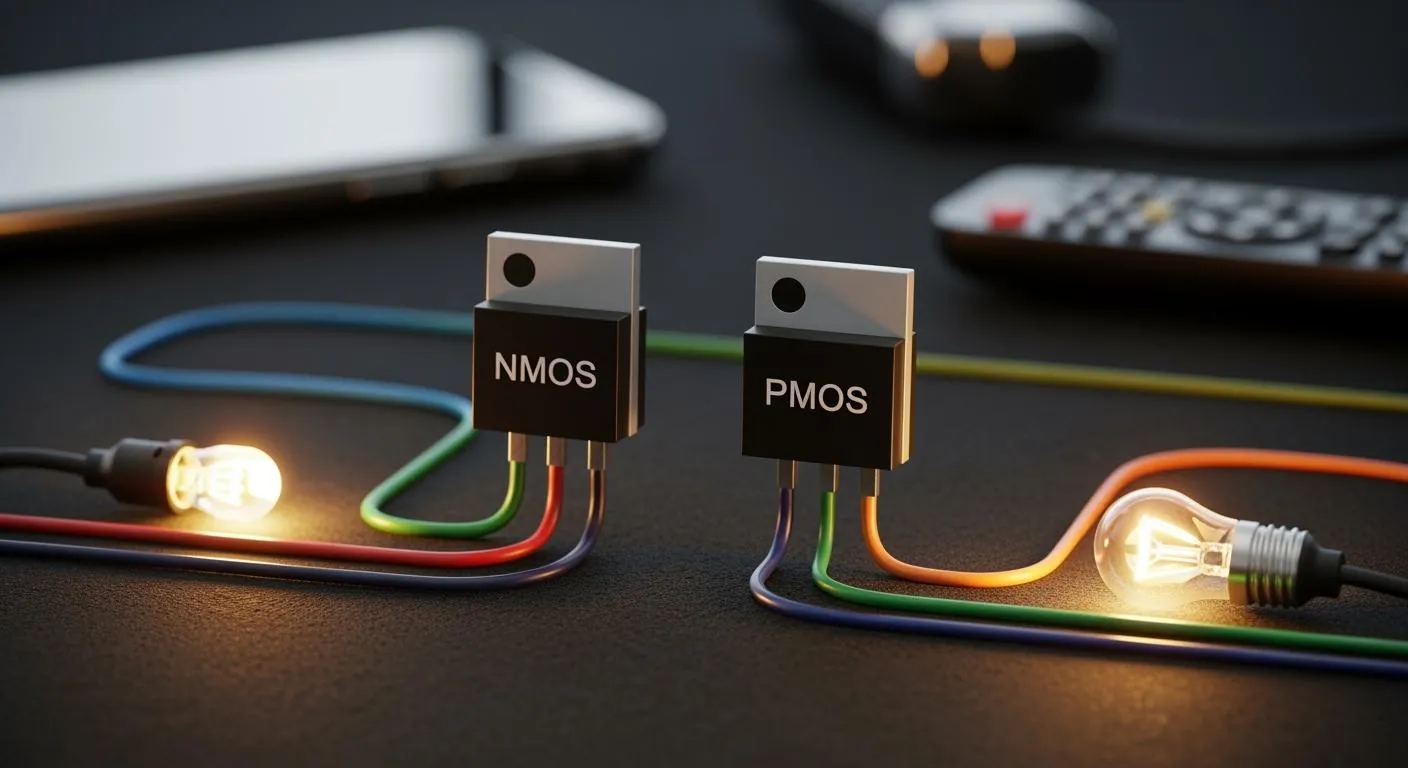
Imagine you have two types of light switches in your home. One works best for quick on-off actions, while the other saves energy and handles more noise from the wiring. In electronics, nmos and pmos act like these switches, making your devices both fast and power-efficient. Your smartphone alone uses billions of these tiny switches every day.
Key Takeaways
- NMOS and PMOS transistors act like switches in electronics, controlling the flow of electricity. NMOS turns on with a high voltage, while PMOS turns on with a low voltage.
- Using both NMOS and PMOS together in circuits creates CMOS technology, which improves speed and reduces power consumption. This is crucial for devices like smartphones that need to last longer on a single charge.
- Understanding NMOS and PMOS helps you troubleshoot and improve electronic projects. Check gate drive, switching paths, and thermal management to ensure your devices work efficiently.
Nmos and Pmos Basics

What Are Nmos and Pmos?
You can think of nmos and pmos as two types of voltage-controlled switches inside your electronic devices. These switches help control the flow of electricity, just like a light switch controls the flow of power to a lamp. Here’s a simple way to understand them:
- NMOS transistors use n-type semiconductor material. They turn on when you apply a high (positive) voltage to the gate.
- PMOS transistors use p-type semiconductor material. They turn on when you apply a low (or negative) voltage to the gate.
- Both types act as switches or amplifiers, letting current flow when the right voltage is applied to the gate.
When you press a button on your phone or computer, these tiny switches work together to make things happen instantly.
Tip: Most modern electronics use a special kind of switch called a mosfet, which includes both nmos and pmos types.
Key Differences Between Nmos and Pmos
You might wonder why engineers use both nmos and pmos in circuits. The answer lies in their unique properties. Let’s break down the main differences:
| Characteristic | NMOS Transistor | PMOS Transistor |
|---|---|---|
| Majority Charge Carrier | Electrons (negatively charged) | Holes (positively charged) |
| Carrier Mobility | Higher mobility | Lower mobility |
| Drive Current | Higher | Lower |
| Switching Speed | Faster | Slower |
| On-Resistance | Lower | Higher |
| Threshold Voltage | Positive | Negative |
- NMOS transistors rely on electrons, which move quickly and allow for faster switching. This means nmos can handle rapid changes in signals, making your devices more responsive.
- PMOS transistors use holes as charge carriers. These move slower, so pmos switches operate at a slower speed and have higher resistance.
- NMOS switches pass a strong logic ‘0’ but a weaker logic ‘1’. PMOS switches do the opposite, passing a strong logic ‘1’ but a weaker logic ‘0’.
You will find that both nmos and pmos are made from silicon, the most common material in the semiconductor industry.
Why Both Types Matter
You need both nmos and pmos to build efficient and reliable circuits. When you combine them, you get what is called cmos technology. This combination allows your devices to work faster and use less power.
- NMOS switches provide speed and are used for pulling signals down to zero (pull-down networks).
- PMOS switches add stability and are used for pulling signals up to the supply voltage (pull-up networks).
- CMOS circuits, which use both nmos and pmos, waste almost no power when idle. This feature is essential for battery-powered devices like smartphones and tablets.
- Using both types together also improves noise immunity, making your electronics more robust and less likely to malfunction.
Note: The integration of nmos and pmos in cmos technology is one reason why your portable devices can last all day on a single charge.
If you look inside any modern chip, you will see billions of these switches working together. This teamwork is what makes today’s electronics powerful, efficient, and reliable.
Mosfet Technology in Everyday Devices

How Mosfets Work
You use devices every day that rely on mosfet technology. A mosfet acts like a smart switch. When you apply a voltage to the gate of a mosfet, you control the flow of current between two other terminals called the source and drain. In nmos, a positive gate voltage lets electrons flow, turning the transistor on. In pmos, a negative gate voltage allows holes to move, switching the transistor on. The gate threshold voltage is important because it marks when the channel forms and current starts to flow. You find both n-channel mos and p-channel mos types in circuits, each with unique roles.
Nmos and Pmos in Common Electronics
You see mosfet technology everywhere. In your smartphone, computers, and home gadgets, transistors handle everything from processing data to controlling power. Digital circuits use nmos and pmos in microprocessors, memory, and logic gates for fast data handling. Power electronics rely on mosfet transistors for efficient switching in chargers and motor controllers. Amplifiers in audio devices use these transistors to boost signals. Communication devices, like radios and mobile phones, depend on cmos and complimentary mos designs for signal processing and low power consumption. Even your TV and kitchen appliances use mosfet technology for power control.
Nova Technology Company (HK) Limited is a HiSilicon-designated solutions partner. The company specializes in chip-level solutions, system integration, and application scenarios across the integrated circuit industry, supporting advanced IC design and deployment.
Choosing the Right Mosfet for the Job
You select nmos for high speed performance and efficiency. Nmos transistors have better electron mobility, which means lower resistance and faster switching. This makes them ideal for circuits where speed and performance matter. Pmos, or p-channel mos, are easier to use for high-side switching and can simplify driver circuits, even though they have higher resistance and slower speeds. Engineers often combine nmos and pmos in complimentary mos or cmos designs to balance speed, power consumption, and noise immunity. This approach helps your devices run longer and more reliably.
You now know how NMOS and PMOS switches power your electronics. This knowledge helps you understand features like:
- Power switching in smart plugs
- LED dimming in smart lights
- Logic circuits in smart thermostats
You can use these basics to troubleshoot or improve your own projects:
| Area | What to check | Why it matters |
|---|---|---|
| Gate drive | VGS threshold, gate charge | Ensures proper switching |
| Switching path | Source reference, load current | Prevents circuit errors |
| Thermal | Package rating, heat spreading | Avoids overheating |
Curious minds like yours drive innovation—keep exploring how these tiny switches shape your world!
FAQ
What makes NMOS and PMOS important in electronics?
You rely on NMOS and PMOS to manage power in your devices. These switches help control speed, efficiency, and stability in every circuit.
How do MOSFETs improve power efficiency?
MOSFETs reduce wasted power by switching quickly and using less energy. You benefit from longer battery life and cooler devices.
Can you use NMOS or PMOS alone for power control?
You can use one type, but combining both gives you better power management. This approach increases reliability and reduces unnecessary power loss.