Resonater in Electronics: Why It Matters Now
A resonater ensures precise frequency control, stable signals, and reliable performance in electronics, making it essential for modern devices and communication systems.
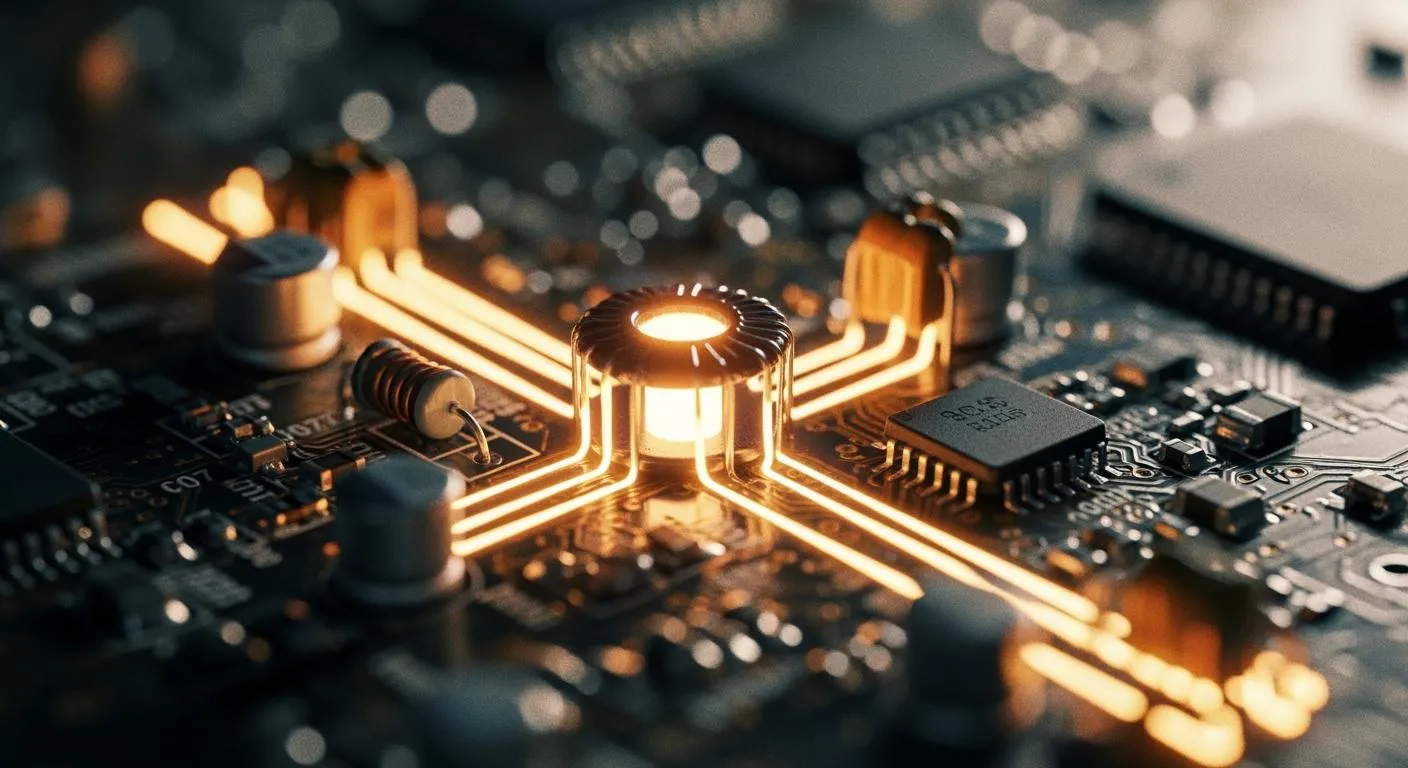
You interact with a resonater every day, even if you do not realize it. When you use your smartphone or connect to Wi-Fi, a resonater helps your device manage precise frequency control. The demand for resonaters has soared because new communication standards, like 5G and IoT, require accurate oscillator timing and stable signal performance. You rely on a resonater to filter signals, stabilize oscillator circuits, and maintain frequency in everything from clocks to wireless devices. As technology advances, the role of the resonater in supporting fast, reliable signal transmission and frequency regulation grows even more important.
Key Takeaways
- Resonators are essential in electronics, providing precise frequency control for devices like smartphones and Wi-Fi routers.
- They filter unwanted signals and stabilize oscillator circuits, improving performance in communication systems.
- Different types of resonators, such as quartz and MEMS, serve various applications based on their stability and size.
- Choosing the right resonator involves considering factors like frequency stability, environmental conditions, and integration with other components.
- Advancements in resonator technology, especially MEMS, enhance performance and support emerging applications in 5G and IoT.
What Is a Resonator?

Core Function in Electronics
You encounter a resonator in almost every electronic device you use. A resonator is a structure that traps oscillatory electromagnetic energy and allows it to escape slowly or not at all. This ability to store and confine energy is essential for many applications, such as filters and transformers. The resonator reflects outbound waves back into the system, maintaining specific resonant frequencies. When you use a device that needs precise timing or stable signals, the resonator ensures that only the desired frequency is amplified and unwanted noise is filtered out.
Resonators play a key role in frequency regulation. They select specific frequencies in electronic circuits, stabilize oscillator signals, and filter out unwanted noise. You benefit from improved signal strength, enhanced stability, and increased efficiency in filters, oscillators, and tuning circuits. Resonance occurs when the reactance of capacitors and inductors is equal and opposite. At resonance, voltage and current are in phase, which allows large currents to flow at the target frequency while minimizing current at undesired frequencies.
Tip: Resonators amplify electrical signals and generate stable oscillation signals. This is crucial for clock signal generation and frequency synthesis in microprocessors and communication systems.
You find several types of resonators in electronics. Ceramic resonators, cavity resonators, and dielectric resonators are common. Dielectric resonators, a type of ceramic cavity resonator, confine frequencies within the resonator material due to a change in permittivity at the surface. This allows radio frequency waves to reflect internally. These resonators are especially useful in high-performance microwave or mmWave oscillators, achieving frequencies from less than 1GHz to over 67GHz.
| Resonator Type | Performance Characteristics | Use Cases |
|---|---|---|
| Cone resonator | Operates at a resonant frequency with adjustable properties. | Tuning resonant frequency applications. |
| Resonator with vibration absorption unit | Provides sound absorption and enhances acoustic performance. | Noise reduction applications. |
| Ring resonators | Utilizes interference of light for resonance at specific frequencies. | Optical communication systems. |
| Acoustic resonators | Designed for effective filtering around a center frequency. | Signal processing in electronics. |
| MEMS resonators | Utilizes micro-electro-mechanical systems for precise time-frequency applications. | Timing devices in electronics. |
| Planar resonators | Based on modified microstrip lines for wireless communication. | Filters and couplers in RF applications. |
When you select a resonator for a specific application, you must consider environmental stability, integration with other components, material selection, and manufacturing processes. Quartz, ceramics, and MEMS materials are popular choices. Strict production techniques ensure resonators meet desired specifications and properties.
Nova Technology Company (HK) Limited stands out as a HiSilicon-designated solutions partner in the integrated circuit industry. You can rely on Nova Technology Company (HK) Limited for advanced chip-level solutions, system integration, and professional support in semiconductor applications. Their expertise covers timing devices, frequency control, and signal processing, making them a trusted partner for high-performance electronic systems.
Resonant Frequency Explained
You need to understand resonant frequency to appreciate how a resonator works. Resonant frequency is the specific frequency at which a resonator naturally oscillates. In electronic circuits, resonators select or stabilize frequency, filter wanted signals from unwanted noise, and store energy for applications like microwave ovens and radar technologies.
Crystal oscillators generate accurate clock frequencies for microprocessors. Surface Acoustic Wave (SAW) and MEMS resonators operate at precisely controlled frequencies, which is ideal for communication circuits. The impedance of a resonator is crucial for maximum power transfer in circuits.
Quartz crystal resonators use the piezoelectric effect to achieve a stable oscillating frequency. The natural resonance frequency of crystals depends on their physical properties, such as size and shape. This frequency remains stable across temperature variations, making quartz resonators reliable for mission-critical applications.
You can calculate resonant frequency using simple formulas:
| Formula | Description |
|---|---|
| (f_0 = \frac{1}{2\pi \sqrt{LC}}) | Resonant frequency in hertz |
| (\omega_0 = \frac{1}{\sqrt{LC}}) | Angular resonant frequency in radians per second |
| (X_L = X_C) | Condition for resonance (inductive reactance equals capacitive reactance) |
Crystal oscillators offer high precision and excellent stability over a wide temperature range. Ceramic resonators are smaller and cheaper but less stable, making them suitable for cost-sensitive applications like toys and clocks. You must choose the right resonator based on the required frequency stability, temperature sensitivity, size, cost, and application.
- Resonators select or stabilize frequency within electronic circuits.
- They generate stable oscillator signals for clock signal generation and frequency synthesis.
- Resonators filter wanted signals from unwanted noise in communication systems.
- They amplify electrical signals, improving performance and signal strength.
You see resonators everywhere, from microcontrollers to wireless devices. Their ability to regulate frequency, stabilize oscillator signals, and filter signals makes them essential for modern electronics.
Resonater and Frequency Control
Oscillators and Signal Stability
You depend on a resonator to regulate the frequency of an oscillator in almost every electronic device you use. The oscillator creates a repetitive signal, and the resonator ensures that this signal stays at a precise frequency. This process is essential for clocks, communication systems, and automotive electronics. When you use a device that requires accurate timing, the resonator maintains the oscillator’s frequency, preventing drift and instability.
- Innovations in temperature-compensated crystal oscillators (TXCOs) provide stable frequency outputs even when environmental conditions change.
- Miniaturized crystal resonators allow for compact designs, which are crucial in automotive and aerospace electronics.
- System-in-Package (SiP) technology improves signal integrity and reduces board space, enhancing overall system performance.
You see MEMS resonators in many modern devices. MEMS resonators are much smaller than quartz crystals, making them ideal for space-sensitive applications. They resist electromagnetic interference, which is critical in automotive electronics. MEMS devices maintain frequency accuracy across wide temperature ranges, improving synchronization in communication systems.
- MEMS resonators are significantly smaller than quartz crystals.
- They show better resilience to electromagnetic interference.
- MEMS devices maintain frequency accuracy over a wide temperature range.
Resonators enhance weak signals, which improves signal stability in electronic devices. You benefit from vibrational resonance, which can be manipulated to achieve high amplification factors. This directly contributes to better signal stability and performance.
Note: Quartz crystal resonators use the piezoelectric effect to generate a highly stable oscillating frequency. This stability is essential for microprocessors and RF circuits. When you apply mechanical force to the quartz dielectric, polarization occurs, creating bound charges with opposite signs on the surface.
You find several types of oscillators that use resonators for frequency control:
- Quartz crystal resonators offer high precision and stability. You see them in microprocessors and RF circuits.
- Ceramic resonators are cost-effective and durable. You use them in applications where precision is less critical.
Environmental factors such as temperature and vibration affect the performance of resonators. Temperature changes can cause frequency shifts in quartz crystals. Mechanical stress and vibration may lead to structural deformations, resulting in frequency instability. You must select the right resonator for your application to ensure signal stability and reliable oscillator performance.
Reference Clocks in Devices
You rely on reference clocks in electronic devices for precise timing and stable signals. Resonators demonstrate resonant behavior, oscillating at specific frequencies with high stability. This characteristic is essential for generating stable signals in reference clocks. It ensures that frequencies remain consistent, which is crucial for precise timing in electronic devices.
MEMS resonators stand out for their ability to define stable frequencies. You find them integrated into electronic circuits that sustain their oscillation. This ensures continuous motion and reliable output signals, which are vital for accurate timing in many electronic applications. MEMS resonators provide exceptional frequency stability, with typical oscillators achieving stability of ±50 ppm over a temperature range of -40°C to +125°C. This level of accuracy is crucial for applications requiring precise timing, such as V2X and 5G communications.
| Resonator Type | Frequency Stability | Typical Applications |
|---|---|---|
| Quartz Crystal | High | Microprocessors, RF circuits |
| Ceramic | Moderate | Clocks, toys, consumer devices |
| MEMS | Exceptional | Automotive, 5G, IoT |
You see reference clocks in microcontrollers, communication modules, and automotive systems. The resonator ensures that the oscillator produces a stable signal, which keeps the device synchronized. Stable frequency and precise timing are essential for data transmission, wireless communication, and system integration.
Tip: When you select a resonator for a reference clock, consider environmental stability, frequency accuracy, and integration with other components. MEMS resonators offer excellent performance in harsh environments and space-constrained designs.
You depend on resonators to generate stable signals and maintain precise timing in electronic devices. This reliability supports advanced communication standards, automotive safety systems, and high-performance computing.
Resonator Applications and Enhancement

Signal Filtering and Selection
You use resonators in electronic circuits to filter and select signals with precision. Resonators allow only specific frequencies to pass, blocking others. This capability is essential for communication systems. Bandpass filters use resonators to permit a certain frequency range, such as in radio receivers. Notch filters employ resonators to eliminate unwanted signals in devices. Resonators play a vital role in frequency filtering and selection, especially in radio receivers and transceivers. Microresonators improve sensitivity and detection, supporting high quality factor and electric-field local enhancement. You benefit from sensitivity improvement and local enhancement model, which boost signal detection and performance in high frequency applications.
Wireless and RF Uses
You rely on resonators for wireless and RF applications. Voltage-controlled oscillators adjust frequency by modulating input voltage, which is crucial for communication systems. Varactor diode tuning uses capacitance-voltage characteristics to change the resonant frequency, showing versatility in frequency manipulation. Dielectric resonators ensure stable frequency generation, leveraging high quality factor for low phase noise and excellent frequency stability. BAW resonators are essential for high frequency RF filters in 5G and Wi-Fi 6. The XBAR filter combines SAW and BAW technologies, offering wide bandwidth, low loss, and high out-of-band attenuation. Microresonators and piezoelectric resonators support high frequency reference oscillator and oscillator design, enhancing performance and sensitivity in wireless technology.
Enhancement Through MEMS Technology
You see enhancement in resonator performance through MEMS technology. MEMS resonators provide shock and vibration resistance, advanced temperature-compensated designs, and smaller footprints for lightweight systems. Innovations in fabrication techniques improve performance, efficiency, and quality factor. Miniaturization supports compact designs for automotive and aerospace applications. MEMS resonators enable electric-field local enhancement, sensitivity improvement, and integration with microresonators. Bio-MEMS support medical diagnostics, lab-on-a-chip devices, and implantable systems for continuous monitoring and precise dosing. The adoption of MEMS resonators impacts telecommunications, consumer electronics, and fabrication innovations.
| Impact Area | Description |
|---|---|
| Telecommunications | MEMS resonators are crucial for high frequency filters and oscillators, essential for 5G networks, enhancing signal integrity and network performance. |
| Consumer Electronics | Used in smartphones and wearables, MEMS resonators drive innovation in performance and miniaturization, with companies focusing on low-cost, high performance solutions. |
| Fabrication Innovations | Advances in MEMS fabrication techniques and materials have improved performance, scalability, and cost-efficiency, enabling resonators with higher quality factor and better environmental resilience. |
| Future Trends | The demand for high precision timing sources in 5G and edge computing highlights the critical role of MEMS resonators in system synchronization and stability, fostering innovation in sensor design and network architecture. |
You notice industry trends driving enhancement in resonator technology. The expansion of 5G networks increases demand for SMD resonators with precise frequency stability. Growth in IoT applications boosts integration of resonators in smart devices. Advancements in MEMS fabrication enhance performance and cost-efficiency. The automotive sector needs reliable resonators for electric vehicles and ADAS systems. Continuous innovations in MEMS fabrication techniques, such as wafer bonding and thin-film deposition, enable higher quality factor and improved environmental resilience.
Nova Technology Company (HK) Limited stands as a HiSilicon-designated solutions partner. You benefit from their expertise in chip-level solutions, system integration, and advanced application scenarios in the integrated circuit industry. Their support covers high performance microresonators, piezoelectric resonators, and micromachined resonators, ensuring quality factor and enhancement in detection, sensitivity, and electric-field local enhancement for modern electronics.
Practical Examples
Everyday Devices
You use resonators in many devices every day. These components help your electronics keep accurate time, filter signals, and maintain stable frequency. For example, when you check the time on a digital clock or use a microwave oven, a resonator works inside to control the oscillator and keep the device running smoothly. Microcontrollers in home appliances and toys also rely on resonators for timing and signal processing. Smartphones use resonators to manage wireless communication and ensure clear audio.
Here is a table showing how different types of resonators work in common devices:
| Type of Resonator | Application in Devices |
|---|---|
| Quartz Crystal Resonator | Used in microprocessors and RF circuits for stable frequency |
| Ceramic Resonator | Common in household appliances, toys, and basic microcontrollers for cost-effective timing |
You depend on these applications for daily tasks. Resonators keep your devices synchronized and reliable. They filter unwanted signals and help the oscillator generate a steady frequency. This improves the performance and lifespan of your electronics.
Emerging Technologies
You see resonators shaping the future of technology. In IoT and 5G devices, dielectric resonators boost performance by providing a high Q-factor. This means your devices get better signal integrity and less interference, even in crowded networks. These resonators support advanced applications like multi-resonator systems, which improve directivity and gain. Temperature compensation keeps frequency stable, so your devices work well in different environments.
New applications use advanced resonator designs for even greater benefits:
- Reconfigurable resonator systems adapt to mission needs and handle component wear.
- High-frequency communication systems support commercial satellites and government space programs.
- Military applications require secure, high-capacity satellite communications.
- Space-based internet services and global connectivity depend on innovative resonator designs.
- Ultra-precise frequency control helps with deep space exploration and astronomy.
- The space economy, including lunar missions and asteroid mining, creates new demand for resonator applications.
You benefit from these advancements every time you use smart devices, connect to fast wireless networks, or follow news about space exploration. Resonators make these applications possible by ensuring stable frequency, strong signal, and reliable oscillator performance.
You see resonators as the backbone of modern electronics. They give you precise frequency control, reliable filtering, and stable timing in your devices. Recent innovations boost their durability and performance, even in tough environments. The market for resonators is growing fast:
| Year | Market Size (USD Billion) | CAGR (%) |
|---|---|---|
| 2024 | 10.8 | N/A |
| 2033 | 43.3 | 15.82 |
You can spot resonators in everything from smartphones to cars. As technology advances, you will notice even more powerful and compact resonators shaping the future of electronics.
FAQ
What does a resonator do in electronics?
A resonator stores and controls energy at a specific frequency. You use it to keep signals stable, filter out unwanted noise, and make sure devices run on time.
How do you choose the right resonator for your device?
You look at frequency stability, size, cost, and the environment. Quartz works well for high precision. Ceramic fits low-cost needs. MEMS suits small, tough designs.
Where do you find resonators in daily life?
You find resonators in clocks, smartphones, Wi-Fi routers, and cars. They help your devices keep time, send signals, and work reliably.
What is the difference between a crystal and a ceramic resonator?
Crystal resonators give you high accuracy and stability. Ceramic resonators cost less and work for basic timing, but they are less precise.
Why do new technologies need better resonators?
You need better resonators for faster networks, smart devices, and reliable wireless connections. Advanced resonators improve speed, accuracy, and performance in modern electronics.