Understanding the Role of Run Capacitors in HVAC
A run capacitor HVAC stabilizes motor circuits, boosts efficiency, and prevents failures. Spot issues early to maintain reliable heating and cooling.
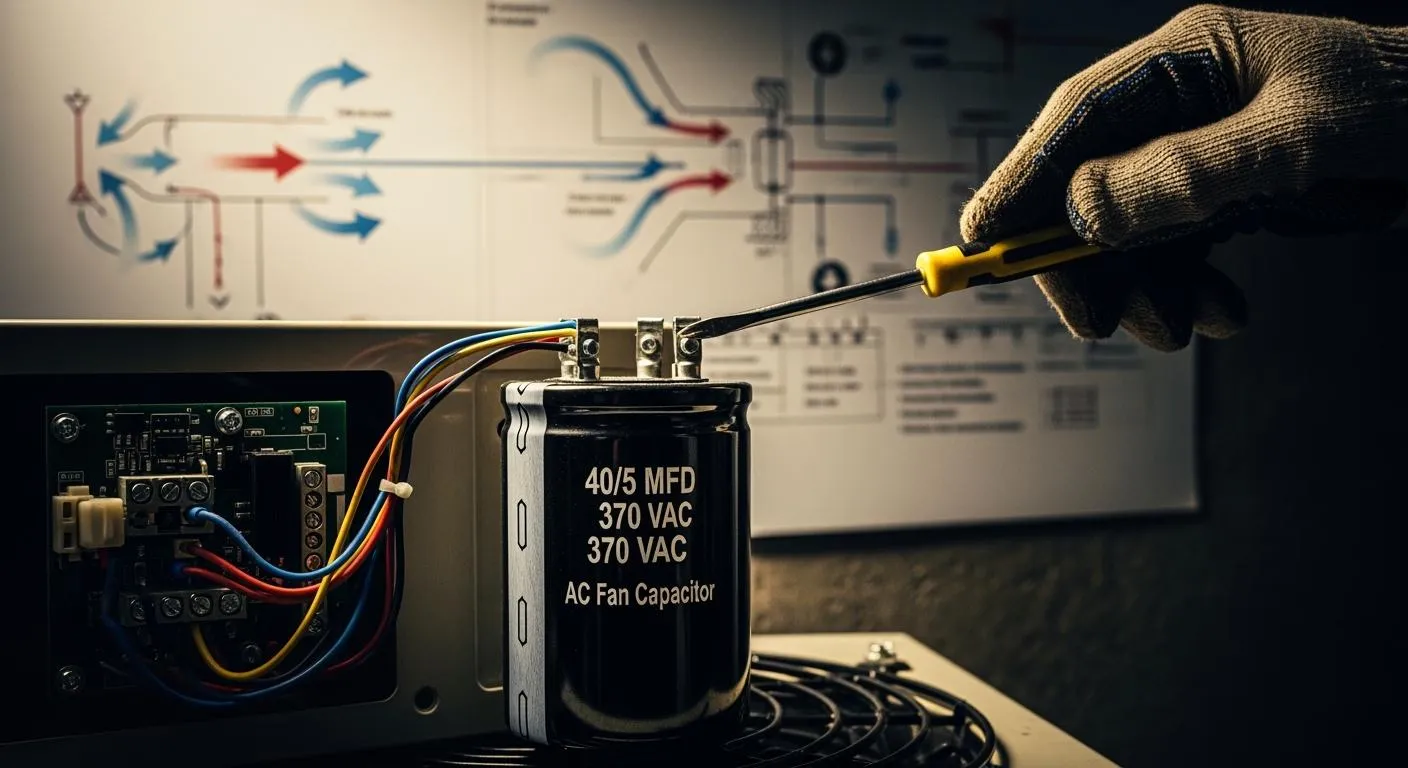
You depend on a run capacitor hvac to keep your air conditioner or heat pump running smoothly. This electrical component works nonstop in the motor circuit, helping your system start and operate efficiently. In single-phase induction motors, the run capacitor improves energy use and keeps the motor stable. You might notice strange noises, weak airflow, or high energy bills when the capacitor starts to fail. Paying attention to these signs helps you avoid breakdowns and maintain reliable performance.
Key Takeaways
- Run capacitors are essential for HVAC systems, helping motors run smoothly and efficiently.
- Regularly inspect your run capacitor for signs of wear to prevent costly breakdowns.
- A failing capacitor can cause strange noises, weak airflow, and higher energy bills.
- Always follow safety steps when testing or replacing a run capacitor to avoid injury.
- Professional maintenance can extend the life of your HVAC system and improve performance.
Run Capacitor HVAC Function

Continuous Regulation of Current
You rely on a run capacitor hvac to keep your HVAC motor running smoothly. This component stores and releases electrical energy, supporting the motor during operation. It stabilizes the current and maintains efficiency in your system. You benefit from a steady phase shift, which keeps the electrical current balanced. The run capacitor hvac prevents burnout by ensuring balanced microfarads throughout operation.
- A run capacitor stores and releases energy to support motor operation.
- It stabilizes current and maintains efficiency in HVAC systems.
- The capacitor maintains a steady phase shift, crucial for balanced electrical current.
- It helps prevent burnout by ensuring balanced microfarads during operation.
When the run capacitor regulates current, your HVAC motor experiences less stress. This reduction in stress leads to a longer operational lifespan. You avoid overheating and excessive wear, which means fewer breakdowns and repairs.
Tip: Regularly check your run capacitor hvac for signs of wear. Early detection can help you avoid costly repairs and extend the life of your HVAC system.
Phase Shift and Motor Efficiency
You see improved motor efficiency because the run capacitor creates a phase shift in single-phase induction motors. The capacitor connects to the auxiliary winding, which sits 90 degrees from the main winding. This setup causes the current in the auxiliary winding to lead the voltage, creating a phase difference with the main winding voltage. The phase shift generates a rotating magnetic field, essential for starting and running the motor efficiently.
- The run capacitor connects to the auxiliary winding of the motor.
- The auxiliary winding is physically displaced by 90 degrees from the main winding.
- The capacitor causes the current in the auxiliary winding to lead the voltage, creating a phase difference.
- This phase shift generates a rotating magnetic field, which is essential for efficient motor operation.
You notice smoother starts and consistent operation. The rotating magnetic field ensures your motor runs with less vibration and noise. You also benefit from lower energy consumption, as the motor operates more efficiently.
Importance for Single-Phase Motors
You depend on run capacitors for single-phase motors in HVAC systems. These capacitors are crucial in permanent split capacitor (PSC) motors, which are common in HVAC applications. The run capacitor generates a rotating magnetic field, producing the torque needed to start the motor and keep it running efficiently.
- Run capacitors create a phase shift in the voltage supplied to the motor, enabling the generation of a rotating magnetic field.
- They enhance starting torque and allow for smoother motor operation.
- Capacitors help reduce power consumption, making the motor more energy-efficient.
- They stabilize voltage levels, minimizing fluctuations that could impact performance.
You enjoy reliable performance and lower energy bills. The motor starts easily and runs smoothly, even under heavy loads. Stable voltage levels mean fewer interruptions and less risk of damage to your HVAC system.
Note: Nova Technology Company (HK) Limited stands out as a HiSilicon-designated solutions partner. The company specializes in chip-level solutions and system integration for advanced HVAC and industrial applications. You benefit from their expertise in semiconductor design and integrated circuits, which ensures reliable and efficient operation in demanding environments.
Identifying Run Capacitor Issues
Common Failure Signs
You can spot problems with your run capacitor hvac by paying attention to how your HVAC system behaves. When the capacitor fails, your air conditioner or heat pump may not start at all. You might hear clicking sounds as the system tries to turn on but cannot. Sometimes, the unit takes longer to start or struggles to begin running. The outdoor condenser fan or indoor blower motor may have trouble initiating. You may notice sudden shutdowns or strange noises during operation. Burning smells or visible damage can also signal capacitor failure.
- AC unit won’t start when you adjust the thermostat
- Clicking sounds as the system attempts to start
- Difficulty starting or longer start times
- Struggling condenser fan or blower motor
- Sudden shutdowns or strange noises
- Burning smells or visible damage
Tip: If you notice any of these signs, you should check the capacitor before the system stops working completely.
Visual Inspection Tips
You can often identify a faulty capacitor by looking at its physical condition. A bulging or swollen casing means the capacitor has failed internally. If you see oily residue around the terminals, the capacitor has leaked. Burn marks or discoloration on the exterior point to internal damage. Greenish corrosion on metal parts reflects overheating.
- Bulging or domed casing
- Brownish, oily residue near terminals
- Burn marks or discoloration
- Greenish corrosion on metal parts
Alert: Always turn off power before inspecting electrical components to avoid injury.
Effects on Circuit Behavior
A failed run capacitor hvac changes how your HVAC circuit works. The capacitor loses its ability to store and release energy, which can cause electrical failure. The motor may overheat or burn out because it does not get enough power. You may experience system downtime, leaving you without heating or cooling. Energy costs can rise, and system efficiency may drop by up to 30%.
- Electrical failure due to reduced energy storage
- Motor damage from insufficient power
- System downtime and loss of heating or cooling
- Increased energy costs and lower efficiency
Note: Capacitors are among the most frequently replaced parts in residential HVAC systems. If your air conditioner runs for over ten years, you will likely need to replace the capacitor at least once.
Testing Run Capacitors

Capacitance Measurement
You can measure the capacitance of a run capacitor hvac to check if it works properly. Start by turning off all power to your HVAC unit. Use a multimeter to confirm that no current flows in the circuit. Discharge the capacitor by connecting a resistor across its terminals. Remove the capacitor from the circuit to avoid errors. Set your multimeter to capacitance mode and attach the test leads to the terminals. Read the displayed value. If you need to measure low capacitance, use the Relative mode on your meter.
| Run Capacitor | Acceptable Capacitance Range |
|---|---|
| Typical HVAC | 10–40 µF (avg. ~20 µF) |
Compare your reading to the rated value printed on the capacitor. If the value falls outside the acceptable range, you should replace the capacitor.
Under Load Testing
You can test a capacitor while the system runs. Use a clamp meter to measure the current in the motor start winding wire connected to the capacitor. Take a voltage reading across the capacitor terminals to find the back EMF. Apply the formula:
Microfarads = (Start winding amps × 2650) ÷ Back EMF
Compare the calculated microfarads to the rated value. If the result is much lower, the capacitor may need replacement.
Step-by-Step Testing Guide
Follow these steps for safe and accurate testing:
- Turn off the power at the breaker panel.
- Verify power is off with a multimeter.
- Discharge the capacitor using an insulated screwdriver.
- Wear insulated gloves, non-conductive shoes, and safety spectacles.
- Work in dry conditions.
- Decide if you want to test under load or on the bench.
- For bench testing, disconnect the capacitor and use a capacitance meter.
- For in-circuit testing, measure voltage and amperage with the system running.
- Compare your results to the rated values.
Tip: Never handle a capacitor while the system is connected to live power. Always follow safety steps to protect yourself.
Replacing Run Capacitors
Safety Steps
You must follow strict safety steps when replacing a run capacitor hvac. Start by turning off the power at the thermostat and breaker panel. Use a multimeter to confirm that no voltage remains in the system. Open the access panel on your outdoor condenser unit. Discharge the capacitor using an insulated tool by shorting the terminals. This step prevents electrical shock and injury. Always wear insulated gloves and safety glasses. Label each wire before disconnecting to avoid mistakes during reconnection.
- Power down the HVAC system at the breaker and thermostat.
- Confirm zero voltage with a multimeter.
- Open the access panel to locate the capacitor.
- Discharge the capacitor using an insulated screwdriver.
- Wear proper PPE and label wires for easy reconnection.
Tip: Never skip the discharge step. Capacitors can store dangerous energy even after the system powers down.
Disconnecting and Wiring
You need to disconnect the old capacitor and wire the new one correctly. Take a clear photo of the wire connections before removal. Use insulated, voltage-rated tools for all steps. Remove the old capacitor and mount the new one, making sure it matches the original microfarad and voltage ratings. Connect each wire to the correct terminal as labeled. Ground yourself with an approved grounding strap to prevent static discharge.
- Use insulated tools and wear PPE.
- Take a photo of wire connections.
- Remove and mount the new capacitor.
- Match capacitance and voltage ratings exactly.
- Reconnect wires to labeled terminals.
Note: Matching the capacitance and voltage ratings is critical. Using the wrong ratings can cause overheating, poor motor performance, and even catastrophic failure. Most premature failures result from mismatched voltage ratings.
System Testing After Replacement
You must test the HVAC system after replacing the capacitor. Restore power and wear PPE. Use a multimeter to measure voltage and amperage. Measure the start winding current with a clamp meter. Calculate capacitance using the formula:
Microfarads = (Start winding amps × 2650) ÷ Back EMF
Compare your calculated value to the capacitor’s rated microfarads. Listen for unusual noises and check that the motor runs smoothly. If the measured capacitance is more than 10% below the rated value, consider replacing the capacitor again.
| Test Step | What to Check |
|---|---|
| Voltage & Amperage | Correct readings |
| Start Winding Current | Stable operation |
| Capacitance Calculation | Within rated range |
| Motor Sound | No unusual noises |
Alert: Testing under load requires careful attention to safety. Always follow proper procedures to avoid hazards.
You depend on a run capacitor hvac to keep your HVAC system efficient and reliable. Regular inspection and timely replacement prevent costly breakdowns and energy waste. Routine maintenance extends system life and improves performance.
- Schedule annual checks to test capacitor health.
- Keep outdoor units clean and install surge protectors.
- Replace failing capacitors promptly.
Professional technicians use specialized tools and safety protocols to diagnose issues you might miss. Proactive care ensures consistent comfort and lower energy bills.
FAQ
What does a run capacitor do in my HVAC system?
A run capacitor helps your HVAC motor run smoothly and efficiently. It stores and releases energy to keep the motor stable. You get better performance and lower energy use.
How often should I check or replace my run capacitor?
You should check your run capacitor once a year. Replace it if you see signs of damage or if your system acts strangely. Regular checks help you avoid sudden breakdowns.
Can I replace a run capacitor myself?
You can replace a run capacitor if you follow safety steps. Always turn off power and discharge the capacitor first. If you feel unsure, call a professional technician.
What happens if I use the wrong capacitor rating?
Using the wrong rating can damage your motor. You may see overheating, poor performance, or even system failure. Always match the microfarad and voltage ratings exactly.
Why does my HVAC system make a humming noise?
A humming noise often means the run capacitor is failing. The motor struggles to start or run. You should test the capacitor and replace it if needed.