Step-by-Step Guide to Designing with RF Modules: Best Practices and Tips
Expert guide on Step-by-Step Guide to Designing with RF Modules: Best Practices and Tips. Technical specs, applications, sourcing tips for engineers and buyers.
Introduction
In the rapidly evolving landscape of wireless communication, RF modules play a critical role in enabling devices to communicate over radio frequencies. As the demand for IoT devices, smart homes, and industrial automation increases, understanding how to effectively design with RF modules becomes essential. This article delves into the intricacies of RF module design, focusing on component specifications, datasheets, and application circuits. The insights provided will guide you through the process of integrating RF modules into your designs, ensuring reliable and efficient performance.
Technical Overview
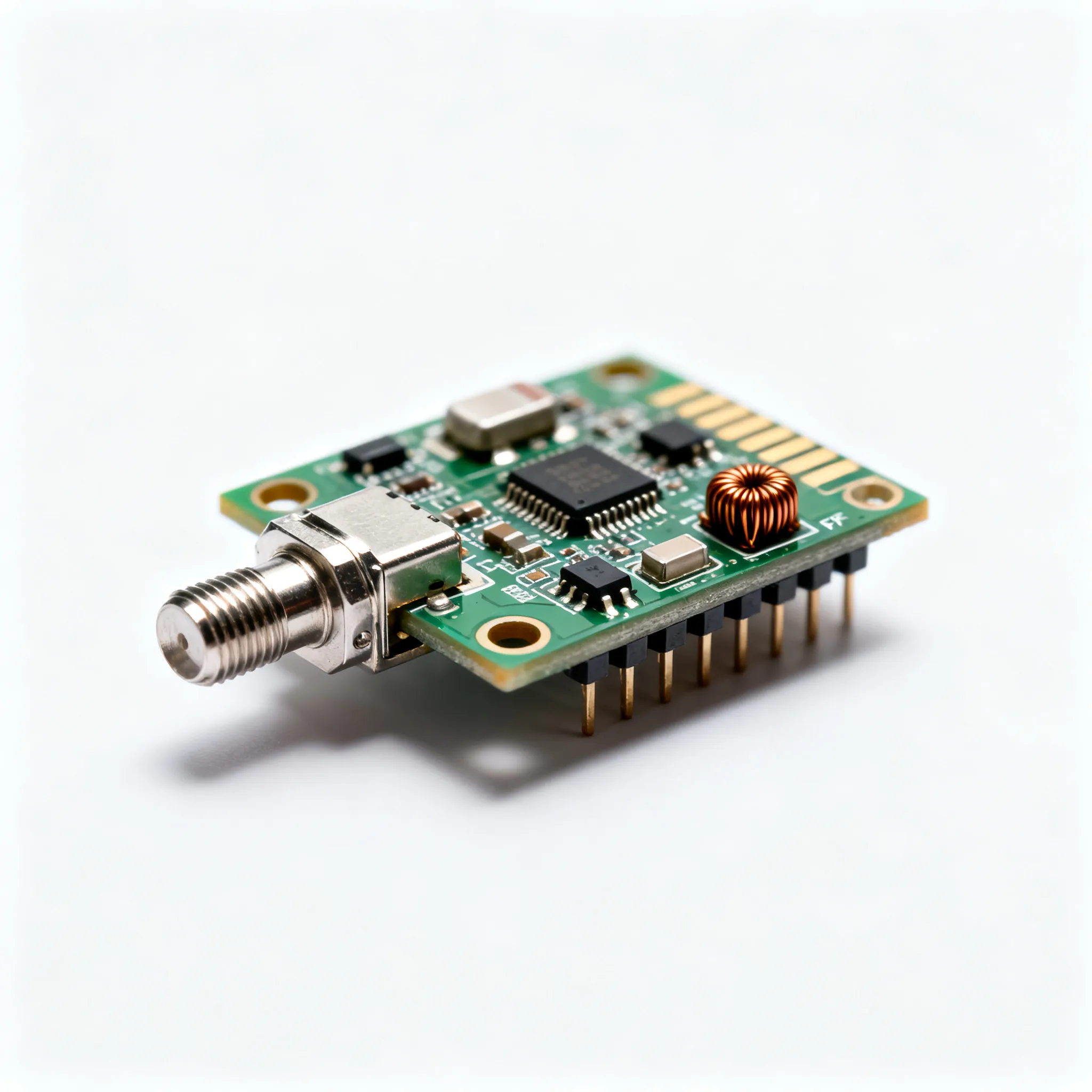
RF modules are compact electronic devices that transmit and receive radio signals between two devices. They typically operate in frequency bands such as 433 MHz, 868 MHz, and 2.4 GHz, among others. The core components of an RF module include a transceiver, antenna, and power supply. Understanding the principles of RF communication, such as modulation techniques and signal propagation, is crucial for effective design. Modulation techniques like amplitude modulation (AM), frequency modulation (FM), and phase modulation (PM) are used to encode data onto carrier waves. Additionally, the propagation of RF signals can be affected by factors such as distance, obstacles, and environmental conditions, necessitating careful planning and design.
Detailed Specifications
Table 1: Electrical Specifications
| Parameter | Value | Units | Notes |
|---|---|---|---|
| Operating Frequency | 2.4 | GHz | Common for Wi-Fi and Bluetooth |
| Transmit Power | 20 | dBm | Maximum allowed by FCC for certain bands |
| Receive Sensitivity | -90 | dBm | Indicates the minimum detectable signal |
| Data Rate | 1 | Mbps | Maximum data throughput |
| Supply Voltage | 3.3 | V | Typical operating voltage |
| Current Consumption (TX) | 120 | mA | During transmission |
| Current Consumption (RX) | 40 | mA | During reception |
| Impedance | 50 | Ohms | Standard for RF circuits |
| Harmonic Suppression | -40 | dBc | Suppression level of harmonic frequencies |
| Modulation Type | GFSK | - | Gaussian Frequency Shift Keying |
| Channel Bandwidth | 1 | MHz | Bandwidth of the communication channel |
Table 2: Thermal & Mechanical Specs
| Parameter | Value | Units | Notes |
|---|---|---|---|
| Operating Temperature | -40 to 85 | °C | Industrial temperature range |
| Storage Temperature | -55 to 125 | °C | For safe storage |
| Dimensions | 25 x 15 x 3 | mm | Compact size for integration |
| Weight | 3 | g | Lightweight for portable applications |
| PCB Mounting | SMD | - | Surface Mount Device |
| Humidity Resistance | 95% | % RH | Non-condensing environment |
| Vibration Tolerance | 5 | g | Withstands mechanical vibration |
| Shock Resistance | 50 | g | Withstands mechanical shock |
Table 3: Application Comparison
| Application | Frequency Band | Range | Data Rate | Notes |
|---|---|---|---|---|
| Home Automation | 2.4 GHz | 100 m | 250 kbps | Common for smart home devices |
| Industrial IoT | 868 MHz | 1 km | 100 kbps | Long-range, low power |
| Wireless Audio | 2.4 GHz | 30 m | 1 Mbps | High data rate for audio streaming |
| Remote Control | 433 MHz | 500 m | 10 kbps | Simple low data rate applications |
| Telemetry | 915 MHz | 2 km | 50 kbps | Used in scientific and industrial fields |
The tables above provide a comprehensive overview of the electrical, thermal, mechanical, and application-specific specifications of RF modules. These specifications are crucial for determining the module's suitability for various applications. The electrical specifications highlight parameters like operating frequency, transmit power, and data rate, which directly impact the module's performance in different environments. Thermal and mechanical specifications ensure that the module can withstand harsh conditions, while the application comparison table helps identify the best-suited frequency bands and data rates for specific use cases.
Design Considerations
Designing with RF modules requires careful consideration of several factors to ensure optimal performance. First, the selection of the appropriate frequency band is crucial. Factors such as regulatory requirements, range, and interference should be considered. For instance, the 2.4 GHz band is widely used for Wi-Fi and Bluetooth but may suffer from interference in crowded environments. Next, the placement and design of the antenna are critical. A well-designed antenna can significantly improve range and signal quality. It's essential to consider the antenna's orientation, polarization, and proximity to other components to minimize interference and signal loss.
Power management is another vital aspect. RF modules often require precise voltage levels and current supply to function correctly. Implementing efficient power management circuits can help reduce power consumption, especially in battery-operated devices. Additionally, the thermal management of RF modules is essential to prevent overheating. Proper heat dissipation techniques, such as using heat sinks or thermal vias, can help maintain optimal operating temperatures.
EMI (Electromagnetic Interference) shielding is also crucial in RF module design. Shielding techniques, such as using metallic enclosures or ground planes, can help reduce interference from external sources. Finally, thorough testing and validation are necessary to ensure the RF module performs as expected. This includes testing for compliance with relevant standards and certifications.
Step-by-Step Guide
- Define Requirements: Determine the application's specific requirements, including range, data rate, and frequency band. This will guide the selection of an appropriate RF module.
- Choose the RF Module: Based on the defined requirements, select an RF module that meets the specifications. Refer to datasheets and consult with suppliers like DigiKey for detailed information.
- Antenna Design: Design or select an appropriate antenna that matches the module's frequency and impedance. Consider factors like size, orientation, and location on the PCB.
- Power Supply Design: Ensure the RF module receives the correct voltage and current. Design power management circuits to handle power supply fluctuations and reduce consumption.
- Layout and Placement: Carefully place the RF module and antenna on the PCB to minimize interference. Keep the RF path as short as possible and avoid crossing with digital signals.
- EMI Shielding: Implement EMI shielding techniques to protect the RF module from external interference. Use ground planes and shielding enclosures where necessary.
- Testing and Validation: Conduct thorough testing to ensure the RF module meets the desired performance criteria. Test for range, sensitivity, and compliance with regulatory standards.
- Iterate and Optimize: Based on testing results, make necessary adjustments to the design. Optimize for performance, cost, and manufacturability.
Common Issues & Solutions
-
Issue: Low Signal Range
Solution: Ensure the antenna is properly designed and placed. Check for obstacles or interference sources that may be affecting the signal. -
Issue: High Power Consumption
Solution: Optimize power management circuits. Use low-power modes and efficient power supply components. -
Issue: Interference with Other Devices
Solution: Implement EMI shielding and select a frequency band with less congestion. -
Issue: Overheating
Solution: Improve thermal management with heat sinks or thermal vias. Ensure adequate airflow around the RF module. -
Issue: Compliance Failures
Solution: Review design against relevant standards and certifications. Conduct pre-compliance testing to identify issues early.
Applications & Use Cases
RF modules are integral to a wide range of applications. In home automation, they enable wireless control of lighting, security systems, and appliances. In industrial IoT, RF modules facilitate real-time monitoring and control of machinery and processes, enhancing efficiency and reducing downtime. Wireless audio systems leverage RF modules for high-quality audio streaming without the need for cables. Remote control applications, such as garage door openers and keyless entry systems, utilize RF modules for secure and reliable operation. In telemetry, RF modules are used to collect and transmit data from remote sensors for scientific research and environmental monitoring.
Selection & Sourcing Guide
Sourcing the right RF module is critical to the success of your design. Authorized distributors like IC Online offer a wide range of RF modules from leading manufacturers. When selecting a module, consider factors such as cost, availability, and support. It's also important to review datasheets and consult with suppliers to ensure the chosen module meets your specific requirements. Additionally, leveraging online resources and tools can aid in the selection process, providing valuable insights into performance and compatibility.
FAQ
-
What is an RF module?
An RF module is a compact electronic device that enables wireless communication between devices using radio frequencies. -
What are the common frequency bands for RF modules?
Common frequency bands include 433 MHz, 868 MHz, 915 MHz, and 2.4 GHz. -
How do I choose the right RF module for my application?
Consider factors such as range, data rate, frequency band, and regulatory requirements. Refer to datasheets and consult with suppliers for detailed information. -
What are the key design considerations for RF modules?
Key considerations include frequency band selection, antenna design, power management, EMI shielding, and thermal management. -
How can I improve the range of my RF module?
Use a well-designed antenna, minimize interference, and select a suitable frequency band for your environment. -
What are the common issues faced with RF modules?
Common issues include low signal range, high power consumption, interference, overheating, and compliance failures. -
What is EMI shielding, and why is it important?
EMI shielding involves protecting electronic components from electromagnetic interference. It's crucial for maintaining signal integrity and reducing interference. -
Can RF modules operate in harsh environments?
Yes, many RF modules are designed to operate in harsh environments with extended temperature ranges and robust mechanical specifications. -
How do I ensure compliance with regulatory standards?
Review design against relevant standards, conduct pre-compliance testing, and consult with certification bodies if necessary. -
Where can I source RF modules?
Authorized distributors like IC Online offer a wide range of RF modules from leading manufacturers.
Conclusion
Designing with RF modules requires a thorough understanding of their specifications, applications, and design considerations. By following best practices and leveraging the information provided in this guide, engineers can successfully integrate RF modules into their designs, ensuring reliable and efficient wireless communication. Whether for home automation, industrial IoT, or other applications, RF modules are a critical component in the modern electronics landscape.